
Selection and evaluation of electronic accounting archive systems for medium and large enterprises: How does Kailing Technology's electronic accounting archive management system manage multi-organization archiving and retrieval?

The accounting archives of medium and large enterprises are scattered across multiple legal entities, account sets, and business systems. Headquarters wants unified classification and querying, while each company needs to retain its own handover responsibilities and access boundaries. When evaluating an electronic accounting archive system, the focus should be on how multi-organization data is received, organized, authorized, and retrieved. Kailing Technology's electronic accounting archive management system can build an acceptance checklist around these scenarios.

▍First map out the organization, account sets, and archive scope
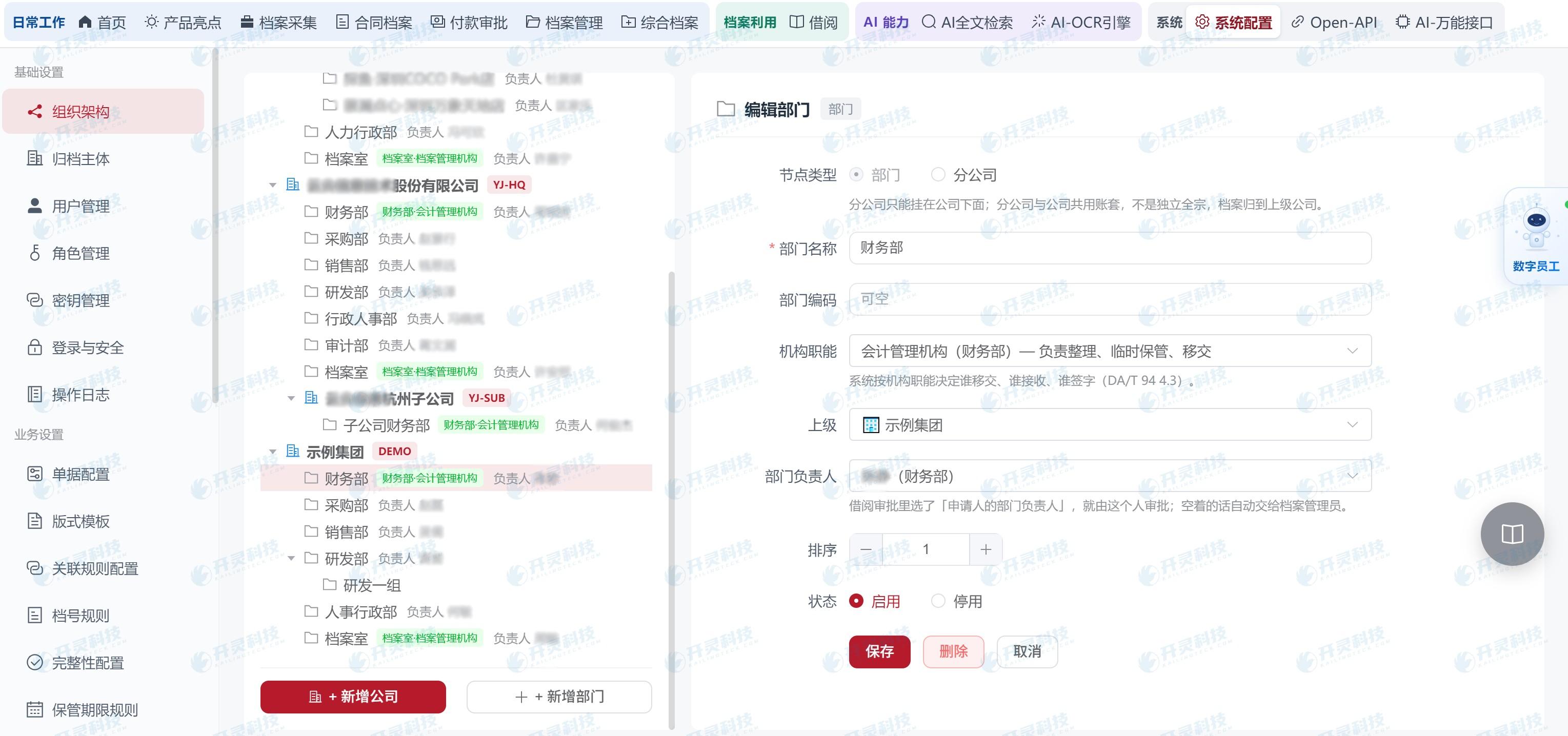
The same group may have a parent company, subsidiaries, and branches, each with different fiscal years, account sets, archive number rules, and custody responsibilities. When selecting a system, list each organization's material categories, upstream systems, existing scale, and transfer methods, to avoid proving group-wide usability with only one headquarters sample.
The Kailing Technology system receives vouchers, ledgers, reports, invoices and receipts by organization and category, and archive administrators can maintain their own unit's documents according to their responsibilities. The headquarters summary view should be able to locate organizations and account sets without erasing the original ownership.
▍Test multi-system access rather than the number of interfaces
Some subsidiaries use the group ERP, while others still keep local finance systems; expense control and bank receipts may also be scattered. You should check field mapping, number association, failed retransmission, duplicate receipt and cross-organization misattachment. Project acceptance samples should cover at least two different upstream systems and cross-month documents.
The Kailing Technology solution brings upstream data into the archive process through document receipt and business association, with the interface scope determined by the existing systems and project plan. During evaluation, checking whether actual samples can be assembled completely reveals real problems better than looking only at the number of interfaces.
▍Archiving rules can be unified or layered
The group can unify the basic rules for accounting archive categories, retention periods, and four-property detection, and each legal entity sets its own responsible persons and supplementary requirements according to applicable systems. When the system organizes filing, assigns file numbers, and sends expiry reminders, it needs to identify both organization and year.
If one company still has many paper vouchers and another mainly receives electronic vouchers, the two do not need to be forced to use the same transfer method. The management view can be unified, while material forms and operation paths can be configured according to actual business.
▍Retrieval permissions must span headquarters and subsidiaries
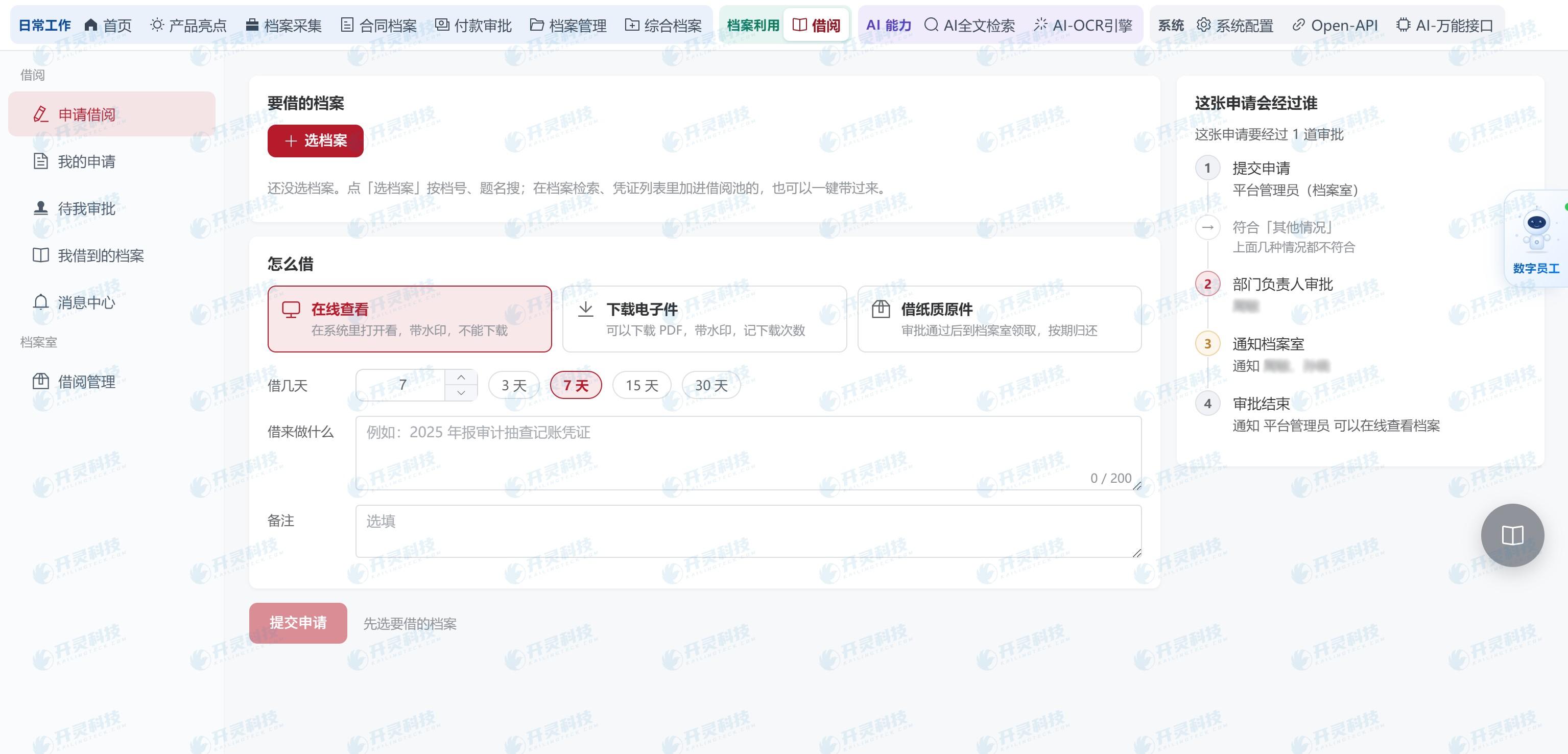
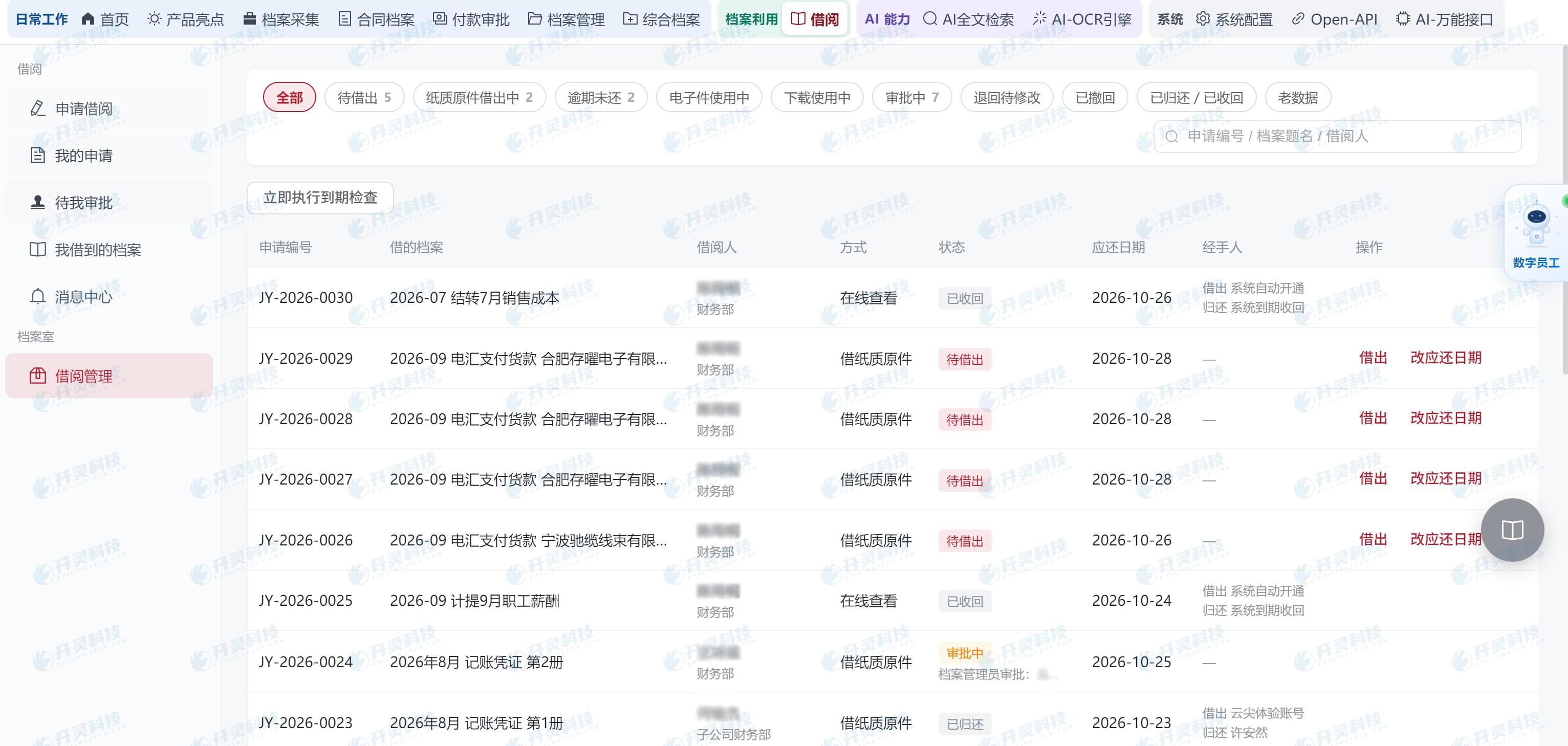
Headquarters auditors, subsidiary finance staff, archive administrators and ordinary business staff need different scopes. You should test whether cross-organization search requires authorization, what permissions exist for borrowing approval, viewing, downloading or printing respectively, and whether operations leave a trace. Sensitive invoices and personal information also need visibility restricted by role.
The Kailing Technology system supports archive search and access management. During evaluation, have headquarters auditors and subsidiary archivists separately query the same voucher, and check whether they can find the documents they should see, cannot see documents they should not see, and whether every use is recorded.
▍Use five types of transactions for final evaluation
Optional samples include normal reimbursement by a single company, shared expenses across companies, multiple invoices for one voucher, late-arriving receipts, and cross-year access. Check material receipt, linking, four-property detection, archive number, permissions, and search results item by item. If a sample can only be found by manually locating attachments offline, list the interface or rule as an implementation task.
System selection should not compare only homepage feature points. For medium and large enterprises, the key to long-term usability is clear organizational boundaries, accurate associations, the ability to handle exceptions, and the ability to find all materials by authorization during audit review.
▍Archive use is the final test of selection
Have headquarters audit initiate a cross-organization query to check whether only authorized-scope documents are obtained and whether original attachments can be found from the voucher; have subsidiary finance access the company's historical archives to check whether search and borrowing are convenient.
The system should also be able to display four-property (authenticity, integrity, usability, and security) detection exceptions, archiving progress, and retention period expiry items. What medium and large enterprises face is not a one-time import, but long-term continuous operation.
Through sample acceptance of organization, interfaces, archiving, permissions, and utilization, enterprises can more clearly judge how the Kailing Technology solution fits into the existing group financial architecture.
▍Migration and ongoing operations must also be evaluated
Group archive systems often need to receive multi-year existing files. During migration, old file numbers, organizations, years, and attachment relationships should be retained, and readability should be spot-checked.
As new documents continue to arrive every day, who handles the four-property anomalies, who maintains classification rules, and who reviews cross-organization borrowing should also be clearly written at the selection stage.
Kailing Technology solutions can set up processes around these long-term tasks, preventing the archive repository from gradually falling into disorder after project acceptance.
If the group plans to go live in phases, it can first select two subsidiaries with different organizational structures for a pilot: one uses a unified ERP, and the other retains an independent financial system. After completing archiving and cross-organization access tests respectively, then formulate group rules and a migration plan. The headquarters confirms permissions and operation and maintenance division of labor accordingly, and accepts item by item.
▍FAQ
Q: Can the group uniformly query subsidiary archives?
A: Summary retrieval can be established based on organization and role authorization while retaining the ownership of each legal entity's materials.
Q: Must all subsidiaries use the same ERP?
A: Not necessarily; upstream interfaces, fields, and receiving methods need to be confirmed one by one.
Q: How do you verify permission isolation?
A: Use accounts for different roles to test retrieval, viewing, downloading, and operation logs for the same materials.
Visit Kailing Technology to learn about related products and implementation plans: https://www.kailingteck.com/eaa/ .
As a national high-tech enterprise, Kailing Technology focuses on the digital and intelligent transformation of enterprise business-finance-tax and operations management, providing software products, system integration, implementation and delivery, and operational services for various government agencies, institutions, group enterprises, and SMEs.
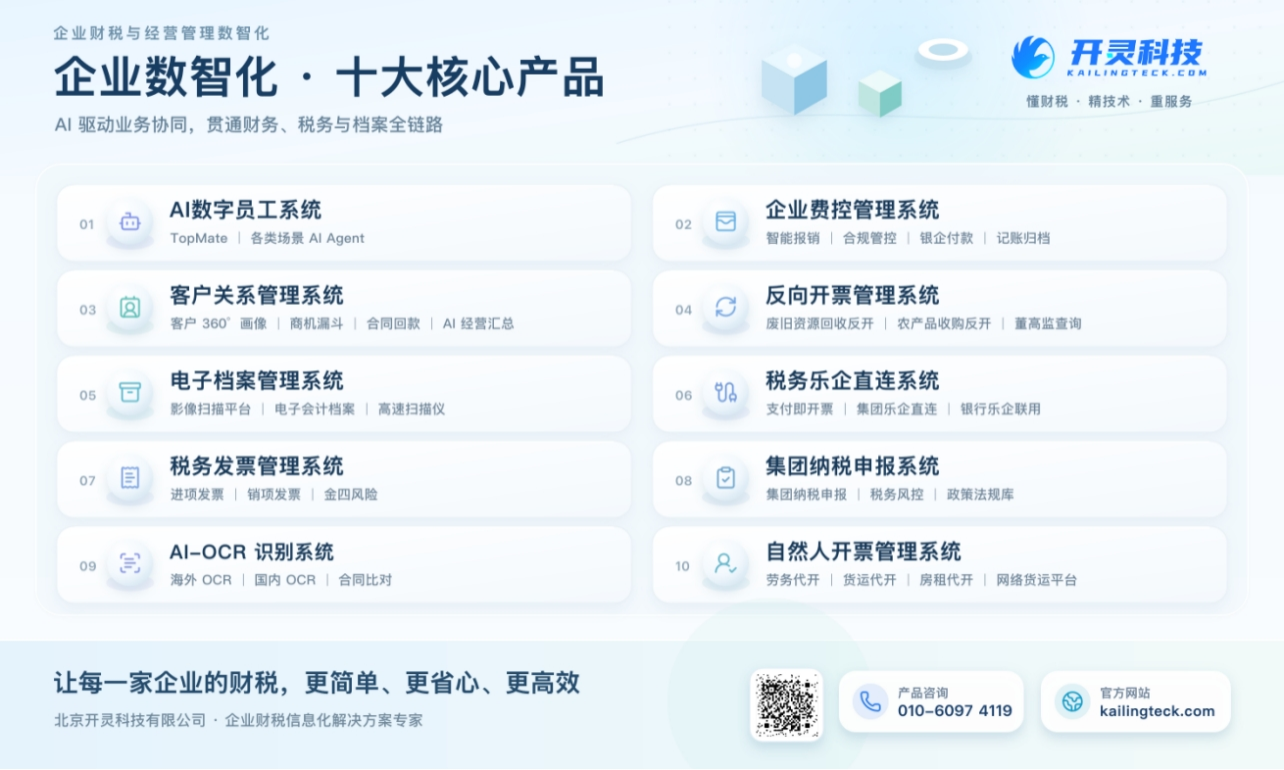
The company has now formed ten core product lines, including: AI digital employee system, enterprise expense control management system, customer relationship management system, reverse invoicing management system, invoice issuance for individuals management system, electronic archives management system, tax fully digitalized e-invoice Leqi system, tax invoice management system, group tax filing system, and AI OCR recognition system. It is committed to connecting enterprise business, finance, tax, funds, and archive data to help customers improve operational efficiency, business-finance-tax compliance capabilities, and digital management levels.
If you have any business-finance-tax digital transformation needs, welcome to contact us. Beijing Kailing Technology will serve you wholeheartedly.
Keywords: Electronic accounting archive selection for medium and large enterprises, multi-organization archiving, archive retrieval, Kailing Technology
As a comprehensive business-finance-tax digitalization solution service provider, Kailing Technology provides business-finance-tax management digital transformation products and operational services for various government agencies, institutions, and large, medium, and small enterprises. The product line includes: solutions for sales contract management system, procurement contract management system, fully digitalized Leqi interface project, automatic output invoicing system, reverse invoicing system, invoice issuance for individuals system, employee expense control and reimbursement system, input VAT invoice management system, supply chain collaborative reconciliation system, image AI OCR recognition system, automatic financial bookkeeping system, electronic accounting archives system, etc., comprehensively driving the digitalization process across various fields.
Consultation Hotline: 18513895936 / 010-60974119 Location: Beijing