
A batch of used mobile phones includes multiple devices; after quality inspection, how do you reconcile the settlement amount? Kailing Technology's resource recycling five-flow-in-one compliance management platform links the goods list, acceptance, and payment
When a batch of used mobile phones arrives at the store, the seller quotes a whole-batch price; after testing, however, each device differs in condition, capacity, and functional status. If the quality inspection list and settlement each keep only one summary table, it will be hard to explain later why the actual payment differs from the initial quote. Kailing Technology's resource recycling five-flow-in-one compliance management platform retains device details, acceptance conclusions, and payments by purchase batch.

▍A batch with multiple devices needs a per-device list first
The acquisition slip records the seller and transaction batch, and the device details should at least distinguish brand and model, capacity, appearance and identifiable device number. When collecting photos, serial numbers or other applicable identifiers on site, prevent duplicate entry and mix-ups; devices involving personal information should also complete data clearing and security processing according to enterprise rules before acceptance.
The batch number is responsible for grouping multiple devices under the same seller, and the per-device identifier is responsible for explaining price differences and subsequent whereabouts. If a machine is returned on the spot, the list marks it as not acquired, rather than only changing the total count. In this way the final payment scope has a basis at the goods level.
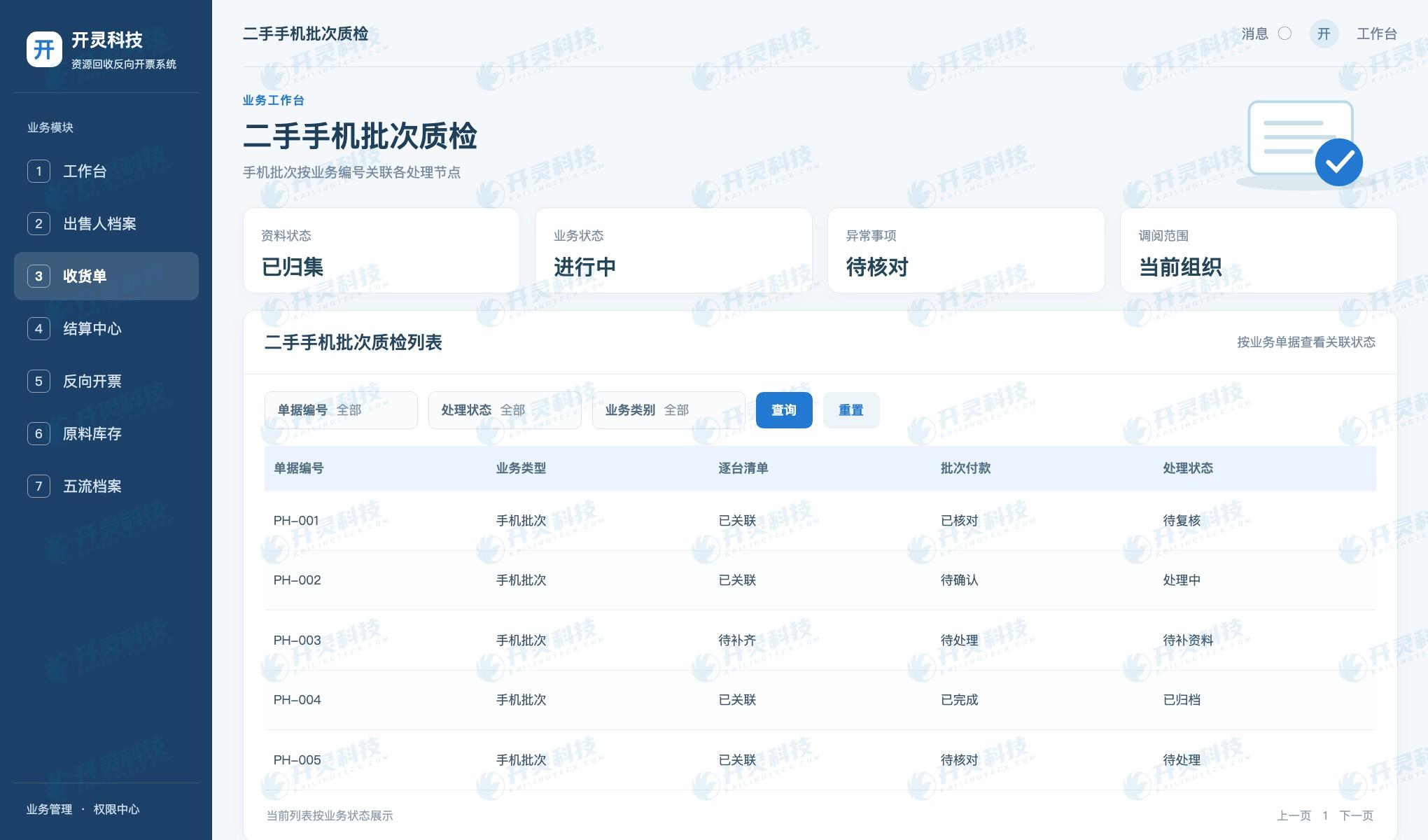
Used mobile phone quality inspection business list
▍Quality inspection differences enter the confirmation process
Inspection can separately record screen, battery, appearance, function and repair traces, forming a grade and per-device quote. The initial quote, the post-inspection quote and the reason for changes are all kept, and the payable amount is aggregated after the seller confirms. For devices that cannot be powered on, are locked or have questionable origin, settlement should be suspended and additional verification required; they must not be mixed into the payment for other qualified machines.
Acceptance results are core evidence of goods flow. With only a statement of "accepted", finance cannot know how the batch total is formed; with clear device-by-device inspection and price mapping, even if the whole batch is paid at once, each device can still be back-calculated from the total payment.
▍Payment covers only confirmed devices
Finance forms payment tasks from confirmed purchase orders and verifies the actual seller and receiving account. After the bank receipt is written back, the system records the batches and amounts covered by the payment. If some equipment in a batch is pending review, settlement can first be made based on the accepted portion confirmed by both parties, while marking the unsettled equipment; the entire batch must not be set to paid with one click.
Reverse invoicing or applicable invoice handling must be based on real transactions, seller eligibility, and confirmed amounts. If the invoice amount differs from the batch settlement, first check whether it is a return, a price reduction, or installment payment, then complete the invoice-payment review.
▍Five-flow materials are more than one list
The Kailing platform links natural person identity, transaction confirmation, devices and quality inspection, and funds and invoices by batch. When checking a payment, you can see which phones were actually received in that batch, and when checking a single device, you can return to the seller and payment batch. Batch-level archives and per-device lists work together to avoid matching only totals at the financial level.
Subsequent repair, graded warehousing, transfer, and sales are inventory destinations. Corresponding devices continue to record status along the unique identifier, making it easy to detect anomalies such as one device appearing in two batches or a returned device being warehoused.
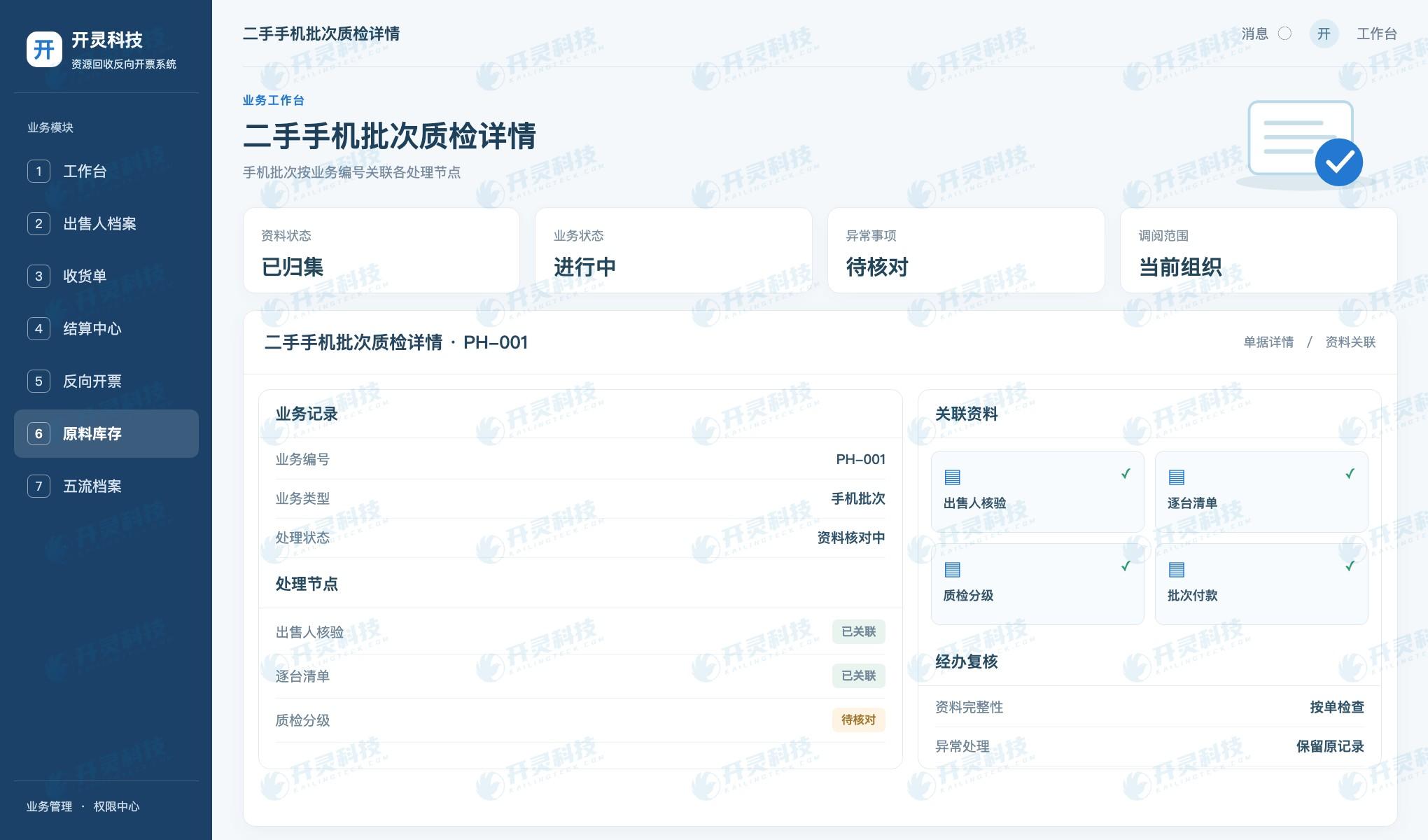
Linking second-hand phone quality inspection documents with materials
▍Exceptions must be traceable to specific devices
Enterprises can process items in groups of "pending quality inspection, pending confirmation, pending payment, invoice-payment discrepancy, duplicate device." When one machine is downgraded, only review the impact of that machine and the batch total, without redoing all device materials; if the seller disagrees, record the negotiation and return results.
The management value of the Kailing Technology solution is to break bulk acquisitions into verifiable per-unit facts, and then aggregate those per-unit facts into payable, invoiceable transactions. What it reduces is the work of searching for discrepancies after the fact; it does not replace on-site physical inspection of the actual machines.
▍Verify in both directions: whole batch and single device
At launch, take a test transaction containing normal devices, downgraded devices, and returned devices. First trace back from the batch payment to the prices of all received devices, then from any device to its photos, quality inspection conclusions, settlement, and inventory status. If the total amount is correct but a returned device is still included, the business chain is not yet closed.
Finance, quality inspection, and warehouse each verify the nodes they are responsible for, and finally the purchase order summarizes the status. After personnel changes, new handlers can also explain why this payment was made this way by following the number.
▍How to avoid disputes between quotation and final inspection
Stores can first save a preliminary quotation, and then confirm the final price device by device after inspection is completed. If screen cracks, repair traces, or network locks lead to price reductions, the inspection items, images, and quotation changes must be retained together. Sellers often find it hard to accept seeing only a shrunken whole-batch amount; item-by-item details are easier to explain.
Bulk acquisitions may be sold by corporate customers or natural persons, and the invoice paths for different entities should be checked separately. Five-flow management needs to check the actual seller, goods, transaction confirmation, payment and invoice relationships, and does not treat all batches uniformly under the same reverse invoicing rules.
Quality inspectors and payment approvers should have separate roles. After the quality inspection conclusion is modified, the system recalculates the batch total and prompts finance to review, avoiding old payment instructions still being issued at the initial quotation.
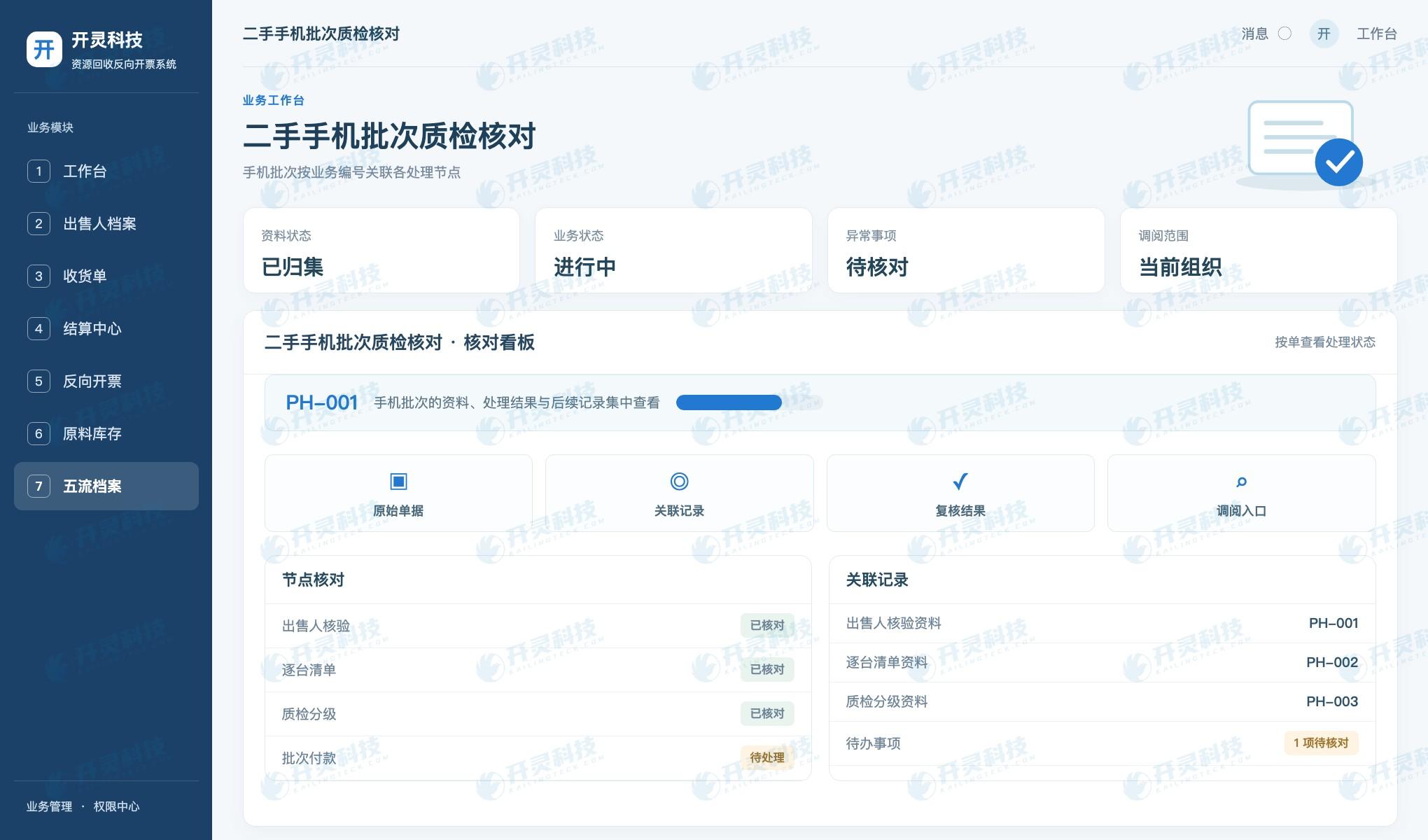
Verifying second-hand phone quality inspection checkpoints
▍Device identifiers connect the goods destination
After each machine completes acceptance, it enters the status of pending clearing, repair, graded stocking or return. The serial number or an enterprise-recognized unique identifier runs through these steps; when a batch of devices is split into multiple sales batches, it can still be traced back to the original acquisition slip.
If the device identifier cannot be read, on-site staff can use photos, seals, and temporary numbers, but must record the reason it cannot be read and subsequent completion. Simply describing it as "one phone" cannot support duplicate detection, inventory counting, or after-sales returns.
Payment records are linked to transaction batches, and inventory records are linked to devices; only when both layers of relationships exist can every device be explained from a single payment, and every payment be traced from a single device.
▍Exception handling should allow partial completion
For example, of ten phones, eight pass, one is pending verification, and one is returned. The system should let the eight enter confirmed settlement, keep the pending-verification phone open, and have a handover record for the returned phone. Showing only "completed" or "not completed" for the whole batch would conceal the real progress.
When finance verifies the payable amount of a batch, only confirmed equipment is included; when pending-review machines are subsequently received, changes are recorded on the original batch or a supplementary order. Invoices and payments are verified separately for the actual coverage.
The Kailing Technology platform places this parallel batch-and-single-device structure in the five-flow archives, helping purchasing, quality inspection, warehouse, and finance collaborate under the same set of facts.
▍Review when inventory and settlement are inconsistent
A mobile phone has completed payment but still shows as pending quality inspection, possibly because the status was not synchronized; a phone that has been returned but shows as stocked may mean the goods scope is wrong. Finance and the warehouse should first check by device identifier, then decide which side to correct.
Quality inspection photos, detection time, and operator can help explain disputes. Enterprises can restrict direct modification after final inspection confirmation; when changes are truly needed, review is required and the original conclusion is retained, preventing a whole-batch payment from being silently repriced in the backend.
▍Per-device price differences must be explainable
After a whole-batch payment succeeds, if individual phones are found not to have actually been stocked, first check the returned, pending-repair and temporary-storage status, then handle the difference according to the business agreement. Both the original quality inspection and the original payment records should be kept.
The batch total price and the sum of per-device prices should be reconcilable and consistent; a single final payment receipt cannot alone prove that every device has completed acceptance.
▍FAQ
Q: Can a whole-batch purchase retain only one total price?
A: The total price can be used for settlement, but a per-device list, acceptance differences, and the basis for the summary should be retained.
Q: If one device is pending review, can the other devices be paid first?
A: Record settlement and payment separately according to the confirmed scope, and retain the status of devices pending review.
Q: Should returned mobile phones still enter inventory?
A: It should not be treated as purchased inventory; keep return records to explain changes in batch quantities.
Visit Kailing Technology to learn about related products and implementation plans: https://www.kailingteck.com/fxzy/ .
As a national high-tech enterprise, Kailing Technology focuses on the digital and intelligent transformation of enterprise business-finance-tax and operations management, providing software products, system integration, implementation and delivery, and operational services for various government agencies, institutions, group enterprises, and SMEs.
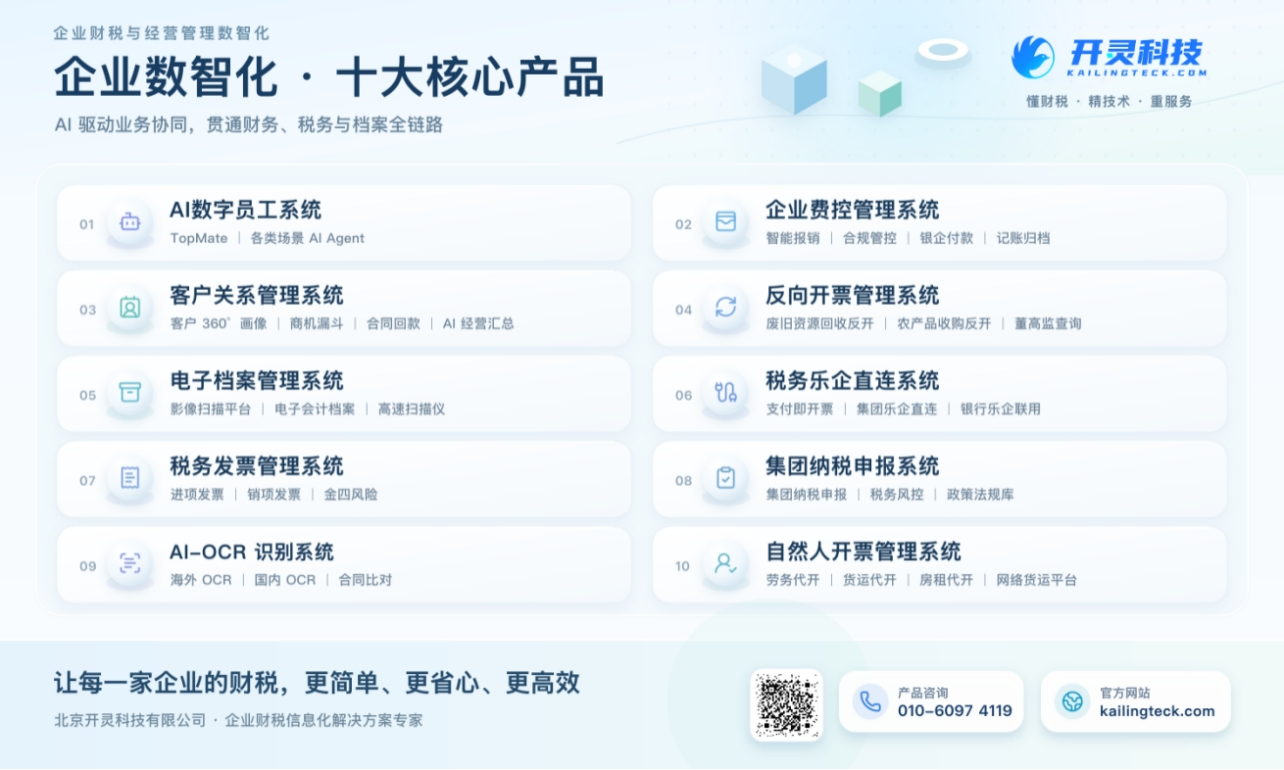
The company has now formed ten core product lines, including: AI digital employee system, enterprise expense control management system, customer relationship management system, reverse invoicing management system, invoice issuance for individuals management system, electronic archives management system, tax fully digitalized e-invoice Leqi system, tax invoice management system, group tax filing system, and AI OCR recognition system. It is committed to connecting enterprise business, finance, tax, funds, and archive data to help customers improve operational efficiency, business-finance-tax compliance capabilities, and digital management levels.
If you have any business-finance-tax digital transformation needs, welcome to contact us. Beijing Kailing Technology will serve you wholeheartedly.
Keywords: Batch purchase of used mobile phones, quality inspection settlement, five-flow-in-one, device list, Kailing Technology
As a comprehensive business-finance-tax digitalization solution service provider, Kailing Technology provides business-finance-tax management digital transformation products and operational services for various government agencies, institutions, and large, medium, and small enterprises. The product line includes: solutions for sales contract management system, procurement contract management system, fully digitalized Leqi interface project, automatic output invoicing system, reverse invoicing system, invoice issuance for individuals system, employee expense control and reimbursement system, input VAT invoice management system, supply chain collaborative reconciliation system, image AI OCR recognition system, automatic financial bookkeeping system, electronic accounting archives system, etc., comprehensively driving the digitalization process across various fields.
Consultation Hotline: 18513895936 / 010-60974119 Location: Beijing