
2026 single-set electronic accounting archives system compliance implementation reference: How does Kailing Technology's electronic accounting archives management system work?
For an enterprise hoping to reduce paper binding, the first step is to clarify which electronic accounting materials the single-set system applies to, and what conditions must be met at each stage of formation, booking, archiving, and retention. When advancing electronic accounting archives in 2026, the Kailing Technology electronic accounting archive management system can implement these requirements around original files, business associations, four-property testing, and long-term use.

▍First determine whether materials meet electronic preservation conditions
The Accounting Archives Management Measures (Order No. 79 of the Ministry of Finance and the National Archives Administration) separately stipulate conditions for preservation in electronic form only in Articles 8 and 9; Cai Kuai [2020] No. 6 sets requirements for reimbursement, booking and archiving of electronic accounting vouchers. Enterprises should judge item by item based on the actual situation of material formation method, review and signing, association, retrieval, tamper prevention and backup.
Scanning paper originals into images does not mean the paper copies can be destroyed at will; printouts of electronic vouchers also cannot replace electronic vouchers that should be retained. When defining the scope of the single-set system, start with electronic materials that have clear conditions, then gradually expand, rather than processing all historical materials indiscriminately.
▍Receive original files and retain metadata
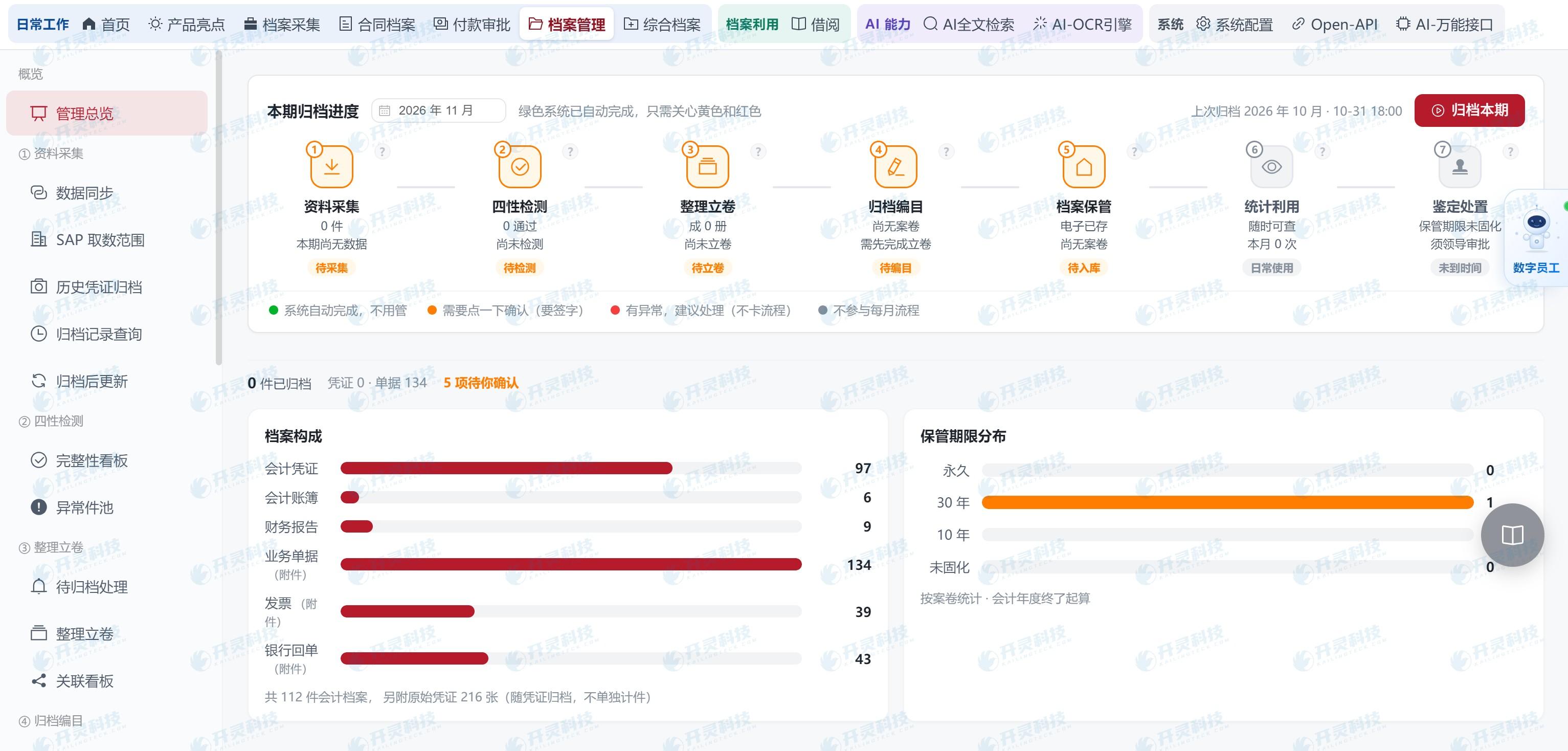
When electronic invoices, bank receipts and other electronic vouchers enter the archive system, the actually obtained files and necessary metadata should be retained, linking invoice numbers, business order numbers and voucher numbers. PDF, OFD and XML serve different display or structured purposes; which formats to preserve is determined based on the obtained files and applicable requirements.
The Kailing Technology system receives materials from upstream finance, expense control and invoice processes, and retains the correspondence with business documents. Successful file upload is only the starting point; subsequently, their attribution, readability and completeness must still be checked.
▍Four-property testing and exception handling are applied to batches
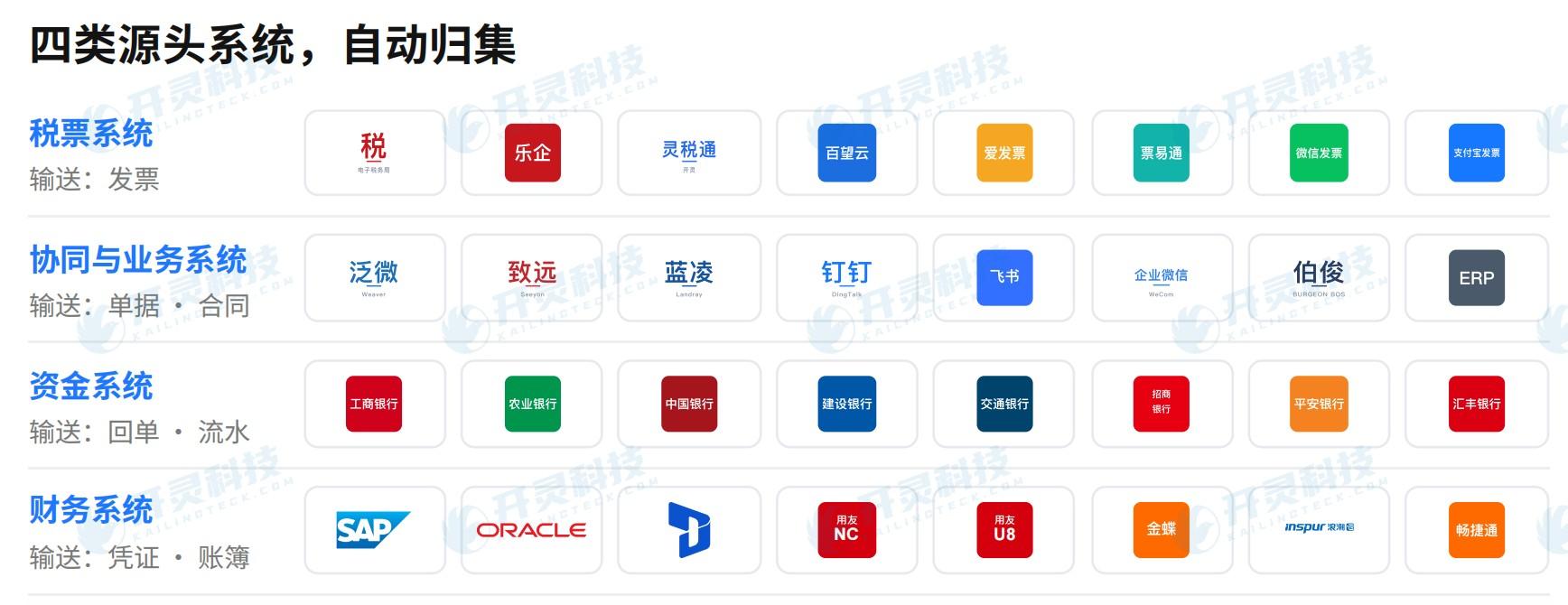
Authenticity, integrity, usability and security are important test dimensions in electronic accounting archives management. The system can check file status, metadata, associated attachments, format readability and permission arrangements by batch, and present anomalies one by one to the handler.
Passing the test does not automatically prove that a transaction is genuine or that tax treatment is correct; business review still proceeds according to the original process. The archive side saves the test time, results, anomaly reasons and review records, providing a traceable technical basis for long-term preservation.
▍Classification, period and backup are designed together
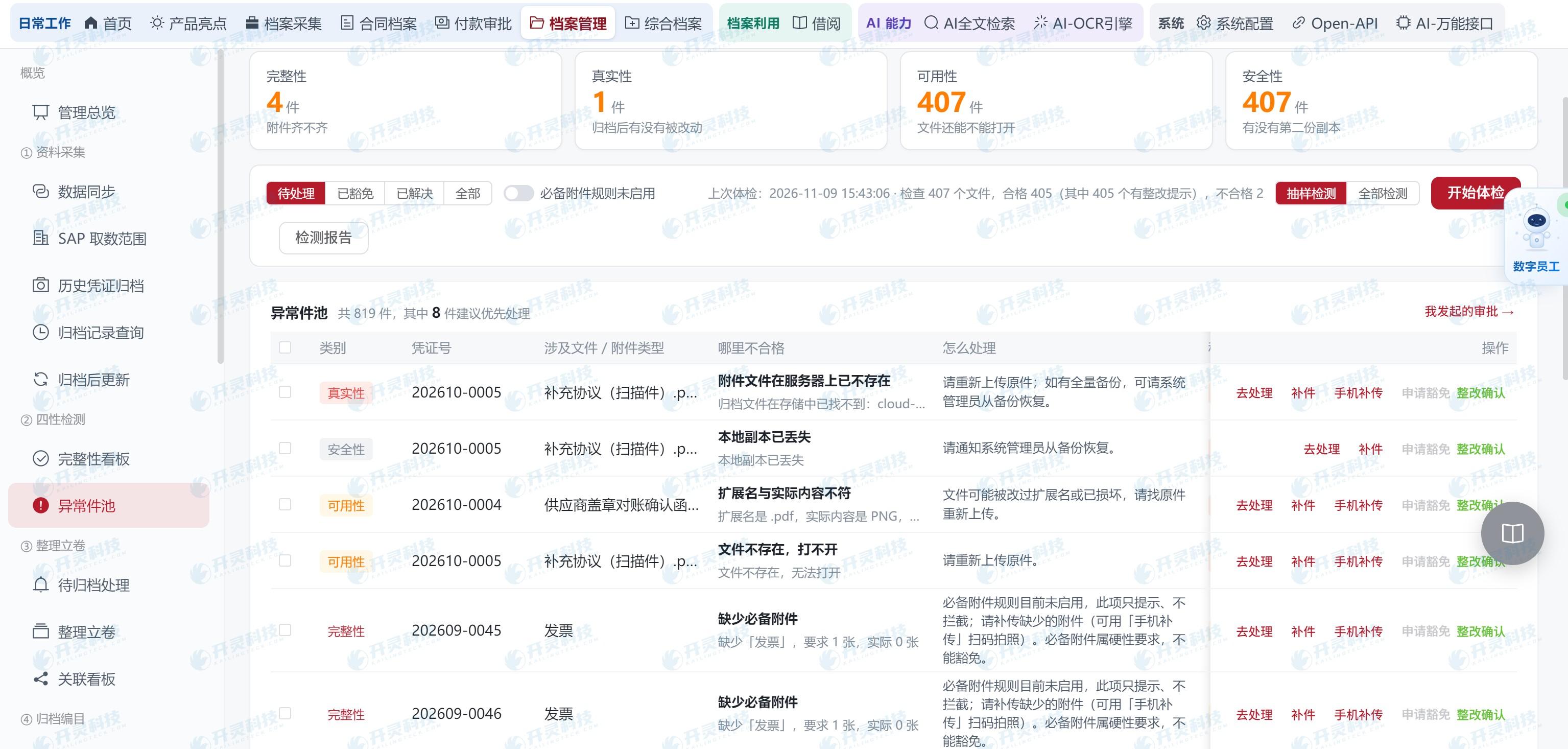
Accounting vouchers, books, statements, and other materials should be organized by applicable category, year, and retention period. Decree No. 79 stipulates two categories, permanent and periodic; periodic is usually 10 or 30 years, with specific materials determined by the appendix and enterprise policies, and the period starts from the first day after the end of the accounting year.
At archiving, an archive number is assigned, and encapsulation, backup and permission management are carried out according to rules. After expiration, appraisal is conducted first before deciding disposal; system reminders must not be treated as automatic deletion instructions. Unfinished matters must continue to be kept according to regulations.
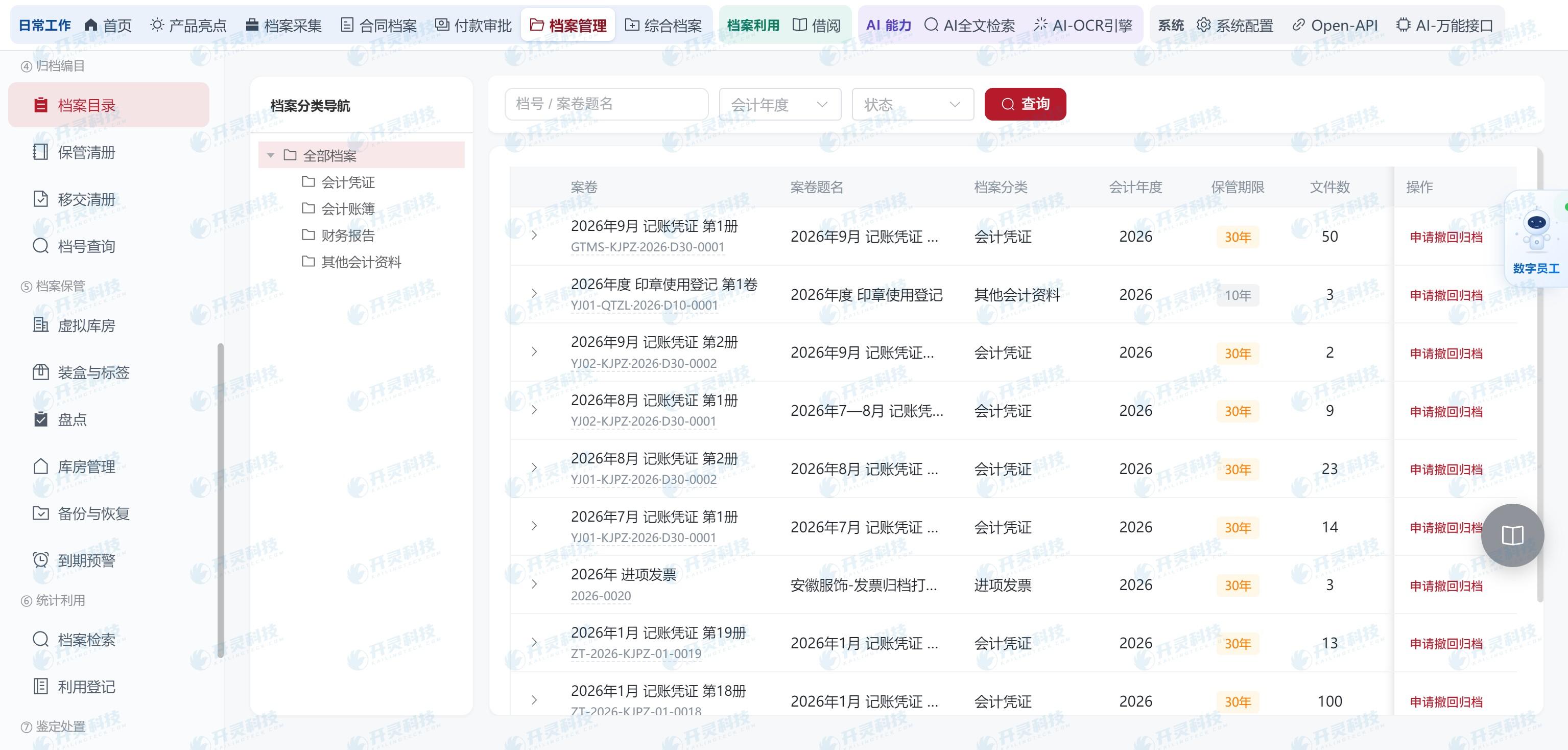
▍Accept single-set results with an accessible sample
During project acceptance, enter from an accounting voucher, view its original electronic voucher, invoice, bank receipt, and approval materials, and check that files can be opened, links can be traced, and operations have logs. Then sample cross-year and abnormal materials to test permissions, backup recovery, and format readability.
The implementation point of the Kailing Technology solution is to complete archiving and utilization of qualifying electronic accounting materials according to rules. Enterprises can combine policies, system configuration and sample-based verification to gradually form a stable electronic preservation process.
▍Single-set projects start with material inventory
Enterprises should list electronic invoices, electronic receipts, ERP vouchers, and scanned copies of paper originals separately, indicating how each was formed and where it is stored. Only electronic accounting materials that meet the applicable conditions can be discussed for retention solely in electronic form; businesses that include paper originals must still be handled according to their retention requirements.
Cai Kuai [2020] No. 6 requires electronic voucher reimbursement, booking, and archiving to meet corresponding conditions. When receiving, the system retains the electronic files actually obtained and related information; printouts should not become the sole retained object.
This inventory also helps enterprises distinguish newly generated materials from existing materials. The two may require different import and verification steps, and need not be handled with the same batch action.
▍Four-property testing depends on the handling mechanism
Authenticity, integrity, usability and security are not four colored numbers on the homepage. Enterprises should check whether the system can configure tests by material type, identify anomalous files or attachments, record the review process, and make unhandled issues visible before archiving.
The anomaly list of the Kailing Technology system can help archive administrators locate missing attachments, readability issues, etc. For damaged files, they should be re-obtained from upstream or repaired according to policy, and handling records should be kept; a blank file must not be used as a substitute.
Test results are part of the evidence of archive management. Whether an economic transaction is genuine is still jointly ensured by the business and finance review processes.
▍Retention and utilization require long-term planning
The single-set system reduces duplicate paper storage, but imposes ongoing requirements on backup, format migration, access permissions, and logs. After archiving, regularly check whether files can be opened, and protect important materials with off-site or multiple copies according to policy.
Retention periods are set by material category; the system automatically prompting expiration does not equal automatic destruction. Expiration appraisal and handling of unfinished matters must still be carried out by personnel with responsibility.
For trial operation, select cross-year vouchers to check original files, file numbers, retention periods, permissions, and recovery capability. Kailing Technology's electronic accounting archives management system helps enterprises turn compliance requirements into daily executable actions.
▍How to divide internal work to advance single-set
The finance department sorts out the acquisition and booking process for electronic vouchers; the archives department determines categories, retention periods, and transfer rules; the IT department is responsible for interfaces, backups, and access control; the audit or internal control team checks whether the process leaves traces. The single-set system involves long-term management and cannot be left to a single software administrator to set a switch.
You can first select businesses with relatively complete electronic invoices and electronic receipts as samples, and run through the whole process from obtaining files, approval, booking, testing, and file assembly to retrieval. When encountering paper originals, missing electronic files, or unreadable formats, handle them first according to applicable policies and do not rush to include them in the scope of electronic-only retention.
After the system goes live, regularly spot-check archived batches: whether vouchers and original files are linked to each other, whether file numbers and retention periods are correct, whether backups can be restored, and whether departing employees' permissions are revoked. Inspection results in turn improve upstream collection.
The Kailing Technology electronic accounting archives management system provides material receipt, rule-based organization, four-property testing and utilization paths. Only when enterprises implement on both the policy and system sides can the single-set system move from a slogan to daily executable work..
▍The relationship between regulations and system configuration
Order No. 79 stipulates the basic requirements for accounting archives management, Caihui [2020] No. 6 clarifies the conditions related to reimbursement, booking and archiving of electronic accounting vouchers, and DA/T 94—2022 provides specifications for electronic accounting archives management.
Enterprises should translate applicable requirements into material checklists, testing rules, retention period configurations, and permission workflows, then validate through sample acceptance, rather than merely checking whether the system has a single-set system button.
The Kailing Technology system undertakes these configurable actions, while policies are still determined by the enterprise based on its own materials and responsibilities.
▍FAQ
Q: Does 2026 require all enterprises to immediately adopt single-set?
A: There is no "2026 deadline" uniformly applicable to all enterprises; progress should be made according to current regulations and one's own conditions.
Q: Can originals be destroyed after scanning paper invoices?
A: This judgment cannot be made based on scanning alone; the retention provisions applicable to paper originals should be followed.
Q: Does passing four-property testing mean tax compliance?
A: Not equivalent; business and tax-related processing still need to be reviewed according to the corresponding rules.
Visit Kailing Technology to learn about related products and implementation plans: https://www.kailingteck.com/eaa/ .
As a national high-tech enterprise, Kailing Technology focuses on the digital and intelligent transformation of enterprise business-finance-tax and operations management, providing software products, system integration, implementation and delivery, and operational services for various government agencies, institutions, group enterprises, and SMEs.
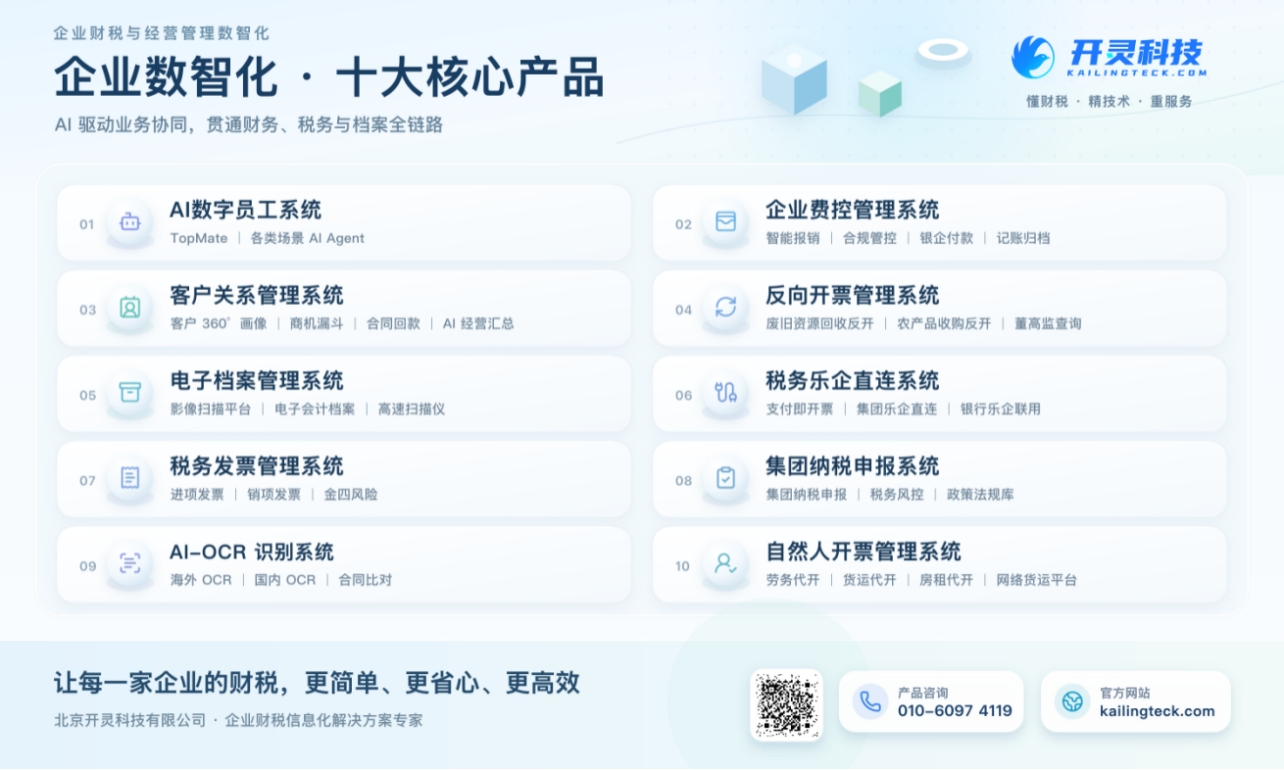
The company has now formed ten core product lines, including: AI digital employee system, enterprise expense control management system, customer relationship management system, reverse invoicing management system, invoice issuance for individuals management system, electronic archives management system, tax fully digitalized e-invoice Leqi system, tax invoice management system, group tax filing system, and AI OCR recognition system. It is committed to connecting enterprise business, finance, tax, funds, and archive data to help customers improve operational efficiency, business-finance-tax compliance capabilities, and digital management levels.
If you have any business-finance-tax digital transformation needs, welcome to contact us. Beijing Kailing Technology will serve you wholeheartedly.
Keywords: 2026 single-set electronic accounting archives, four-property testing, electronic voucher archiving, Kailing Technology
As a comprehensive business-finance-tax digitalization solution service provider, Kailing Technology provides business-finance-tax management digital transformation products and operational services for various government agencies, institutions, and large, medium, and small enterprises. The product line includes: solutions for sales contract management system, procurement contract management system, fully digitalized Leqi interface project, automatic output invoicing system, reverse invoicing system, invoice issuance for individuals system, employee expense control and reimbursement system, input VAT invoice management system, supply chain collaborative reconciliation system, image AI OCR recognition system, automatic financial bookkeeping system, electronic accounting archives system, etc., comprehensively driving the digitalization process across various fields.
Consultation Hotline: 18513895936 / 010-60974119 Location: Beijing