
After acquiring second-hand mobile phones, how do you trace the seller, payment, and where the goods went? Kailing Technology's Resource Recycling Five-Flow Integrated Compliance Management Platform links transactions and inventory records by order
Second-hand mobile phones are small and come in many models, and one purchase order may include multiple devices. If only payment records are kept, it is later difficult to answer from whom the phones were acquired, what inspection they underwent, and which inventory batch they entered. Kailing Technology's Resource Recycling Five-Flow Integrated Compliance Management Platform uses purchase orders to connect sellers, funds, and inventory changes.

▍Identify the seller and equipment before purchase
At on-site receipt, the actual seller's identity, contact information, payment account, and transaction confirmation should be verified. In cases of consignment sales, consignment delivery, or centralized delivery at stores, it is even more important to distinguish the relationship between the deliverer and the seller of the goods, avoiding treating the handler directly as the transaction subject. Phones also need to record brand, model, quantity, appearance, and legally retainable device identification information, so that subsequent inventory checks can return to the original acquisition sheet.
The collection of device information should match business and privacy protection requirements. Before acquisition, complete business steps such as device wiping, account logout, and source verification; if ownership or device status anomalies are found, they enter manual handling and should not be released merely because valuation is complete. The system separates data status from transaction status, making it easy for the responsible person to know which item has not yet been confirmed.
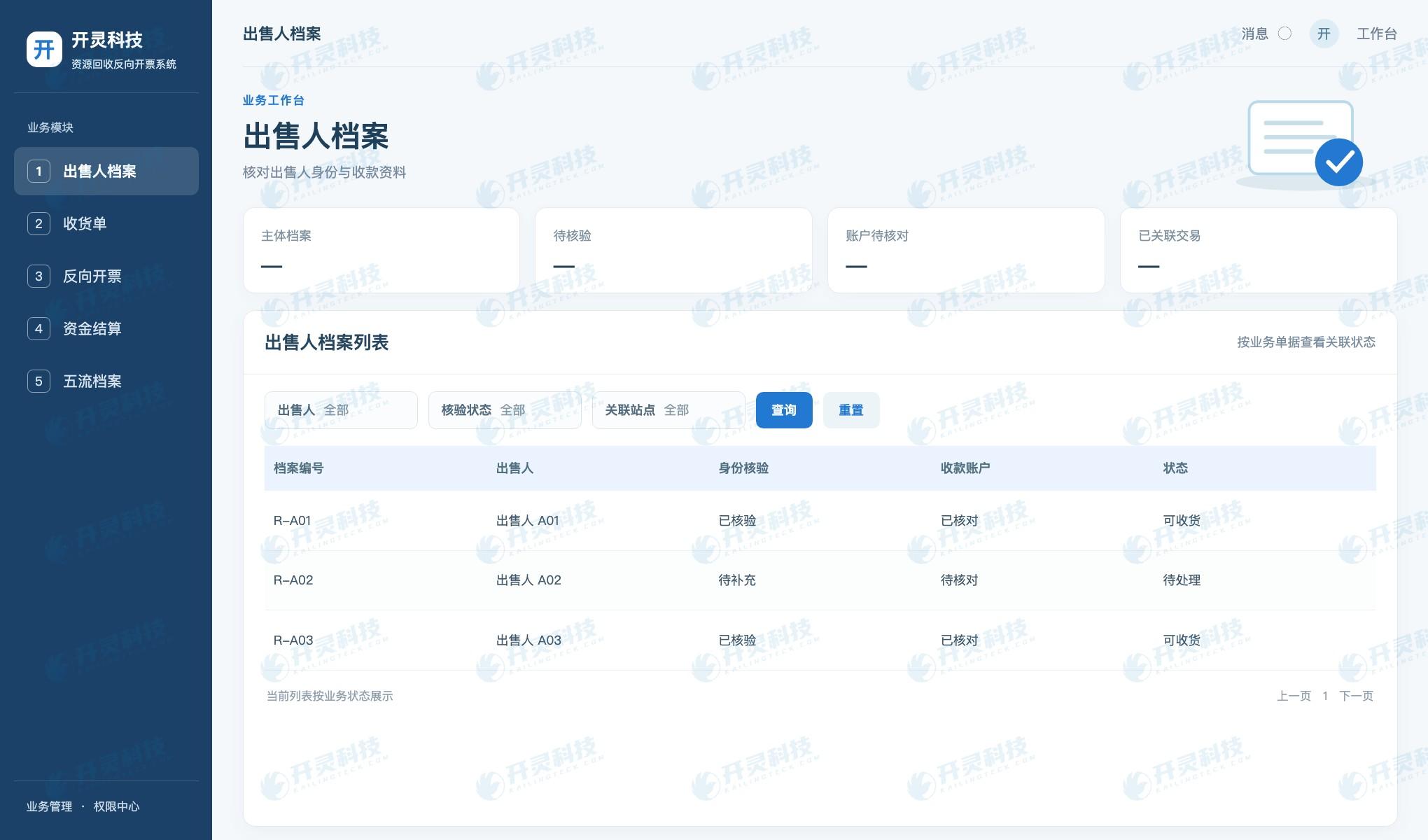
Seller files and payment materials
▍Device inspection valuation and payment keep the same order number
Multiple phones differ in condition, battery, screen, and repair history, so a single total price that cannot be broken down must not be recorded. The purchase order can record inspection results, initial estimates, adjustment reasons, and final confirmed amounts per phone or per batch. When one phone is returned, the payable amount for that phone should be adjusted accordingly, rather than deleting the entire order and creating a new transaction that appears unchanged.
The cashier pays based on the confirmed purchase results, and bank receipts should be linked to the actual seller's receiving account and corresponding order number. Installment payments, failed payments, or account changes each have different statuses; the funds page must retain each instruction and result. If the device has been received into inventory but payment is not fully settled, both the inventory and funds lines should be visible rather than overriding each other.
▍How warehousing, transfer, and outbound are tracked
After acceptance, equipment can enter inventory statuses such as pending inspection, pending refurbishment, sellable, dismantled, or returned. Each status change references the original purchase order and equipment batch, recording the responsible person, time, and destination. Even if multiple units are merged into one storage location, the original seller and purchase price must be traceable back from a specific unit or batch.
If phones enter repair, dismantling, or channel sales, the corresponding outbound, transfer, and transaction records should be retained. Five-flow integration management focuses not on keeping all phones permanently in one list, but on having a traversable association path among seller, goods, funds, documents, and subsequent business records. When inventory shortages occur, this can also narrow the scope of investigation.
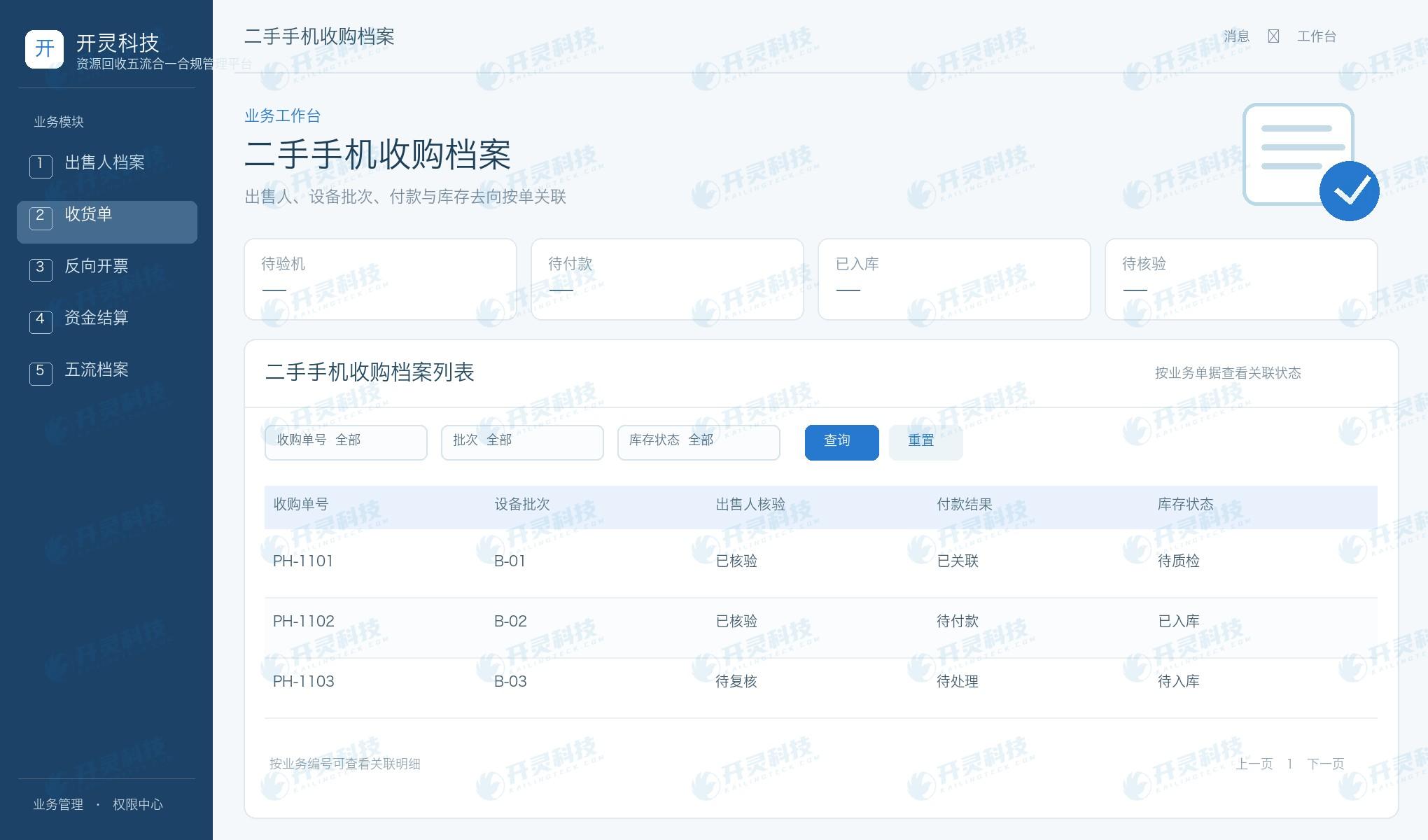
Second-hand mobile phone purchase orders link payment and inventory
▍Control invoice eligibility and business archives separately
Whether a second-hand mobile phone purchase can apply specific reverse invoicing rules should be judged transaction by transaction based on enterprise qualifications, actual transaction counterparties, and current policies; it does not automatically apply just because the platform name contains "resource recycling." Before submitting invoices, finance verifies the seller, items, settlement, and payment, then retains the relationship between invoice numbers and original orders. Different transaction types adopt corresponding invoice handling methods.
The Kailing Technology resource recycling five-flow integrated compliance management platform supports aggregating business evidence by order and can also trace back to the original purchase from inventory records. For subjects, equipment, or amounts requiring review, the system should maintain a pending status so that business and finance clearly know who verifies. Only when the material chain is complete and policy eligibility judgment is also completed can there be an explainable transaction archive.
▍Include abnormal equipment in acceptance scenarios
During implementation, run trial operations with five types of samples: one order with multiple phones, single-unit return, phone delivered on behalf of another, failed payment, and transfer after inbound. Have purchasers find the original seller from the device batch, finance find the original order from the payment, and the warehouse find the inbound record from the outbound. Every breakpoint in a path requires adding fields or clarifying responsibilities.
Daily reviews should focus on statuses such as "paid but not received into inventory," "received into inventory but seller pending verification," and "device whereabouts unknown." The business value of the Kailing Technology platform lies in keeping key evidence from small, high-frequency transactions on a single chain, reducing reliance on manually searching photos and chat records after the fact.
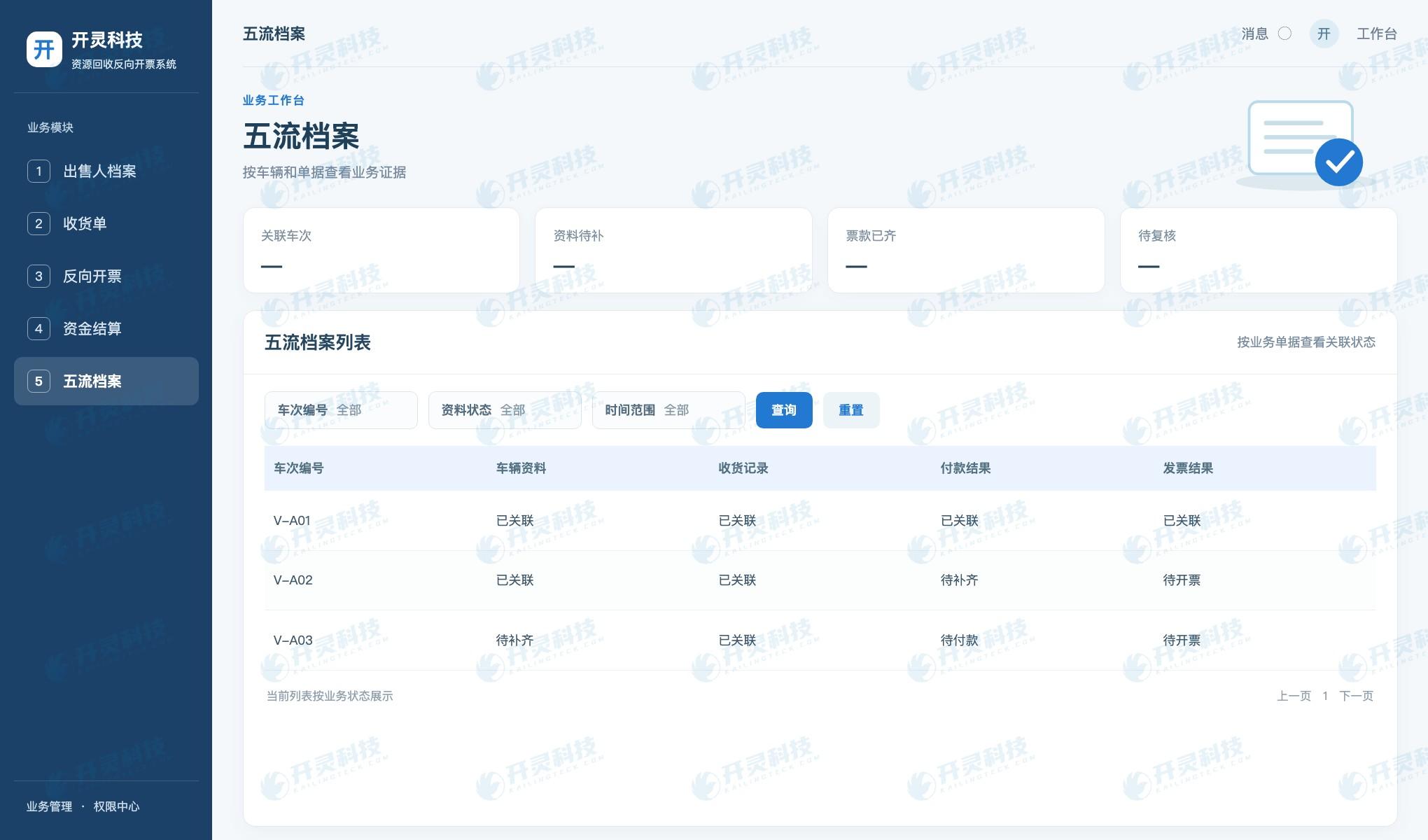
Collection and tracking of transaction evidence
▍Control exceptions in small-item, high-frequency purchases
Phone purchases also need to consider device status and after-sales returns. Devices should not be directly treated as sellable inventory before inspection is complete; when lock, functional failure, or ownership doubts are found, the status should switch to pending and communication with the seller recorded. If a device is returned, both inventory quantity and payable amount must be updated simultaneously, retaining the original purchase record.
Similar phone models are easily mixed up by carton number. Purchase orders can reference device serial numbers, internal enterprise device codes, or batch labels, but collection and display must comply with personal information and device data management requirements. When scanning into the warehouse, verify the original purchase batch; when outbound, record the channel and order number, so a single phone or single batch can be tracked in both directions.
When a single seller sells a relatively large number of devices at one time, business personnel should pay attention to the explanation of source, transaction frequency, and actual operating conditions, and finance should then determine the applicable invoice handling. The system can summarize the same seller's purchase count, quantity, and settlement status to provide review clues, but it cannot automatically give a tax conclusion based on quantity alone.
Inventory flow may cross warehouses and stores. Transfers, refurbishment, parts dismantling, sales, and returns each have different documents; finance does not need to rebuild the seller profile on every flow, but subsequent inventory records must be traceable back to the original purchase. If a quality dispute arises after the equipment is sold, procurement, warehousing, and after-sales can also verify along the same equipment chain.
Pilot acceptance should have the warehouse randomly pick up a phone already received into inventory and trace back to the deliverer, actual seller, device inspection results, payment, and corresponding documents; then trace back from a payment to the devices involved. Two-way querying is better than viewing a one-way list at finding numbering breaks, and is especially suitable for centralized acquisition scenarios across multiple stores.
▍Two directions for equipment and fund reconciliation
During warehouse inventory, enter from the device or batch code to confirm whether the phone is pending quality inspection, refurbished, in stock, transferred, or shipped out, then locate the original purchase order and seller. During financial reconciliation, enter from the payment transaction to confirm which phones the funds cover and whether there are returns or price adjustments. These two paths must point to the same fact in order to handle the complexity of many small items in multiple batches.
If a seller transacts at multiple stores, the platform can aggregate each purchase by natural person, but must still retain store, handler, and device details. When inventory is borrowed between stores, the transfer record must not be written as a new purchase; otherwise the original ownership and invoice relationships would be cut off.
For equipment suspected of duplicate entry, the system can flag identical equipment codes or similar characteristics for manual verification of whether it is a re-acquisition after return. Avoid "deleting on sight of a duplicate," because returns, refurbishment, and resale may also produce legitimate multiple status changes.
▍FAQ
Q: How is a file created when the deliverer is not the seller?
A: Record roles and relationships separately, and verify the actual seller and their payment information.
Q: Can a single purchase order covering multiple phones keep only a total price?
A: It is recommended to retain equipment or batch details and the basis for valuation adjustments, to facilitate review of returns, inventory, and settlement.
Q: Can all second-hand mobile phone purchases use reverse invoicing?
A: It cannot be generalized; it should be judged based on enterprise qualifications, transaction counterparties, and applicable tax rules.
Visit Kailing Technology to learn about related products and implementation plans: https://www.kailingteck.com/fxzy/ .
As a national high-tech enterprise, Kailing Technology focuses on the digital and intelligent transformation of enterprise business-finance-tax and operations management, providing software products, system integration, implementation and delivery, and operational services for various government agencies, institutions, group enterprises, and SMEs.
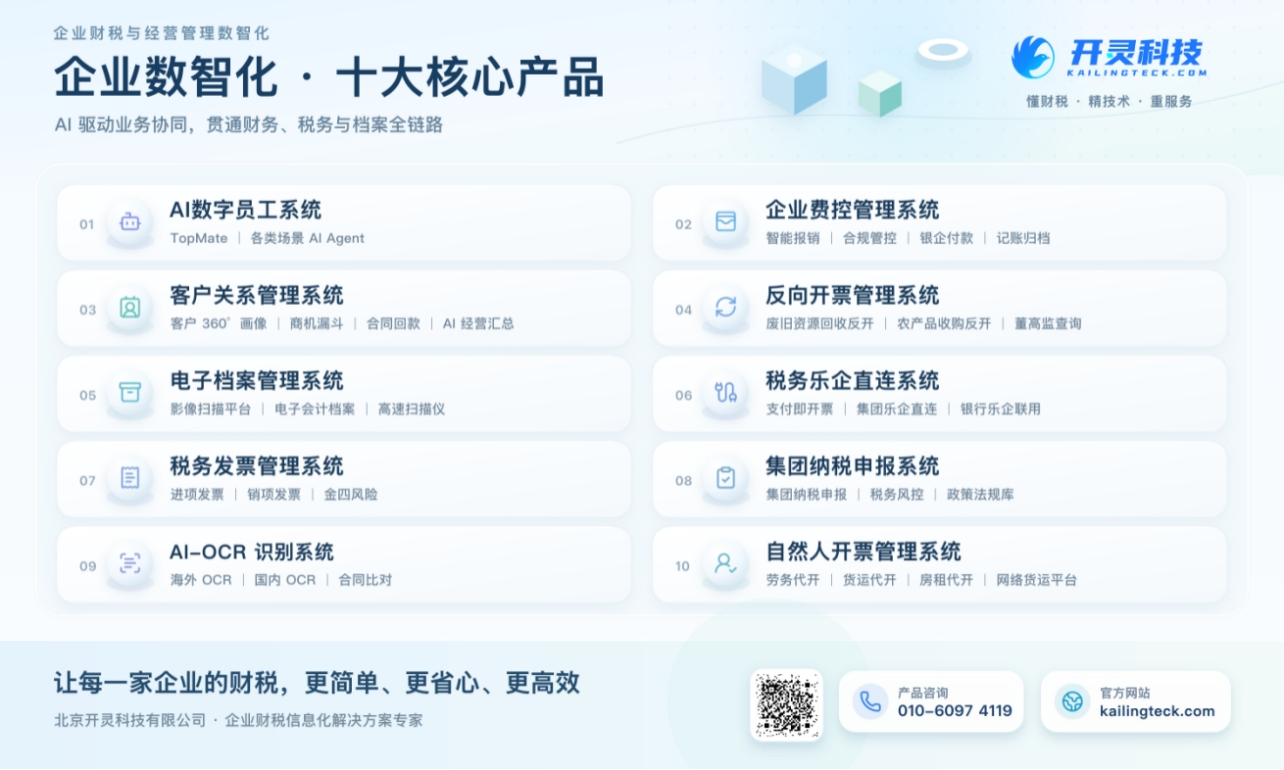
The company has now formed ten core product lines, including: AI digital employee system, enterprise expense control management system, customer relationship management system, reverse invoicing management system, invoice issuance for individuals management system, electronic archives management system, tax fully digitalized e-invoice Leqi system, tax invoice management system, group tax filing system, and AI OCR recognition system. It is committed to connecting enterprise business, finance, tax, funds, and archive data to help customers improve operational efficiency, business-finance-tax compliance capabilities, and digital management levels.
If you have any business-finance-tax digital transformation needs, welcome to contact us. Beijing Kailing Technology will serve you wholeheartedly.
Keywords: Second-hand mobile phone purchase, five-flow integration, seller verification, inventory tracking, Kailing Technology
As a comprehensive business-finance-tax digitalization solution service provider, Kailing Technology provides business-finance-tax management digital transformation products and operational services for various government agencies, institutions, and large, medium, and small enterprises. The product line includes: solutions for sales contract management system, procurement contract management system, fully digitalized Leqi interface project, automatic output invoicing system, reverse invoicing system, invoice issuance for individuals system, employee expense control and reimbursement system, input VAT invoice management system, supply chain collaborative reconciliation system, image AI OCR recognition system, automatic financial bookkeeping system, electronic accounting archives system, etc., comprehensively driving the digitalization process across various fields.
Consultation Hotline: 18513895936 / 010-60974119 Location: Beijing