
What should be done if electronic accounting archives cannot be opened after long-term storage? Kailing Technology's electronic accounting archive management system verifies material usability through four-property testing and exception handling

After electronic accounting archives have been stored for many years, the greatest fear is discovering only when an audit needs them that files are corrupted, formats cannot be opened, or attachments are missing. Kailing Technology's electronic accounting archive management system arranges four-property testing and exception handling in the receipt, custody, and utilization stages, turning "stored" further into "still verifiable and usable later."

▍What exactly does the four-property testing check
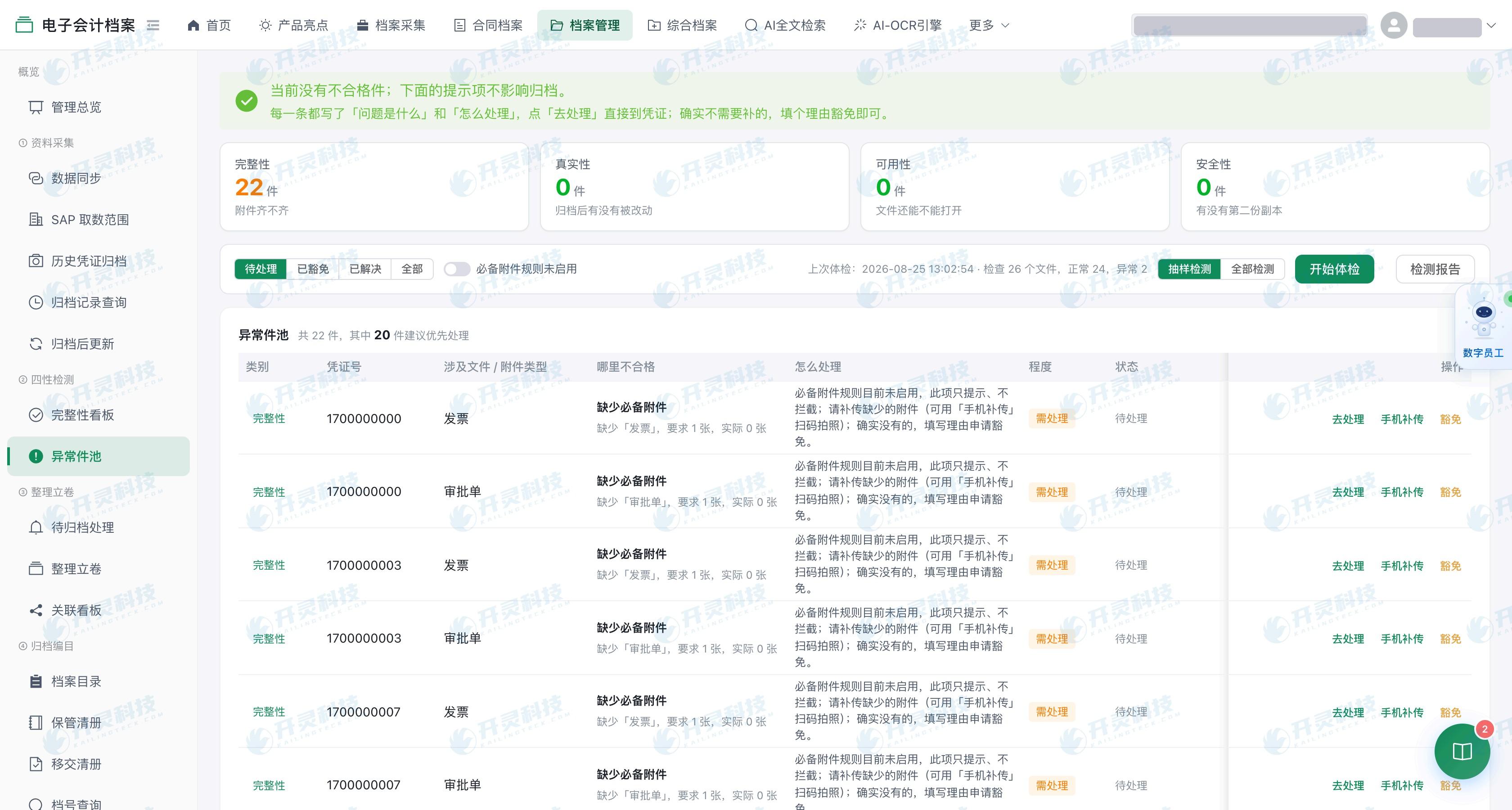
The four properties of electronic accounting archives refer to authenticity, integrity, usability, and security. Authenticity focuses on whether files correspond to their formation process; integrity checks whether files and metadata that should be archived are complete; usability focuses on format, opening, and reading capability; security verifies permissions, storage, and protection measures.
When the system receives vouchers, invoices, receipts, and attachments, it can run the corresponding checks by archive category and record the batch, rules, results, and exceptions. The focus of checks differs by material type: electronic invoices require verification of the original file and essential information, scanned copies require checks on clarity and page count, and data received via interface requires verification of numbers and fields. The Kailing Technology system keeps the check results on the archive formation chain.
▍Long-term readability must be rechecked during the retention period
A file that can be opened today is not guaranteed to remain usable years later. Software versions, encoding formats, storage media, and permission configurations may all change. Enterprises can periodically spot-check file opening, display, and retrieval, and retain original files and conversion records before technical migration. If format conversion occurs, verify that content is consistent and traceable before and after conversion.
Usability checks also include whether the relevant metadata can still retrieve the original business. If an invoice file can be opened but has lost its voucher number, business order number, and accounting period, its value for access drops significantly. The Kailing Technology electronic accounting archives management system manages files together with archive catalogs and associations, reducing isolated files.
▍How to handle an exception once discovered
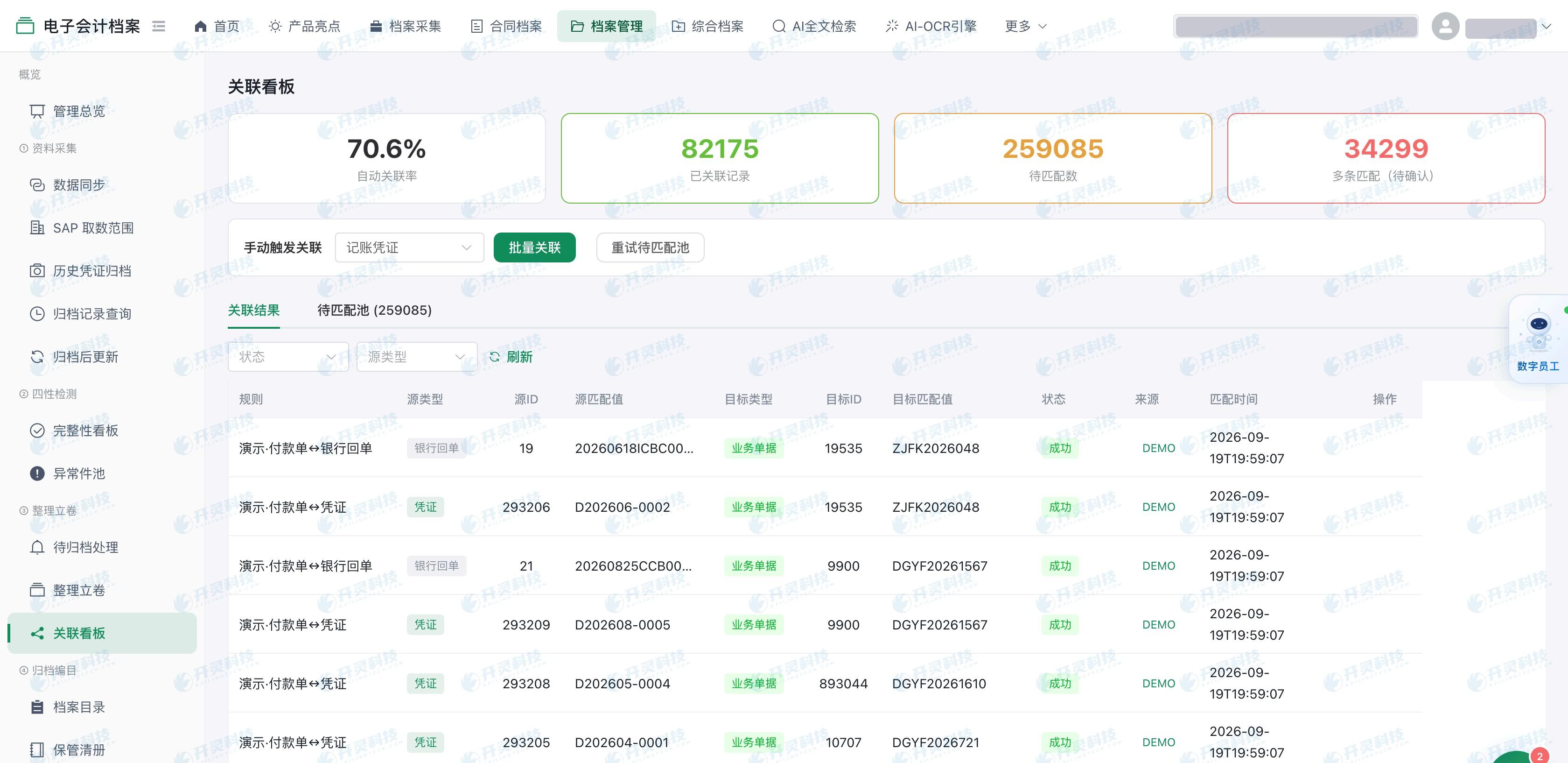
If testing finds file corruption, incomplete pages, signature verification exceptions, or permission configuration errors, they should enter a pending queue by type, marking the archives involved, impact scope, responsible person, and processing deadline. Files that can be re-obtained from upstream systems are supplemented and verified per process; those that cannot be repaired immediately retain an exception note and handling opinion.
Exception handling must not make reports look green by directly deleting failed records. Supplementing documents, re-receiving, format migration, or manual confirmation should all leave before-and-after versions. In this way, when an audit asks why an invoice from a certain month of a certain year was replaced, the system can provide a timeline.
▍Manage security and access permissions together
Long-term preservation is not just about backups. Enterprises must specify who can add, modify metadata, preview, download, and destroy archives, and must record operation logs. Important files should use appropriate verification, backup, and disaster recovery mechanisms to prevent accidental deletion or unauthorized tampering. The Kailing Technology system can link archive categories, retention periods, and permission rules.
When the organization is adjusted or positions change, authorizations also need updating. A person with approval authority for a certain month's reimbursements should not automatically have download permission for all historical accounting archives. Permission review works with four-property testing to ensure that materials remain under control while usable.
▍Long-term storage requires a continuously maintained mechanism
Enterprises can design spot check plans by archive formation year and file format. Newer e-invoices, historical scans, and attachments exported from old systems carry different risks, and the spot check ratio and frequency can be set according to policy. The system saves each testing task and result, continuously discovering problems with the same format or the same access channel, rather than fixing them one by one after retrieval fails.
Usability is not just about whether a file can be opened. Whether audio, images, or PDFs display completely, whether page numbers are complete, whether characters are garbled, and whether the correct file can be retrieved by archive number all affect actual access. When a certain format is found to depend on old software, IT and archive staff can evaluate migration or retain a usable reading environment.
Authenticity and integrity also change with supplemented documents. When an upstream system re-uploads a receipt, the system verifies the business number, file content, and receipt time, and must not overwrite old files merely because file names are the same. If duplicates, missing pages, or file corruption are found, exception records and the repair process should be archived together to form a traceable handling history.
Security checks can cover authorization changes, download records, backup status, and abnormal access. If an employee can still download historical vouchers after leaving, the permission rules need fixing; if a batch of archives lacks backups or fails verification, storage risks should be addressed first. The four-quality checks discover different problems from different perspectives and cannot rely on a single composite score.
Long-term preservation also involves retention periods and expiration appraisal. The four-property check helps confirm that materials remain usable during the retention period, while expiration handling is based on archive category, legal requirements, and appraisal opinions. A file must not be deleted simply because it cannot be opened, nor should unfinished appraisal procedures be skipped simply because the retention period has expired.
The Kailing Technology electronic accounting archives management system can route check exceptions into responsibility queues. Finance, archives, and IT handle missing business documents, catalog errors, and technical readability issues respectively, and jointly accept repairs. This turns long-term preservation from "someone is responsible for backups" into a management action with cycles, results, and reviews.
▍Schedule proactive inspections during the retention period
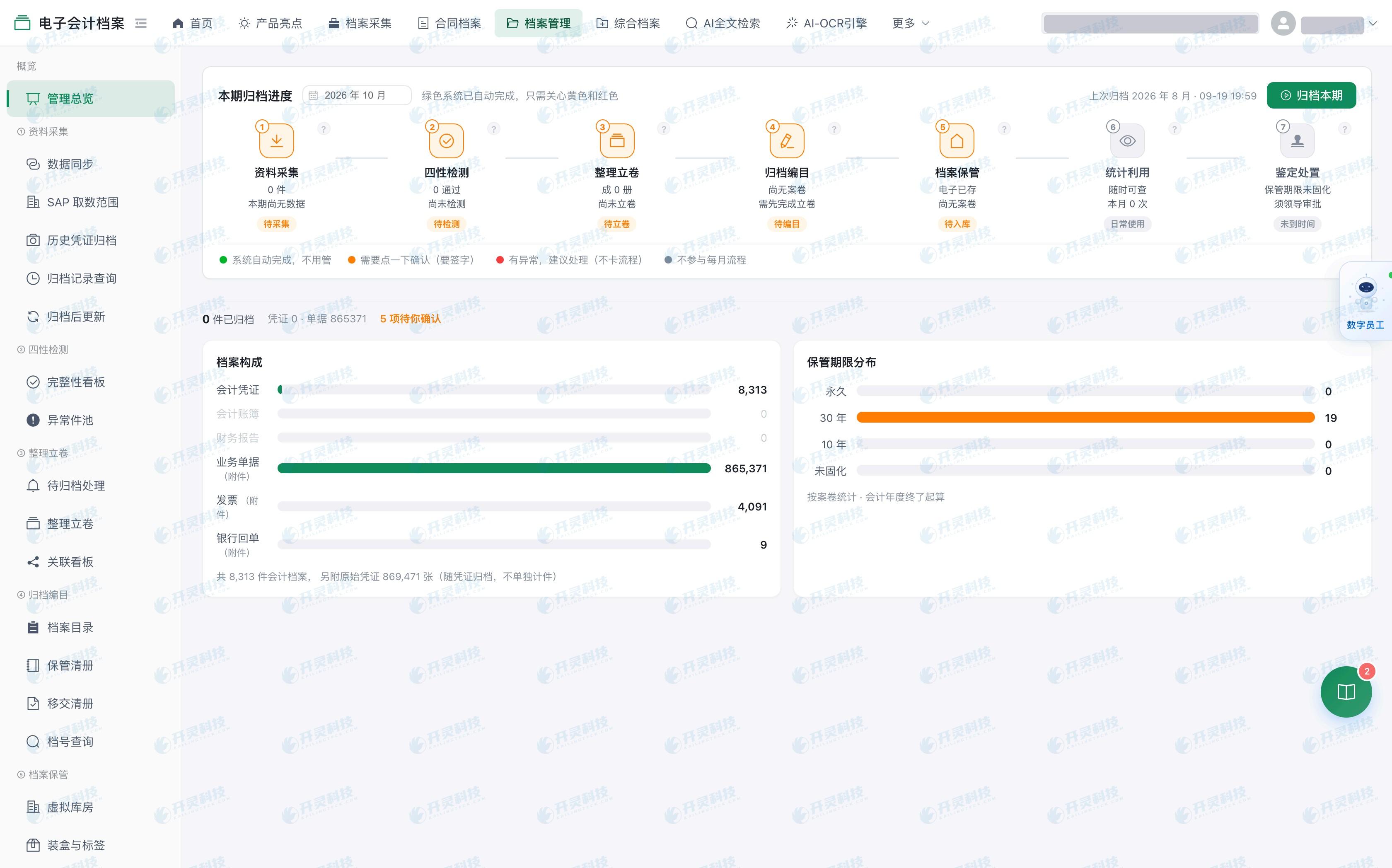
Archive positions can arrange regular inspections by year, category, and file format; IT is responsible for readability and storage exceptions; finance is responsible for missing business materials. Inspection results enter system tasks rather than being stored only as a separate report. If a batch of historical files requires format migration, first determine the scope, backup, and verification method, then process batch by batch.
Simulated retrieval tests usability better than merely looking at backend testing status. Take a voucher from years ago, find the invoice and receipt from the archive number, actually open the file, and check content, page numbers, and links; if retrieval fails, it may be metadata loss rather than file corruption. The two types of problems should be assigned to different responsible persons.
Enterprises should also retain the review basis for closing exceptions. Re-uploading a file does not mean the problem is resolved; you need to confirm that it matches the original business, that the content is complete, and that it can be read continuously. The Kailing Technology system makes testing, handling, and review form a continuous record, reducing archive gaps that cannot be explained years later.
▍FAQ
Q: Is the four-property check performed only once at the time of archiving?
A: Testing should be performed upon receipt, and during long-term storage, spot checks and exception handling should also be carried out according to the management policy.
Q: Does being able to open a file mean the archive is usable?
A: You must also confirm that the content is complete, that metadata and business associations are searchable, and that permission and security requirements are met.
Q: Can the original file be deleted after format conversion?
A: Retain the original, conversion records, and verification results according to the archive policy; you cannot delete at will merely because the new format can be opened.
Visit Kailing Technology to learn about related products and implementation plans: https://www.kailingteck.com/eaa/ .
As a national high-tech enterprise, Kailing Technology focuses on the digital and intelligent transformation of enterprise business-finance-tax and operations management, providing software products, system integration, implementation and delivery, and operational services for various government agencies, institutions, group enterprises, and SMEs.
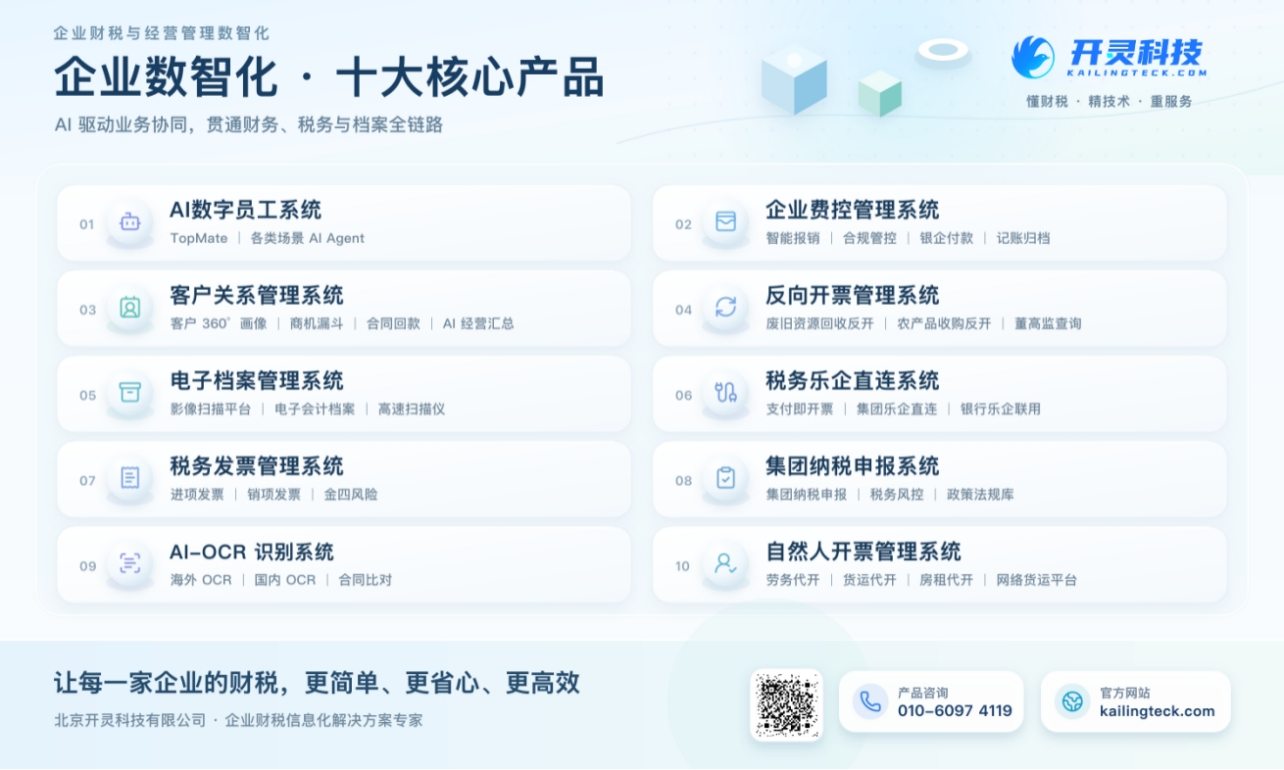
The company has now formed ten core product lines, including: AI digital employee system, enterprise expense control management system, customer relationship management system, reverse invoicing management system, invoice issuance for individuals management system, electronic archives management system, tax fully digitalized e-invoice Leqi system, tax invoice management system, group tax filing system, and AI OCR recognition system. It is committed to connecting enterprise business, finance, tax, funds, and archive data to help customers improve operational efficiency, business-finance-tax compliance capabilities, and digital management levels.
If you have any business-finance-tax digital transformation needs, welcome to contact us. Beijing Kailing Technology will serve you wholeheartedly.
Keywords: Electronic accounting archive four-property testing, long-term readability, archive exception handling, usability verification, Kailing Technology
As a comprehensive business-finance-tax digitalization solution service provider, Kailing Technology provides business-finance-tax management digital transformation products and operational services for various government agencies, institutions, and large, medium, and small enterprises. The product line includes: solutions for sales contract management system, procurement contract management system, fully digitalized Leqi interface project, automatic output invoicing system, reverse invoicing system, invoice issuance for individuals system, employee expense control and reimbursement system, input VAT invoice management system, supply chain collaborative reconciliation system, image AI OCR recognition system, automatic financial bookkeeping system, electronic accounting archives system, etc., comprehensively driving the digitalization process across various fields.
Consultation Hotline: 18513895936 / 010-60974119 Location: Beijing