
Back from a business trip and still hunting for receipts to fill out forms? Kailing Technology's expense control and reimbursement management system "Lingdong Reimbursement" automatically collects receipts and supports initiating reimbursement with a single sentence in Doubao Work and WorkBuddy
When employees return from business trips, they often have to find invoices from email, photo albums, and business travel platforms, then fill in the date, amount, and expense type item by item into a reimbursement form. Kailing Technology's expense control and reimbursement management system "Lingdong Reimbursement" moves invoice collection and reimbursement initiation earlier: employees can submit a reimbursement request in one sentence within Doubao Work or WorkBuddy, then confirm the documents organized by the system.

▍First route scattered receipts to each person's to-do list
Electronic invoices, hotel bills, transportation tickets, and restaurant receipts may come from different channels. The invoice folder collects documents by employee and expense scenario, extracting information such as date, amount, issuer, and invoice type, reducing secondary entry. Invoices already reimbursed, uploaded repeatedly, or with incomplete information should be identified and flagged, preventing the same invoice from being repeatedly selected into different forms.
Automatic invoice collection does not mean the system can guess the business purpose of each invoice. Travel purpose, project attribution, and accompanying personnel still need to be combined with itineraries or employee confirmation. Kailing Technology's "Lingdong Reimbursement" first brings readable information into the draft, then leaves items that cannot be determined for employees to complete.
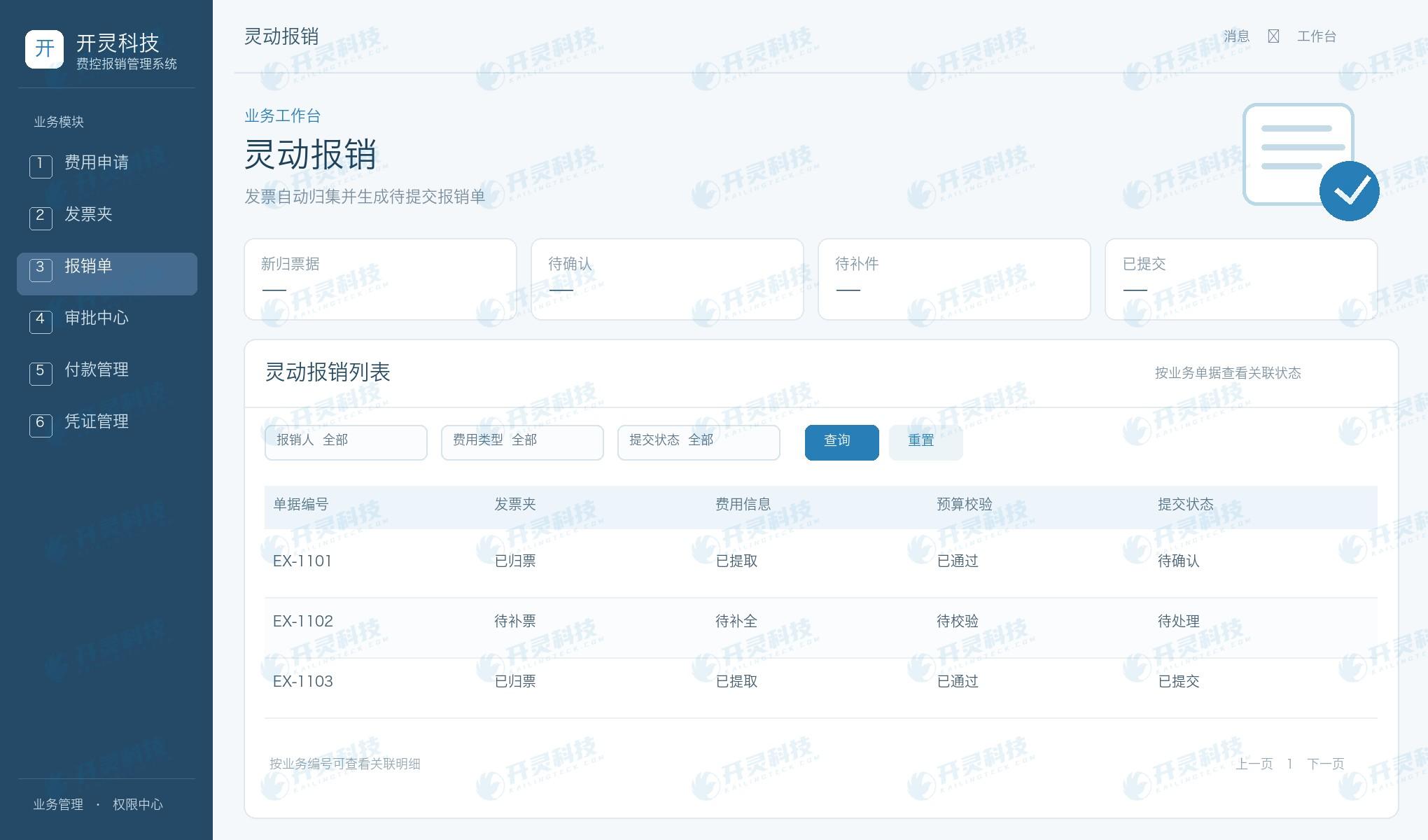
Lingdong Reimbursement invoice collection and document status
▍A verifiable draft must be provided after a single-sentence initiation
An employee can say "Help me reimburse the transportation and accommodation for last week's business trip to Shanghai." The digital entry point identifies the time, expense type, and available invoices, and creates a reimbursement form pending confirmation. The system should show which invoices were selected, which business trip application and budget they belong to, rather than directly submitting after saying "completed" in the conversation.
Doubao Work and WorkBuddy are natural language entry points, and enterprise expense control rules are still executed in the Kailing Technology system. If an employee's single sentence lacks a business trip application or cost center, the system prompts for supplementation; if the invoice date does not match the itinerary, it is first handed to the employee for verification. In this way, natural language reduces operating steps while maintaining the information completeness required for business approval.
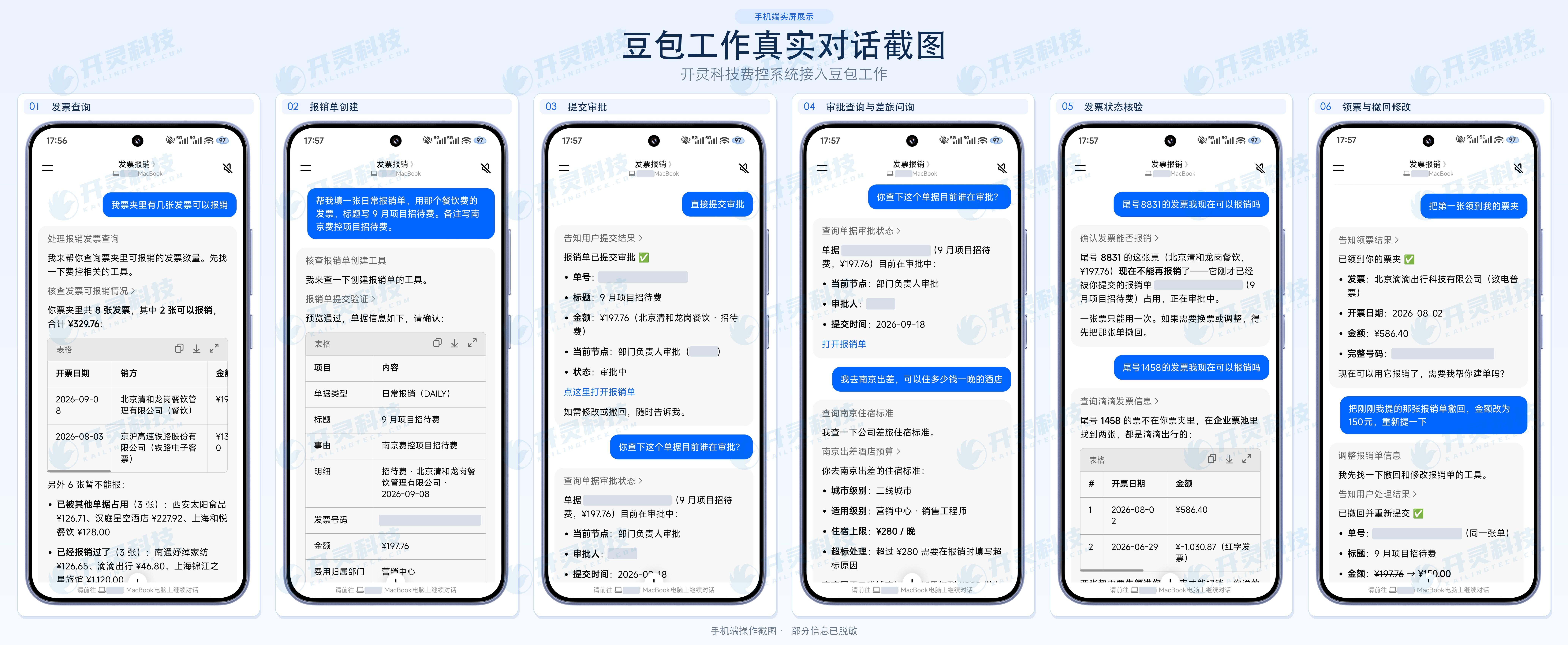
Kailing Technology's expense control system connects to Doubao Work
▍Verify invoices, budget and standards before submission
After a reimbursement form draft is created, the system can check invoice authenticity or duplication, expense standards, budget occupation, and organizational rules. Over-standard accommodation, cross-department attribution, or missing travel evidence should clearly display the reason and handling action. Employees completing materials before submission saves more time than resubmitting after an approver returns the form.
Different organizations or positions may use different standards, and rules must be configured according to actual policies. Kailing Technology's expense control and reimbursement management system puts receipt collection, form filling and pre-verification in one process; automatic verification results should also be understandable to employees, not just a red "failed" prompt.
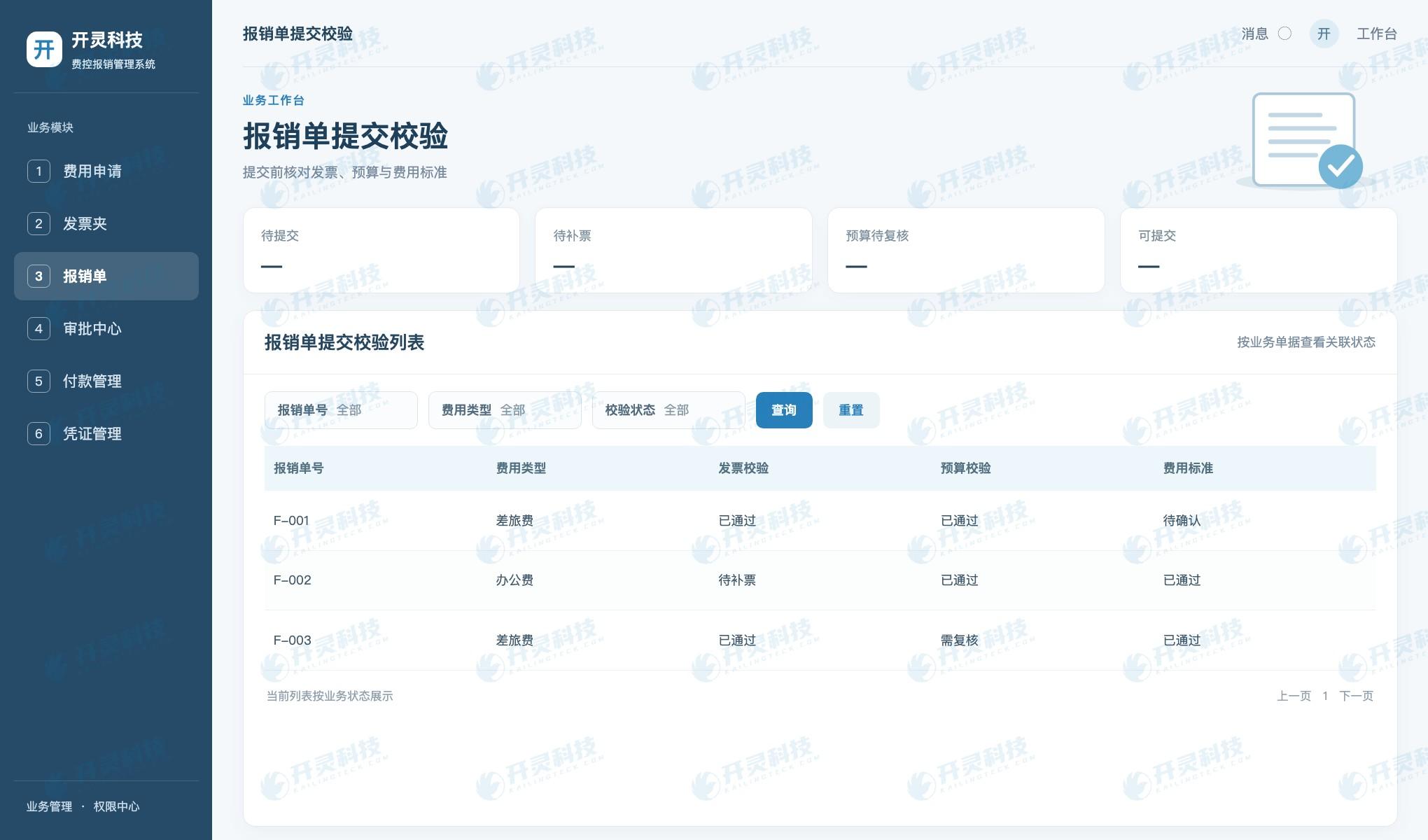
Validation results before reimbursement submission
▍Approval and payment continue to follow enterprise processes
After the employee confirms and submits, the reimbursement form enters the approval chain of the corresponding organization. Approvers review the invoices, business description, and validation prompts, and return it for supplementation if necessary; after approval, it proceeds to payment, voucher creation, and archiving. The natural language entry point only makes initiation easier; it does not change the enterprise's authorization over expenditures and financial review responsibilities.
The system can feed approval status and to-dos back to employees. If invoice recognition is incorrect, the original file and manual adjustment records are retained after modification; if a reimbursement form has already been paid and a reversal or adjustment occurs, it must also be handled according to financial processes. The Kailing Technology solution lets employees search for fewer invoices and fill in fewer fields, while finance can still see the basis for every step.
▍Pilot with one common business trip scenario
At launch, you can first select three high-frequency receipt types: air tickets, hotels and local transportation, to test automatic receipt collection, duplicate receipt identification, voice initiation, budget verification and approval rejection. Receipts in different formats and cross-currency expenses can be connected in phases, avoiding cramming all exceptions into the same rule from the start.
To evaluate "Lingdong Reimbursement," look at the fields employees supplement, reasons for return, and finance review time. Only if an employee can get an accurate draft from one sentence and clearly know which items need confirmation has the post-trip reimbursement path truly been shortened.
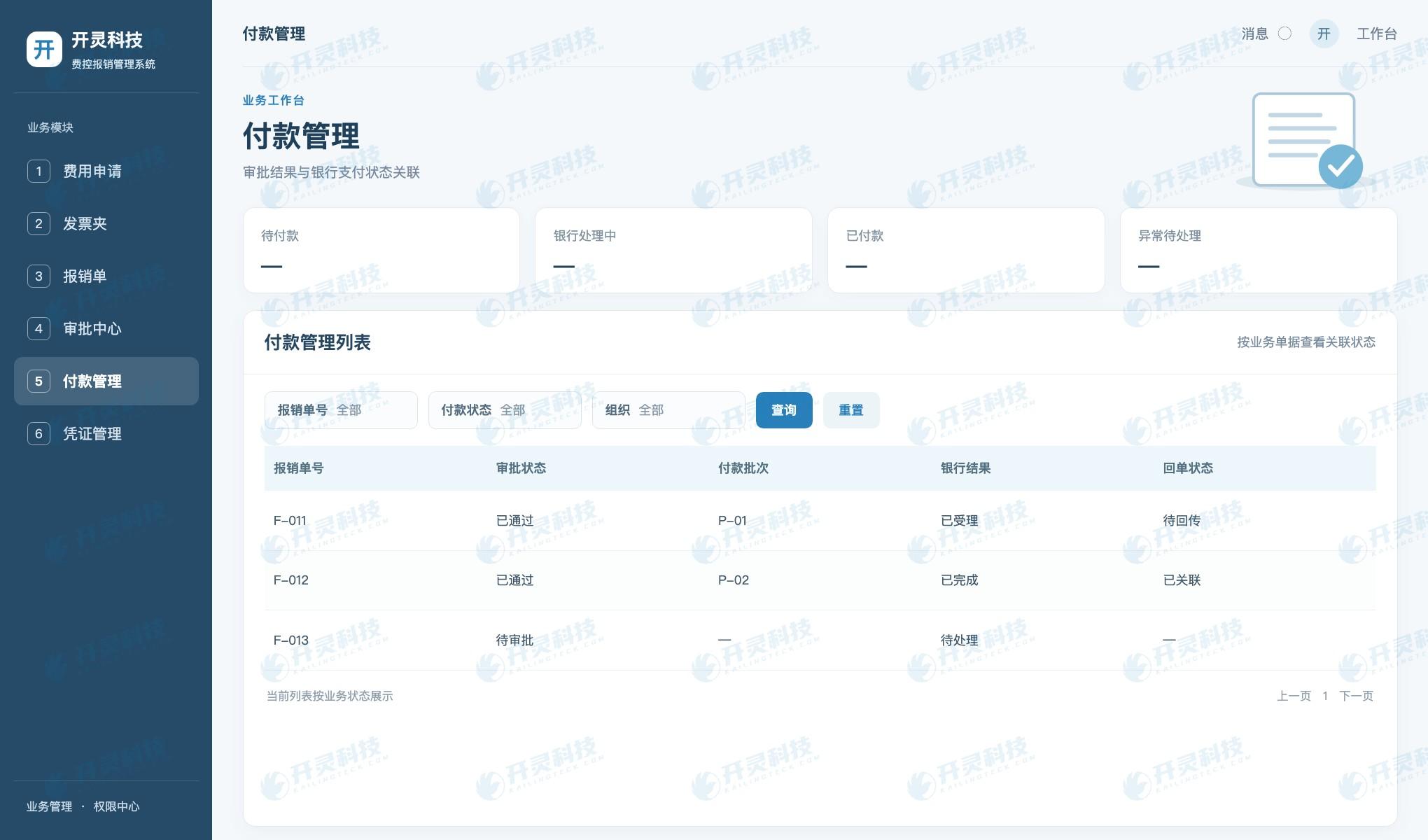
Payment status after approval
▍Make single-sentence reimbursement a clear interaction
When an employee says "Reimburse the invoices from last week's business trip," the system first needs to determine the date range of "last week," the corresponding business trip application, and the selectable invoices. If there were two business trips in the same period, candidate itineraries should be displayed for the employee to choose, rather than arbitrarily mixing the invoices together. The natural language entry point saves time in searching and filling out forms, but it cannot omit confirmation of business attribution.
The invoice folder can collect electronic invoices from channels permitted by the enterprise, and retain the original appearance of files, invoicing time, and invoice status. When employees photograph and upload paper invoices, the recognition results are displayed side by side with the original image; transportation tickets and hotel invoices have different field structures and should be extracted by expense type. Duplicate invoices and voided invoices are flagged before being selected into a reimbursement form, reducing approval rejections.
The entry points in Doubao Work and WorkBuddy need to connect with enterprise identity and expense control permissions. Employees can only initiate reimbursements for themselves or for authorized proxies, and cannot read other people's invoice folders through a single sentence. The amounts and sensitive information displayed in the conversation should be subject to permission constraints; formal approval and payment status are still saved back in the expense control system.
When the conversational assistant generates a draft, it can explain the selected invoices, missing business descriptions, whether the budget is available, and the next confirmation step. If an employee finds that an invoice is linked incorrectly, it can be removed and reselected; some expenses are personally borne and must not automatically enter reimbursement just because the system recognizes an invoice. Each modification retains a record for finance review.
What finance focuses on is whether the information remains complete after employees fill in less. A pilot can compare field omissions, duplicate invoices, standard overruns, and approval rejections between traditional form filling and single-sentence initiation. If automatic drafts frequently require substantial modification, invoice collection and expense classification should be optimized first, rather than continuing to add chat scripts.
Kailing Technology's expense control and reimbursement management system connects automatic invoice collection, natural language initiation, and existing financial controls. The improvement in employee experience comes from fewer repetitive actions; for the enterprise, invoices, budgets, approvals, payments, and vouchers remain on the same auditable business chain.
▍Reimbursement experience also depends on exception prompts
What employees fear most is being told after submission that the itinerary is missing or the invoice is non-compliant. Lingdong Reimbursement prompts what is currently missing and how it can be supplemented when generating the draft, keeping issues at a time when employees still remember the trip details. For items that cannot be automatically determined, the system provides options and explanation entry points rather than directly marking the form as failed.
The same invoice may first be collected via email and then photographed and uploaded by an employee. The system should flag a suspected duplicate and show the relationship between the two files, letting the employee confirm which one to use. If the invoice has already entered another reimbursement form, it must not be silently submitted again. Finance can later view which channel the invoice entered through and its usage status.
During project acceptance, have employees unfamiliar with the system initiate a business trip reimbursement in natural language, and observe whether they can understand the draft, correct errors, and complete submission. Whether the experience improves should be evaluated from actual operating steps and rejection reasons, not just from whether the dialogue entry point can recognize a single sentence.
▍FAQ
Q: Will initiating reimbursement with a single sentence automatically pay out the money?
A: No. After the employee confirms the draft, it is still processed according to the enterprise's approval, payment and financial rules.
Q: Is manual confirmation still needed after invoices are automatically collected?
A: It is necessary to confirm information that the system cannot reliably determine, such as business purpose, project attribution and itinerary.
Q: How are duplicate invoices handled?
A: The system flags duplicate or already-reimbursed status, and the employee and finance handle it after verification.
Visit Kailing Technology to learn about related products and implementation plans: https://www.kailingteck.com/feikong/ .
As a national high-tech enterprise, Kailing Technology focuses on the digital and intelligent transformation of enterprise business-finance-tax and operations management, providing software products, system integration, implementation and delivery, and operational services for various government agencies, institutions, group enterprises, and SMEs.
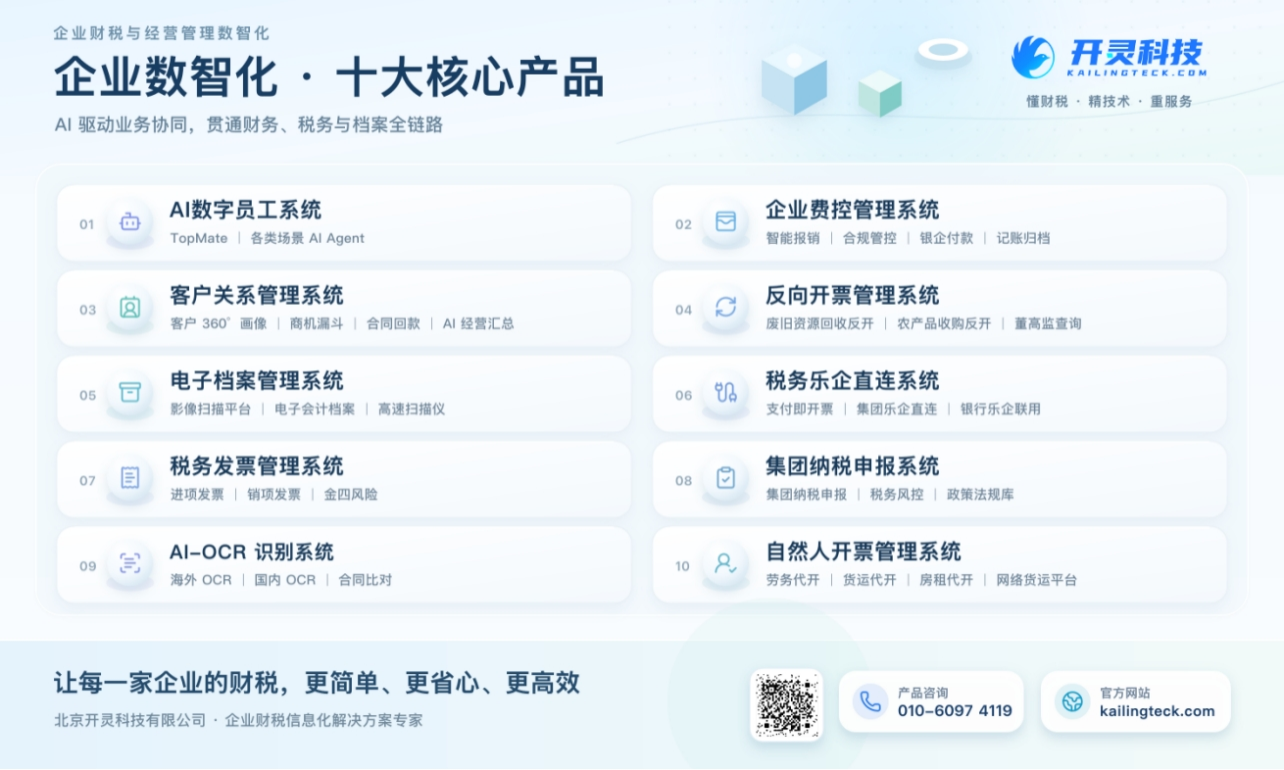
The company has now formed ten core product lines, including: AI digital employee system, enterprise expense control management system, customer relationship management system, reverse invoicing management system, invoice issuance for individuals management system, electronic archives management system, tax fully digitalized e-invoice Leqi system, tax invoice management system, group tax filing system, and AI OCR recognition system. It is committed to connecting enterprise business, finance, tax, funds, and archive data to help customers improve operational efficiency, business-finance-tax compliance capabilities, and digital management levels.
If you have any business-finance-tax digital transformation needs, welcome to contact us. Beijing Kailing Technology will serve you wholeheartedly.
Keywords: Lingdong Reimbursement, automatic invoice collection, Doubao Work, WorkBuddy, expense control reimbursement management system, Kailing Technology
As a comprehensive business-finance-tax digitalization solution service provider, Kailing Technology provides business-finance-tax management digital transformation products and operational services for various government agencies, institutions, and large, medium, and small enterprises. The product line includes: solutions for sales contract management system, procurement contract management system, fully digitalized Leqi interface project, automatic output invoicing system, reverse invoicing system, invoice issuance for individuals system, employee expense control and reimbursement system, input VAT invoice management system, supply chain collaborative reconciliation system, image AI OCR recognition system, automatic financial bookkeeping system, electronic accounting archives system, etc., comprehensively driving the digitalization process across various fields.
Consultation Hotline: 18513895936 / 010-60974119 Location: Beijing