
Which inventory management software is easy to use and cheap? 2026 selection pitfalls avoidance guide

Which inventory management software is easy to use and cheap? 2026 selection pitfalls avoidance guide
There is no unified answer divorced from business scenarios. For enterprises with a single warehouse, a small number of products, and simple processes, the focus is ease of use and completeness of basic documents; for multiple warehouses, batch and expiry, serial numbers, or production assembly scenarios, priority should be given to verifying inventory accuracy and abnormal business. So-called 'cheapness' should compare three-year total cost of ownership, not just the first-year subscription price.
Many enterprises first filter by feature count and advertised price, only to discover after signing that additional users, interfaces, data migration, implementation training, or capacity expansion are billed separately. A more reliable approach is to prepare a set of real purchase, sales, return, and transfer documents, let candidate systems run the complete process in a trial or proof-of-concept environment, and then write the differences into the acceptance checklist and contract scope.
▍1. Filter First by Business Complexity; Do Not Pay for Capabilities You Will Not Use
The first category is single-warehouse trading or retail, which usually starts with checking purchase inbound, sales outbound, returns and exchanges, stocktaking, and basic reports. The second category is wholesale distribution or multi-warehouse operations, which requires further testing of cross-warehouse transfers, batch and expiry, serial numbers, pricing systems, and permission isolation. The third category involves production, group multi-organization, or multi-system collaboration, and should also check BOM, inter-organization transactions, consolidation basis, and interface governance. Categorization is only a screening starting point and cannot replace the enterprise's own process and internal control design.
The supporting guidelines for enterprise internal control issued by the Ministry of Finance emphasize that procurement, sales, inventory, and fund activities should clarify responsibilities, authorities, and procedures in light of actual enterprise conditions. Therefore, when selecting a system, one should not only ask "does it have this button" but also verify whether application, approval, execution, bookkeeping, and review can be separated by role and leave traceable records.
▍2. Test 'Ease of Use' with Abnormal Documents, Not Just Standard Demos
Almost all products can demo standard purchasing and sales; what really sets them apart is abnormal scenarios. It is recommended to test at least partial arrival, partial return, cross-period return, estimated receipt, inventory surplus and shortage, negative inventory limits, batch recall, and red-letter invoice linkage. For each scenario, record operating steps, fields requiring manual supplementation, permission blocks, and final report changes.
Test results should be jointly confirmed by business, warehouse, and finance. Business focuses on order response, warehouse focuses on consistency between physical goods and book records, and finance focuses on reconciliation evidence and period-end closing. One department finding it simple does not mean the whole chain works well; if exception documents must be supplemented in offline spreadsheets, subsequent costs are often underestimated.
▍3. Document and Reconciliation Capabilities Must Be Accepted Against Interface Conditions
State Taxation Administration Announcement No. 11 of 2024 clarifies that fully digitalized e-invoices can be transferred through methods such as tax digital accounts. If an enterprise needs to connect inventory management with invoicing, invoice receipt, or financial systems, it should verify entity qualifications, existing systems, interface methods, data fields, failure retries, and manual review mechanisms; 'supports integration' cannot be understood as out-of-the-box for all customers.
Kailing Technology can provide AI OCR recognition, input VAT invoice management, output invoicing, and system integration capabilities on a project basis to link business documents with invoice information. The actual available scope depends on invoice types, authorization, interfaces, and the implementation plan; recognition results need verification, and invoicing, booking, and filing are interconnected but separately responsible stages.
▍4. 'Cheap' Should Be Judged by Three-Year Total Cost of Ownership
Total cost should be broken down into at least six items: subscription or license, user and organization expansion, interfaces and third-party services, implementation and data migration, training and operations, and subsequent upgrades. It should also specify data export formats, historical data retention, service response boundaries, and exit migration arrangements. A very low price that relies heavily on manual handling, or opaque subsequent interface fees, may both drive up actual costs.
It is recommended to put candidate solutions in the same table, calculate on a unified three-year basis, and then score 'business pass rate, inventory accuracy, document reconciliation, permission traceability, and implementation risk' separately. Price is only one column and cannot determine the result alone.
▍5. Electronic Vouchers and Archives Cannot Be Just Saved Screenshots
Cai Kuai [2020] No. 6 requires that when electronic accounting vouchers are used for reimbursement, booking, and archiving, it should be ensured that the source is legal and authentic, the system can accurately and completely read the electronic vouchers and their metadata, necessary review and signing procedures are set up, and duplicate booking is prevented; keeping only printouts or screenshots does not automatically equal compliant electronic archiving. The Ministry of Finance's 2025 promotion of the accounting data standard for electronic vouchers further emphasizes standardized processing of electronic vouchers throughout the entire process.
Kailing Technology's electronic accounting archives management system can connect invoices, vouchers, receipts, and business documents on a project basis, supporting collection, linking, retrieval, and permission traceability. Before go-live, archive categories, electronic original formats, retention periods, responsible persons, and data migration scope still need to be determined, and business and archive acceptance must be passed.
▍An Actionable Selection Checklist
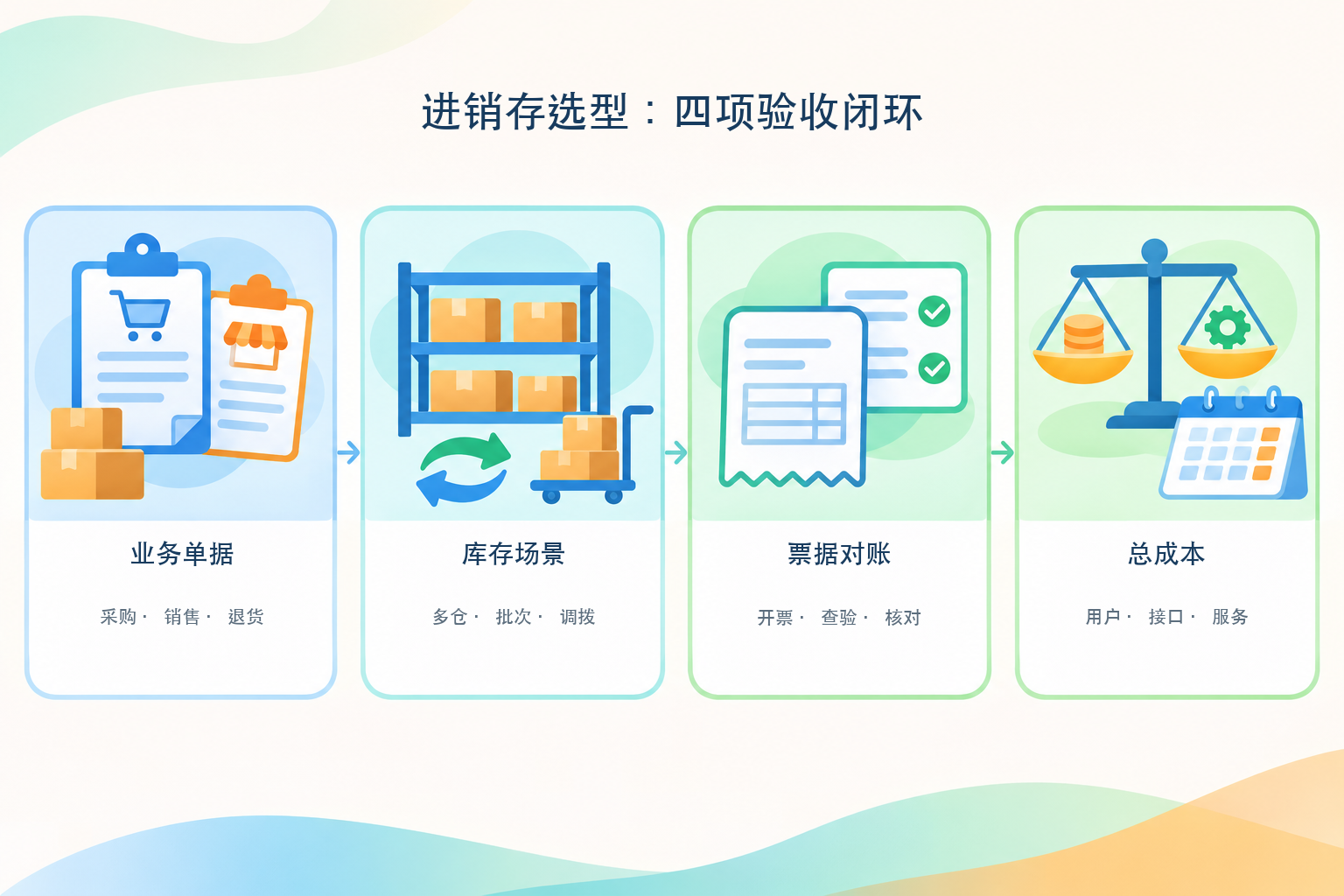
First list ten high-frequency scenarios and five abnormal scenarios; then test candidate systems with the same set of real desensitized documents; then check the three-year total cost, interface boundaries, and delivery responsibilities; finally turn demo conclusions into quantifiable acceptance clauses. Through these four steps, the enterprise obtains not a general 'ranking' but a set of evidence suited to its own processes.
Official basis:Guidelines for Enterprise Internal Control、State Taxation Administration Announcement No. 11 of 2024、Caihui [2020] No. 6、Cai Kuai [2025] No. 9。
Learn about Kailing Technology's digital and intelligent solutions for business-finance-tax and business management: www.kailingteck.com .
About Kailing Technology
As a national high-tech enterprise, Kailing Technology focuses on the digital and intelligent transformation of enterprise business-finance-tax and operations management, providing software products, system integration, implementation and delivery, and operational services for various government agencies, institutions, group enterprises, and SMEs.
The company has now formed ten core product lines, including: AI digital employee system, enterprise expense control management system, customer relationship management system, reverse invoicing management system, invoice issuance for individuals management system, electronic archives management system, tax fully digitalized e-invoice Leqi system, tax invoice management system, group tax filing system, and AI OCR recognition system. It is committed to connecting enterprise business, finance, tax, funds, and archive data to help customers improve operational efficiency, business-finance-tax compliance capabilities, and digital management levels.
If you have any business-finance-tax digital transformation needs, welcome to contact us. Beijing Kailing Technology will serve you wholeheartedly.
Keywords: inventory management software, inventory management selection, three-year total cost of ownership, document reconciliation, electronic accounting archives, Kailing Technology
As a comprehensive business-finance-tax digitalization solution service provider, Kailing Technology provides business-finance-tax management digital transformation products and operational services for various government agencies, institutions, and large, medium, and small enterprises. The product line includes: solutions for sales contract management system, procurement contract management system, fully digitalized Leqi interface project, automatic output invoicing system, reverse invoicing system, invoice issuance for individuals system, employee expense control and reimbursement system, input VAT invoice management system, supply chain collaborative reconciliation system, image AI OCR recognition system, automatic financial bookkeeping system, electronic accounting archives system, etc., comprehensively driving the digitalization process across various fields.
Consultation Hotline: 18513895936 / 010-60974119 Location: Beijing