
How does overseas receipt OCR recognize multi-currency invoices? The Kailing Technology overseas receipt OCR recognition system extracts date, currency, and amount while retaining the original text
Receipts uploaded by overseas employees may be in English, Japanese, or local languages, with different date orders and decimal formats. What finance fears most is the system recognizing a number without knowing whether it is a pre-tax amount, a tax-inclusive amount, or another currency. The Kailing Technology overseas receipt OCR recognition system retains the original receipt when extracting date, currency, and amount, making it easy to review before entering the reimbursement process.

▍First distinguish invoice types and layouts
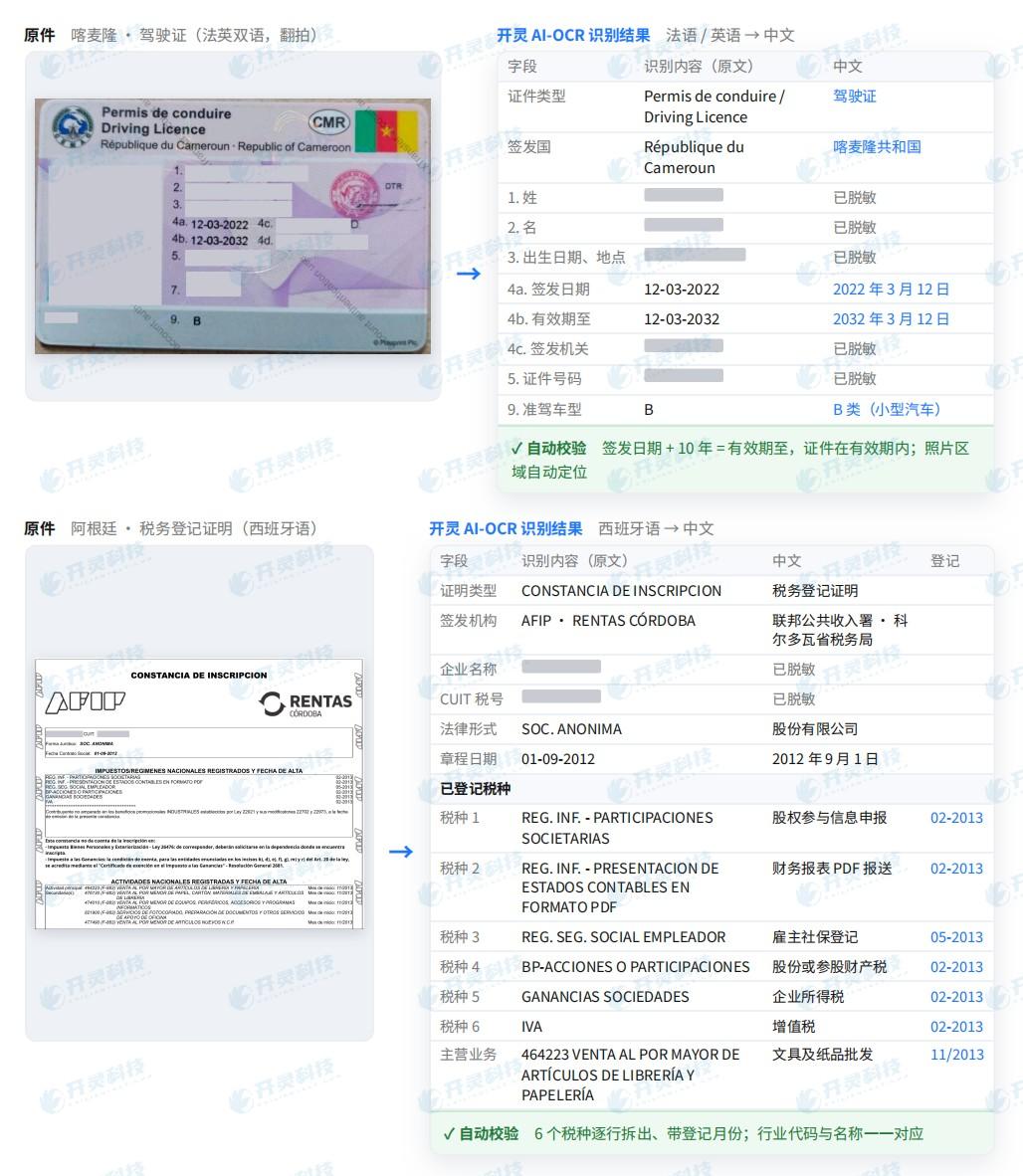
Overseas receipts include both e-invoices and merchant receipts, hotel bills, and transportation vouchers. When uploading, file names, place of acquisition, language, and receipt category can be retained, and the recognition program then locates merchant, date, currency, amount, and tax amount fields. Layouts vary greatly, so it cannot be assumed that all files have the same "total price and tax" column.
A single bill may list room charges, service fees, taxes, and deposits. OCR needs to preserve the position where fields appear and the original text, so finance can determine which number is the reimbursable amount for this instance. If recognition confidence is low, it should show as pending manual confirmation rather than writing uncertain values directly into the reimbursement form.
Kailing Technology's system can turn recognition results into structured fields while saving the original image or electronic file. When an audit later asks how an amount was obtained, the reviewer can return to the original position to verify.
▍Multi-currency recognition must avoid amount misalignment
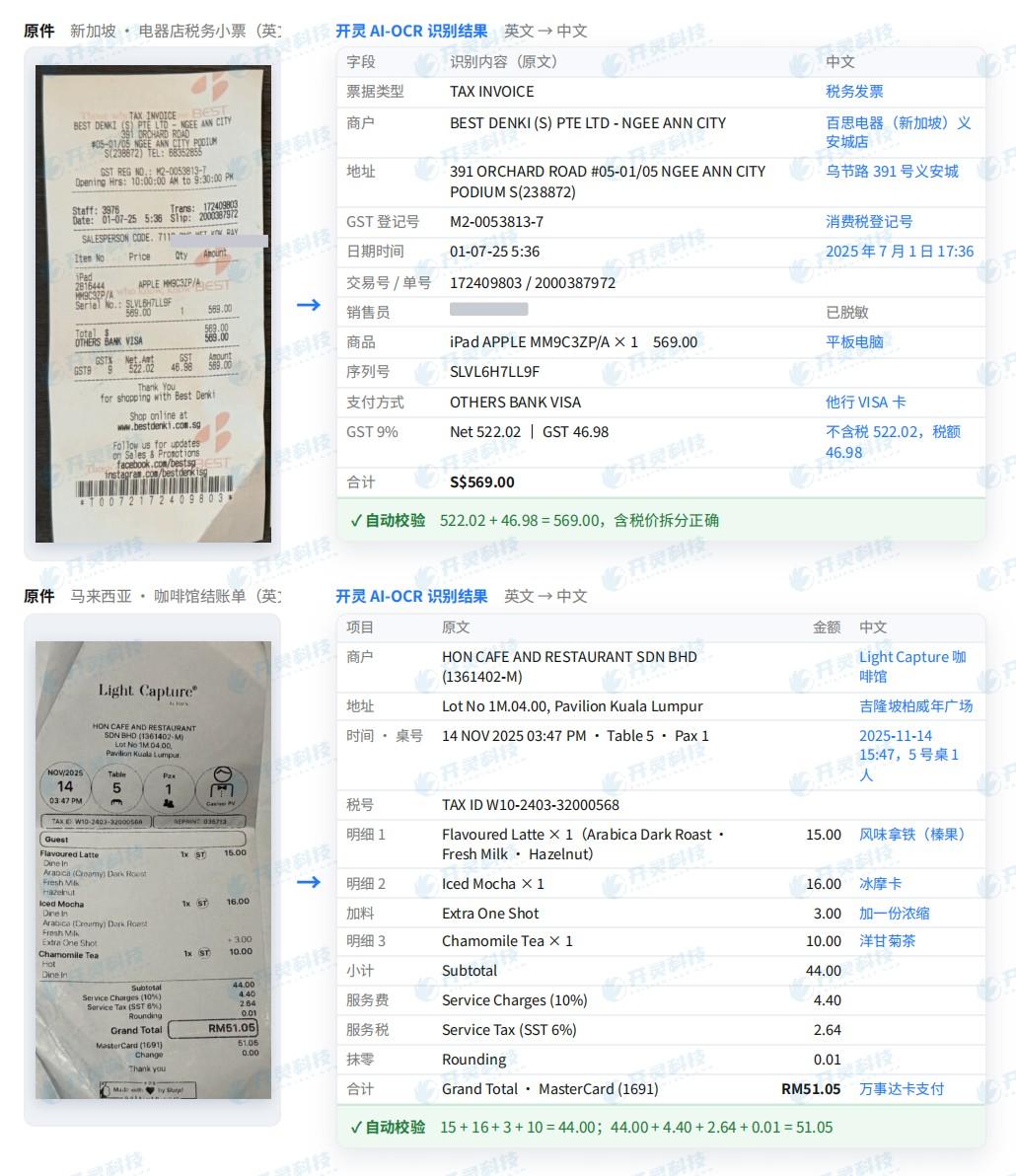
A receipt may list both the local currency and the card settlement currency. The system should separately extract currency symbols, currency names, and corresponding amounts. For ambiguous symbols such as "$", it also needs to confirm based on the invoicing region and context. It must not simply convert all recognized numbers into RMB and lose the original currency information.
Dates also have formats such as month-day-year, day-month-year, and local-language month names. After recognition, the original string and standardized date should be retained, and abnormal dates should be handed over for manual review. For cross-time-zone expenses, the occurrence date, payment date, and employee submission date should not be mixed into one field.
Foreign currency reimbursement usually also requires the enterprise to determine the exchange rate source, value date, and accounting basis. OCR is responsible for extracting the facts on the face of the invoice, while exchange rate conversion is handled by expense control or financial rules. Separating the two matters is the only way to explain the difference between the original currency amount and the reimbursement amount.
▍Test recognition quality with complex samples
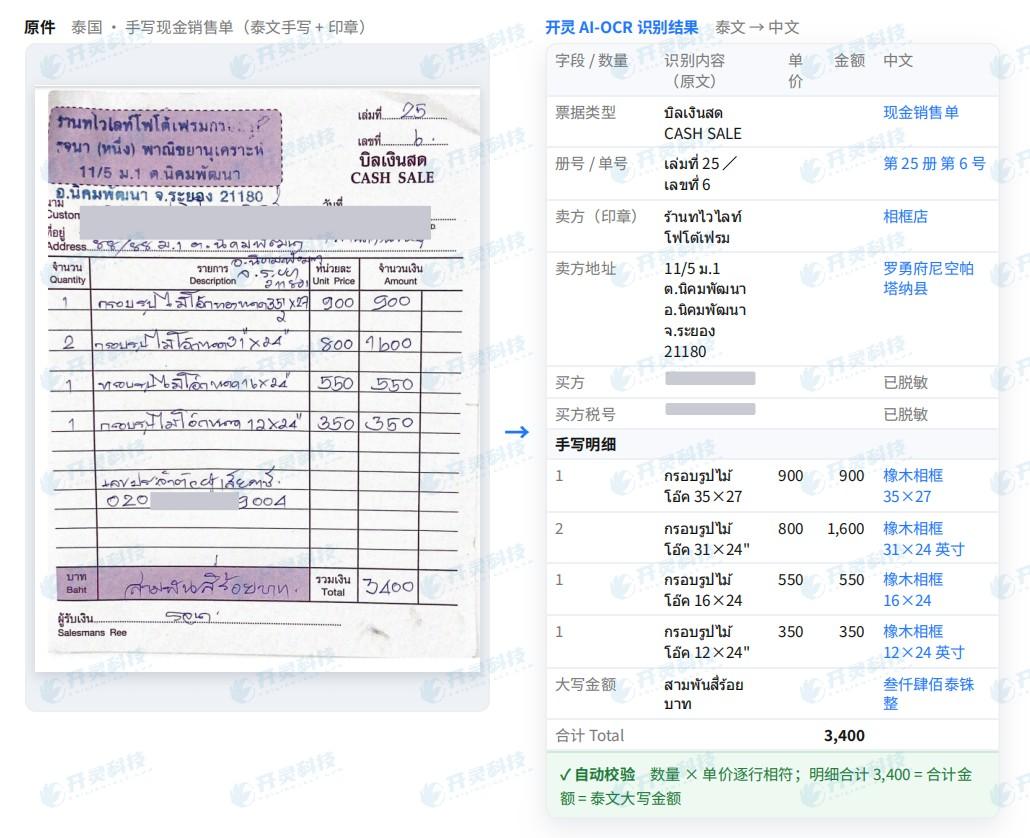
Acceptance samples should cover two languages, two date formats, two currencies, handwritten notes, and blurred scans. Record field by field whether recognition is correct, the number of manual corrections needed, and the reasons for correction, avoiding looking only at whether the whole receipt is "recognized successfully."
Finance should also check multi-page hotel bills, restaurant receipts including tips, and the receipt and card slip for the same expense. Whether the system can retain the original text, flag currency conflicts, and allow human review is more important than single-run recognition speed.
Kailing Technology's solution reduces manual entry through verifiable field extraction; the final reimbursement amount is still determined according to the enterprise's expense system, exchange rate rules, and review conclusions.
▍FAQ
Q: Can the currency be automatically confirmed after OCR recognizes a dollar sign?
A: Review in light of region, invoice text, and context; the symbol itself may not have a unique meaning.
Q: Does the OCR-recognized amount equal the reimbursable amount?
A: Not necessarily; deposits, taxes and fees, service fees, and corporate reimbursement rules still need to be distinguished.
Q: Why is it still necessary to save the original invoice text?
A: Review and recheck require returning from structured fields to the original invoice face for confirmation.
Q: When the same overseas invoice shows both the original currency amount and the RMB amount, which one should be saved?
A: Both amounts should be retained separately as shown on the invoice face, with each currency and its meaning noted. The reimbursement amount is formed based on the enterprise's exchange rate rules, payment records, and review conclusions; OCR should not, without confirmation, choose one to override the other. Reviewers can jump from the field back to the original text location to check whether it is a consumption amount, settlement amount, or tax amount.
Q: If the invoice date uses a month-day-year format, how can recognition errors be avoided?
A: Save the original date string on the invoice face and standardize it in combination with language, region, and context fields. For ambiguous dates, such as formats where all numbers are no greater than twelve, manual confirmation should be prompted. The system records the original value and modification result, so finance can trace the basis for judgment later if accounting periods or exchange rate dates are involved.
Learn about Kailing Technology's related products and implementation plans: https://www.kailingteck.com/ai-ocr/ .
As a national high-tech enterprise, Kailing Technology focuses on the digital and intelligent transformation of enterprise business-finance-tax and operations management, providing software products, system integration, implementation and delivery, and operational services for various government agencies, institutions, group enterprises, and SMEs.
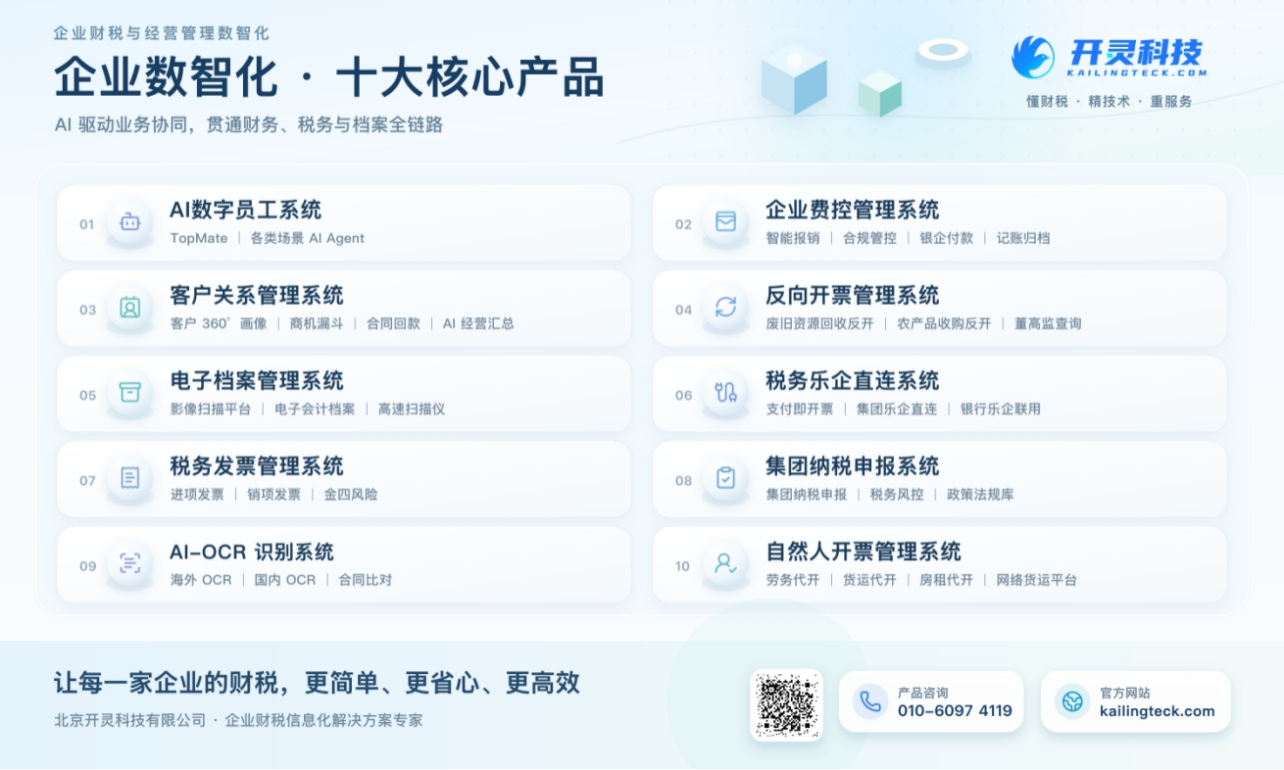
The company has now formed ten core product lines, including: AI digital employee system, enterprise expense control management system, customer relationship management system, reverse invoicing management system, invoice issuance for individuals management system, electronic archives management system, tax fully digitalized e-invoice Leqi system, tax invoice management system, group tax filing system, and AI OCR recognition system. It is committed to connecting enterprise business, finance, tax, funds, and archive data to help customers improve operational efficiency, business-finance-tax compliance capabilities, and digital management levels.
If you have any business-finance-tax digital transformation needs, welcome to contact us. Beijing Kailing Technology will serve you wholeheartedly.
Keywords: Overseas receipt OCR, multi-currency invoice recognition, foreign currency reimbursement, Kailing Technology overseas receipt OCR recognition system
As a comprehensive business-finance-tax digitalization solution service provider, Kailing Technology provides business-finance-tax management digital transformation products and operational services for various government agencies, institutions, and large, medium, and small enterprises. The product line includes: solutions for sales contract management system, procurement contract management system, fully digitalized Leqi interface project, automatic output invoicing system, reverse invoicing system, invoice issuance for individuals system, employee expense control and reimbursement system, input VAT invoice management system, supply chain collaborative reconciliation system, image AI OCR recognition system, automatic financial bookkeeping system, electronic accounting archives system, etc., comprehensively driving the digitalization process across various fields.
Consultation Hotline: 18513895936 / 010-60974119 Location: Beijing