
How are retention periods of electronic accounting archives managed? The Kailing Technology electronic accounting archive management system configures periods by category and manages expiry appraisal

Financial vouchers, ledgers, reports, and other accounting materials have different retention periods. If the system assigns only one number of years to all archives, the expiry list has no management meaning. The Kailing Technology electronic accounting archive management system configures retention periods by archive category and places start, expiry reminders, appraisal, and subsequent disposal into a continuous management process.

▍First confirm the applicable period by archive category
The Measures for the Management of Accounting Archives (Order No. 79 of the Ministry of Finance and the National Archives Administration) divide accounting archive retention periods into permanent and fixed-term, with fixed-term generally divided into ten years and thirty years. Specific materials should be determined according to the appendix to the Measures, the unit's actual business, and applicable systems; all electronic files cannot be uniformly set to thirty years.
When establishing rules in the system, first organize the categories of vouchers, ledgers, financial accounting reports, and other accounting materials, then clarify the retention period, responsible department, and start method for each category. Paper and electronic forms should not cause arbitrary changes to retention rules for the same type of archive.
Kailing Technology's electronic accounting archive management system can configure periods by category. Rules are imported into the system only after confirmation by the unit, retaining the effective date and version. When encountering new business documents or classification adjustments, archive personnel should first determine the category and not guess the period from the file name.
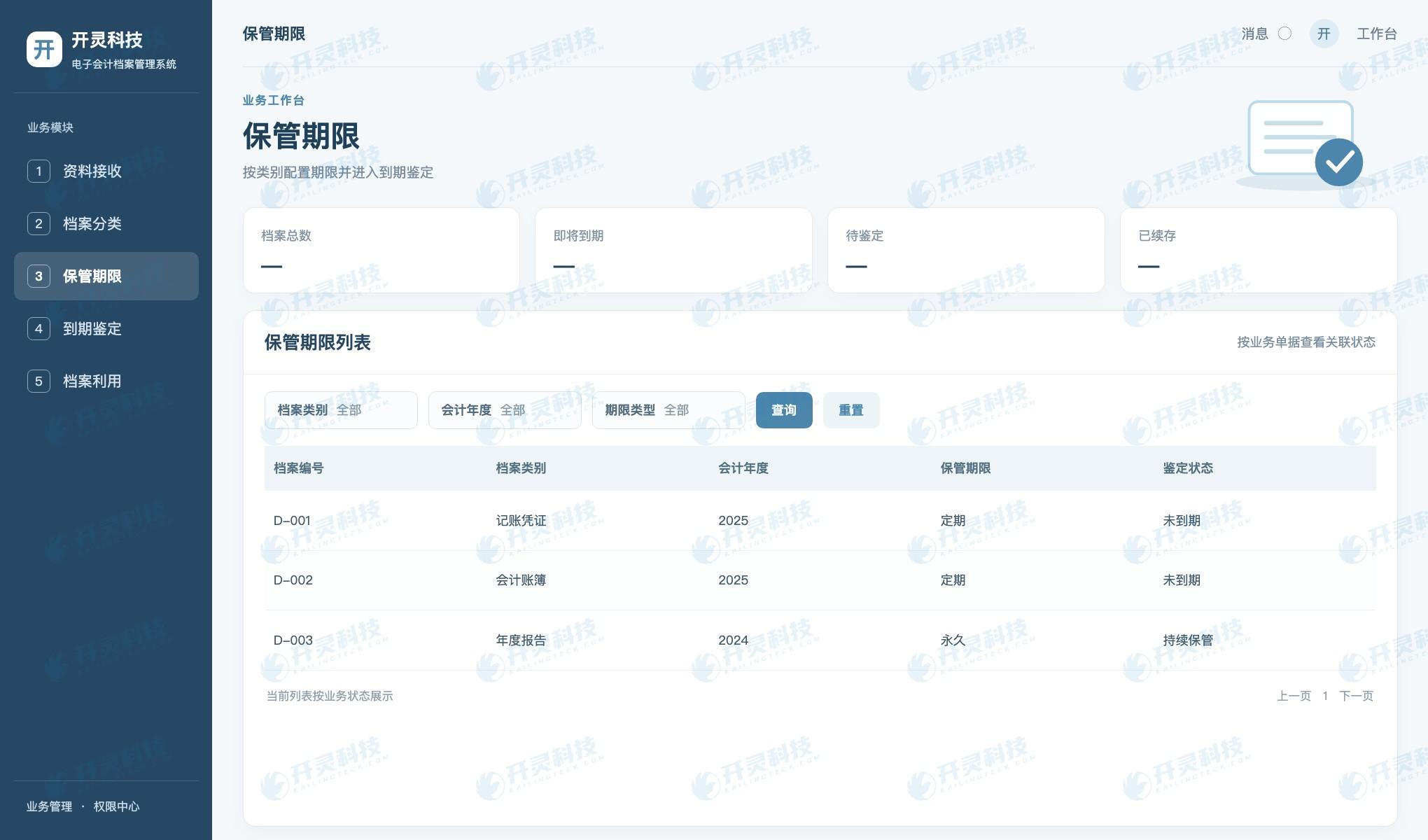
Accounting archive period configuration and classification
▍Start dates and change records must be accurate
Order No. 79 stipulates that the retention period of accounting archives starts from the first day after the end of the fiscal year. The system receipt date, voucher date, and formal start date may differ, so the expiry cannot be calculated directly from the file upload time. Item-by-item verification is especially needed for cross-year supplementary entries or historical archive migration.
During archiving, the business system can transmit the year, category, and original document number, and the archive system assigns the period accordingly. If the classification is wrong or the year is filled in incorrectly, a correction process should be followed, retaining the original value, reason for change, and approver, to prevent the expiration list from changing silently.
Adjusting retention periods must consider the applicable rules for existing archives and the unit's systems. The system can maintain rules in batches, but before batch operations the affected scope should be previewed and different years and categories sampled to avoid one configuration error affecting all archives.
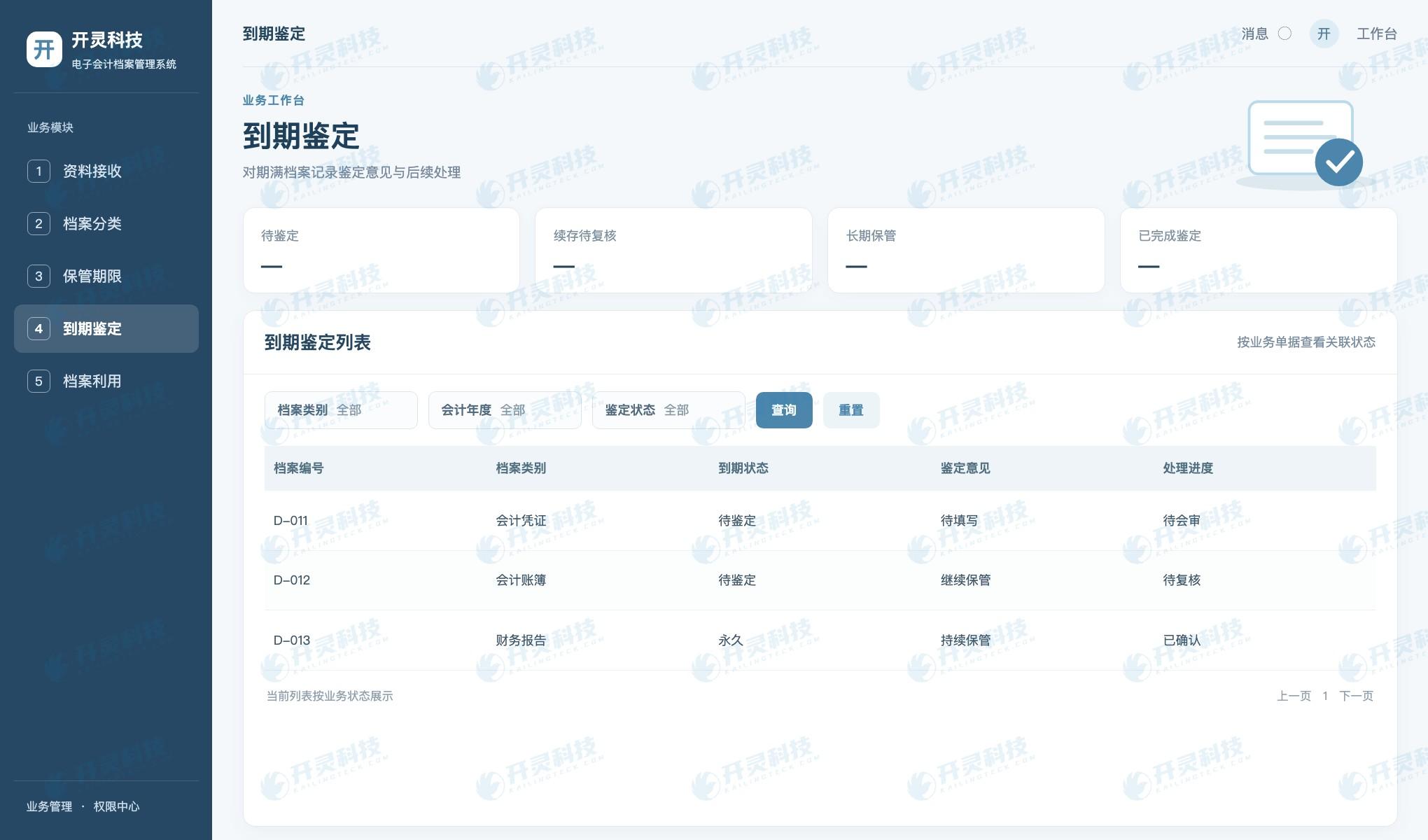
Expiration appraisal opinions and disposition status
▍Expiration is not automatic deletion but entry into appraisal
Accounting archives whose retention period has expired should undergo appraisal. Those still of retention value should have their retention period redefined; only those truly of no retention value may enter destruction procedures per the rules. Accounting vouchers involving unfinished matters such as unsettled claims and debts must continue to be retained until the matter is completed per the rules.
The expiration list should show the archive number, category, year, required retention period, elapsed retention period, and related business status. The archive management body takes the lead and appraises together with accounting, audit, and other relevant personnel; opinions, reviews, and disposition results are kept on the archive object.
Kailing Technology's system can link expiration reminders, appraisal opinions, and continued retention or pending disposition status. Reminders are only responsible for prompting relevant personnel to handle matters promptly; they cannot automatically make destruction decisions, nor can a button in the software replace the unit's approval and supervised destruction procedures.
▍Retaining period clues from archiving to use
When expense reimbursement, ERP vouchers, invoices, and other materials enter the archive system, they need to carry document numbers, fiscal year, and classification fields. Archive personnel can trace from vouchers to original receipts and also view the retention period and expiry status of the file. Materials that are missing or whose category is undetermined first enter the pending organization list.
Daily access should be handled according to permissions, and usage records should be stored separately from the archive's own period rules. At the appraisal stage, materials still in use by audit or legal should enter manual judgment and should not disappear from search results just because the time is up.
Kailing Technology's electronic accounting archive management system links classification, period, expiration appraisal, and disposition records. Enterprises can first select one sample group each of vouchers, ledgers, and reports, check classification, start-date, and expiration lists, and then extend to historical archives.
▍Complete records of expiration appraisal from list to disposal
The archive system forms a list before expiry. Archive personnel first check whether the category, year, and retention period configuration are correct, then verify whether there are unfinished matters, audit investigations, contract disputes, or other reasons for continued retention. Each archive object in the list should allow the relevant vouchers and business materials to be opened, so appraisers do not have to judge value from a single file name.
Opinions formed at appraisal meetings should be linked to archive numbers. If continued retention is decided, record the new period and basis; if destruction is proposed, enter the inventory, approval, and supervised destruction process. Order No. 79 has clear requirements for relevant procedures and roles. The system can carry records and workflows, but the entity should still organize implementation according to applicable rules.
Copies, backups, and indexes of electronic archives should also be included in the disposal scope. If the main record shows destruction but unmanaged copies remain freely accessible, disposal is not truly complete. Enterprises should first establish backup strategies and disposal rules, then have the system execute and record the corresponding actions; for archives subject to long-term preservation, check readability and migration arrangements.
When conducting a pilot migration of historical archives, select vouchers, ledgers, and reports from different years and check the original classification, start date, expiration date, appraisal status, and access permissions. Kailing Technology's electronic accounting archives management system links periods with the lifecycle, so when facing audits or archive inspections in the future, enterprises can explain why a certain material continues to be retained or how it was disposed of per the rules.
▍Annual review of retention period rules
After the end of each fiscal year, archive and accounting positions can check whether newly added business materials have been filed under the correct category, whether default retention periods comply with current rules, and whether the expiry list shows abnormal clustering. For historically migrated archives, especially spot-check the start year and original retention records to avoid all old data being re-timed from the import date after import.
When rules are adjusted, first compare the applicable objects of the old and new rules, then approve configuration changes. The system records the modifier, effective date, and affected archives, so appraisers can see why a certain material uses this retention period. The Kailing Technology electronic accounting archive management system connects rule maintenance, expiry reminders, and appraisal disposal, reducing human oversight omissions.
For permanently retained archives, although the system has no expiration destruction node, readability, backups, and access permissions still need continuous checking. Long-term preservation is not "done once stored"; when formats or storage media change, migration and verification should be arranged according to the system, and processing records should be retained.
▍FAQ
Q: Do all electronic accounting archives need to be kept for thirty years?
A: No. It is determined by the applicable appendix and archive category under the Measures for the Management of Accounting Archives, with periods divided into permanent and fixed-term.
Q: Can the system directly delete archives after they expire?
A: Appraisal should be organized first, and continued retention or destruction procedures should be carried out per the rules.
Q: Does the retention period start from the day the invoice is uploaded to the system?
A: Generally it starts from the first day after the end of the accounting year; the upload date is only a receipt record.
Q: If an archive has expired but involves unsettled debts, can it be destroyed?
A: Relevant accounting vouchers should continue to be retained under the provisions on unfinished matters in the Measures for the Management of Accounting Archives, and handled according to applicable procedures after the matter is completed. The archive system marks related matters and responsible departments in the expiration list, and appraisers form opinions accordingly; automatic deletion cannot be triggered merely because the period has expired.
Q: How are the rules for permanent and fixed-term retention maintained?
A: First confirm the applicable period and start date by accounting archive category, then have archive and accounting roles review the rule version. The system links category, year, period, and appraisal status to the archive object; preview the impact scope before modifying rules and sample-review historical archives. Permanent retention is not a system option that can be casually changed to fixed-term.
Learn about Kailing Technology's related products and implementation plans: https://www.kailingteck.com/eaa/ .
As a national high-tech enterprise, Kailing Technology focuses on the digital and intelligent transformation of enterprise business-finance-tax and operations management, providing software products, system integration, implementation and delivery, and operational services for various government agencies, institutions, group enterprises, and SMEs.
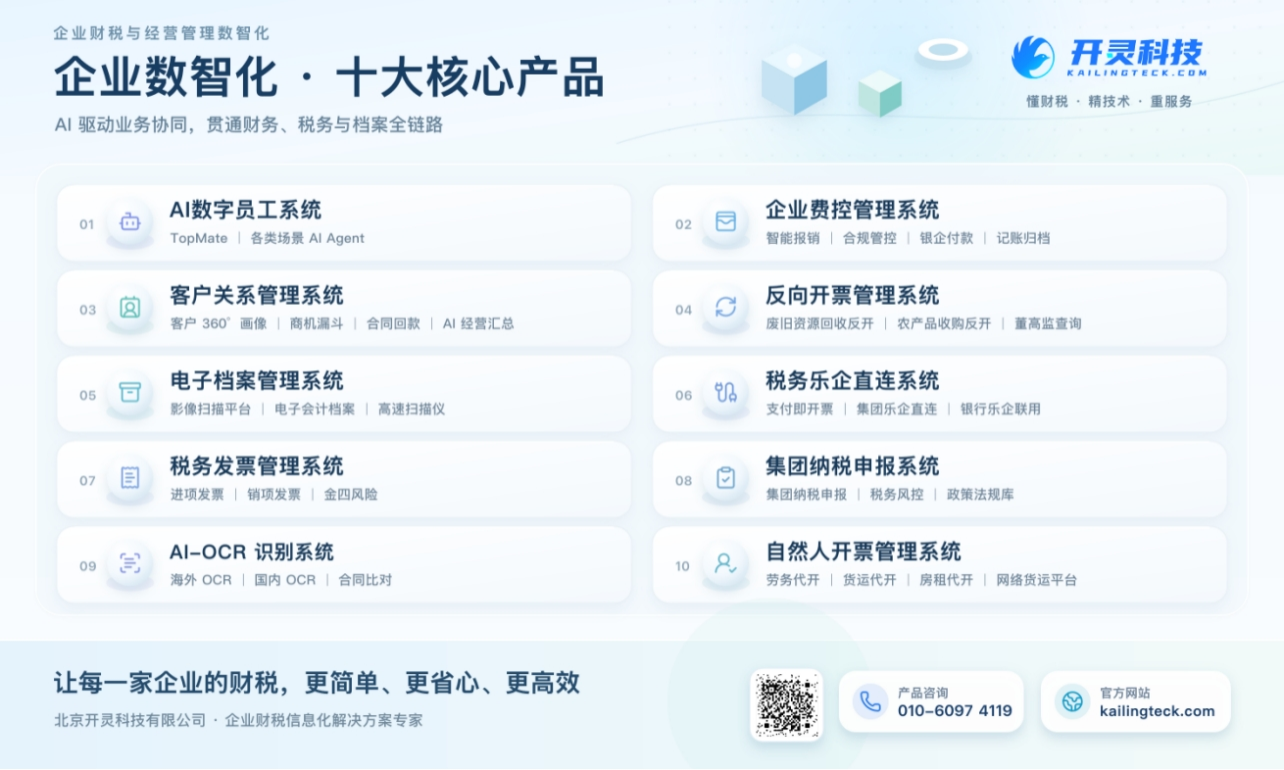
The company has now formed ten core product lines, including: AI digital employee system, enterprise expense control management system, customer relationship management system, reverse invoicing management system, invoice issuance for individuals management system, electronic archives management system, tax fully digitalized e-invoice Leqi system, tax invoice management system, group tax filing system, and AI OCR recognition system. It is committed to connecting enterprise business, finance, tax, funds, and archive data to help customers improve operational efficiency, business-finance-tax compliance capabilities, and digital management levels.
If you have any business-finance-tax digital transformation needs, welcome to contact us. Beijing Kailing Technology will serve you wholeheartedly.
Keywords: Electronic accounting archive retention periods, expiry appraisal, archive classification, Kailing Technology electronic accounting archive management system
As a comprehensive business-finance-tax digitalization solution service provider, Kailing Technology provides business-finance-tax management digital transformation products and operational services for various government agencies, institutions, and large, medium, and small enterprises. The product line includes: solutions for sales contract management system, procurement contract management system, fully digitalized Leqi interface project, automatic output invoicing system, reverse invoicing system, invoice issuance for individuals system, employee expense control and reimbursement system, input VAT invoice management system, supply chain collaborative reconciliation system, image AI OCR recognition system, automatic financial bookkeeping system, electronic accounting archives system, etc., comprehensively driving the digitalization process across various fields.
Consultation Hotline: 18513895936 / 010-60974119 Location: Beijing