
How is the waste paper recycling reverse invoicing amount determined? The Kailing Technology resource recycling reverse invoicing system links weighing, moisture and impurity deductions, and settlement records.
When waste paper arrives at the station, it is weighed by vehicle, but settlement may be adjusted by moisture, inclusions, and grade. If finance only looks at the final total price, it cannot restate the calculation process from gross weight to invoice amount. The Kailing Technology resource recycling reverse invoicing system places weigh tickets, deductions, settlement confirmation, and invoices in the same goods order, so that the amount is traceable.

▍First determine the measurement starting point, then judge the settleable quantity
Waste paper receiving should retain entry and exit weighing, vehicle, time, and weigh ticket number. Gross weight minus tare weight gives the basic net weight, but the basic net weight is not always the final settlement weight. Recycling stations need to record paper type, baling method, on-site sampling, and sorting results so that finance knows from which batch the deductions begin.
Deductions for moisture, impurities, and quality downgrades should have clear rules. Especially when goods arrive on rainy days or paper bales contain other materials, the inspector should record the trigger conditions, sampling evidence, deduction quantity or ratio, and reviewer. Goods notes disputed by the counterparty should first be held in a pending-confirmation status; uniformly backfilling deductions at month-end makes the invoice amount difficult to reconstruct.
If the same vehicle carries multiple types of waste paper, gross weight can be retained by vehicle, while settlement details are split by category. Returns or re-weighing cannot only change the final net weight; values before and after adjustment should be shown. The Kailing Technology system uses the goods note as the business number, linking weighbridge results with final confirmation records, so that on-site and finance use the same measurement basis.
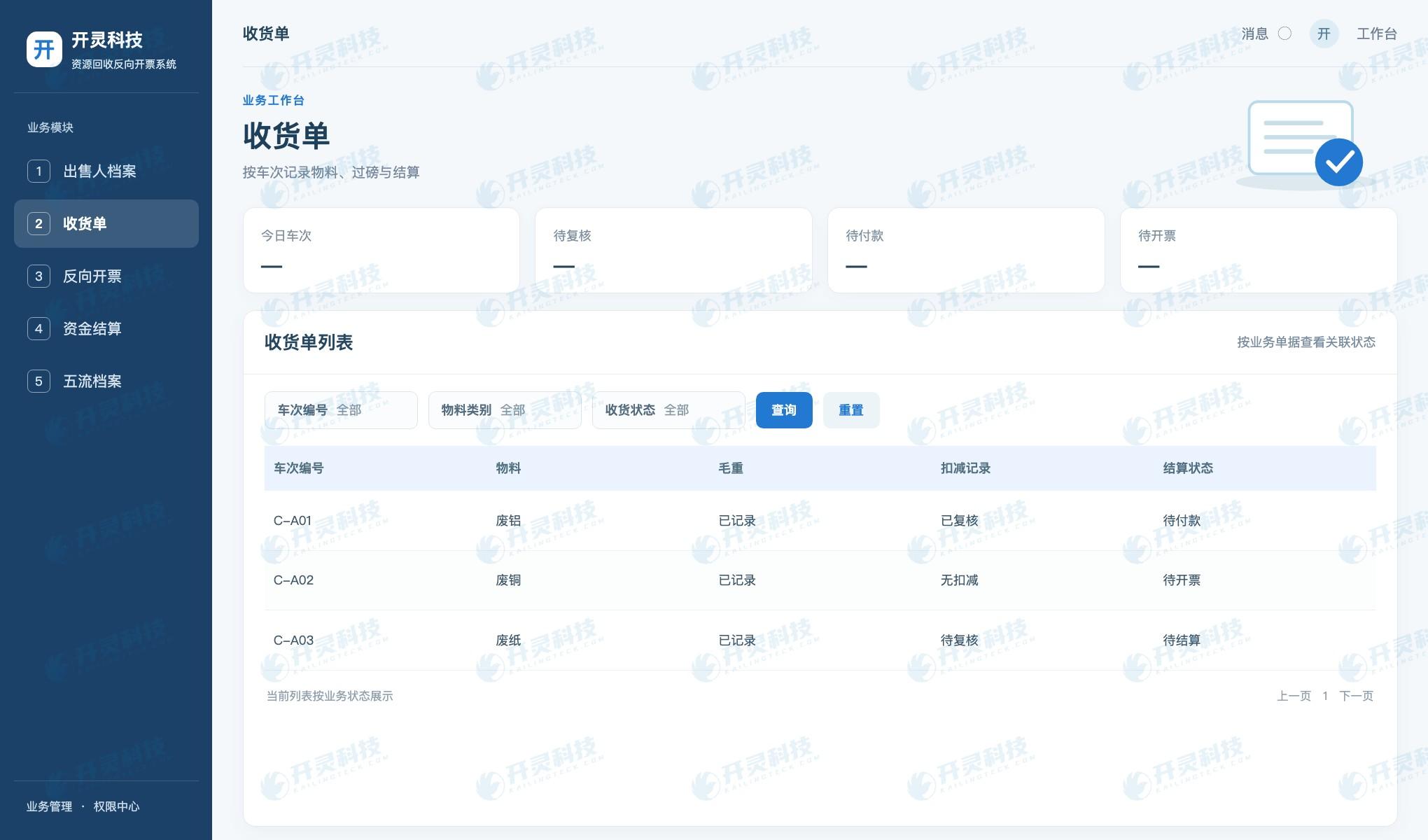
Waste paper weighing and settlement records
▍Write deductions as verifiable calculations
The settlement amount is generally formed from the confirmed weight of each type of waste paper and the applicable unit price, then contractually agreed adjustment items are handled. Each deduction should state which weighbridge ticket it targets, which type of goods, and what rule it is based on. If deducted by ratio, the base used should be retained; if deducted by weight, the quantity before and after deduction should be shown.
Prices may be adjusted daily, by grade, or per contract, and finance should retain the effective time. When business personnel negotiate prices temporarily, the reason and confirmation process must be recorded. A settlement document without a price version may later calculate the same total amount but cannot explain why that unit price was chosen at the time.
During review, a finance person who did not participate in receiving can independently calculate once from the weigh ticket. If the settlement amount cannot be recalculated, invoicing should not be rushed. The system can provide discrepancy alerts, and business and finance can then determine whether it is a data entry error, a rule version issue, or an actual dispute.
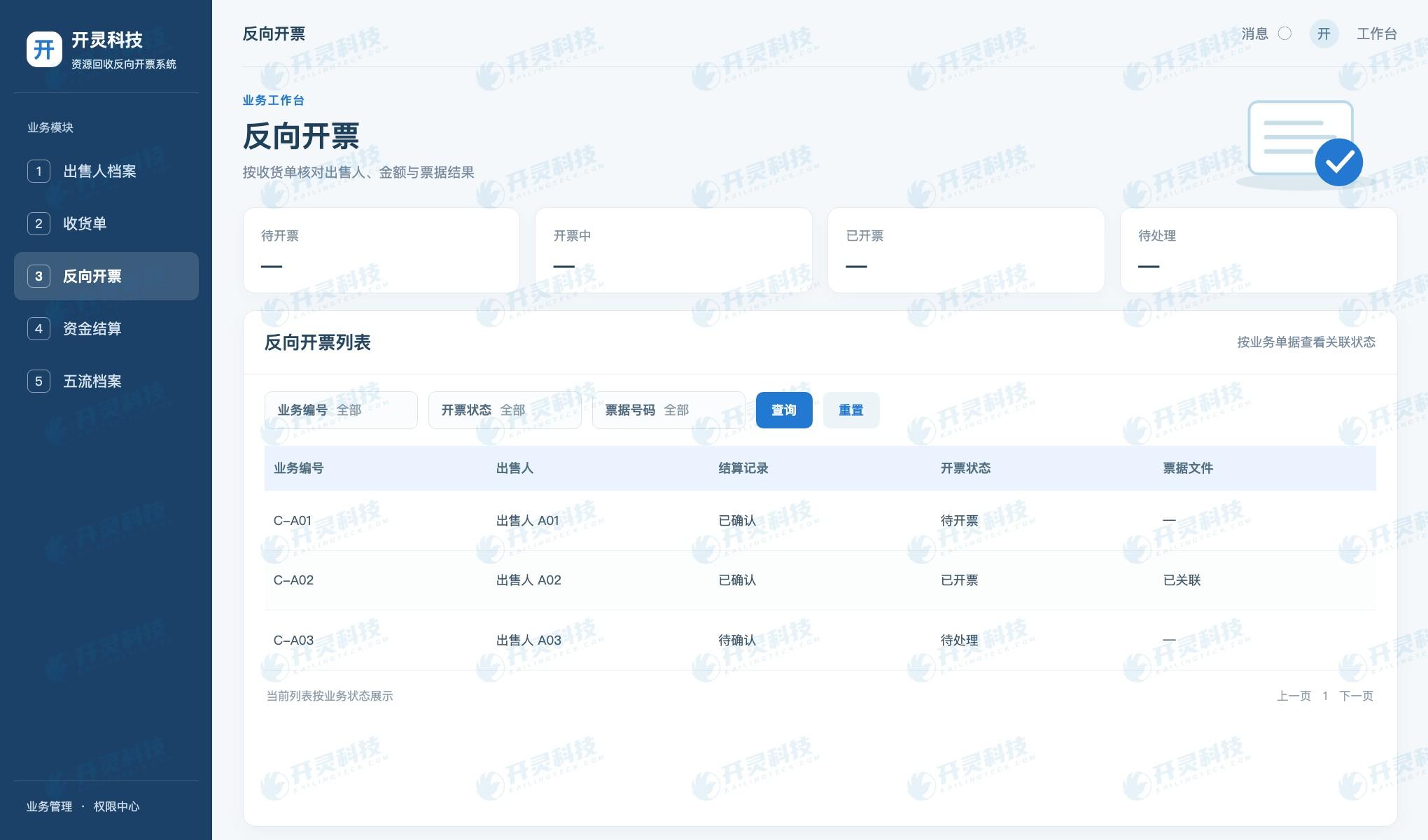
Settlement results linked to reverse invoicing
▍How invoices and payments carry forward the final settlement figures
Reverse invoicing should correspond to the actual seller and confirmed scrap product transactions. Before invoicing, verify the seller's identity, waste paper category, settled quantity, and amount; after the invoice is issued, link the invoice number and electronic file back to the original goods order. When different batches are combined into one invoice, the details should be expandable rather than showing only a summary amount.
The payment step also uses the same settlement result. If the receipt amount differs from the payable amount, it may be due to installment payment, deduction, or payment failure, and the reasons should be marked separately. Do not hide the difference by manually checking "paid." Pending payment, partially paid, and settled are three statuses with different meanings.
If a moisture determination error is later found, settlement needs to be reconfirmed, and it should be checked whether the original invoice and funds require corresponding handling. The system should retain the adjustment chain and handler traces so that finance can reconcile the new amount with the old records.
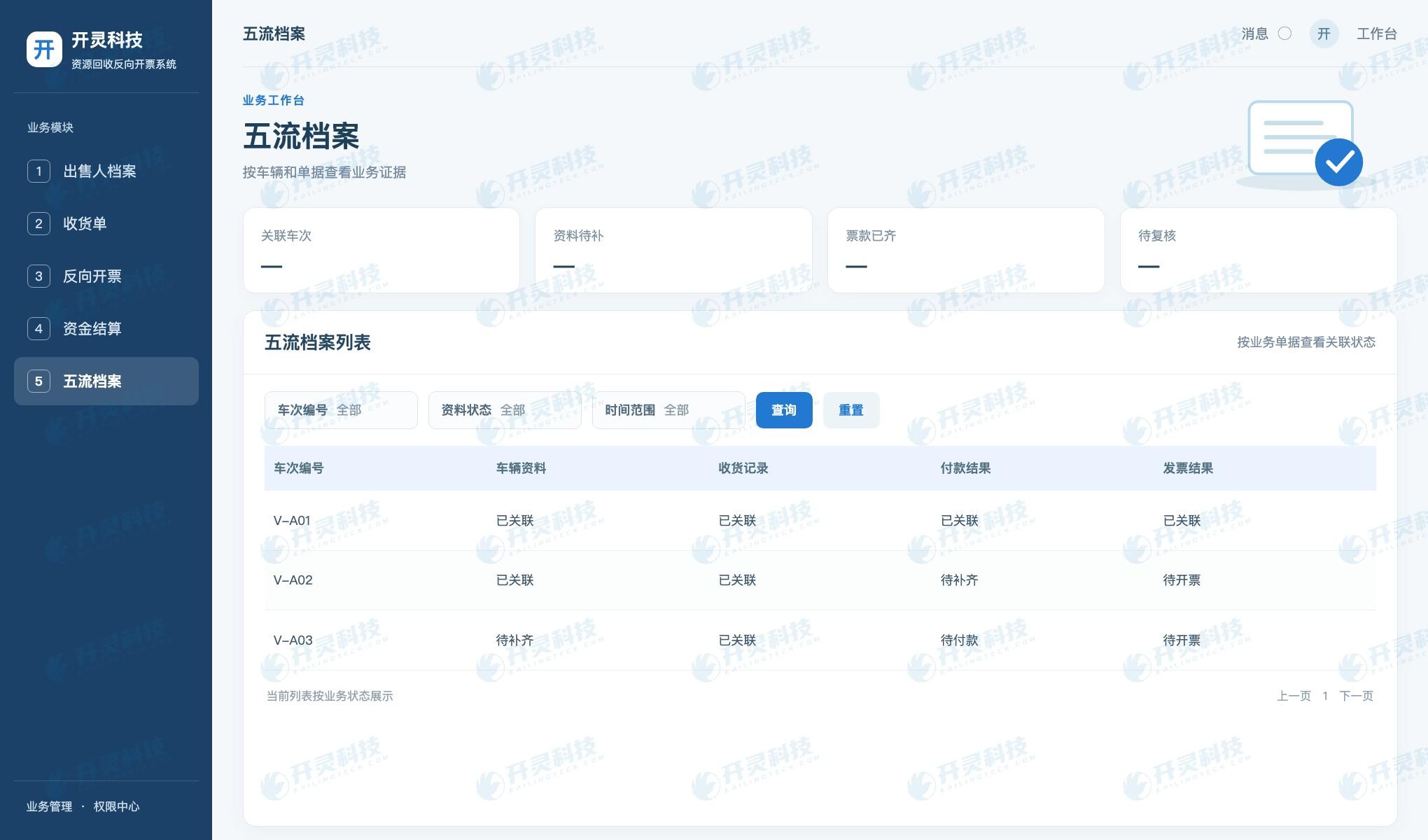
Waste paper transaction evidence collection
▍Start month-end reconciliation from exception orders
Month-end should not only summarize waste paper tonnage and invoiced amounts. First filter out documents with missing weighbridge tickets, unconfirmed deductions, settlement-invoice inconsistencies, and unsettled payments, then group them by site or seller. The earlier anomalies are located to goods notes, the less reliance there is on on-site staff explaining from memory afterward.
Select five typical delivery notes to validate the system: normal receipt, rain water deduction, impurity deduction, cross-day price adjustment and returns. Let acceptance staff see the basis from the delivery note, and let finance trace back the calculation from the invoice and payment. The weight, price, amount and version seen by both sides should be consistent.
The role of the Kailing Technology resource recycling reverse invoicing system in the waste paper business is to make weighing, deductions, and settlement form the same reviewable record. Pricing rules are formulated and reviewed by the enterprise, while the system helps record the execution process clearly.
▍Retain both the on-site and settlement perspectives for deduction disputes
Waste paper bales are densely packed, and the surface and inner layers may be in different conditions. When sampling finds inclusions, acceptance personnel should explain the sampling location, weighing method, and handling choice for the batch, and ask the seller to confirm. If the two parties do not reach agreement, record the provisional result and disputed quantity; finance must not fill in an impurity deduction percentage based on experience. In the system, disputed status should prevent the corresponding amount from entering final settlement, but allow other confirmed batches to continue flowing.
The same purchasing point may have multiple deduction rules: by moisture test, by impurity weight, or by grade discount. Rules are not better simply because they are more complex; the key is which version is used at receiving, which paper types it applies to, and who approves special handling. If rules are updated, the effective time should be marked, and historical goods orders should continue to use the version at that time; re-settlement should generate adjustment records so that subsequent review can see the original and new values.
During financial reconciliation, an invoice amount can be split into three layers: original weighbridge quantity, inspection-confirmed settleable quantity, and the unit price and adjustment items actually applied. If each layer can be traced back to the original materials, the invoice figures need not rely on the handler's verbal explanation. If different goods notes are invoiced together, each settlement statement can be expanded; combined payments likewise need allocation so that invoices and payments can be compared by batch.
Monthly business analysis should also distinguish received weight from settleable weight. If a site's deductions are abnormally high, managers can go from the statistics to the corresponding samples to see whether it is seasonal moisture variation, supply quality variation, or inconsistent rule enforcement. The Kailing Technology system records business facts and provides an entry point for review; specific deduction standards are still set by the enterprise based on contracts and on-site inspection.
▍A calculation path for financial review
Take a vehicle of baled waste paper as an example. The receiving clerk first saves the two weighings at vehicle entry and exit, then records sampling by paper type. If one bale is damp, the acceptance clerk registers moisture deduction only for the affected detail, while other details are still priced under normal rules. When finance opens the goods order, they should see the original net weight, deduction basis, settleable weight, and both parties' confirmation time at the same time, so they can independently derive the total payable for this vehicle of goods.
The invoicing staff then generates a reverse invoice from the confirmed amount, and the cashier arranges payment for the same amount. If the bank returns the payment and the account is changed, the quantity and price on the goods note should not be modified; if re-inspection changes the settlement quantity, the invoice and payment must be checked in sync. Keeping changes for different reasons at different nodes makes month-end discrepancies easier to locate.
▍FAQ
Q: Should the invoice amount be calculated directly from gross weight?
A: The amount should be formed based on confirmed settlement rules, net weight, grade, and deductions; gross weight must not be used directly as the settlement quantity.
Q: How is reconciliation handled when one invoice corresponds to multiple batches of waste paper?
A: Expand each invoice into its batch goods orders and settlement details, while retaining the payment allocation relationships.
Q: If a return occurs after reverse invoicing, which records should be checked?
A: First locate the original goods order, the returned quantity or amount, and the payment status, then handle invoice adjustment or red-letter reversal according to the applicable process. The system should retain the original weighing, settlement, invoice, and receipts, and add return and adjustment records; it must not delete the original order and overwrite it with a new net amount. Finance should also check whether the current-period reconciliation and subsequent payments are affected.
Visit Kailing Technology to learn about related products and implementation plans: https://www.kailingteck.com/fxzy/ .
As a national high-tech enterprise, Kailing Technology focuses on the digital and intelligent transformation of enterprise business-finance-tax and operations management, providing software products, system integration, implementation and delivery, and operational services for various government agencies, institutions, group enterprises, and SMEs.
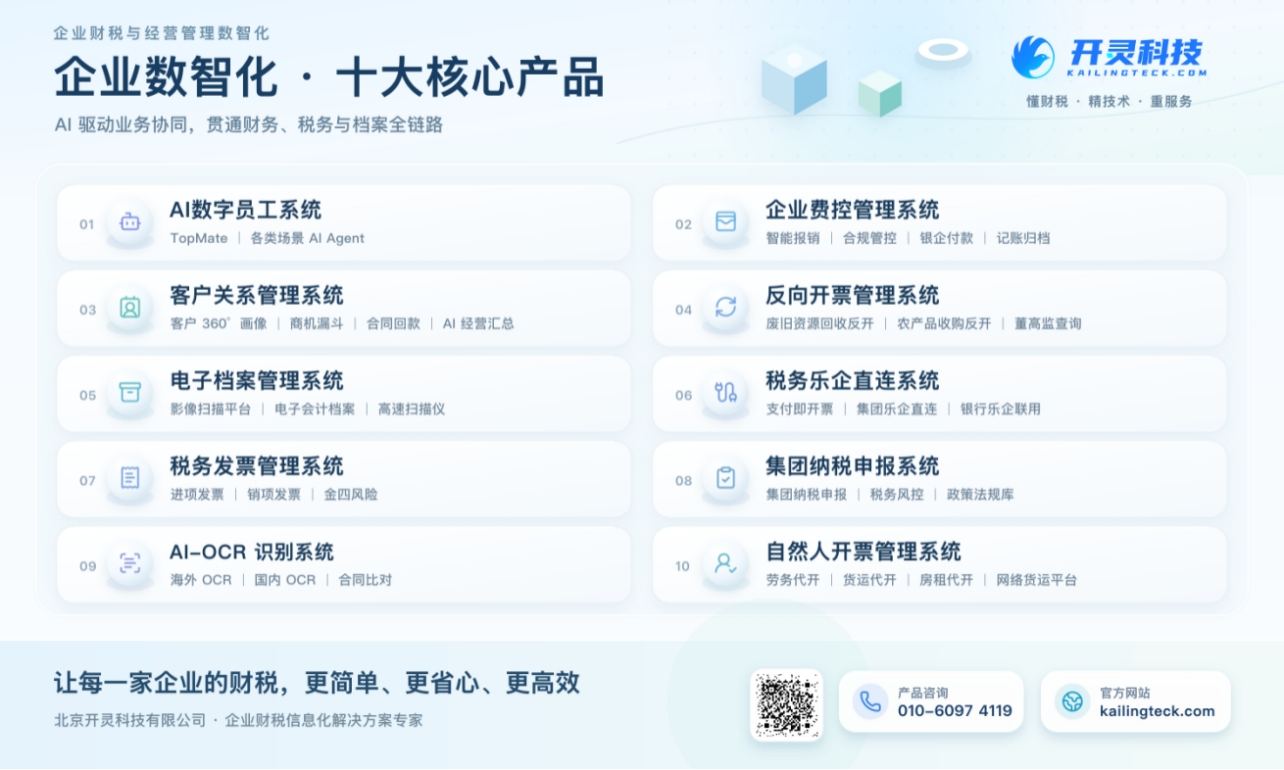
The company has now formed ten core product lines, including: AI digital employee system, enterprise expense control management system, customer relationship management system, reverse invoicing management system, invoice issuance for individuals management system, electronic archives management system, tax fully digitalized e-invoice Leqi system, tax invoice management system, group tax filing system, and AI OCR recognition system. It is committed to connecting enterprise business, finance, tax, funds, and archive data to help customers improve operational efficiency, business-finance-tax compliance capabilities, and digital management levels.
If you have any business-finance-tax digital transformation needs, welcome to contact us. Beijing Kailing Technology will serve you wholeheartedly.
Keywords: Waste paper reverse invoicing amount, weighing moisture and impurity deductions, settlement records, Kailing Technology resource recycling reverse invoicing
As a comprehensive business-finance-tax digitalization solution service provider, Kailing Technology provides business-finance-tax management digital transformation products and operational services for various government agencies, institutions, and large, medium, and small enterprises. The product line includes: solutions for sales contract management system, procurement contract management system, fully digitalized Leqi interface project, automatic output invoicing system, reverse invoicing system, invoice issuance for individuals system, employee expense control and reimbursement system, input VAT invoice management system, supply chain collaborative reconciliation system, image AI OCR recognition system, automatic financial bookkeeping system, electronic accounting archives system, etc., comprehensively driving the digitalization process across various fields.
Consultation Hotline: 18513895936 / 010-60974119 Location: Beijing