
How can expense control be unified when group companies have inconsistent reimbursement standards? Kailing Technology expense control and reimbursement management system configures control rules by organization

Group headquarters wants to unify expense criteria, but subsidiaries have different accommodation standards, approval levels, and payment accounts. If one rule covers all organizations, exceptions will flood offline communication; if each company builds its own table, headquarters cannot aggregate risks. The multi-organization, invoice pool, process configuration, and reporting capabilities of Kailing Technology expense control and reimbursement management system "Lingdong Reimbursement" provide an implementation foundation for "group unified framework, legal entities and departments configured by authorization."

▍First define unified standards, then write the scope of allowed differences
Unified group expense control does not mean all employees stay in same-price hotels. Headquarters should first clarify expense subjects, organization levels, project attribution, budget occupation timing, invoice requirements, and exception reporting criteria, which are used for cross-company aggregation. Subsidiaries may set travel levels, regional standards, approval roles, and payment accounts within the approved scope. Managing the two types of rules separately allows subsequent reports to both compare horizontally and explain reasonable differences.
When creating the rule list, specify item by item the applicable legal entity, department, employee job level, expense type, effective date, and exception approver. Overseas travel, temporary projects, and special positions may require separate rules and cannot be resolved by a single "by organization" field alone. If the same employee holds positions in two organizations, the attribution of the expense must first be determined to avoid approvals, budgets, and payments falling to different entities.
Inconsistent historical reimbursement standards may also stem from different financial systems and old policies. Before implementation, extract actual documents from several months to identify situations frequently manually approved, then decide which should become formal rules and which should be tightened. Directly copying old spreadsheets into the system unchanged often solidifies conflicting standards.
▍How Lingdong Reimbursement's multi-organization and process configuration work
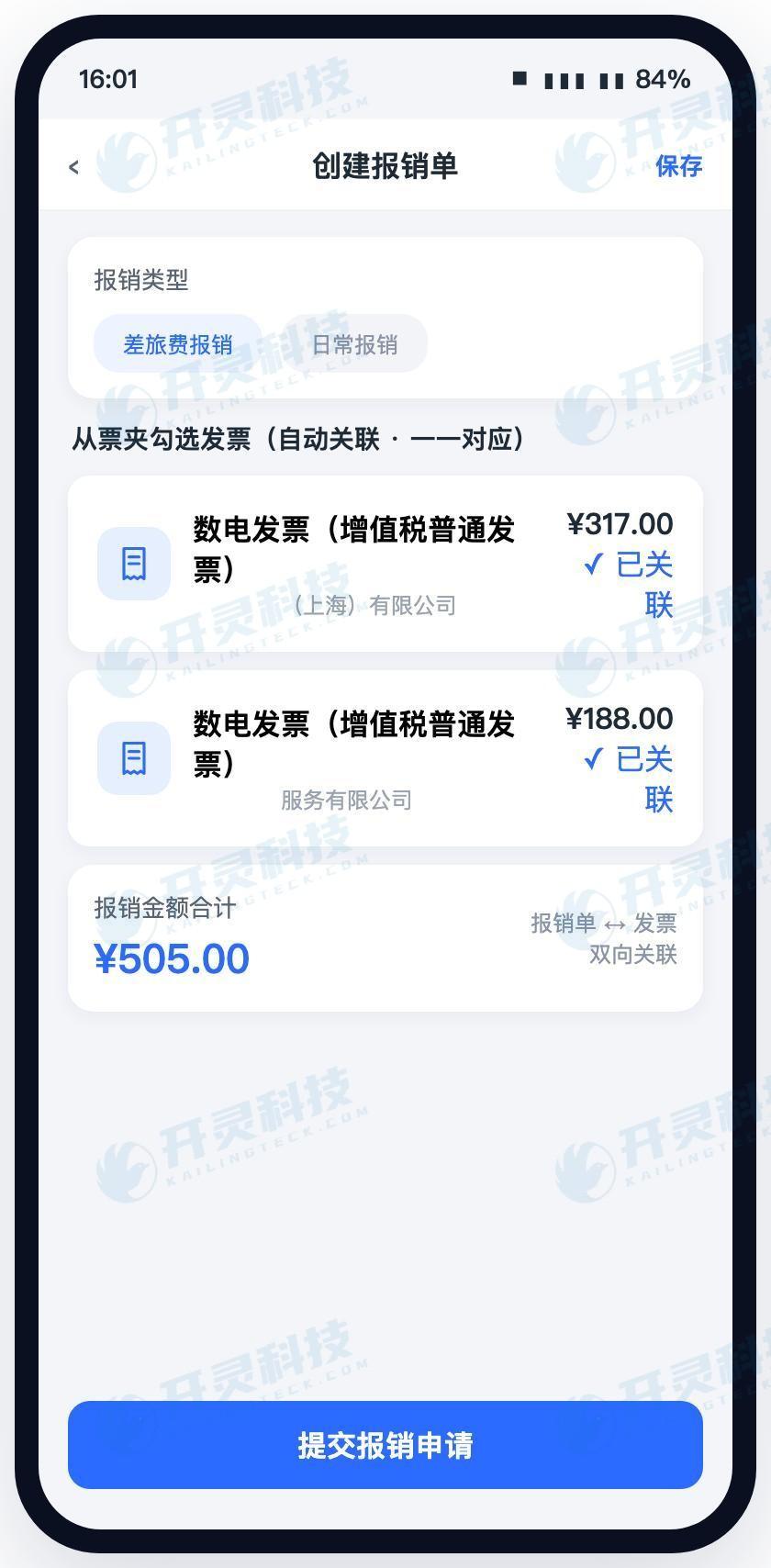
Product materials show that Lingdong Reimbursement supports multi-organization switching, permission isolation, and business processing by different roles; reimbursement forms and approval processes can be configured as needed. The group can first establish unified fields and voucher requirements, then implement reimbursement limits, approval nodes, and payment paths by organization. Employees enter the corresponding organization to process, finance views documents of its own legal entity, and headquarters views summaries as authorized; specific inheritance, override, and cross-legal-entity approval rules need to be confirmed in project configuration.
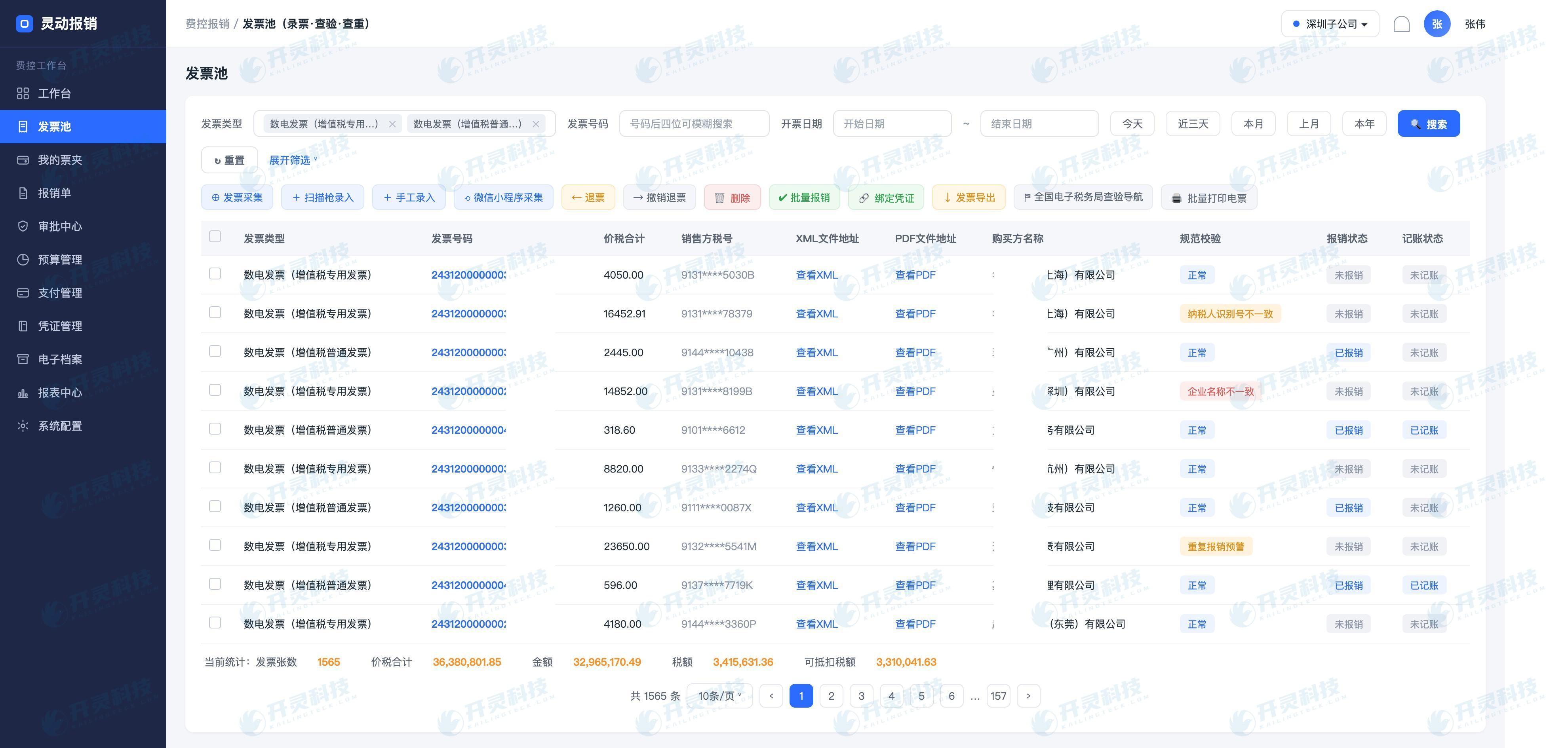
The buyer, tax ID, reimbursement status, and accounting status in the invoice pool help identify entity mismatches at the document entry point. An invoice issued to Company A but reimbursed at Company B cannot be approved merely because the expense content is reasonable. After a system prompt, there should be a clear correction or exception process recording who judged and on what basis, rather than making employees repeatedly delete and re-enter until it passes.
Approval flows should also not become longer and longer. Low-amount, within-standard expenses can simplify nodes; over-budget, cross-organization bearing, or special suppliers trigger higher-level review. AI digital employee review of policy clauses can serve as the first pre-review, but group rule versions, scope of application, and manual review authority must be clear.
▍Budgets, payments, and reports must still maintain legal entity boundaries
The headquarters often wants to see "group travel expenses", but payments must be made to the corresponding legal entity account and against the approved budget. Smart Reimbursement materials include payment management, bank file export or bank-enterprise direct connection, receipt association and custom reports; during implementation, expense attribution, payment entity, bank account and ERP accounting organization should be mapped one by one. If different companies share an employee service center, operations can be centralized, but voucher and payment responsibilities still need to be separated.
Budget control can be set as pre-application, verification at reimbursement submission, or reminder at approval, depending on the enterprise management system. Do not only look at "how much budget remains"; also distinguish applied, approved, paid, and booked amounts; otherwise the same expense may be occupied repeatedly at multiple stages. Headquarters reports must be able to drill down from aggregated figures to the original reimbursement form and invoices, so as to explain which company deviates from the standard.
When vouchers are converted to ERP, the mapping rules for cost centers and expense accounts should be confirmed by the finance team of each legal entity. Electronic archives should also be collected according to the corresponding accounting entity and retention rules; it is not advisable to pile all subsidiary attachments into the same folder without permission differentiation. The true boundary of unified expense control lies not only in the approval interface but also in payment, accounting, and archiving.
▍Retain versions when rules change, to avoid recalculating old documents under new standards
After group policy adjustments, the approver, effective date, applicable organizations, and invalidation time of the old version should be recorded. Documents for trips occurring under the old standard period but submitted for reimbursement under the new standard period should be judged according to the determined policy criteria, and finance should be allowed to view the version applicable at that time. Replay new rules with historical samples first, then enable them in batches, avoiding a single configuration change causing a large number of in-transit reimbursements to be suddenly rejected.
For acceptance, optionally select three subsidiaries with different policies and prepare four types of samples: within standard, over standard, wrong invoice title, and cross-organization bearing. Check whether the limits, approval paths, budget occupation, payment entities, and headquarters aggregation seen by employees are correct. Kailing Technology expense control and reimbursement management system configures control rules by organization, with the goal of making differences justified, exceptions approvable, and the group comparable, rather than forcing all business to use the same reimbursement form.
▍Use a rule matrix to clarify who can change and who reviews
Group rules are issued by headquarters finance or the policy department; subsidiaries only adjust local limits and approvers within the authorized range; system administrators are responsible for configuration and should not interpret policy on their own. Set application reasons, attachments, approval authority, and validity period for exception documents, avoiding a one-time special approval becoming a long-term default. When approvers leave their posts, organizations merge, or cost centers adjust, the rule matrix should be revised simultaneously, and documents must not continue to be sent to invalid positions.
Rule testing should not only check whether the interface displays the correct amount, but also verify how over-standard cases are handled: reminder, prohibition of submission, allowing continuation with reasons or escalation for approval, depending on group policy. Different expense types can adopt different intensities. For example, an incorrect invoice title for transportation may require correction, while project entertainment exceeding budget may require additional approval; the system should not classify all exceptions as the same kind of "review failed".
Reports of the headquarters and subsidiaries should also use the same statistical scope. If one company records accommodation expenses as project cost and another records them as administrative expenses, mapping is needed before cross-company consolidation. In the early stage of go-live, conduct monthly spot checks of each organization's exception release records, payment entities and voucher accounts, and correct differences in policy interpretation promptly, rather than relying only on a one-time year-end cleanup.
▍FAQ
Q: With group-wide unified expense control, can subsidiaries still retain different standards?
A: Under unified headquarters accounts and control standards, local standards and approval paths can be configured with authorization.
Q: If the same employee works part-time at two companies, who handles the reimbursement?
A: First determine the actual attribution of the expense and the paying entity, then match the corresponding organizational rules and approval authority.
Q: After policy adjustments, will old reimbursement forms be re-judged under the new rules?
A: It should be handled according to the effective date and confirmed rules, and historical versions and exception records should be retained.
Q: How does headquarters verify summary data?
A: Drill down from organization and expense account summaries to reimbursement forms, receipts, payments, and vouchers, rather than only looking at totals.
Unify group rules and make organizational differences traceable. Learn about Kailing Technology expense control and reimbursement management system: https://www.kailingteck.com/feikong/ .
As a national high-tech enterprise, Kailing Technology focuses on the digital and intelligent transformation of enterprise business-finance-tax and operations management, providing software products, system integration, implementation and delivery, and operational services for various government agencies, institutions, group enterprises, and SMEs.
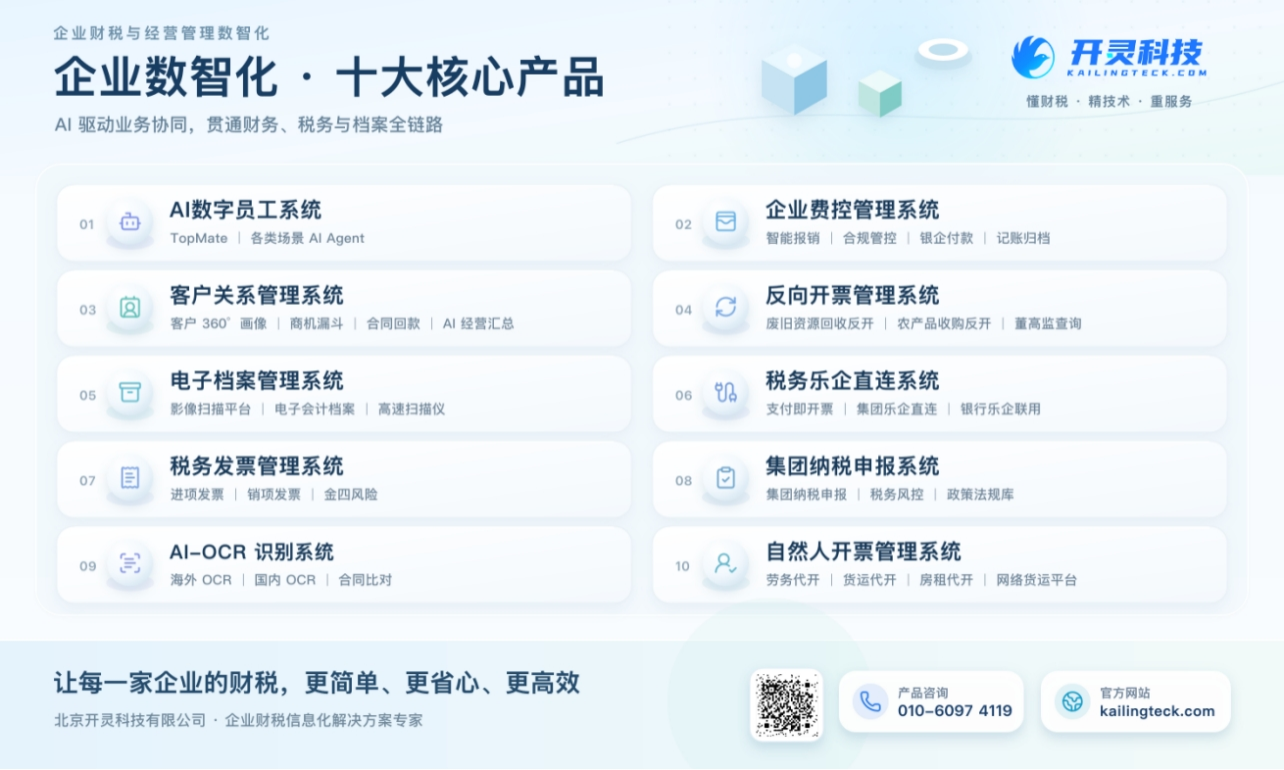
The company has now formed ten core product lines, including: AI digital employee system, enterprise expense control management system, customer relationship management system, reverse invoicing management system, invoice issuance for individuals management system, electronic archives management system, tax fully digitalized e-invoice Leqi system, tax invoice management system, group tax filing system, and AI OCR recognition system. It is committed to connecting enterprise business, finance, tax, funds, and archive data to help customers improve operational efficiency, business-finance-tax compliance capabilities, and digital management levels.
If you have any business-finance-tax digital transformation needs, welcome to contact us. Beijing Kailing Technology will serve you wholeheartedly.
Keywords: Kailing Technology expense control and reimbursement management system, group expense control, multi-organization reimbursement, reimbursement standard configuration, Smart Reimbursement
As a comprehensive business-finance-tax digitalization solution service provider, Kailing Technology provides business-finance-tax management digital transformation products and operational services for various government agencies, institutions, and large, medium, and small enterprises. The product line includes: solutions for sales contract management system, procurement contract management system, fully digitalized Leqi interface project, automatic output invoicing system, reverse invoicing system, invoice issuance for individuals system, employee expense control and reimbursement system, input VAT invoice management system, supply chain collaborative reconciliation system, image AI OCR recognition system, automatic financial bookkeeping system, electronic accounting archives system, etc., comprehensively driving the digitalization process across various fields.
Consultation Hotline: 18513895936 / 010-60974119 Location: Beijing