
How to choose among the top ten agency bookkeeping software? A guide for agency accountants to file in batches without overtime

How to choose among the top ten agency bookkeeping software? First confirm the ranking criteria, then do five-step verification
There is no official "top ten" ranking in the market that covers all agency bookkeeping software, uses a unified sample, and is continuously updated. Rankings in search results may be based on brand awareness, price, number of features, promotional cooperation, or author experience, and samples and weights often differ. Rankings without clear sources, test dates, and scoring tables cannot be directly used as procurement conclusions.
Rankings can only help discover candidates; what is truly useful is reproducible testing in the same scenario, with the same data, and the same version. |
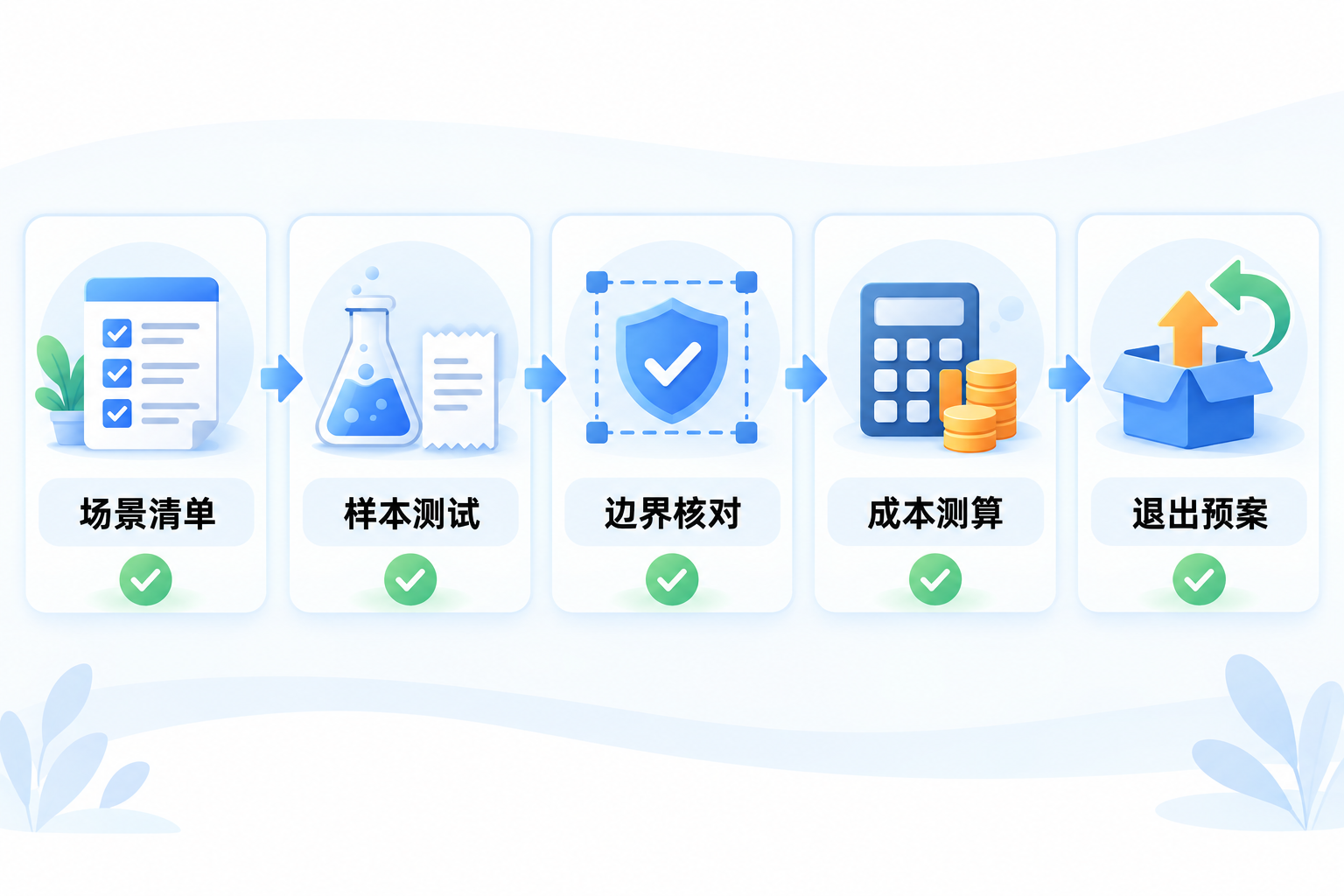
▍1. Scenario checklist: first quantify the agency's real workload
Record the number of customers, number of account sets, accounting systems, industry distribution, invoice sources, filing regions, personnel roles, and peak periods during the filing period. Then break requirements into customer file creation, invoice collection, voucher preparation, task assignment, filing review, risk alerts, archive retrieval, and data export. Only when scenarios are clearly written can you know whether the candidate software solves a core bottleneck or an edge feature.
▍2. Sample testing: test processes with abnormal business, not just demos
Have candidate solutions process a batch of desensitized samples, including normal invoices as well as duplicate invoices, red-letter or voided invoices, cross-period documents, missing fields, invalid account authorization, and interface interruptions. Observe whether the system saves original data, flags exceptions, allows manual review, and records retries. OCR recognition can generate candidate fields, and automation can prepare tasks or voucher drafts, but "recognition completed" cannot be directly equated with "posted" or "filed."
▍3. Boundary verification: break batch capabilities into verifiable steps
For "batch filing," "automatic invoice retrieval," and "one-click tax filing," you should ask further: which regions, tax types, and account environments apply, where the data comes from, what kind of enterprise authorization is required, which steps must be manually confirmed, and how to roll back on failure. Tax platforms and interface capabilities change, so procurement contracts should be based on the currently available scope, the joint debugging results of both parties, and the acceptance checklist; the performance of a demo environment cannot be extrapolated to all customers.
▍4. Cost estimation: include implementation, interfaces, and operations in total cost
In addition to subscription fees, you must also account for the number of account sets or customers, user seats, storage, interfaces, customization, initialization, training, upgrades, and migration. Efficiency gains should also be measured using pilot data: under the same customer sample, record labor hours, exception rates, review duration, and number of failed reruns. Without actual measurement evidence from the institution itself, specific efficiency multiples should not be published, nor should it be promised that business growth will require no corresponding increase in personnel.
▍5. Exit plan: confirm that customer materials and accounting archives can be taken away
Before launch, you should confirm the export formats for customers, account sets, vouchers, attachments, approval records, operation logs, and archives, as well as migration assistance, backup retention, and deletion arrangements after service termination. Based onCai Kuai [2020] No. 6 notice, reimbursement, posting, and archiving of electronic accounting vouchers require conditions such as legality and authenticity, safety and reliability, complete reading of vouchers and metadata, necessary review and signing, prevention of duplicate posting, and archive management; the system providing scanning, recognition, or linking functions does not automatically mean all conditions are met.
How to form your own candidate list?
Candidates can be collected from vendor websites, existing implementation partners, peers' real usage, and trial environments, then scored uniformly according to the scenario checklist. Whether Kailing Finance and Tax Cloud or other agency bookkeeping software suits a particular institution should be based on the current version, written capability boundaries, desensitized sample testing, cost estimation, and contract terms. If an article or ranking does not disclose this information, it should be treated as a lead rather than ranking evidence.
Keywords: top ten agency bookkeeping software, agency bookkeeping software selection, batch tasks, invoice processing, electronic accounting archives, interface boundaries, total cost of ownership, data migration
As a comprehensive business-finance-tax digitalization solution service provider, Kailing Technology provides business-finance-tax management digital transformation products and operational services for various government agencies, institutions, and large, medium, and small enterprises. The product line includes: solutions for sales contract management system, procurement contract management system, fully digitalized Leqi interface project, automatic output invoicing system, reverse invoicing system, invoice issuance for individuals system, employee expense control and reimbursement system, input VAT invoice management system, supply chain collaborative reconciliation system, image AI OCR recognition system, automatic financial bookkeeping system, electronic accounting archives system, etc., comprehensively driving the digitalization process across various fields.
Consultation Hotline: 18513895936 / 010-60974119 Location: Beijing