
Input VAT invoices never match U8? 2026 automatic invoice retrieval and posting solution

Input VAT invoices never match U8? First clarify invoice sources, mapping, review, and writing boundaries
Input VAT invoice and U8 integration is not about directly "stuffing" data from the tax digital account into the account set. A sound process should include enterprise authorization, invoice query or export, status verification, field mapping for suppliers and subjects, manual review of exceptions, controlled writing, and log retention. The specific U8 version, modules, interface licenses, and data dictionary may differ; whether integration is possible and how to write should be based on the enterprise's existing environment, vendor documentation, and joint debugging results.
The goal of integration is to reduce duplicate entry while ensuring every field has a source, every write can be reviewed, and every exception can be rolled back. |
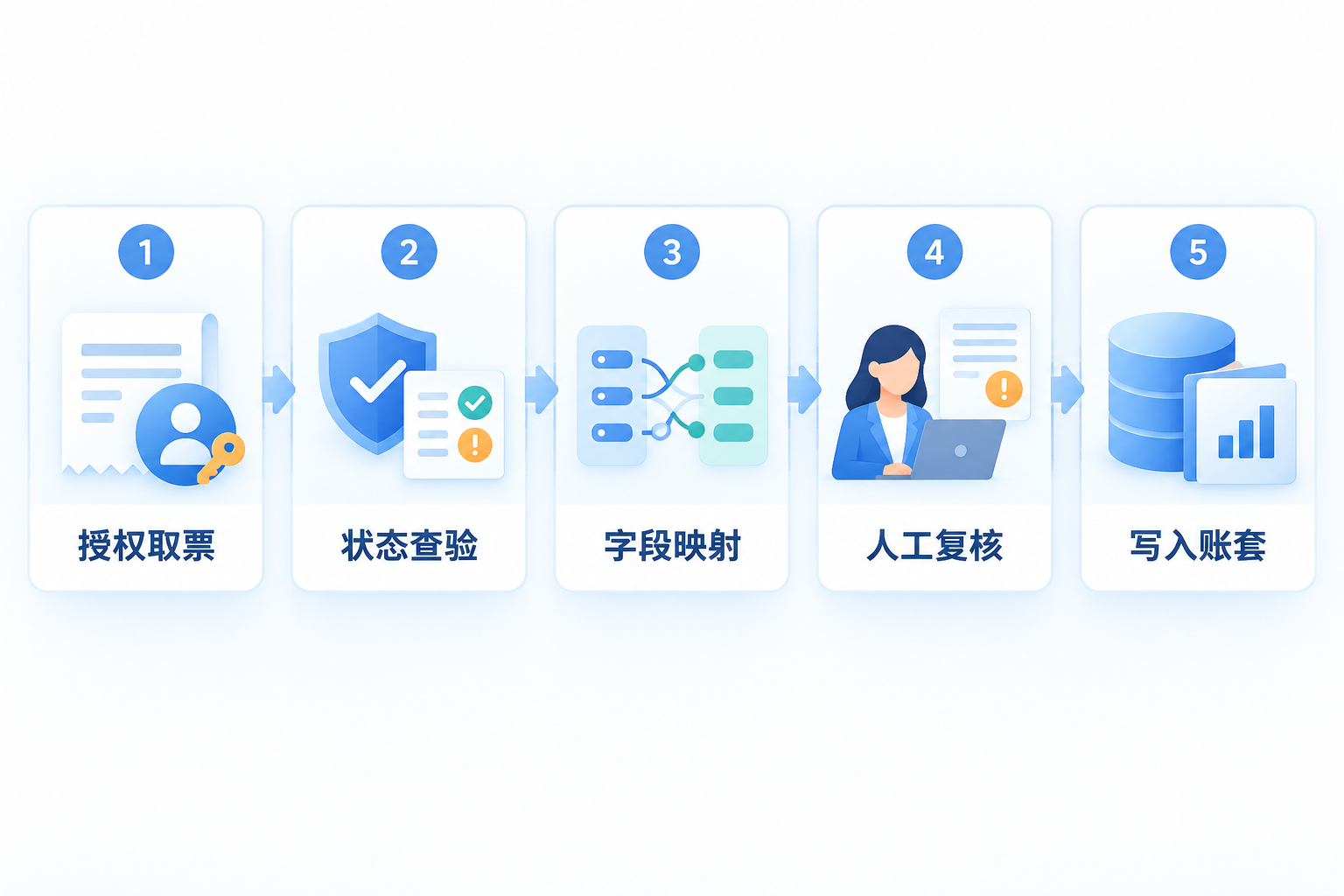
▍1. Authorized invoice retrieval: first confirm the data source and available scope
According toState Taxation Administration Announcement No. 11 of 2024, units and individuals can log in to their own tax digital accounts to query, download, print, and export issued or received fully digitalized e-invoices, and can perform verification and posting identification operations. Enterprise tools can assist in collecting these data within the scope of legal authorization and current interface support, but cannot broadly promise coverage of all invoice sources, nor should they bypass identity verification, access control, and platform rules.
▍2. Status verification and use confirmation are two different things
Invoice verification can be used to check the invoice information and current status, and duplicate checking can identify risks of duplicate import or duplicate reimbursement, but passing verification does not mean it can automatically be deducted. After the recipient obtains a fully digitalized e-invoice, if it is used for matters such as declaring and deducting input VAT, the use should be confirmed through the tax digital account and declared according to applicable tax rules. The system should separately save the invoice source, verification results, use confirmation status, red-letter or abnormal changes, rather than replacing all judgments with a single "valid" label.
▍3. Field mapping: identical names may not be the same master data
The buyer and seller, item name, specification, unit, quantity, amount, and tax amount on the invoice need to be mapped to the supplier, inventory, department, project, tax code, and accounting subject in U8. Abbreviations, historical codes, multiple tax numbers, and merged suppliers can all cause matching conflicts. The system can provide candidate values based on approved rules, but should retain the original fields, mapping version, confidence prompts, and modification records; first-time matches, low-confidence results, and one-to-many conflicts must be confirmed by personnel.
▍IV. OCR is a supplementary means and cannot skip entry review
Fully digitalized e-invoices already have structured data, so OCR is more suitable for assisting with scanned paper invoices, contracts, delivery notes, and other supporting materials. Image quality, layout, and missing fields can all cause recognition errors. Recognition results can only serve as candidate data or part of a voucher draft, and still need to be reviewed in combination with the actual business, approval records, accounting policies, and use confirmation; they cannot be automatically deemed posted or deducted at the same time recognition is completed.
▍5. Controlled writing and archiving: a successful interface call is only a technical status
During integration, data can first be written to an intermediate table or pending review area, and after verifying the account set, period, currency, debit-credit balance, auxiliary accounting, and duplicate keys, authorized personnel confirm the write. The interface should record requests, responses, batches, failure reasons, and rollback results. BasisCai Kuai [2020] No. 6 notice, electronic accounting voucher reimbursement, posting, and archiving also need to meet conditions such as legality and authenticity, safety and reliability, complete reading of vouchers and metadata, necessary review and signatures, prevention of duplicate posting, and archive management; successful writing to U8 does not mean all these conditions have been fulfilled.
Keywords: input VAT invoice management, U8 integration, authorized invoice retrieval, invoice status verification, field mapping, manual review, use confirmation, electronic accounting archives
As a comprehensive business-finance-tax digitalization solution service provider, Kailing Technology provides business-finance-tax management digital transformation products and operational services for various government agencies, institutions, and large, medium, and small enterprises. The product line includes: solutions for sales contract management system, procurement contract management system, fully digitalized Leqi interface project, automatic output invoicing system, reverse invoicing system, invoice issuance for individuals system, employee expense control and reimbursement system, input VAT invoice management system, supply chain collaborative reconciliation system, image AI OCR recognition system, automatic financial bookkeeping system, electronic accounting archives system, etc., comprehensively driving the digitalization process across various fields.
Consultation Hotline: 18513895936 / 010-60974119 Location: Beijing