
Sole proprietors always hit pitfalls when invoicing? 2026 compliant batch invoicing guide

How can sole proprietors issue invoices compliantly? First confirm status, business, invoice type and quota
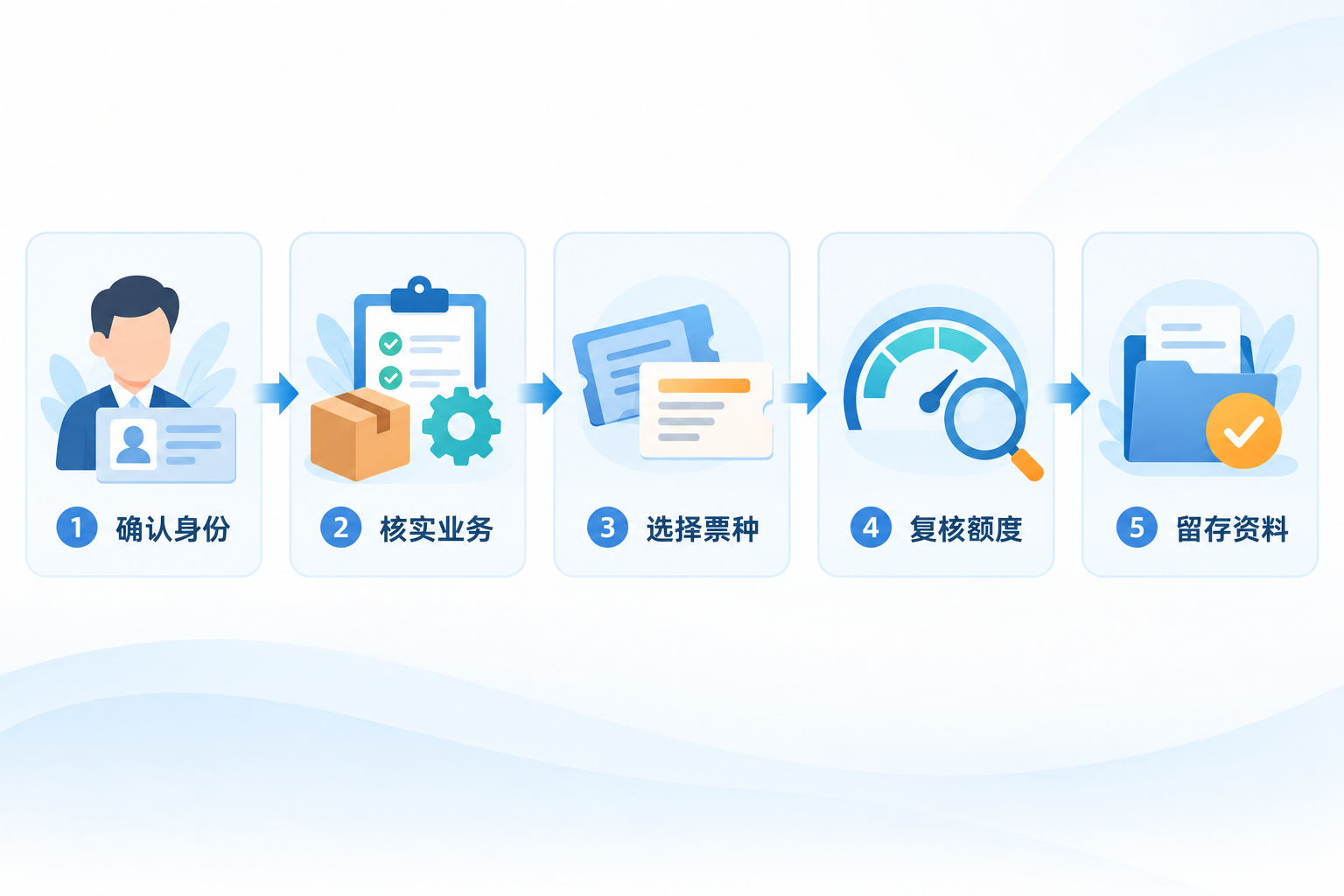
Sole proprietor invoicing cannot be based only on customer needs or operating speed. A more reliable order is: confirm taxpayer status and registration status, verify the real taxable business, choose the invoice type and issuance method according to current rules, review the total invoice quota and invoice information, and then retain contracts, receipts and payments, delivery and accounting materials. The system can assist with validation and recording the process, but cannot replace judgment on business authenticity, tax treatment and filing responsibility.
The compliance bottom line is not "issue less" or "split up," but real business, consistent information, clear permissions and traceable materials. |
▍1. What invoices can be issued depends on taxpayer status and current rules
Sole proprietors should base invoicing on real taxable transactions, truthfully fill in the buyer, item name, amount and other invoice information, and must not change the substance of the business at the customer's request. For VAT special invoices, the issuance method also depends on taxpayer status and current rules. Public statements from tax authorities show that small-scale taxpayers that have completed tax registration (including sole proprietors) may, when engaging in VAT taxable acts and needing special invoices, apply to the competent tax authority for issuance on behalf according to regulations; small-scale taxpayers other than other individuals may also voluntarily choose to issue invoices themselves, and after choosing so, the corresponding business shall be issued by themselves. Before proceeding, the current rules of the competent tax authority and the electronic invoice service platform shall prevail. Reference may be made toQingdao Municipal Tax Service public replyandZhejiang Provincial Tax Service tax guide。
▍2. If the total invoice quota is insufficient, apply for adjustment based on real business changes
Fully digitalized e-invoices are subject to total invoice quota management. According to"Announcement of the State Taxation Administration on Promoting the Application of Fully Digitalized Electronic Invoices" (No. 11 of 2024), tax authorities grant and dynamically adjust the total invoice quota based on factors such as the taxpayer's risk level, tax credit rating and actual operating conditions; if adjustment is needed due to changes in actual operating conditions, the taxpayer may apply according to regulations, and the competent tax authority shall confirm in accordance with laws and regulations. Splitting transactions, changing item categories or fabricating business cannot solve quota problems. The system can assist in monitoring quotas, organizing real business materials and prompting to-dos, but cannot promise automatic approval.
▍3. Deduction of operating costs requires real business and lawful, valid vouchers
For sole proprietors subject to audit collection, only expenditures related to production and operation, actually incurred and supported by lawful and valid vouchers may be deducted when calculating operating income according to regulations; items unrelated to production and operation, personal and household expenditures, or items not actually incurred cannot be mixed in. Tax treatment should be combined with"Measures for the Calculation of Individual Income Tax of Sole Proprietors"and the current rules of the competent tax authority. Arrangements such as reverse invoicing and invoice issuance for individuals have their own applicable subjects and business conditions, and cannot be used as a general method to supplement invoices when upstream invoices are missing, let alone used apart from real transactions.
▍4. How tools assist batch issuance and record-keeping
The output invoicing system can assist order data retrieval, batch issuance, delivery status recording, quota reminders and exception to-dos within the scope of enterprise authorization and interface support; input and archive tools can assist collection, duplicate checking, linking original materials and saving operation records. During implementation, manual review, role permissions, cancellation or red-letter reversal processing, failure retry and log auditing should be retained. Successful invoicing does not automatically mean accounting booking, income tax deduction or tax filing has been completed; subsequent handling is still required separately based on the real business and current rules.
Keywords: sole proprietor invoicing, fully digitalized e-invoice, VAT special invoice, total invoice quota, invoice issuance on behalf, operating income, lawful and valid vouchers, Kailing Technology
As a comprehensive business-finance-tax digitalization solution service provider, Kailing Technology provides business-finance-tax management digital transformation products and operational services for various government agencies, institutions, and large, medium, and small enterprises. The product line includes: solutions for sales contract management system, procurement contract management system, fully digitalized Leqi interface project, automatic output invoicing system, reverse invoicing system, invoice issuance for individuals system, employee expense control and reimbursement system, input VAT invoice management system, supply chain collaborative reconciliation system, image AI OCR recognition system, automatic financial bookkeeping system, electronic accounting archives system, etc., comprehensively driving the digitalization process across various fields.
Consultation Hotline: 18513895936 / 010-60974119 Location: Beijing