
How should recycling enterprises issue sales invoices? Distinguish the purchase and sales ends
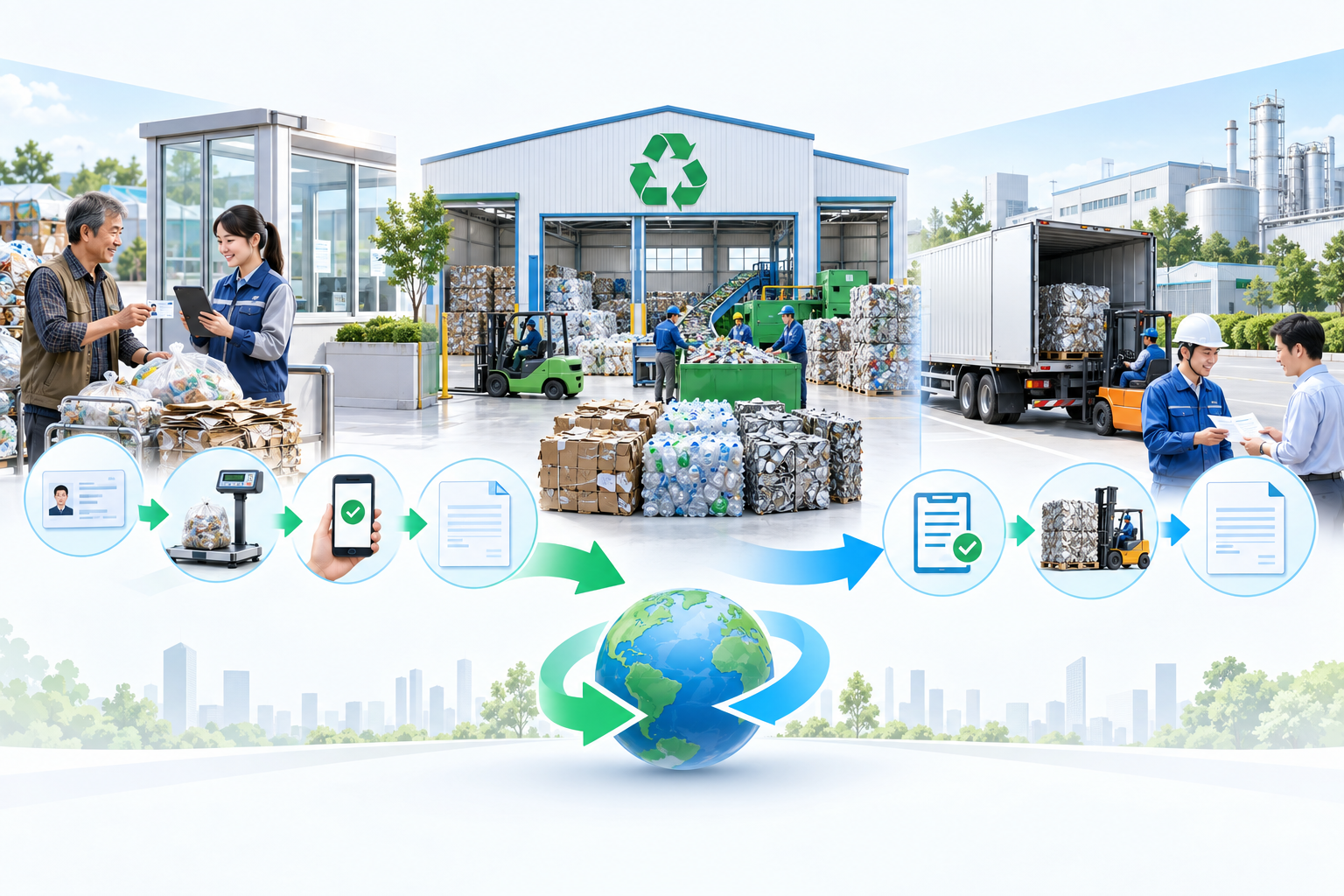
How should recycling enterprises issue sales invoices? Distinguish the purchase and sales ends
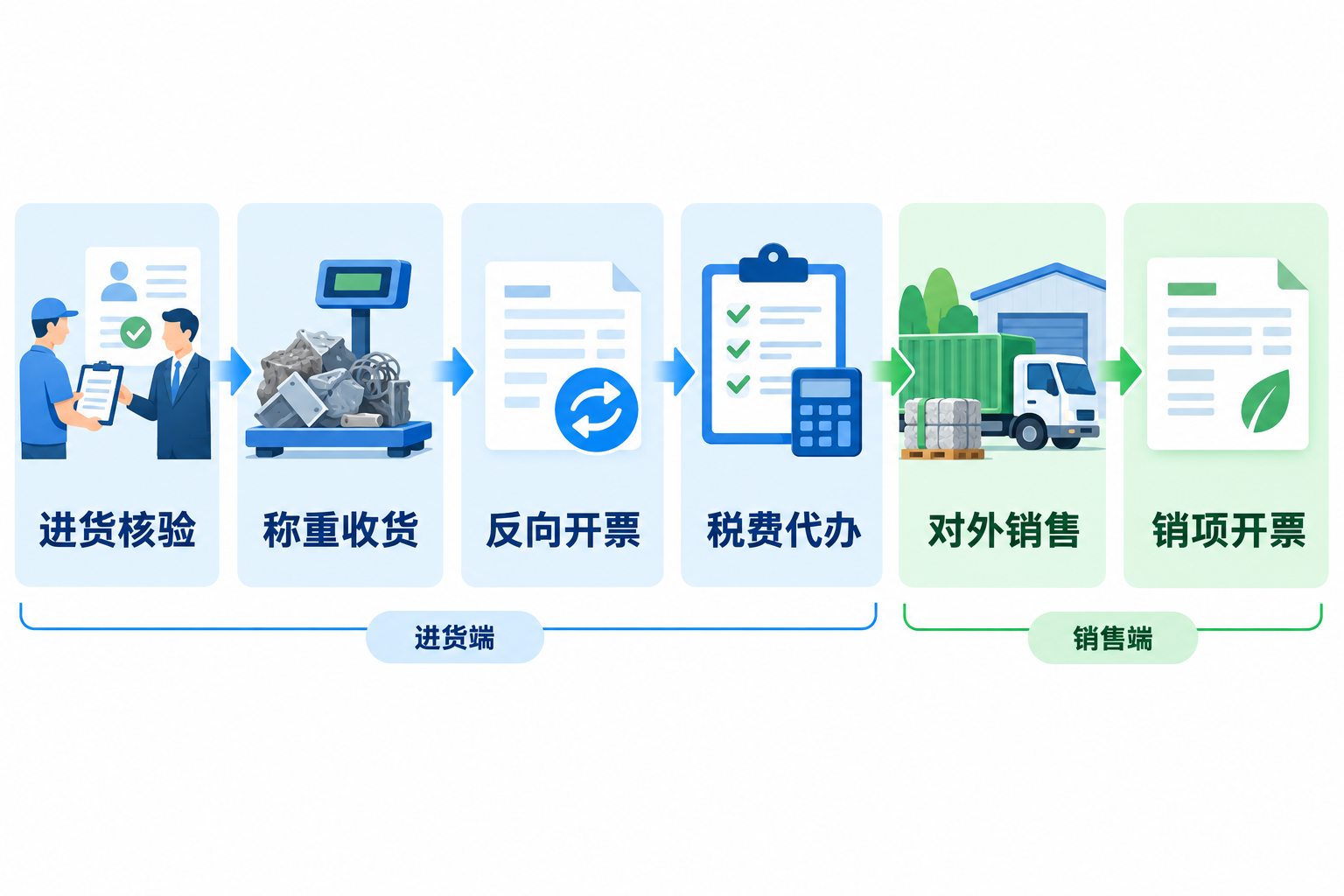
"Reverse invoicing" addresses how the purchase end forms vouchers when a recycling enterprise purchases scrapped products from qualifying individual sellers; when the recycling enterprise sells goods downstream to steel mills, paper mills, or processing enterprises, it should issue output VAT invoices based on the genuine sales business. The two differ in direction, applicable targets, and management responsibilities; reverse invoicing cannot be directly understood as a recycling enterprise's sales invoice.
At the purchase end, first verify qualification, receipt, and payment; at the sales end, issue invoices based on orders, outbound delivery, and delivery; the two evidence chains of purchase and sales should be able to corroborate each other. |
▍1. Purchase end: first confirm whether reverse invoicing can be implemented
The State Taxation Administration policy clearly states that qualifying resource recycling enterprises need to submit an application to the competent tax authority and provide corresponding materials such as a hazardous waste operating permit, a qualification recognition certificate for end-of-life vehicle recycling and dismantling enterprises, or a renewable resource recycling operator filing registration certificate from the commerce department. Only after completing the prescribed procedures can they issue invoices online marked "scrapped product purchase" through the electronic invoice service platform or the VAT invoice management system. SeeInterpretation of the State Taxation Administration's implementation measures for reverse invoicing。
▍2. Clear boundaries exist for sellers and scrapped products
Under the reverse invoicing policy, a seller is an individual who sells scrapped products they have used themselves or sells purchased scrapped products, and whose cumulative reverse invoicing sales amount does not exceed 5 million yuan over 12 consecutive months; scrapped products are products that have lost all or part of their original use value. Enterprises should verify the seller's identity, cumulative sales situation, and the nature of the goods, and must not directly apply the same process to legal persons, individual industrial and commercial households, or transactions that do not involve scrapped products.
▍3. Purchase-end vouchers must be consistent with weighing, receipt, and payment
Each reverse invoice should be linked to the seller, category, weight, acceptance, settlement, online payment, and on-site materials, and tax and fee filing agency should be handled for the seller according to regulations. The relevant 2026 tax administration announcement continues to clarify that when individual sellers of scrapped products sell scrapped products through reverse invoicing, resource recycling enterprises handle VAT and other tax and fee filing agency according to regulations. SeeState Taxation Administration Announcement No. 4 of 2026。
▍4. Sales end: issue output VAT invoices based on genuine external sales business
When recycling enterprises sell renewable resources to downstream customers, they should truthfully select the purchaser, goods or service items, quantity and amount, and applicable tax classification codes based on sales contracts or orders, outbound delivery, transport delivery, settlement, and receipts, and issue invoices within the prescribed time limit. Which tax calculation method to use and whether a special invoice can be issued should be judged based on the enterprise's taxpayer status, specific business, and current policy, and cannot be automatically concluded merely because reverse invoicing is used at the purchase end.
▍5. Connecting purchase and sales data does not equal "invoicing means booking"
Kailing TechnologyOutput VAT Invoice Management SystemSales orders or contracts, approval, issuance, delivery, and status write-back can be connected based on enterprise configuration; reverse invoicing-related systems can aggregate purchase-end seller, receipt, payment, and tax filing agency records. Invoice results can generate pending data, but revenue recognition, cost carry-forward, accounting vouchers, and purpose confirmation should still be executed based on business facts, accounting policies, and approval processes.
▍6. Archives and risk management must cover both chains
Enterprises should separately retain purchase-end qualification applications, seller verification, weighing and acceptance, payment, reverse invoices, and tax filing agency materials, as well as sales-end contracts and orders, outbound transport, receipts, output VAT invoices, and red-letter handling records. AI OCR can assist in extracting candidate fields from paper materials, but "successful scanning" must not be treated as a conclusion that booking, deduction, or the transaction is genuine.
Keywords: renewable resource recycling sales invoices, reverse invoicing, output VAT invoices, scrapped product purchases, tax and fee filing agency, five-flow ledger, output VAT invoice management, Kailing Technology
As a comprehensive business-finance-tax digitalization solution service provider, Kailing Technology provides business-finance-tax management digital transformation products and operational services for various government agencies, institutions, and large, medium, and small enterprises. The product line includes: solutions for sales contract management system, procurement contract management system, fully digitalized Leqi interface project, automatic output invoicing system, reverse invoicing system, invoice issuance for individuals system, employee expense control and reimbursement system, input VAT invoice management system, supply chain collaborative reconciliation system, image AI OCR recognition system, automatic financial bookkeeping system, electronic accounting archives system, etc., comprehensively driving the digitalization process across various fields.
Consultation Hotline: 18513895936 / 010-60974119 Location: Beijing