
What to do if goods information changes before online payment? Kailing Technology's reverse invoicing and Leqi combined-use solution strengthens data verification and compliance control
For resource recycling business, when goods information changes before payment, it should first be confirmed whether the change affects the settlement and invoicing basis, and then decide whether the original payment instruction can continue. Kailing Technology's reverse invoicing and Leqi combined-use solution can establish associations around receiving, settlement, funds, and invoices, so that the modified goods details go through appropriate confirmation again. When transaction data has versions, subsequent payment and invoicing know which one to recognize.
▍Is what is changed the receiving note, or the basis for the entire settlement?
A receiving staff member correcting a contact phone number has a different scope of impact from redefining a category or weight. If the system treats all modifications as ordinary edits, it may allow an already prepared payment to continue referencing old values; if all modifications require redoing the entire order, it will bring unnecessary waiting to the site.
The importance of a change can be judged from how it is used downstream. Goods name, measured quantity, pricing basis, seller identity, payment collection information, and the actual sales entity may affect settlement, funds, or invoices; explanations used only for internal communication should also confirm whether they involve changes in facts. The importance of a field needs to be defined in light of the enterprise's actual business and cannot be judged only by whether there is an asterisk on the interface.
For example, if material classification needs adjustment after sorting, the change does not occur only in the goods name but may also affect the settlement conditions recognized by both parties. At this point, the relevant details should be sent back for confirmation rather than merely replacing a few words in the original record. What finance receives should be a business basis that has been reconfirmed, not an unexplainable back-end edit.
▍Kailing Technology's reverse invoicing and Leqi combined-use solution separates old and new versions
The core of the combined-use scenario is organizing data around real transactions and connecting them according to the applicable Leqi services and invoicing rules. Kailing Technology undertakes the solution and system integration work; the actual direct connection unit, user unit, and the responsibilities of each party need to be determined according to the project access relationship, and an integration service provider cannot automatically be equated with the transaction seller or payment institution.
For modifications that may affect invoice payment, a version confirmation mechanism can be set up during implementation. The original receiving materials are retained, the changed content explains the reason, and after reconfirmation a subsequent usable version is formed. Payment requests and invoicing requests reference the corresponding version identifier, so handlers can judge whether they are based on the same set of facts.
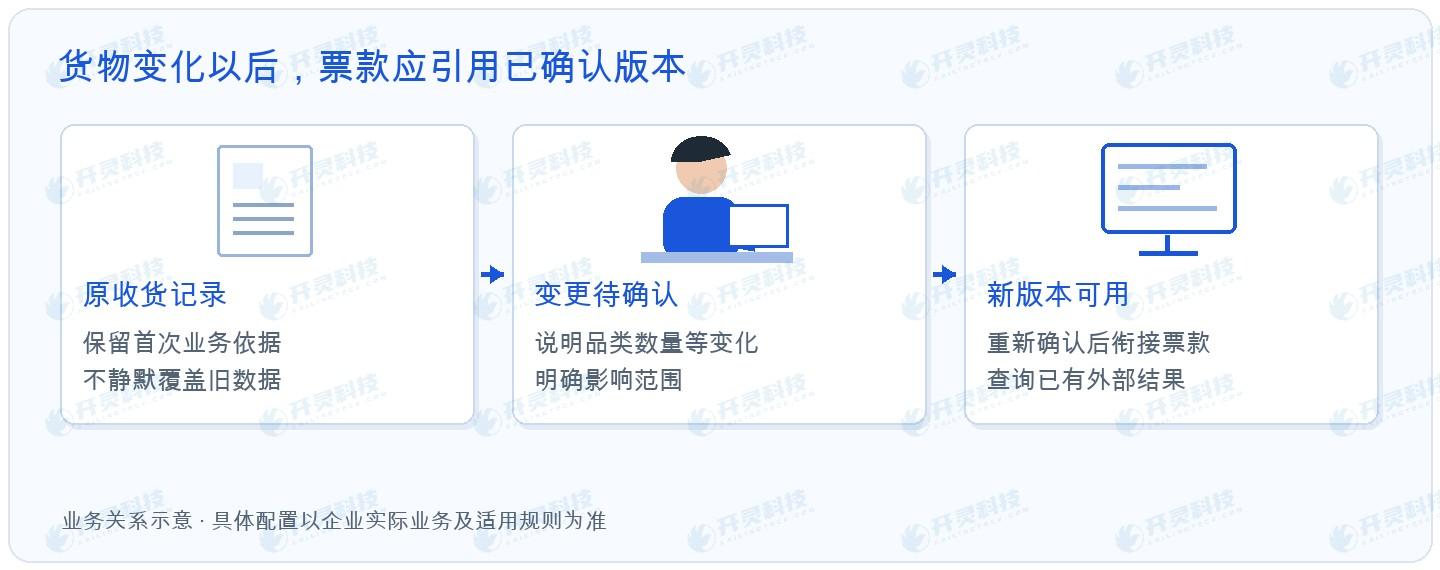
This association is especially important for multi-person collaboration. Procurement staff focus on whether the goods are accurate, settlement staff confirm the amount, cashiers handle fund operations, and invoicing staff care about the invoice basis. Version identifiers provide a common coordinate for each role, avoiding everyone holding a "latest spreadsheet" without knowing exactly which modification the latest one is as of.
▍Payment not yet sent and unclear bank result are two different things
If the payment instruction is still in the internal preparation stage and the goods change will affect the payment basis, the original pending instruction should be disabled according to the rules, and then a corresponding arrangement should be generated using the confirmed data. Disabling here needs to be reflected in the status; it is not enough to tell one cashier "do not pay yet" while another entry point can still continue sending the old request.
If the instruction has already been sent to the bank or payment system, the actual result must first be queried. The absence of a success prompt on the interface does not mean the funds did not go out; if the request is processing, it is also not appropriate to directly submit again with the new amount. Transaction version management must work together with fund status management to avoid a goods correction leading to duplicate payment.
In cases where payment has already been completed, subsequent differences, refunds or supplements, or other adjustments need to be handled according to the real business. The original payment record cannot be modified to the new amount as if history had never happened. Invoicing should also check the existing invoice status and be handled according to applicable rules, not treating the reconfirmed order directly as a completely new unrelated transaction.
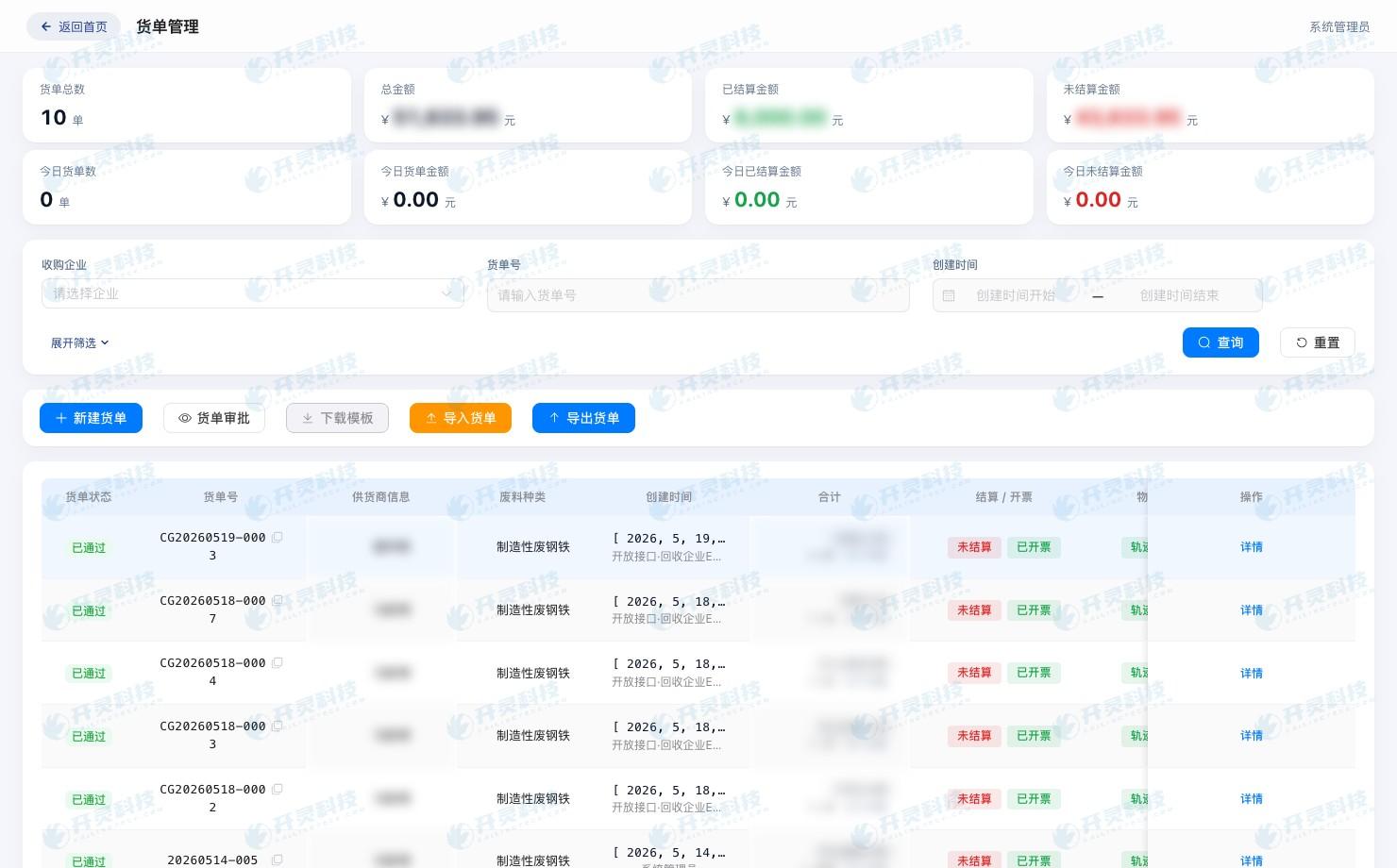
Likewise, a goods change does not necessarily mean the invoice must be changed. If the relevant invoice has not yet been issued, the confirmed data can simply be used later; if it has already been issued, it is necessary to judge whether the actual change affects the invoice content and the corresponding tax treatment. Identifying the affected objects first and then arranging actions can save frontline staff from the detour of "cancel everything and start over."
▍Confirmation to the seller must explain why settlement is being redone
Both parties to the transaction may have different understandings of weighing differences, category attribution, or deduction items. Letting the seller clearly see the details and reasons before and after the change makes it easier to reach agreement than merely notifying them that "this settlement amount has changed." Enterprises may retain the confirmation method and related records according to business arrangements as supporting materials for subsequent payment and invoice processing.
When identity or payment collection information adjustments are involved, the real relationship needs to be verified even more. You cannot assume that another payment account belongs to the same seller just because the contact information is the same; nor can you package an entity that does not meet policy requirements as an individual transaction for payment convenience. Associations in the system are used to reveal relationships, not to replace authenticity verification.
Reverse invoicing itself also needs to meet the applicable conditions for resource recycling business. Regarding sellers, acquisition scope, and retained materials, the basis should be State Taxation Administration Announcement No. 5 of 2024 and current relevant provisions.
▍Let the site be able to correct it, and let finance dare to continue processing
Real business cannot remain forever without modifications. A good system does not prohibit all corrections, but allows reasonable corrections to continue flowing while clearly explaining the scope of impact. Items requiring supplementary confirmation are prominently visible, unaffected parts do not need duplicated work, and payment and invoicing roles know when they can continue.
Enterprises can also review change records to discover common weak points in collaboration. If the same type of goods repeatedly has its grade changed before payment, it may be necessary to unify the on-site confirmation standard; if settlement is already stable but payment collection information is often changed at the last minute, the front-end information collection and review arrangements should be checked. Records not only serve post-event tracing but also provide clues for improving daily processes.
The value of Kailing Technology's reverse invoicing and Leqi combined-use solution is reflected in letting the receiving site and the back-end invoice payment use the same set of supported data. People can modify judgments, and the system should retain the origin of the modification; business can continue to move forward, and each role can know which version they have received.
For sellers in ongoing cooperation, a clear explanation of changes is also part of trust. If every adjustment can state the reason and basis, both parties can check more easily and do not have to interpret a normal reweighing or sorting correction as a sudden change in settlement rules.
▍FAQ Q&A on changing goods information before payment
Q: If only the weight is changed and the total amount is not changed, does it still need to be reconfirmed?
A: You should check whether the weight affects the goods details, pricing basis, and invoice content. An unchanged total does not mean other business facts have not changed; the handling method needs to cover the affected objects.
Q: If the payment button has already been clicked, can the original instruction still be deleted directly?
A: First confirm the external payment status. Requests already sent may be processing and should be resolved through inquiry and established handling methods; you cannot simply delete the internal record and assume the funds did not move.
Q: Does every modification have to go through the full approval process again?
A: You can arrange it in layers according to field impact and enterprise authorization rules. Changes to important facts require appropriate confirmation, while purely explanatory adjustments can follow a different path, but both should retain necessary records.
Let every goods change find its corresponding settlement basis. Welcome to discuss Kailing Technology's reverse invoicing and Leqi combined-use solution: www.kailingteck.com .
As a national high-tech enterprise, Kailing Technology focuses on the digital and intelligent transformation of enterprise business-finance-tax and operations management, providing software products, system integration, implementation and delivery, and operational services for various government agencies, institutions, group enterprises, and SMEs.
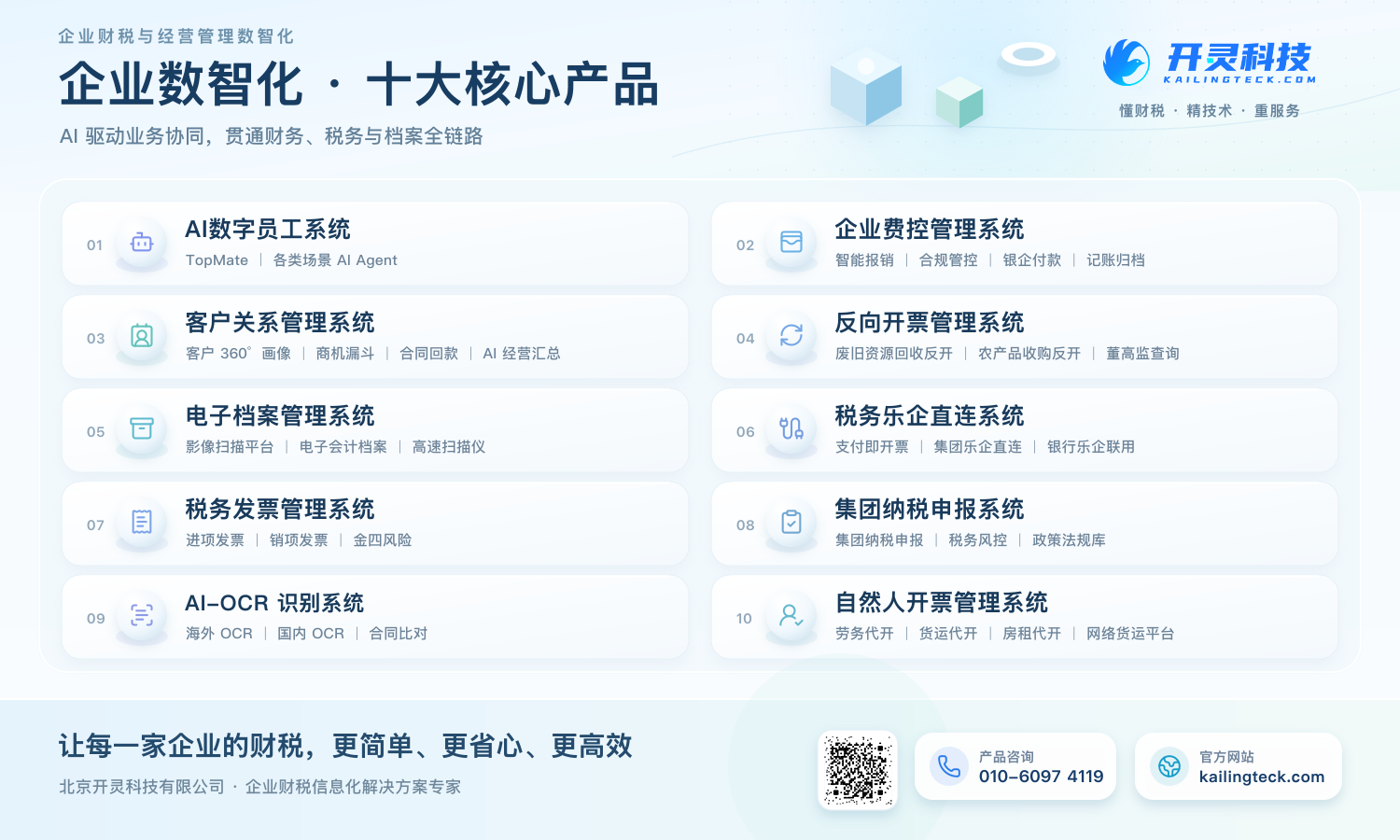
The company has now formed ten core product lines, including: AI digital employee system, enterprise expense control management system, customer relationship management system, reverse invoicing management system, invoice issuance for individuals management system, electronic archives management system, tax fully digitalized e-invoice Leqi system, tax invoice management system, group tax filing system, and AI OCR recognition system. It is committed to connecting enterprise business, finance, tax, funds, and archive data to help customers improve operational efficiency, business-finance-tax compliance capabilities, and digital management levels.
If you have any business-finance-tax digital transformation needs, welcome to contact us. Beijing Kailing Technology will serve you wholeheartedly.
Keywords: Reverse invoicing and Leqi combined use, pre-payment data verification, resource recycling reverse invoicing, goods information changes, five-flow ledger
As a comprehensive business-finance-tax digitalization solution service provider, Kailing Technology provides business-finance-tax management digital transformation products and operational services for various government agencies, institutions, and large, medium, and small enterprises. The product line includes: solutions for sales contract management system, procurement contract management system, fully digitalized Leqi interface project, automatic output invoicing system, reverse invoicing system, invoice issuance for individuals system, employee expense control and reimbursement system, input VAT invoice management system, supply chain collaborative reconciliation system, image AI OCR recognition system, automatic financial bookkeeping system, electronic accounting archives system, etc., comprehensively driving the digitalization process across various fields.
Consultation Hotline: 18513895936 / 010-60974119 Location: Beijing