
Many invoice types, slow and error-prone manual entry? Kailing Technology's expense control and reimbursement system uses OCR full-category receipt recognition and scan-to-enter, automatically filling the reimbursement form
Many invoice types, slow and error-prone manual entry? Kailing Technology's expense control and reimbursement system uses OCR full-category receipt recognition and scan-to-enter, automatically filling the reimbursement form
Special VAT invoices, general VAT invoices, electronic general VAT invoices, fully digitalized e-invoices, roll invoices, motor vehicle invoices, passenger train tickets... a pile of colorful invoices spread out on the desk. The person handling reimbursement types field by field into a form, copying the number, amount, tax amount, and seller's tax ID one by one. One wrong digit and they have to start over. With many invoice types and slow, error-prone manual entry, this is the least noticeable yet most exhausting part of expense control. The answer from Kailing Technology's expense control reimbursement system (product name "Lingdong Reimbursement") is to let machines read invoices and let employees simply scan codes: with AI OCR recognition of all invoice categories combined with photo capture, scan-to-record, card wallet, email, and other multi-channel entry, scanning the code records the invoice and automatically fills and generates the reimbursement form based on invoice content. Invoice elements no longer need to be typed in cell by cell.
▍Many invoice types, slow and error-prone manual entry: where exactly is the problem
Many enterprises think slow invoice entry is due to unskilled employees, but the bottleneck is structural. Invoices themselves are highly varied in category and format, while traditional methods require the key elements of each invoice to be read by human eyes and manually transcribed. Combined, slowness and errors become inevitable.
- Mixed invoice types and chaotic formats: VAT special invoices, ordinary invoices, electronic ordinary invoices, fully digitalized e-invoices, roll invoices, general machine-printed invoices, fixed-amount invoices, motor vehicle invoices, second-hand vehicle invoices, passenger transport invoices, and other invoice types all have different formats, and the field positions and element definitions are all different. Manual entry relies on "finding fields," which is naturally prone to misreading and omissions.
- Many elements, typed cell by cell: An invoice requires copying a long string of fields such as invoice number, invoicing date, total amount including tax, amount, tax amount, and seller tax number. With large volumes, eyes blur and hands slip; a one-digit tax number error or reversed amount is common, and rework requires checking from the beginning.
- Hard to verify authenticity, prone to duplication: Whether paper invoice numbers need to be compared with the electronic tax bureau, whether electronic invoices have been tampered with, and whether the same invoice has already been reimbursed—all rely on manual visual inspection, which is unreliable and cannot stop duplicate reimbursement.
- Missing source files: Manual entry often only retains a number or a photo, missing the invoice's PDF/OFD/XML source files, burying hidden risks for posting compliance and future verification.
Ultimately, the root cause of slow and error-prone entry is forcing the two tasks of "reading invoices" and "copying invoices," which should be given to machines, onto people. To speed up and reduce errors, the system must automatically recognize invoice contents, automatically populate elements, and automatically generate documents.
▍Kailing Technology expense control and reimbursement system: full-category AI OCR recognition, scan to enter and auto-fill reimbursement forms
Kailing Technology's expense control and reimbursement system breaks invoice entry into four steps: "collection—recognition—verification—generation," all completed automatically by the system. The only action employees need to take is to scan a code or take a photo; the rest—invoice reading, element extraction, authenticity verification, and reimbursement form filling—is done seamlessly by the system.

▍Multi-channel invoice capture: collect invoices from any source with one click
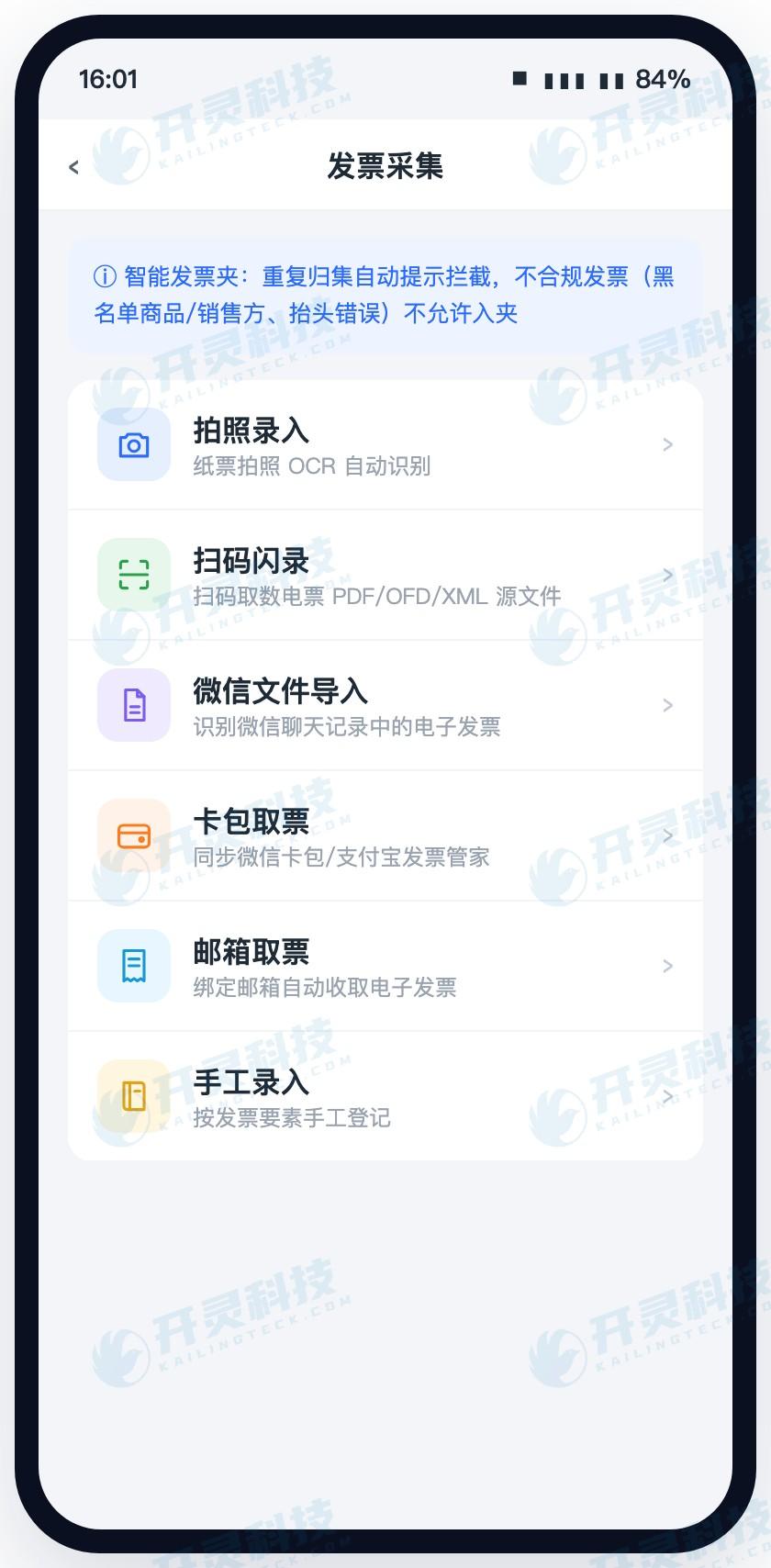
Invoices come from all kinds of sources: some are received paper invoices, some lie in WeChat card wallets, some are sent as chat record files, and some are pushed from the other party's email. Kailing's smart invoice wallet connects all these channels—photo capture, scan-code quick entry, WeChat card wallet synchronization, WeChat chat record file recognition, email invoice retrieval, and manual entry for multi-channel collection. Employees can easily collect invoices into their personal invoice pool on their phones.
The system directly retrieves the PDF/OFD/XML source file of this invoice from the Electronic Tax Bureau, obtaining a "genuine invoice" with complete elements rather than a photo. This complies with the Ministry of Finance Document No. 6 requirement that source files must be retained for reimbursement and booking, and also saves the annual invoice verification fee. Duplicate collection of the same invoice will automatically prompt and not allow repeated addition, blocking duplicate reimbursement at the source.
▍Full-category OCR recognition + invoice pool: elements auto-populated, reimbursement forms generated in one click
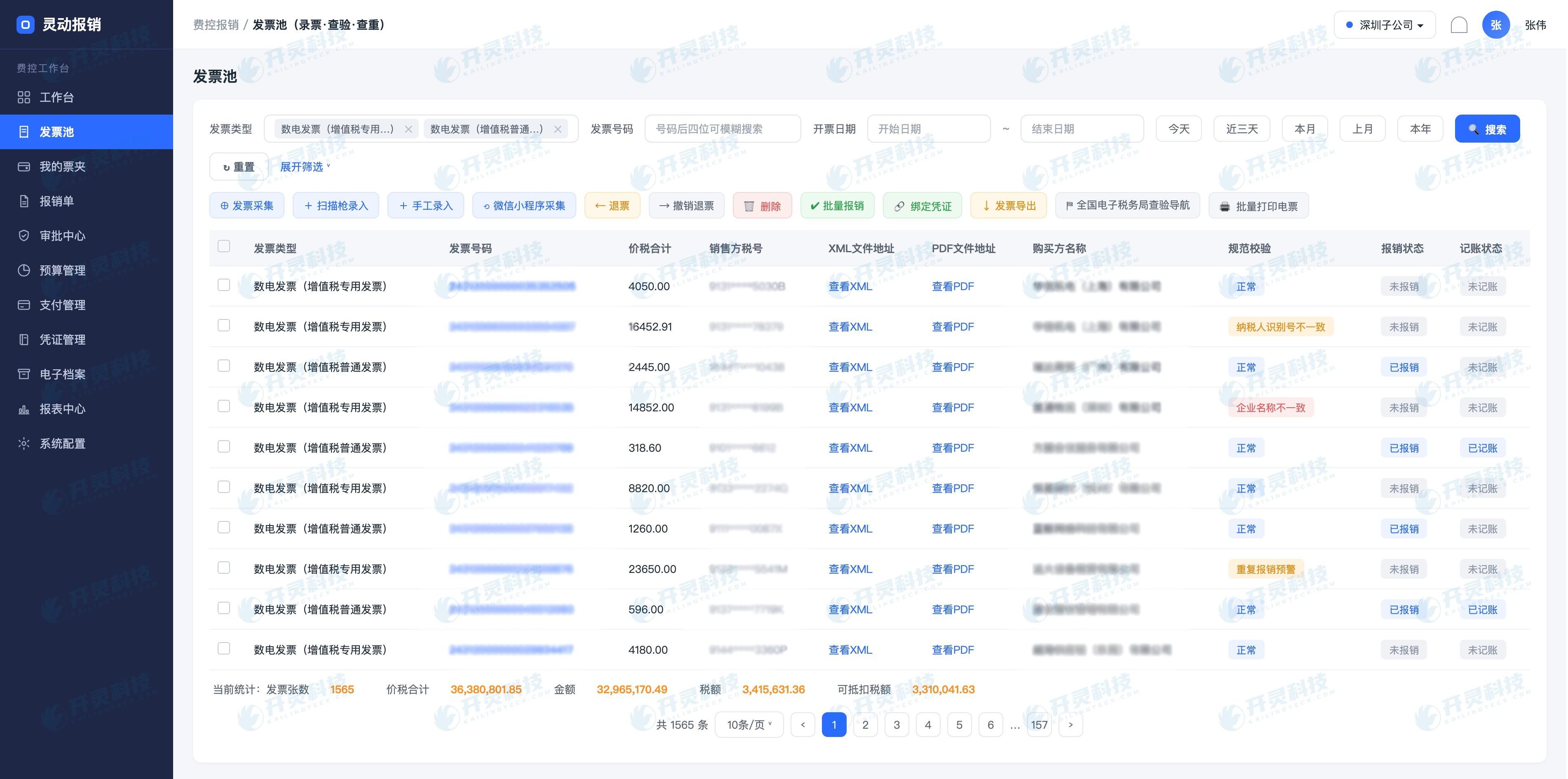
Once invoices enter the pool, the OCR engine immediately takes over. Kailing's OCR full-category invoice recognition covers VAT special invoices, ordinary invoices, electronic ordinary invoices, fully digitalized e-invoices, roll invoices, general machine-printed invoices, fixed-amount invoices, motor vehicle invoices, second-hand vehicle invoices, passenger transport invoices, and various other documents, automatically reading invoice type, number, tax-inclusive total, amount, tax amount, seller tax number, and other elements and backfilling them into the invoice pool, so people no longer need to type cell by cell.
At the same time as recognition, the system performs multi-dimensional risk verification: checks the header, tax number, address and telephone, and bank account; compares paper invoice numbers with the electronic tax authority; verifies electronic invoice signatures to prevent tampering; and intercepts in real time when blacklisted goods or sellers are hit or duplicate reimbursement occurs. Verification results are directly marked as statuses such as Normal, Taxpayer Identification Number Inconsistent, or Enterprise Name Inconsistent, making them clear at a glance. Each invoice in the invoice pool also carries the source file addresses of XML and PDF, available for checking and retrieval at any time. Finally, employees only need to select the target invoice in the invoice pool, and the system automatically fills in and generates a reimbursement form based on the invoice content, with two-way association between the form and the invoice. After changing a few business fields, it can be submitted. From invoice entry to form generation, it truly achieves recording upon scanning and automatic generation.
From multi-channel scan-and-record to full-category OCR recognition, automatic verification, and automatic filling of reimbursement forms, Kailing Technology's expense control reimbursement system compresses the old pain points of "many invoices, manual copying, and error-proneness" into a single scan. No matter how complex the invoice types, there is an engine for recognition; no matter how many elements, backfilling relies on the system; authenticity and duplication are intercepted by verification—the most labor-intensive step of invoice entry is now fast and accurate.
Want any number of invoice types to be scanned and entered immediately, with AI OCR full-category recognition automatically filling the reimbursement form? Welcome to learn about the Kailing Technology expense control and reimbursement system: https://www.kailingteck.com/h-col-125.html .
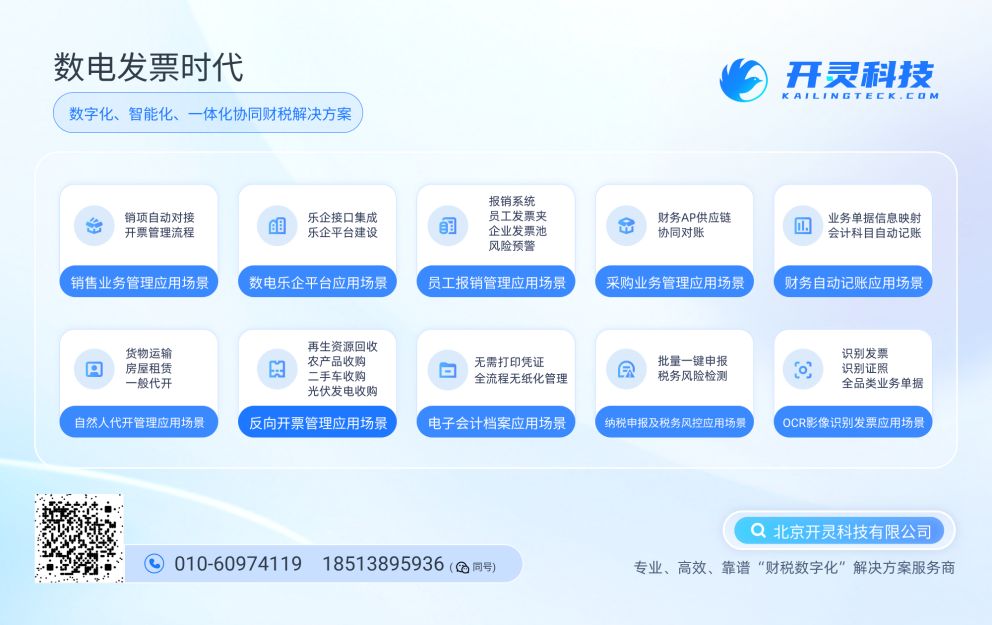
As a comprehensive business-finance-tax digitalization solution service provider, Kailing Technology provides business-finance-tax management digital transformation products and operational services for various government agencies, institutions, and large, medium, and small enterprises. The product line includes:
Solutions for businesses including sales contract management system, procurement contract management system, fully digitalized Leqi interface project, output automatic invoicing system, reverse invoicing system, invoice issuance for individuals system, employee expense control and reimbursement system, input VAT invoice management system, supply chain collaborative reconciliation system, image OCR recognition system, automatic financial bookkeeping system, and electronic accounting archives system, comprehensively driving the digitalization process across various fields.
If you have any business-finance-tax digital transformation needs, welcome to contact us. Beijing Kailing Technology will serve you wholeheartedly.
Keywords: Expense control and reimbursement system, Kailing Technology expense control and reimbursement system, OCR recognition of all categories of invoices, invoice recognition, scan-and-flash entry, multi-channel invoice entry, invoice pool, automatic reimbursement form generation, invoice source files
As a comprehensive business-finance-tax digitalization solution service provider, Kailing Technology provides business-finance-tax management digital transformation products and operational services for various government agencies, institutions, and large, medium, and small enterprises. The product line includes: solutions for sales contract management system, procurement contract management system, fully digitalized Leqi interface project, automatic output invoicing system, reverse invoicing system, invoice issuance for individuals system, employee expense control and reimbursement system, input VAT invoice management system, supply chain collaborative reconciliation system, image AI OCR recognition system, automatic financial bookkeeping system, electronic accounting archives system, etc., comprehensively driving the digitalization process across various fields.
Consultation Hotline: 18513895936 / 010-60974119 Location: Beijing