
Farmer information is scattered and self-production certificates are hard to retain? How does Kailing Technology's reverse invoicing Leqi integration solution establish one file per farmer
Farmer information is scattered and self-production certificates are hard to retain? How does Kailing Technology's reverse invoicing Leqi integration solution establish one file per farmer
After agricultural product procurement enterprises connect to Leqi joint use, one household one archive is no longer a temporary folder organized before invoicing. Banks or payment platforms, as direct connection units, connect to the tax Leqi platform, procurement enterprises become Leqi user units upon invitation, and farmers complete real-name and self-production self-sales information confirmation on the platform or supporting entry points. Enterprises initiate payment based on real procurement orders, and agricultural product procurement invoices are automatically issued after payment is completed.
Kailing Technology's reverse invoicing Leqi joint use solution connects the enterprise's farmer files, weighing and acceptance, procurement orders, and partner platform. The platform is responsible for the Leqi channel and payment-invoicing linkage, while Kailing is responsible for sending the enterprise's already-verified business data to the platform and receiving invoice and payment results, then archiving by farmer and batch. In this way, one file per household can both explain who the farmer is and trace how each procurement was paid and invoiced.
▍I. One household, one file is the main entry point for Leqi joint use
Farmer files store identity, contact information, production location, category, self-production and self-sales statement and necessary supporting evidence, and record the source of information, confirmation time and valid status. After farmers complete real-name or information confirmation through the platform entrance, Kailing binds the platform identity identifier with the enterprise's internal farmer number, avoiding the same farmer appearing under different names in procurement, payment and invoicing steps.
Archives only retain relatively stable master data, and separate business records are created for each acquisition. When farmers supply across seasons or categories or change payment accounts, the system retains effective times and historical snapshots and does not backfill new data into the past. Farmers with incomplete data enter a pending supplementation queue and do not directly enter platform payment.
▍II. Enterprises establish a Leqi usage relationship through the payment platform
The acquiring enterprise selects a local bank or payment platform that has opened the corresponding capabilities, opens an account and accepts the platform invitation, and confirms becoming a Leqi user unit in the electronic tax bureau. Then, according to the enterprise's purchasing process, interface and field integration are completed, clarifying which system generates purchase orders, which data enters the platform, and which results are returned to the enterprise.
Kailing configures the interface between enterprise systems and designated platforms, and does not describe itself as a payment platform or Leqi Direct Connection entity. The platform bears responsibility for direct connection, user entity maintenance, and tax-related risk control; the acquiring enterprise is responsible for the authenticity of actual business; Kailing is responsible for data conversion, business validation, status reception, and exception handling.

=▍III. Purchase orders bring farmers into platform transactions
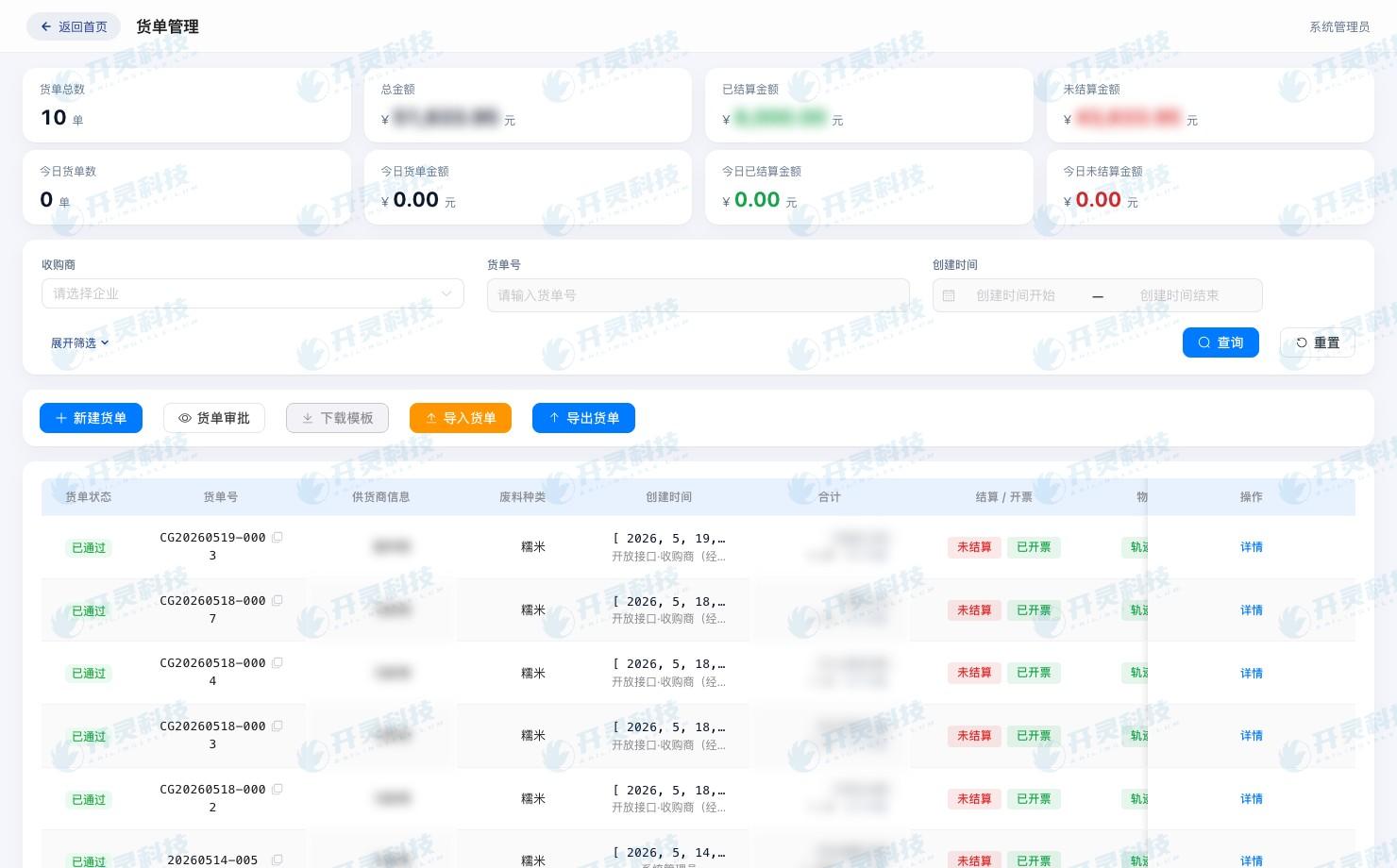
During on-site receiving, business personnel select the already confirmed farmer archive and record category, quantity, unit price, weighing or measuring, acceptance time, and warehousing result. After Kailing completes the necessary verification, the farmer, goods, and amount are sent to the cooperative platform, which forms the original data for the transaction or fund receipt and payment.
Deductions for impurities, grading, returns, and quantity adjustments must be handled before payment. Adjusted orders retain the original weighing, adjustment reason, and confirmer before entering platform payment; enterprise receiving notes cannot be modified directly after invoices are issued. Platform order numbers and enterprise purchase order numbers are bidirectionally linked to ensure that multiple transactions with farmers of the same name are not mixed up.
▍IV. Automatically obtain purchase invoices after payment is completed
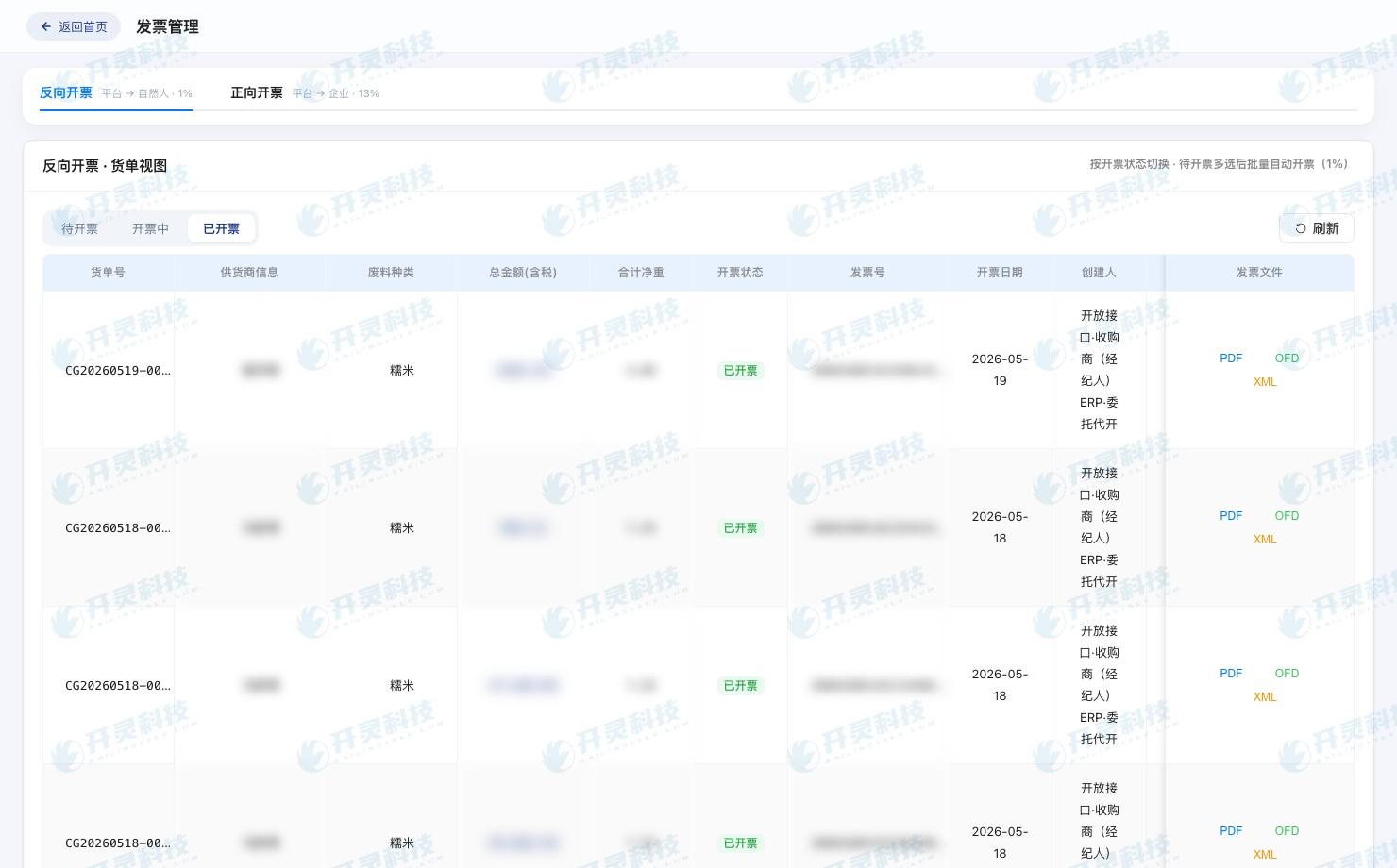
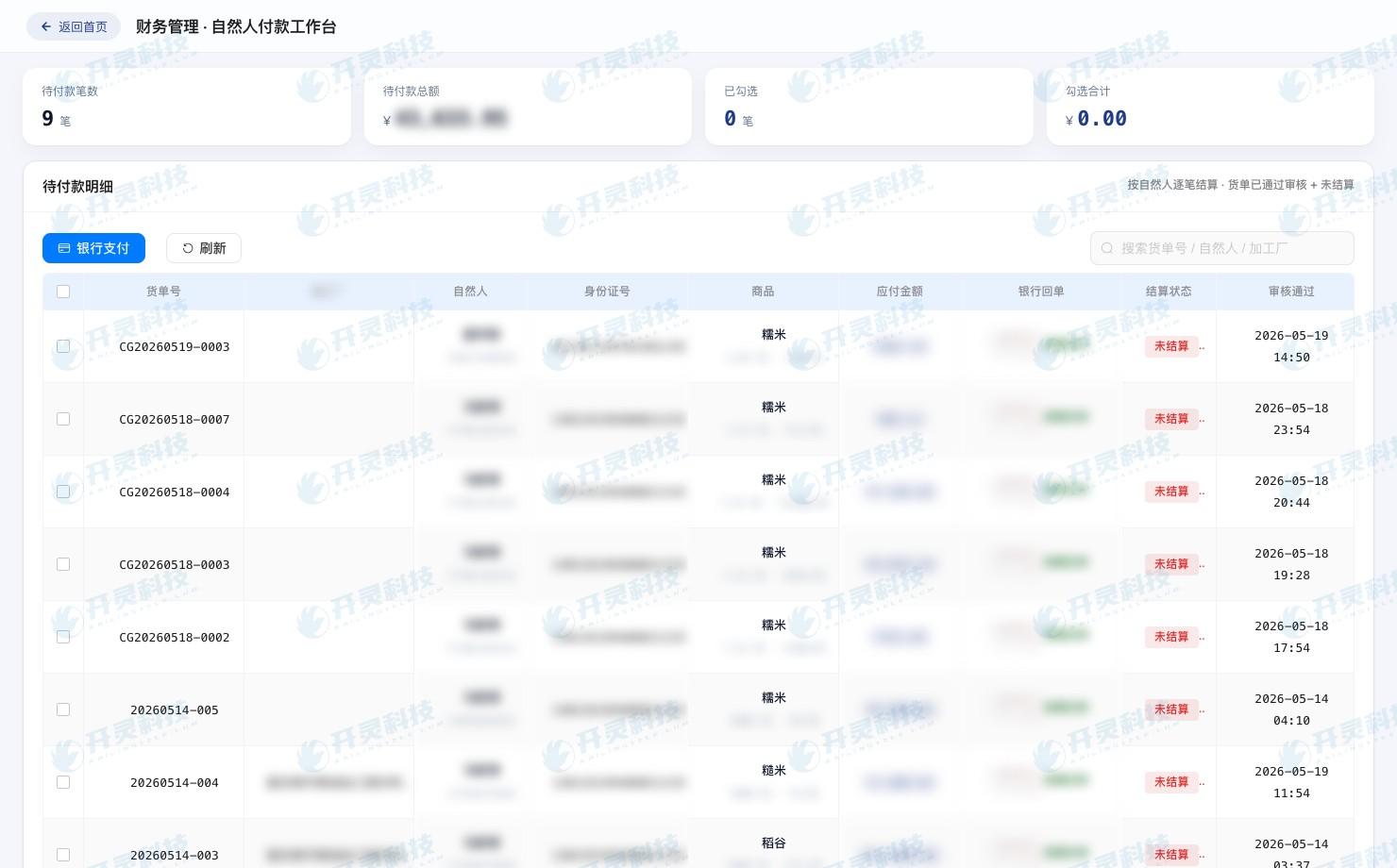
Enterprises initiate payments to farmers on the cooperation platform. Farmers confirm receipt according to the platform process. The platform links payment data with invoicing information and uses Leqi capabilities to issue agricultural product purchase invoices. Existing tax practices have achieved invoicing upon payment for agricultural product purchases through a bank-Leqi joint platform. After payment, enterprises obtain invoices and simultaneously form procurement ledgers.
Kailing receives platform orders, payment transactions, invoice numbers, invoicing status, and electronic files, and writes them back to the enterprise purchase order. Farmer non-confirmation, payment failure, blocked invoicing, or return timeout are handled separately; the system first queries the original platform order status, then decides whether to retry or switch to manual handling, avoiding duplicate payments and duplicate invoicing.
▍V. Platform integration and five-flow ledgers each have their role
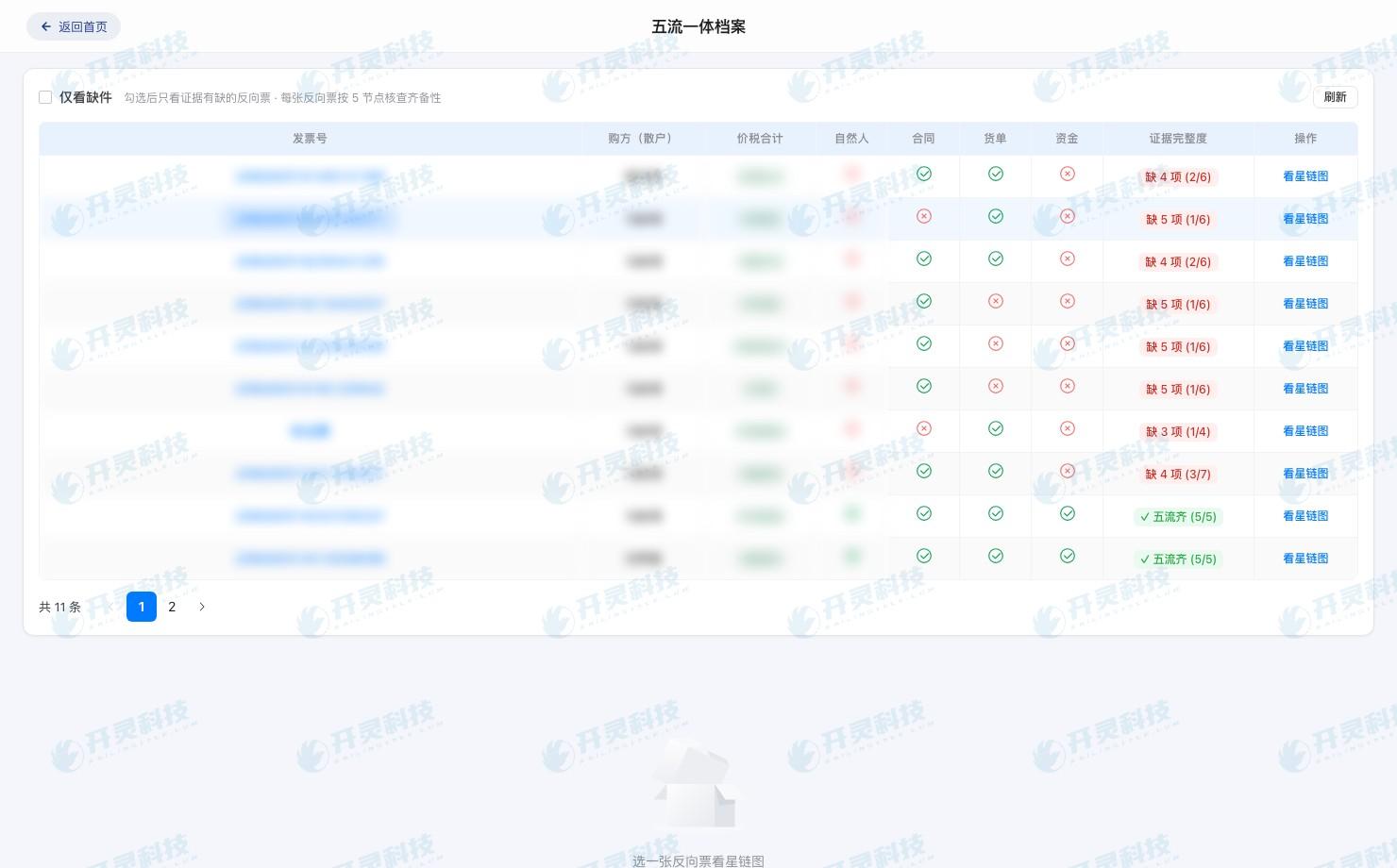
What Leqi Joint Use solves is how entities, payments, and invoices are linked in the same online transaction. The platform's original data provides a direct basis for invoicing, corresponding to the three-flow linkage emphasized on the tax side. What Kailing's five-flow integration solves is how enterprises preserve the complete purchase background: farmers and self-produced materials form the self-certification flow, agreements form the contract flow, weighing and acceptance into inventory form the business flow, purchase invoices form the tax flow, and platform payment receipts form the fund flow.
Five-flow materials all land on the farmer and specific batch, with no need to copy another set of manual ledgers. From one purchase invoice, platform payment, purchase order, and self-production materials can be found; from a certain household file, past transactions can be viewed while retaining the materials used at the time of each business. Platform linkage improves processing efficiency, and five-flow linkage facilitates daily review and material retrieval for enterprises.
▍VI. Access scope is subject to locally available capabilities
Payment-triggered invoicing for agricultural product purchases has formed practices in some regions and categories, but the specific platform, invoice type, farmer confirmation method, and scope of availability may differ. Before integrating, enterprises should confirm local capabilities with the competent tax authority and partner platform, then determine the interface plan; they cannot directly treat the operating process of other regions as a function available to their own enterprise.
Kailing configures farmer fields, purchase categories, payment entry points, invoice return, and exception responsibilities based on confirmed local processes. After official use, enterprises verify receipt, payment, and invoices by farmer and batch. When changes in identity information, order amount discrepancies, or platform status desynchronization are found, subsequent automatic processing is suspended and the reason is retained.
▍7. Peak-season bulk purchases must not disrupt one household, one file
During peak purchasing season, multiple households and multiple pending payment transactions can be grouped into platform batches, but farmer identities, purchase details, and invoice results are still retained transaction by transaction. When some farmers have not completed confirmation, the system only pauses the corresponding orders and does not affect continued processing of other qualified transactions; after batch payment is completed, each invoice can still be traced back to the specific farmer and purchase order.
When the same farmer delivers goods multiple times a day, the enterprise may merge processing according to platform rules, but Kailing retains each weighing, acceptance, and amount allocation. Farmer information is maintained only once, and individual transactions are not overwritten by merging. When returns, payment refunds, or invoice corrections occur, the system processes along the original platform order and updates the status of the corresponding business for that farmer.
Finance reconciles total payment amounts by platform batch, business verifies goods by purchase order, and management views full-year transactions by farmer. All three perspectives use the same set of details, with no need to separately create mutually inconsistent summary tables. After the ticket and payment data returned by the platform is archived together with the enterprise's on-site data, one household, one file can remain continuous as order volume grows, and every transaction result has a clear destination.
▍FAQ
Q: After a farmer profile is created, is confirmation still required for each purchase?
A: Yes. The archive stores master data, and each acquisition still needs to record the category, quantity, price, acceptance, and payment for that transaction.
Q: Can acquiring enterprises directly connect to any payment platform?
A: A local platform that has opened the corresponding Leqi capabilities should be selected, and invitation confirmation, account activation, and interface connection should be completed.
Q: I want to know whether a certain company is a Leqi Direct Connection entity?
A: Kailing Technology provides support for system integration and enterprise business management solutions; the direct connection entity identity should be subject to confirmation by the tax authority and the partner platform.
Q: What is the relationship between one-household-one-file and Leqi joint use?
A: One household, one file provides verified farmer and procurement data; Leqi joint use brings this data into payment and invoicing, then returns the results to the file.
Let farmer profiles truly connect purchase orders, platform payments, and agricultural product purchase invoices. Welcome to visit Kailing Technology: www.kailingteck.com .
As a national high-tech enterprise, Kailing Technology focuses on the digital and intelligent transformation of enterprise business-finance-tax and operations management, providing software products, system integration, implementation and delivery, and operational services for various government agencies, institutions, group enterprises, and SMEs.
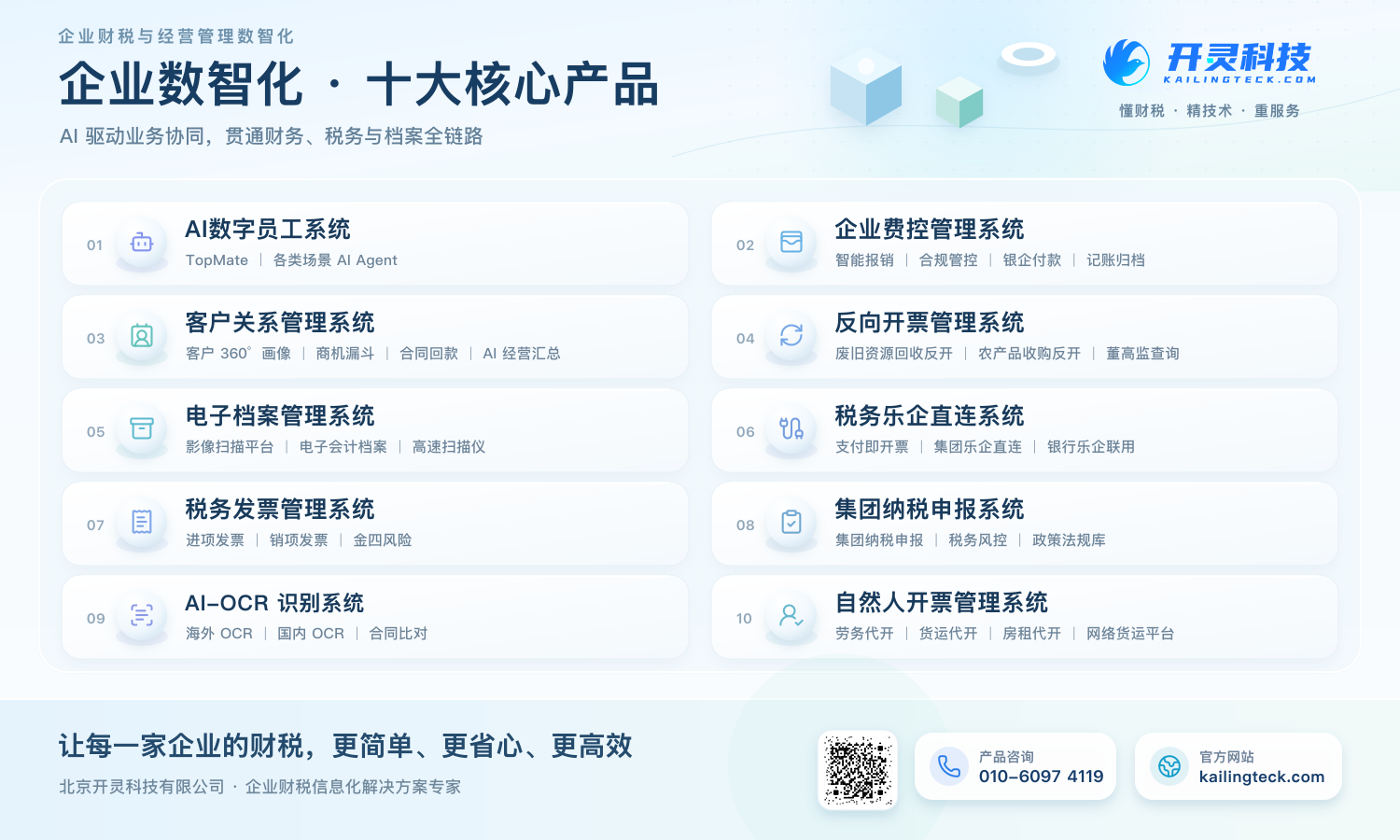
The company has now formed ten core product lines, including: AI digital employee system, enterprise expense control management system, customer relationship management system, reverse invoicing management system, invoice issuance for individuals management system, electronic archives management system, tax fully digitalized e-invoice Leqi system, tax invoice management system, group tax filing system, and AI OCR recognition system. It is committed to connecting enterprise business, finance, tax, funds, and archive data to help customers improve operational efficiency, business-finance-tax compliance capabilities, and digital management levels.
If you have any business-finance-tax digital transformation needs, welcome to contact us. Beijing Kailing Technology will serve you wholeheartedly.
Keywords: One file per farmer, payment-triggered invoicing for agricultural product procurement, Leqi user unit, reverse invoicing Leqi integration, Kailing Technology
As a comprehensive business-finance-tax digitalization solution service provider, Kailing Technology provides business-finance-tax management digital transformation products and operational services for various government agencies, institutions, and large, medium, and small enterprises. The product line includes: solutions for sales contract management system, procurement contract management system, fully digitalized Leqi interface project, automatic output invoicing system, reverse invoicing system, invoice issuance for individuals system, employee expense control and reimbursement system, input VAT invoice management system, supply chain collaborative reconciliation system, image AI OCR recognition system, automatic financial bookkeeping system, electronic accounting archives system, etc., comprehensively driving the digitalization process across various fields.
Consultation Hotline: 18513895936 / 010-60974119 Location: Beijing