
Are separate records for payments, invoicing, and tax payment still not enough? How does Kailing Technology's reverse invoicing and Leqi joint-use solution connect the resource recycling evidence chain?
Resource recycling enterprises that separately keep payment receipts, invoices, and tax payment records may still be unable to clearly explain whether they come from the same purchase. Leqi integration changes the order in which data is generated and processed: the enterprise first forms a real receipt of goods, the partner payment platform generates transaction and payment data accordingly, the payment process automatically triggers invoice and tax handling, and the results return to the enterprise system. Kailing Technology's reverse invoicing Leqi integration solution connects the entire process with a unified business identifier.
The tax authority's three-flow-in-one emphasizes that invoices, the relationship between individual sellers and enterprises, and synchronized fund receipts and payments are verifiable; Kailing collects the self-certification flow, contract flow, business flow, tax flow, and fund flow on the enterprise side. The three flows connect payment, invoicing, and tax payment, while the five flows place this online processing back into the real purchase context, with the two sets of records corroborating each other around the same transaction.
▍1. The goods receipt note first becomes the source of platform transactions
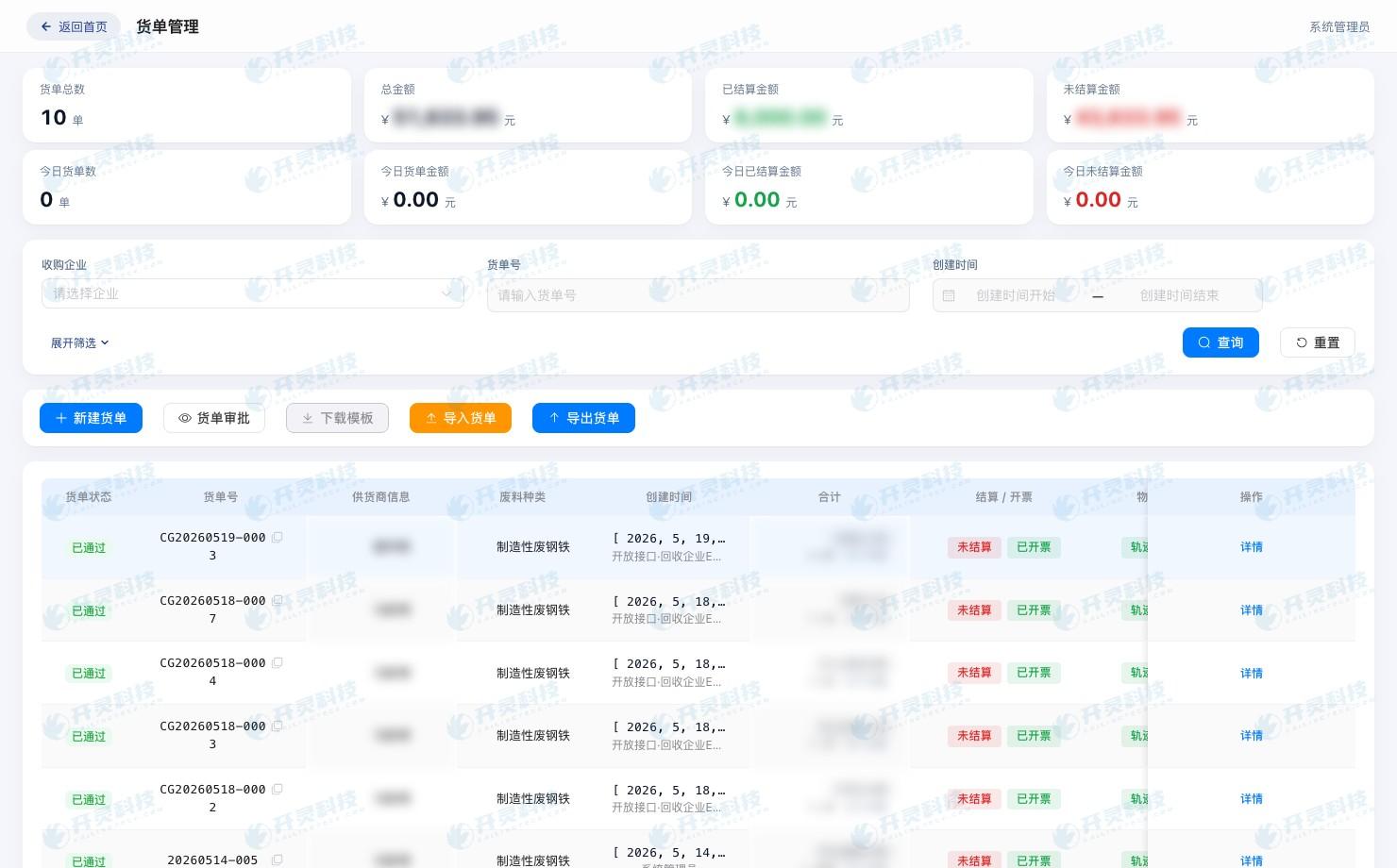
After business personnel complete weighing, acceptance, or warehousing, Kailing generates a stable acquisition business identifier and links it to the individual seller, scrapped products, quantity, unit price, and contract or acquisition agreement. Data that passes internal review enters the Leqi Direct Connection interface, and the partner payment platform forms the original record of the transaction or fund receipt and payment accordingly.
The platform records and enterprise receipt notes need to retain a bidirectional index. When receipt quantity is adjusted, impurities are deducted, goods are returned, or the receiving account is changed, the system first handles the discrepancy, then updates the pending payment data. Orders already submitted to the platform cannot be silently overwritten on the enterprise side; otherwise, subsequent payments, invoices, and taxes, even if the amounts are the same, cannot prove they belong to the same transaction.
▍II. Leqi Direct Connection combined usage turns payment into a processing trigger
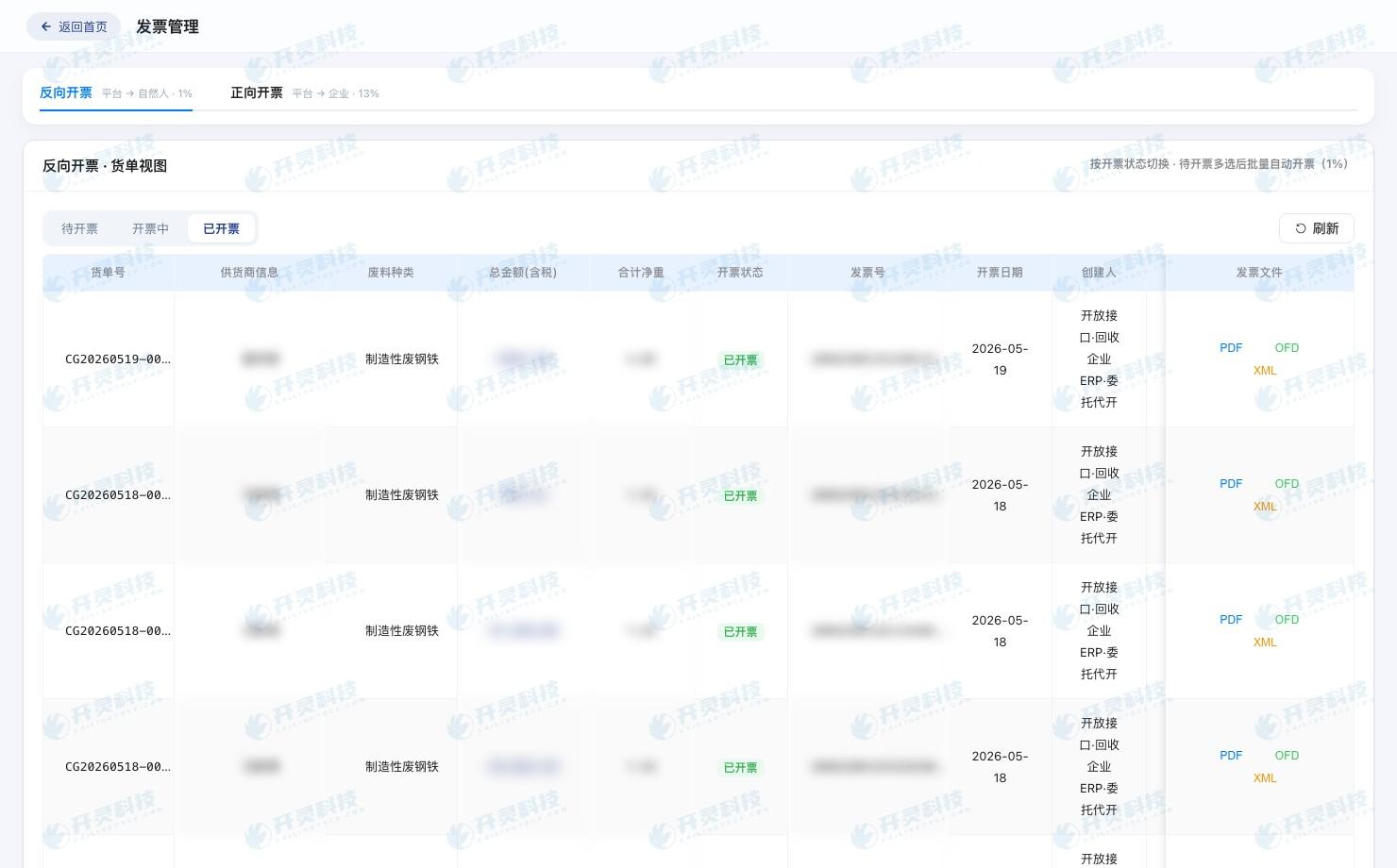
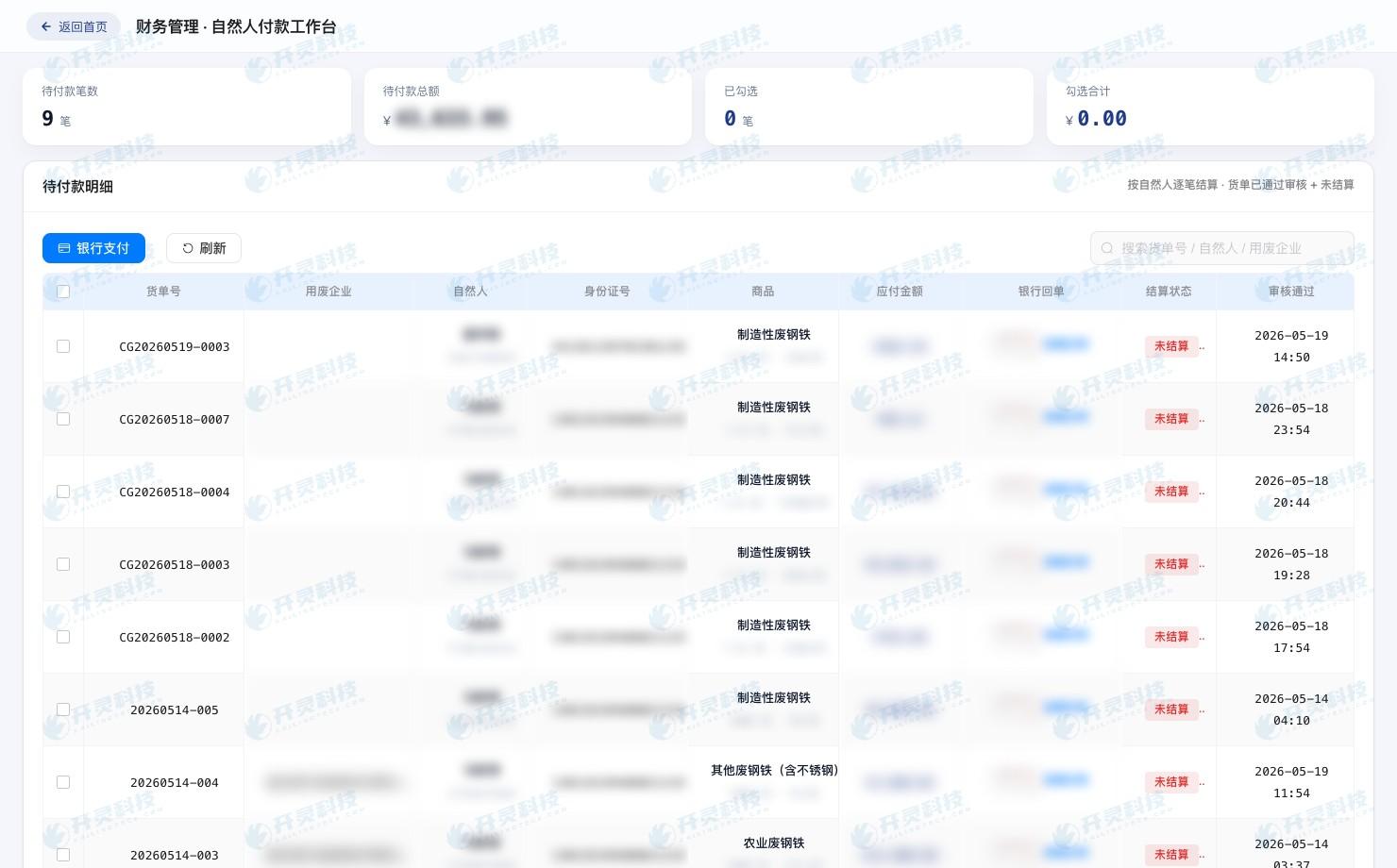
When a resource recycling enterprise initiates payment on the payment platform, the platform calls the already embedded tax rules, reads the individual seller and current scrap transaction information, automatically calculates the payment amount, pre-fills the invoice, and generates taxes and fees to be paid. After the individual seller confirms and pays taxes as required by the platform, the platform completes the transfer of payment, and the reverse invoice is immediately issued and uploaded.
This chain places the previously scattered payment, invoicing, and tax payment actions from different dates and different systems into one continuous process. Enterprises no longer pay first and then manually search for invoicing basis, and the platform does not receive a summary table compiled after the fact; instead, it calls Leqi capabilities based on the original transaction or payment data formed by its own system.

▍III. Every result must be written back to the original business
Kailing receives the order number, payment transaction, payee, actual paid amount, tax status, invoice number, and invoice file returned by the platform, and writes them back to the original goods receipt. Finance can locate platform payments from the invoice, find the individual profile and scrapped product details from the payment, and business personnel can also see whether invoice and tax processing is complete.
The API uses clear statuses rather than a single overall result. Pending individual confirmation, tax payment processing, payment failure, invoicing success, invoicing intercepted, and callback timeout each enter corresponding queues. The system locates issues based on platform return codes and the original request, avoiding operators repeatedly initiating payments or repeatedly applying for invoicing.
▍IV. The three-flow closed loop forms the main chain of tax processing
The Leqi Joint Use platform preserves the usage relationship between individual sellers and resource recycling enterprises, online payments, and invoice tax handling. The invoice flow can identify the invoicing target and transaction, the fund flow can identify the payer and payee, and the person-enterprise relationship can explain in what capacity the individual participates in this reverse invoicing. The three types of information are formed in the same platform event, reducing mismatches caused by manual assembly.
The 2026 policy arrangement for three-flows-in-one reverse invoicing is precisely built on this real-time linkage capability. Businesses choosing this channel should retain the platform identifier and processing time point; reverse invoices issued by other methods are managed according to corresponding rules. Enterprises cannot identify offline business as three-flows-in-one merely because the invoice and payment amounts are the same.
▍V. Five-flow evidence fully explains the acquisition background
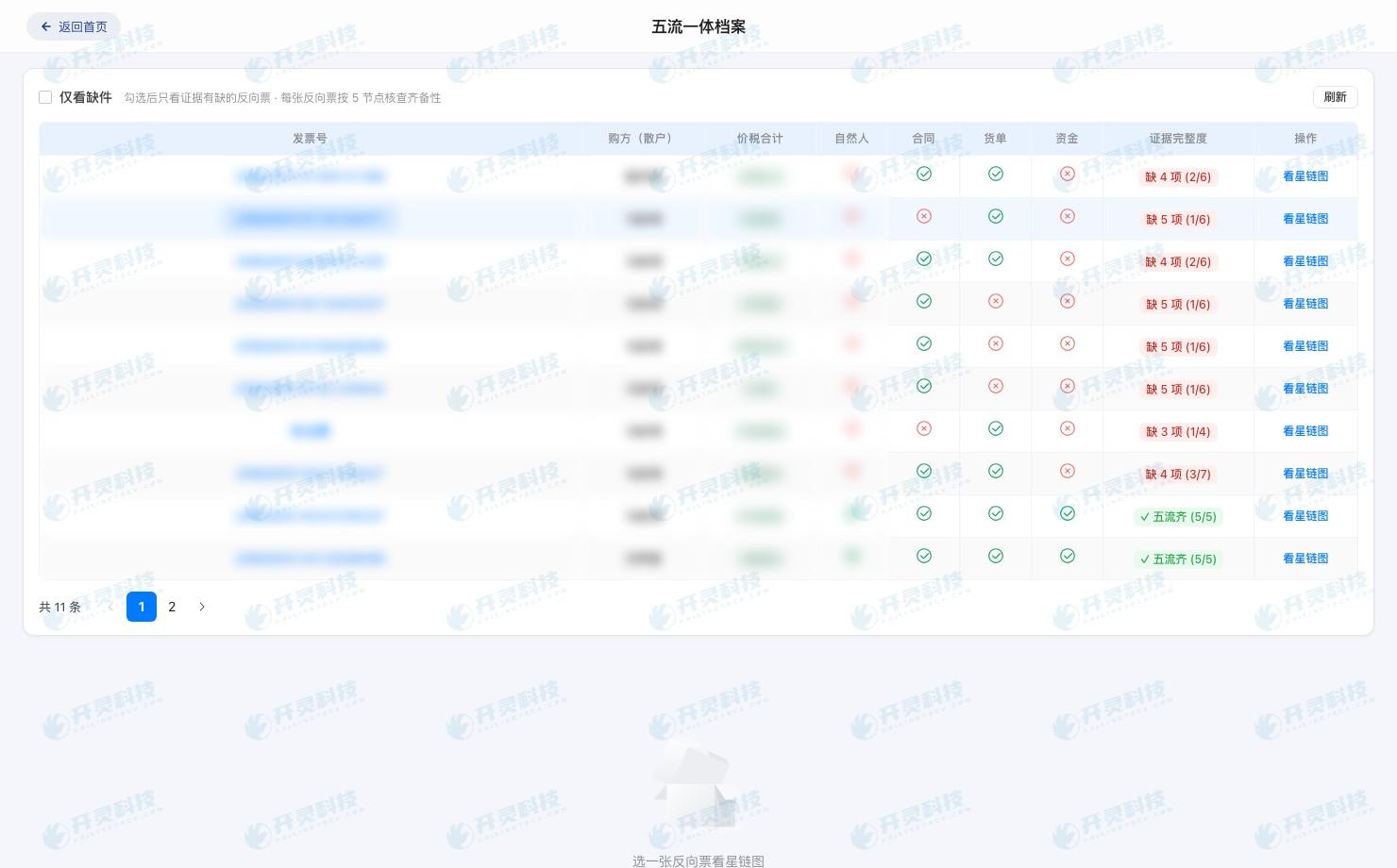
Beyond the three-flow main chain, the Kailing five-flow integrated ledger continues to link self-certification or entity materials of individuals, contracts and acquisition agreements, weighing and acceptance into inventory and other business records, invoices and tax results returned by the platform, and bank or payment records. The five categories of materials do not redefine the tax three flows; rather, they help enterprises answer whether the goods are real, how the amount was formed, and who completed internal confirmation.
Five-flow materials are automatically deposited by the system from the business process, without requiring employees to copy them again. The invoice-tax-fund results returned by the platform enter the tax flow and capital flow, while the enterprise's original archives, contracts, and goods receipt records form the other three types of evidence. All materials share the business identifier, and can be retrieved by invoice as well as by individual, goods receipt batch, or payment transaction.
▍VI. Red-letter reversal and refunds must be handled along the original chain
When a sales return, invoicing error or allowance requires a red-letter reversal, the system should first locate the original blue-letter invoice, platform order and payment record, then initiate subsequent processing according to platform and tax rules. The red-letter invoice remains corresponding to the original invoice, refunds or supplementary payments are recorded separately, and the original receipt note cannot be directly deleted or the original payment flow changed to a new amount.
Daily verification can start from three types of discrepancies: platform payment made but invoice-tax result not completed, invoice present but enterprise receipt missing, and red-flushing or refund not updating business status. Kailing pushes discrepancies to the corresponding positions and retains platform returns, manual explanations, and final results, allowing a single exception to be fully restored along the original business identifier.
▍7. Bulk processing must still retain transaction-by-transaction relationships
Resource recycling enterprises may face large numbers of natural persons and multiple batches of goods received every day. Kailing can generate pending payment batches based on confirmed business and submit them to the platform in bulk, but a batch is only an operational container; each acquisition still retains an independent seller, goods, amount, platform order, and invoice-tax result. When the platform partially succeeds, the system updates only the successful details, while the remaining records continue to await processing.
The management view separately displays batch progress and item-by-item differences. Finance can see how many transactions are pending confirmation by individuals, how many have been taxed and paid, and how many invoice returns have failed; business personnel return from exception details to the original receipt to supplement information. Batch efficiency is built on traceable details and will not compress a batch of transactions into an unexplainable total.
During month-end reconciliation, the system compares payments, invoices, and receipts using platform orders and enterprise business identifiers, without needing to guess correspondence by name and amount again. Businesses where the platform's three-flow status and the enterprise's five-flow materials are both complete enter archiving, while businesses with remaining discrepancies retain to-dos and responsible persons, preventing incomplete records from being mixed into the completed ledger. The same batch can also be tracked transaction by transaction by platform order.
▍FAQ
Q: Do payment, invoice, and tax payment records alone count as the three-flow integration?
A: It is also necessary to confirm that these records were triggered by transactions on the same Leqi joint-use platform, and that the entity, amount, and business relationship can correspond.
Q: Does five-flow integration require creating five more sets of ledgers?
A: No. Kailing automatically aggregates the five categories of evidence from the original business system and platform return results, reducing duplicate entry.
Q: If the platform callback fails, can payment be made again?
A: The actual status of the original order should be queried first, and processing should proceed only after confirming that it is unpaid and not invoiced, to avoid duplicate transactions.
Q: Can the original business record be deleted after red-letter reversal?
A: No. The original invoice, red-letter reversal, refund, or re-issuance results should remain associated for subsequent reconciliation.
Let the platform's three-flow processing results and the enterprise's five-flow evidence correspond to the same resource recycling business. Welcome to visit Kailing Technology: www.kailingteck.com .
As a national high-tech enterprise, Kailing Technology focuses on the digital and intelligent transformation of enterprise business-finance-tax and operations management, providing software products, system integration, implementation and delivery, and operational services for various government agencies, institutions, group enterprises, and SMEs.
The company has now formed ten core product lines, including: AI digital employee system, enterprise expense control management system, customer relationship management system, reverse invoicing management system, invoice issuance for individuals management system, electronic archives management system, tax fully digitalized e-invoice Leqi system, tax invoice management system, group tax filing system, and AI OCR recognition system. It is committed to connecting enterprise business, finance, tax, funds, and archive data to help customers improve operational efficiency, business-finance-tax compliance capabilities, and digital management levels.
If you have any business-finance-tax digital transformation needs, welcome to contact us. Beijing Kailing Technology will serve you wholeheartedly.
Keywords: Resource recycling evidence chain, three-flow integration reverse invoicing, five-flow integration ledger, Kailing Technology reverse invoicing
As a comprehensive business-finance-tax digitalization solution service provider, Kailing Technology provides business-finance-tax management digital transformation products and operational services for various government agencies, institutions, and large, medium, and small enterprises. The product line includes: solutions for sales contract management system, procurement contract management system, fully digitalized Leqi interface project, automatic output invoicing system, reverse invoicing system, invoice issuance for individuals system, employee expense control and reimbursement system, input VAT invoice management system, supply chain collaborative reconciliation system, image AI OCR recognition system, automatic financial bookkeeping system, electronic accounting archives system, etc., comprehensively driving the digitalization process across various fields.
Consultation Hotline: 18513895936 / 010-60974119 Location: Beijing