
Why is expense control review always torn between rules and exceptions? Kailing Technology AI expense control management system reviews according to policy and transfers exceptions to manual handling.

Expense control review is always torn between rules and exceptions, usually because the system either only mechanically intercepts or pushes all judgments back to finance. Kailing Technology AI expense control management system can perform intelligent review of reimbursement forms based on the enterprise's confirmed expense policies, transfer to manual handling after hitting exceptions, and separate normal, pending-supplement, and judgment-required documents.
The boundaries of AI review must first be written into policies and processes: which fields can be automatically compared, which situations require supplementary evidence, and which exceptions need whose confirmation. The system outputs rule hits and pending items; ultimate responsibility still rests with the enterprise's authorized personnel.
▍1. Break policies into check items that the system can execute
Travel standards, subsidy scope, invoice requirements, and approval authority are often written in policies, but policy text cannot directly equal automatic decision-making. Before use, the applicable organization, personnel category, time conditions, amount criteria, and exception evidence should be broken down into fields and rules, and it should be clear how to handle missing data.
Rules must also specify actions: approve, prompt for document supplementation, transfer to manual review, or block submission. Only when actions are clearly written will review results not become unreviewable conclusions like "the system thinks there is a problem."

▍II. Do certainty validation first, then exception routing
Items such as header and tax ID, invoice status, duplicate reimbursement, requesting organization, and approval path are suitable for verification first against clear conditions. If fields are missing, amounts are abnormal, or the business description does not match the invoice, the system should generate the reason for the exception, indicating the materials to be supplemented and the role to take over.
Anomaly triage is not simply bouncing documents back. If an employee can supplement proof, it returns to the initiator; if it involves interpretation of rules, it goes to the expense owner; if it involves the authenticity of an invoice or its posting status, it goes to finance for review. Every destination must carry the original basis for the match.
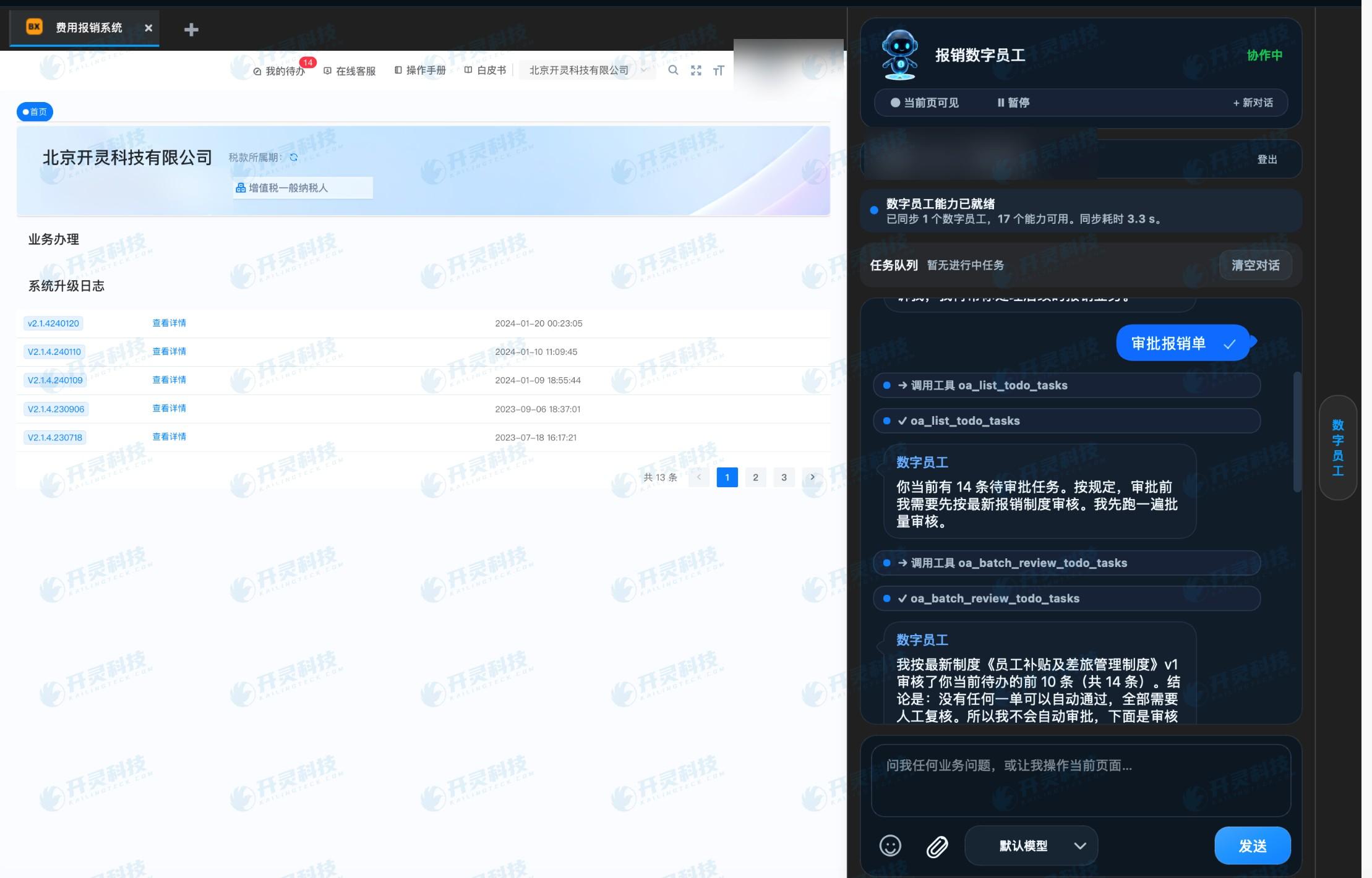
▍III. Kailing Technology AI expense control management system must let people understand why a rule was triggered
The review page should display the policy version used, fields hit, comparison results, and suggested actions. For example, when the system indicates that a certain standard is exceeded, it should show the applicable personnel, application date, actual amount, and allowed criteria, rather than only giving an "over standard" label.
Manual overrides must also retain reasons. If the reviewer confirms the business is genuine and approves, the basis should be recorded; if re-reviewed after supplementary documents, the before-and-after status should be retained. This way, finance can analyze which rules frequently trigger exceptions and revise the system or forms accordingly.
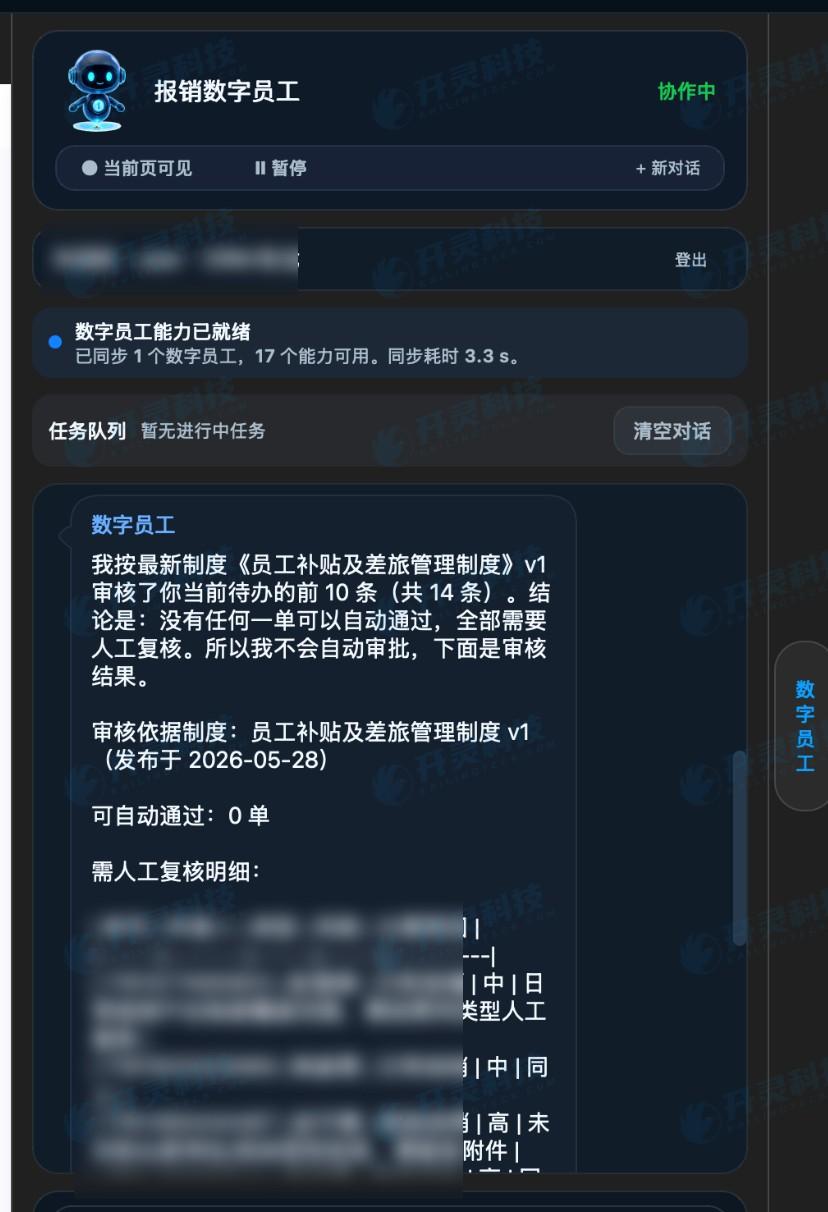
▍IV. Normal documents flow automatically; risky documents remain in a controllable hold
The goal of automatic review is not to let every document pass unconditionally, but to let documents with clear rules, complete materials, and acceptable risk wait for one less round of manual review. Passed documents enter subsequent approval, documents requiring supplementation stop at pending supplementation, and high-risk documents are blocked and the responsible person is notified.
When a document is rejected, withdrawn, resubmitted, or the policy version changes, the original review results cannot be reused unconditionally. The system needs to identify changed fields, re-run the relevant rules, and preserve the relationship between old and new results.
▍V. Use exception samples to test whether the review system is truly usable
For verification, prepare samples such as normal, missing invoice, duplicate invoice, inconsistent header, over-standard, cross-organization, and manual exception, and check item by item the hit reason, routing target, notification content, and status after resubmission. It is not possible to prove the system is effective using only all-normal samples.
After use, continuously observe the volume of manual takeovers, recurring exception causes, and false interception samples. Rule adjustments need authorization, version management, and regression checks to ensure that an exception for one organization does not inadvertently loosen controls for other organizations.
- Rules have scope of application, basis, and actions.
- Anomaly prompts can locate the field and the handling responsibility.
- Manual overrides retain the reason, personnel, and time.
- Changes in systems or documents trigger necessary re-review.
▍VI. The value of intelligent review lies in explaining exceptions
Intelligent review does not turn all documents into the same conclusion. Normal documents flow according to rules, documents with missing information are prompted for supplementation, policy exceptions are handed to designated personnel for judgment, and high-risk matters remain under controllable hold. Each status should carry the matched fields and basis.
Finance must also be able to see where false positives and missed reports come from: incomplete fields, changes in institutional standards, insufficient invoice linkage, or genuine business exceptions. Manual reclassification retains the reasons, and when the institutional version changes, re-judgment occurs, so the review results will not be left with only an isolated label.
- Review conclusions can be traced back to the policy version.
- Manual takeover has clear roles and time limits.
- For misreporting or omissions, the reason can be explained.
- Changes in documents or systems do not reuse old conclusions.
▍7. Exception handoff to manual processing is not pushing responsibility back to finance
Good exception triage will tell humans "why judgment is needed," rather than only generating a to-do item. The policy version, matched fields, comparison results, missing materials, and suggested actions should all be displayed together, so reviewers can supplement documents, provide explanations, or make decisions accordingly.
Manual processing results also enrich rule understanding in return. Frequently occurring exceptions may indicate the system needs supplementation; repeated false positives may indicate inconsistent field or organizational definitions. Retaining these reasons makes intelligent review increasingly aligned with actual business.
Review conclusions and document status must also be synchronized. After supplementary materials, rejection, resubmission, and withdrawal, the original judgment cannot be treated as a permanent conclusion, and changes to relevant fields should trigger new judgments.
An explainable connection must be retained between rule review and manual judgment. The system brings the policy version, hit fields, and suggested actions to the reviewer, who writes back the reasons for supplementing documents, approving, or returning to the document; the next time a similar situation arises, clear rules can be followed while new exceptions can also be identified.
For content that rules can directly determine, the system gives stable results; for content not covered by policies or with insufficient materials, the system retains doubts and hands them to humans. This division of labor is more robust than pursuing automatic passage of all documents, because finance knows which conclusions come from policies and which come from manual work.
When AI digital employees participate in review, the most important thing is not to remove the approver from the process, but to move deterministic checks upstream and leave human attention for exceptions. Rules, exception reasons, handling opinions, and final status form a continuous record, so that subsequent review has enough information.
Transparency in the review process comes from records, not from a complex interface. Policies, fields, actions, and manual opinions are connected to each other, enabling initiators, approvers, and finance to form a consistent understanding of the same exception.
The more specific the explanation of exceptions, the less subsequent review needs to re-ask the initiator.
- The reason for an anomaly matters more than its color.
- Manual overrides retain the basis and the handler.
- Repeated exceptions can return to institutional discussion.
- Document changes do not reuse outdated conclusions.
▍FAQ
Q: Can AI directly perform final review for finance?
A: It should be used according to enterprise authorization and policy configuration. Deterministic rules can be processed automatically, while exceptions and high-risk matters should be routed to manual handling.
Q: Why is the same document re-reviewed after being resubmitted?
A: Supplementary documents, amounts, or changes in policy versions may affect conclusions. The system needs to rerun the relevant rules to avoid using old results.
Q: Will manually approving an exception document lack a basis?
A: The matched rules, review materials, reclassification reasons, and handler should be recorded to form a traceable record.
Q: Can review rules be modified at any time?
A: It should be maintained in versions by authorized personnel and regression-validated with historical samples before use.
Make expense control review both rule-based and retain necessary human judgment. Welcome to visit Kailing Technology: https://www.kailingteck.com/feikong/ .
As a national high-tech enterprise, Kailing Technology focuses on the digital and intelligent transformation of enterprise business-finance-tax and operations management, providing software products, system integration, implementation and delivery, and operational services for various government agencies, institutions, group enterprises, and SMEs.
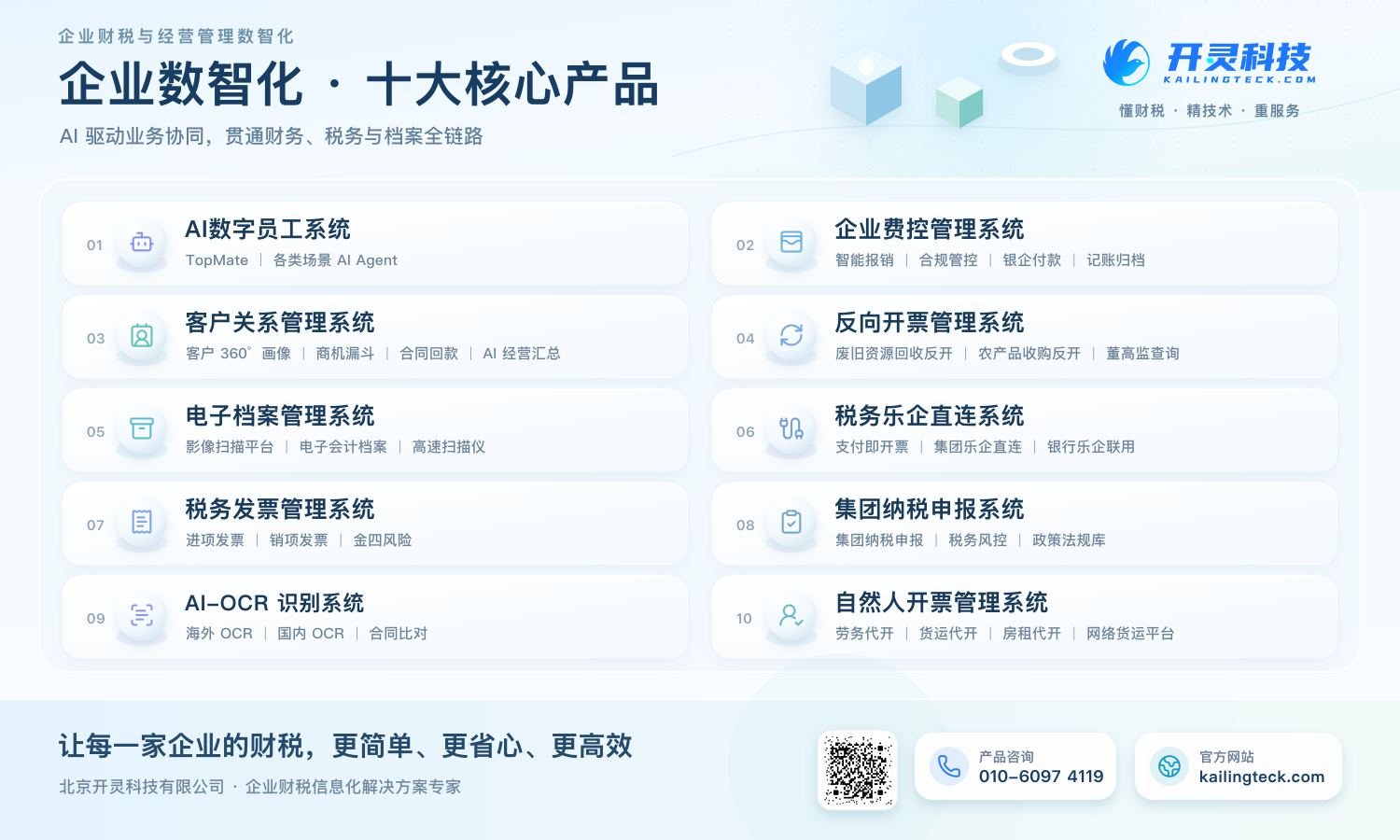
The company has now formed ten core product lines, including: AI digital employee system, enterprise expense control management system, customer relationship management system, reverse invoicing management system, invoice issuance for individuals management system, electronic archives management system, tax fully digitalized e-invoice Leqi system, tax invoice management system, group tax filing system, and AI OCR recognition system. It is committed to connecting enterprise business, finance, tax, funds, and archive data to help customers improve operational efficiency, business-finance-tax compliance capabilities, and digital management levels.
If you have any business-finance-tax digital transformation needs, welcome to contact us. Beijing Kailing Technology will serve you wholeheartedly.
Keywords: AI expense control review, policy review escalation to manual, Lingdong Reimbursement, Kailing Technology
As a comprehensive business-finance-tax digitalization solution service provider, Kailing Technology provides business-finance-tax management digital transformation products and operational services for various government agencies, institutions, and large, medium, and small enterprises. The product line includes: solutions for sales contract management system, procurement contract management system, fully digitalized Leqi interface project, automatic output invoicing system, reverse invoicing system, invoice issuance for individuals system, employee expense control and reimbursement system, input VAT invoice management system, supply chain collaborative reconciliation system, image AI OCR recognition system, automatic financial bookkeeping system, electronic accounting archives system, etc., comprehensively driving the digitalization process across various fields.
Consultation Hotline: 18513895936 / 010-60974119 Location: Beijing