
How can large-volume scrap steel transactions achieve one invoice, one file? Kailing Technology resource recycling reverse invoicing system links vehicle, weighbridge ticket, warehousing, and payment
Large-volume scrap steel transactions involve many steps and positions. Vehicle entry, gross weight and tare weight, net weight, acceptance and warehousing, settlement, invoicing, and payment are often recorded by different systems or forms. Even if the materials are complete, without a common business primary key, when a single invoice is spot-checked, the corresponding vehicle and weighbridge ticket may still not be found, or it may be impossible to explain why the warehousing quantity differs from the settlement basis. Around "1. For large-volume transactions, first determine the business primary key, then record step numbers," the Kailing Technology resource recycling reverse invoicing system needs to bring the related relationships into the same business chain.
Kailing Technology's resource recycling reverse invoicing system uses a single goods receipt transaction as the index, grouping individual sellers, vehicles, weighbridge tickets, warehousing, settlement, reverse invoicing, bank-enterprise payments and five-flow documents into one file. One invoice one file does not require a mechanical one-to-one correspondence between a vehicle and an invoice; rather, no matter how transactions are split or merged, the system retains a verifiable mapping between invoices and original transactions.
▍1. For bulk transactions, first determine the business primary key, then record the step number
Vehicle number, weighbridge ticket number, inbound order number, settlement statement number, and invoice number each have business functions, but none alone can represent the entire transaction. Enterprises should establish a unique business primary key when the vehicle arrives or receipt is accepted, and subsequent stages should add numbers by association. Even if the vehicle is changed, reweighed, or settlement is split, the original matter remains traceable.
The primary key should also limit the affiliated organization, seller, and business date to avoid order mix-ups when multiple bases and sites receive goods simultaneously. After voiding, do not reuse the old number; reissue or reweigh to generate a new version and explain the reason; directly overwriting the original record may look tidy on the surface, but it will leave differences unexplained.
- The business primary key represents one goods receipt event, running through from the site to the archives.
- Step numbers retain the professional meaning of each post and are connected through relationships rather than remarks.
- Adjust the record's previous and subsequent versions and authorizations without deleting facts that have already participated in subsequent processing.
▍II. Kailing Technology resource recycling reverse invoicing system: vehicles and weighing form the starting point of the receipt fact
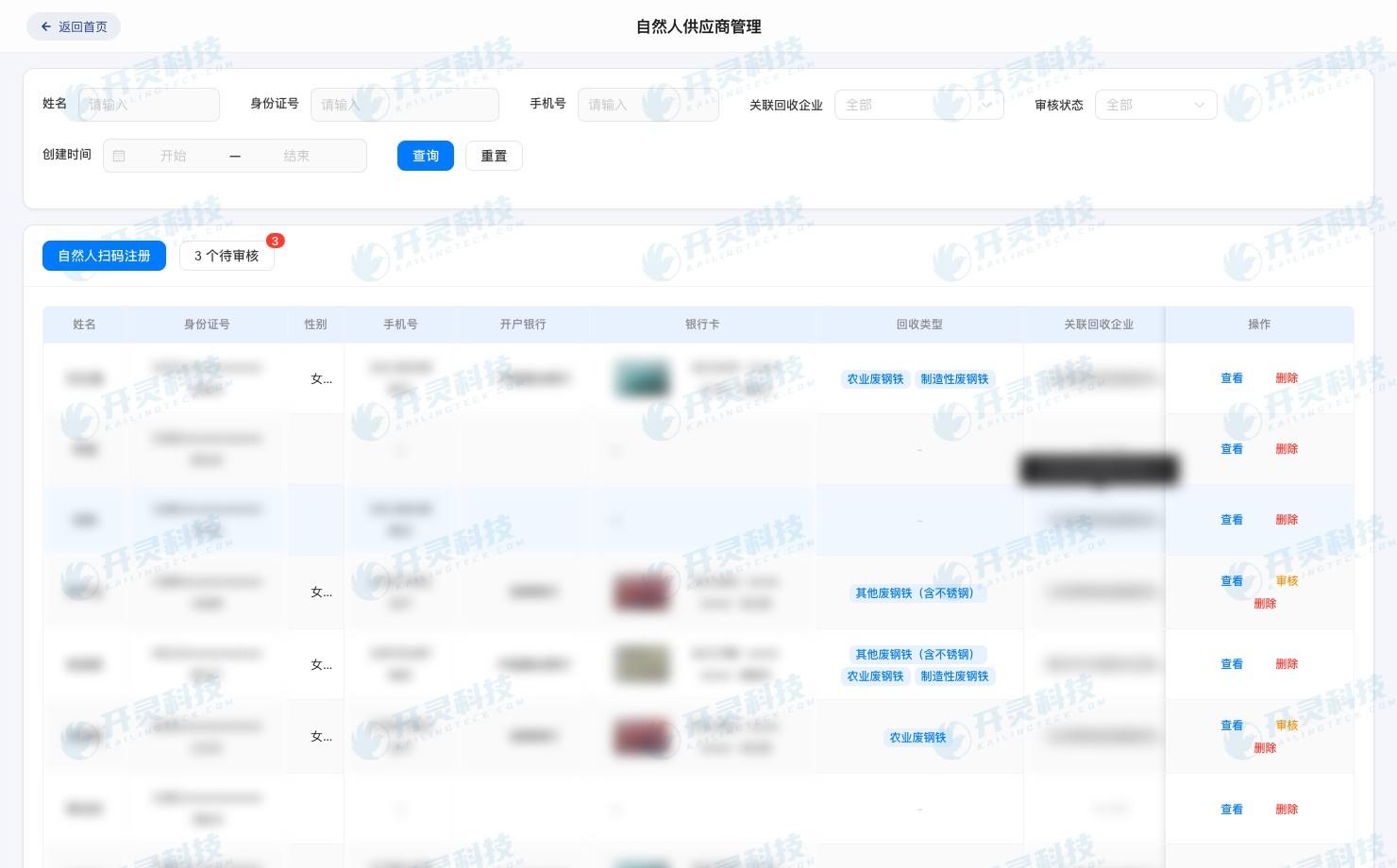
Record the vehicle, arrival time, gross weight, tare weight, net weight, and weighbridge ticket source on site, with necessary images or attachments linked under the same business item. Vehicle information is only part of the business voucher and cannot replace verification of the seller; whether the natural person entity meets the conditions should be checked according to the current reverse invoicing policy, and the basic document includes State Taxation Administration Announcement No. 5 of 2024.
Kailing Technology's resource recycling reverse invoicing system supports individual filing and goods receipt business order management. After the entity passes, weighing data establishes relationships with the seller, vehicle and receiving organization; if re-weighing or weighing anomalies occur, the system retains the original value, review value, reason and approval result, and subsequent warehousing can only reference the effective version.
▍3. Warehousing and settlement must retain changes in quantity measurement basis
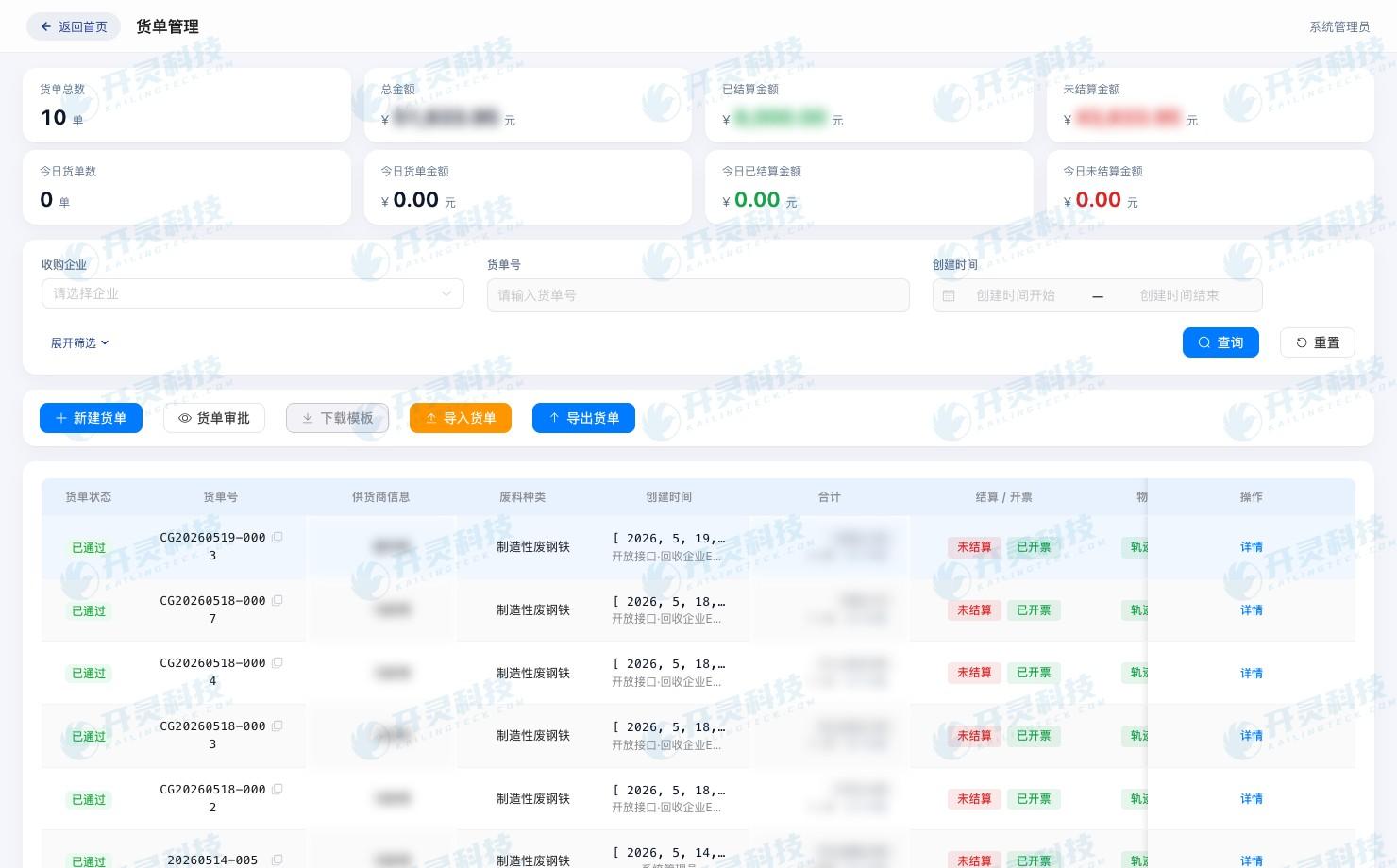
Weighbridge net weight is the on-site quantity basis, and warehouse acceptance may further record category, quality, or adjustments within enterprise rules. This article does not fabricate scrap steel grades, loss rates, or price formulas; system implementation only carries fields and approval rules that the enterprise has already verified. What matters is that warehouse quantities reconcile with weighbridge tickets, and that differences are given a source.
The settlement statement references the final valid receipt and warehousing results. If one truck is divided into multiple categories, the split relationship is retained; if multiple businesses are settled jointly according to rules, each detail is also retained. Invoicing and payment can only use the effective settlement version, avoiding the situation where the site has just adjusted but finance still processes according to old data.
- Quantity differences display the original value, adjusted value and basis, without overwriting with remarks.
- After settlement splitting, the sum of each detail remains reconciled with the effective total quantity and amount.
- Version changes trigger downstream status review, and already invoiced items follow the red-letter reversal or authorization path.
| "One invoice, one archive is not putting all files together, but preserving the evidential relationship of how quantity and amount were formed step by step. |
▍IV. Invoicing and payment close out along the same settlement result
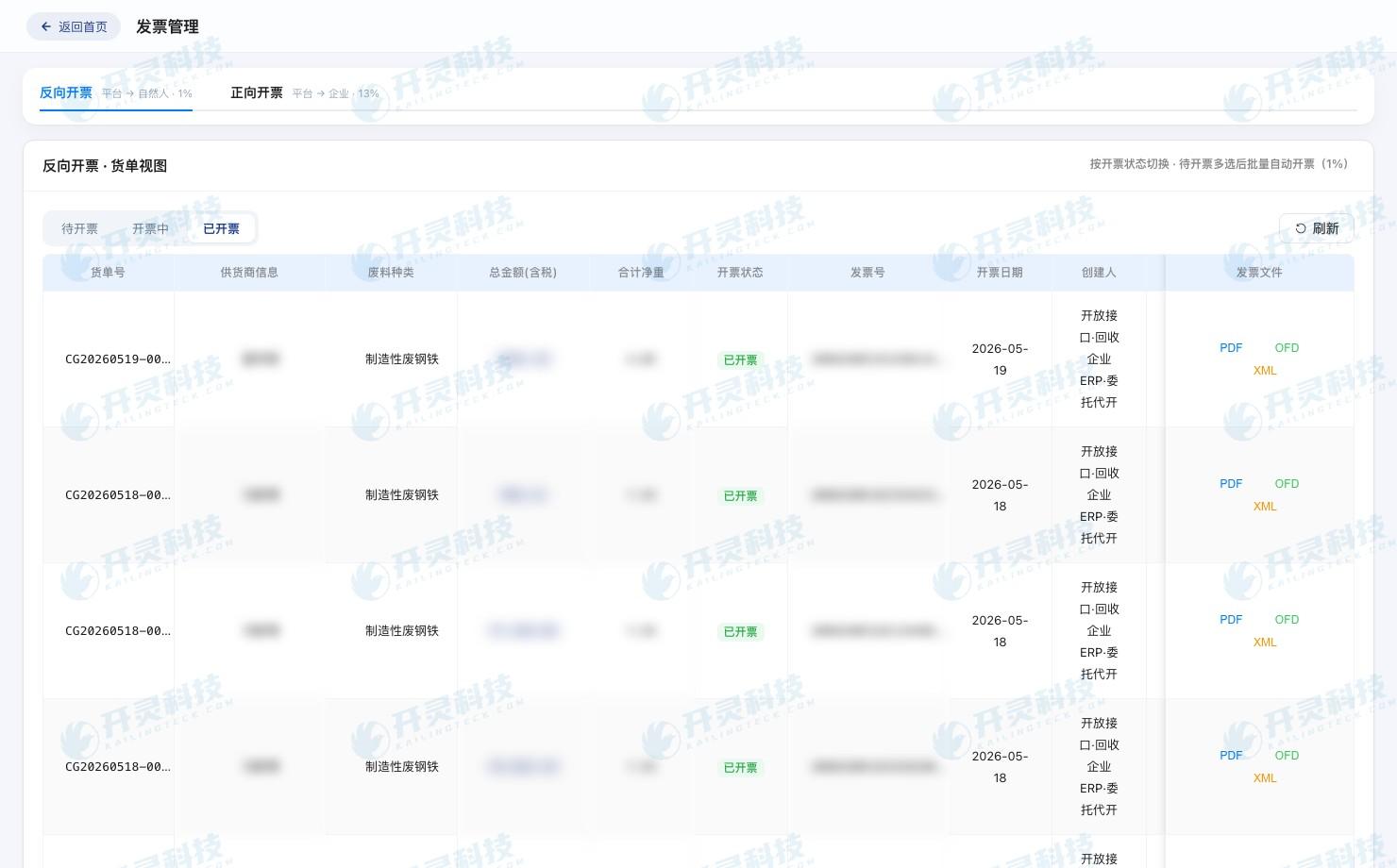
After the entity and business conditions are met, the system can complete reverse invoicing through the relevant interface and save the invoice status and the relationship to source files such as PDF, OFD, or XML. After the invoice is generated, it is still necessary to verify whether it corresponds to the correct seller and settlement details; batch invoicing must not cause the source of each transaction to disappear.
Bank-enterprise payment references the same settlement and collection entity, and the fund status is updated after the bank result is returned. Failed, returned, or resubmitted payments generate independent tasks linked to the original record, while invoice red-voiding points to the original invoice. Kailing Technology's resource recycling reverse invoicing system puts tax and fund results back into the original business chain, avoiding the need for finance to build separate offline mappings.
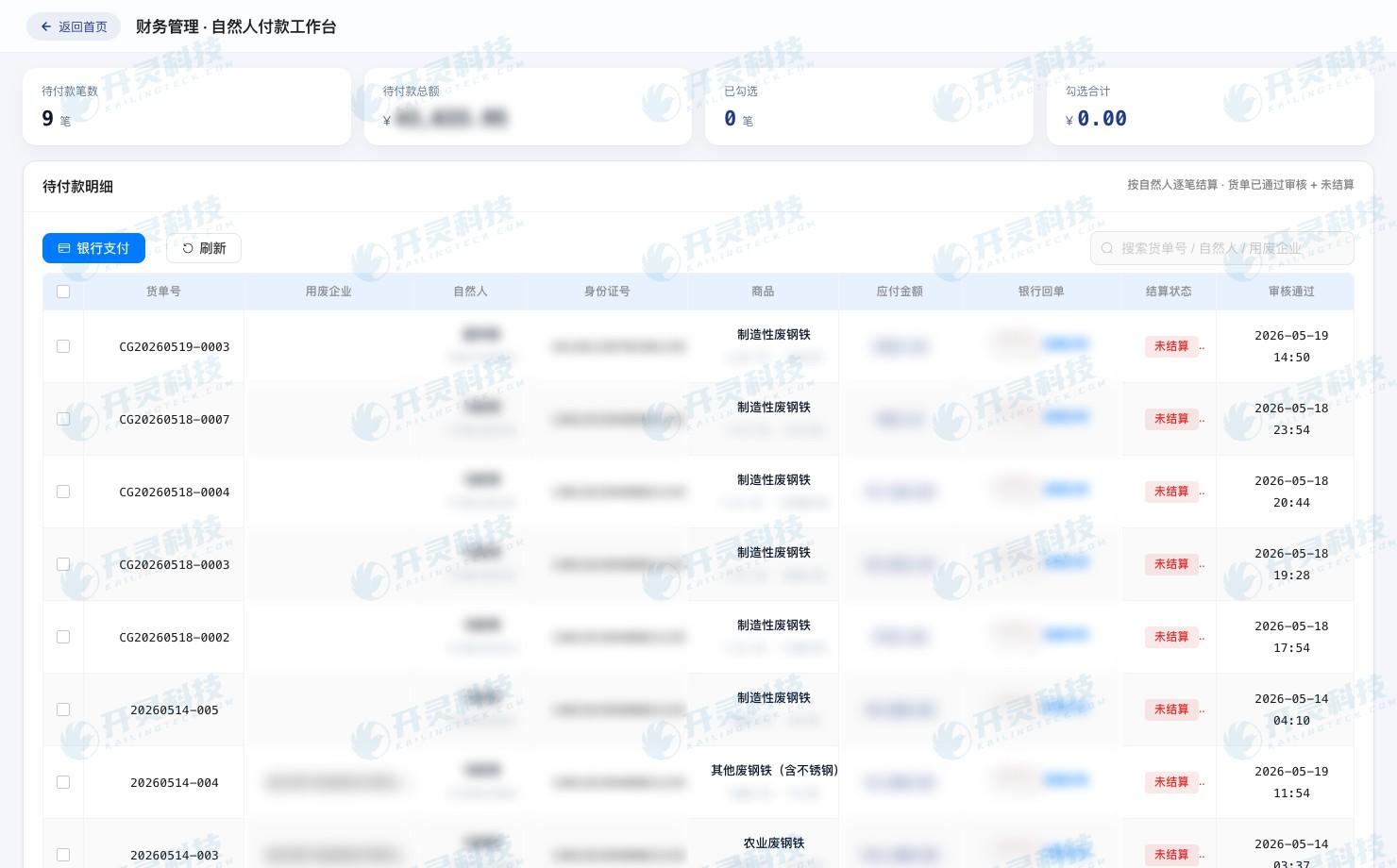
- Invoicing success and payment success are recorded separately, and one completion status should not replace the other.
- Anomaly retries use the original business key, first confirming the counterparty's result to prevent duplication.
- Changing payment collection information requires authorization, and the responsibility trail before and after the change is retained.
▍V. Open the same archive from an invoice, a vehicle, or a transaction record
Archive indexing must support multi-entry queries: entering an invoice number can find the seller, vehicle, weighbridge ticket, warehousing, and payment; entering a vehicle or weighbridge ticket can show the corresponding settlement, bills, and fund status; from bank statements, one can also return to the original business document. Multi-directional queries prove relationship completeness, not that file names happen to be similar.
Kailing Technology uses five-flow integrated ledgers to collect self-certification, business, tax, and capital materials. Before archiving, it checks whether required documents can be opened, whether statuses are consistent, and whether exceptions are closed; after archiving, modifications are restricted and access is logged. In this way, one invoice one archive serves both daily queries and internal audits and necessary external reviews.
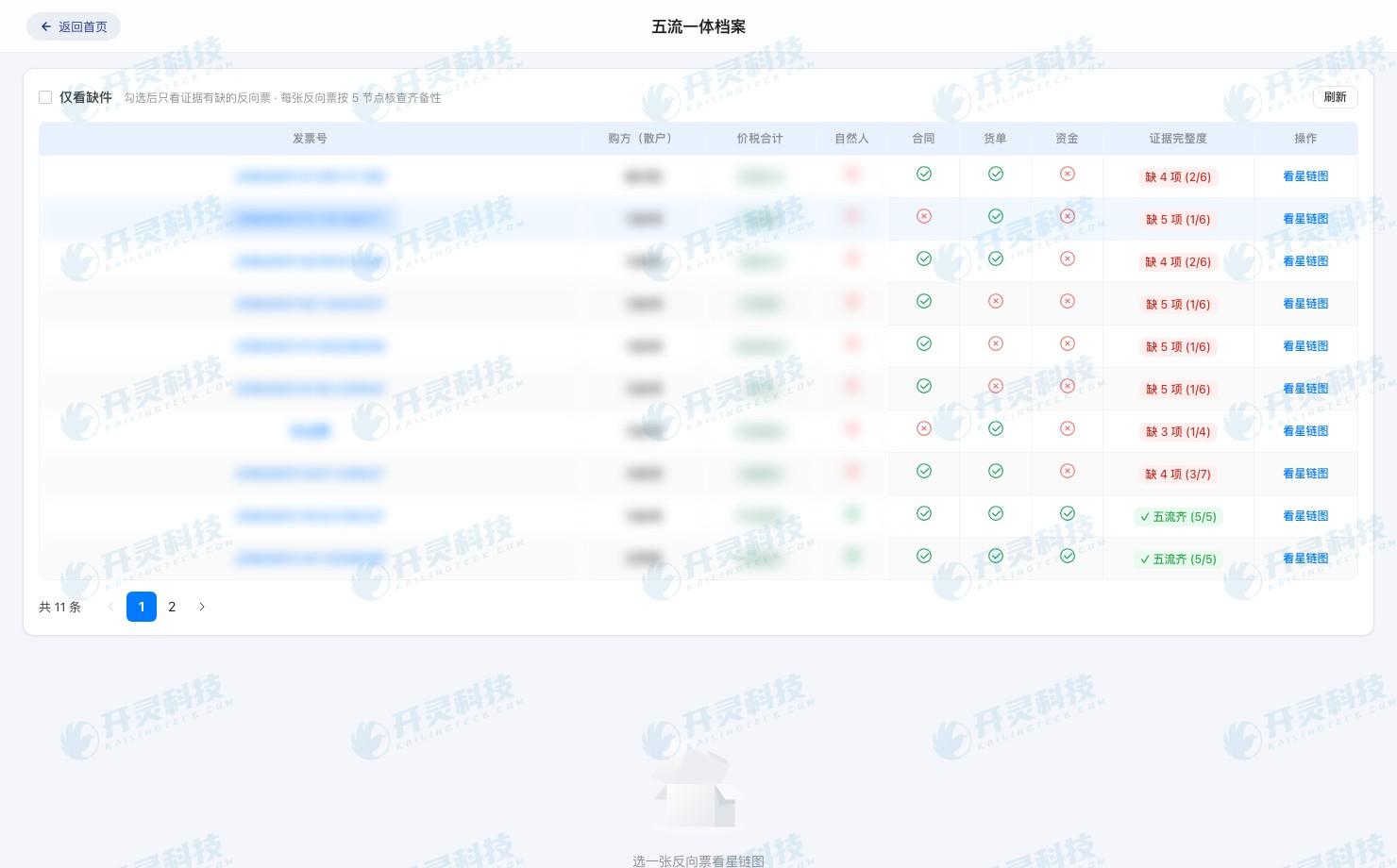
- Extract an invoice and trace back whether the vehicle, weighbridge ticket, warehouse receipt, and payment are all complete.
- Extract a vehicle's receiving record and confirm that the invoice can still be located after splitting or merging.
- Simulate re-weighing, red reversal and refund to verify that archives retain previous and later versions.
Daily operations can establish checklists based on uninvoiced, unpaid, quantity discrepancy pending review, and missing archive items, with each position handling only its own breakpoints. The system centralizes status and evidence, so on-site, finance, and management personnel do not need to maintain multiple conflicting ledgers.
For multi-base groups, primary key rules and minimum evidence requirements should also be unified, while allowing each station to retain approved business fields. Headquarters views summaries and exceptions, bases handle details, and data permissions are isolated by organization; consistent standards do not mean everyone can browse all bulk transaction materials.
Block trades should also have permissions reviewed regularly. Vehicle and amount information is usually sensitive, so receiving personnel, finance, managers, and audit positions should only obtain the scope required to complete their duties. After personnel are transferred, permissions should be revoked promptly while historical operations are still retained, so as to balance collaboration and security.
▍FAQ
Q: Must one truckload of scrap steel correspond to one invoice?
A: One-to-one correspondence is not necessary. The key is that splitting or merging complies with business and invoicing rules, and that each original receipt can be traced back from the invoice.
Q: After re-weighing, can the original weighbridge ticket be directly overwritten?
A: Not recommended. The original value, reviewed value, adjustment reason, and approved version should be retained, so subsequent settlements reference valid records.
Q: What should be done if payment has already been made but the invoice needs to be red-flushed?
A: Fund and tax statuses are handled separately, while both are linked to the original business matter; subsequent reissuance or refunds leave before-and-after relationships according to the authorization process.
Q: Is one-invoice-one-file only used for archiving?
A: No. It also serves pre-invoicing verification, payment reconciliation, month-end breakpoint handling, and post-event traceback — it is a relationship design that runs through the transaction.
Let every vehicle, every weighbridge ticket, and every invoicing payment in bulk scrap steel transactions be filed together. Welcome to visit Kailing Technology: https://www.kailingteck.com/fxzy/ .
As a national high-tech enterprise, Kailing Technology focuses on the digital and intelligent transformation of enterprise business-finance-tax and operations management, providing software products, system integration, implementation and delivery, and operational services for various government agencies, institutions, group enterprises, and SMEs.
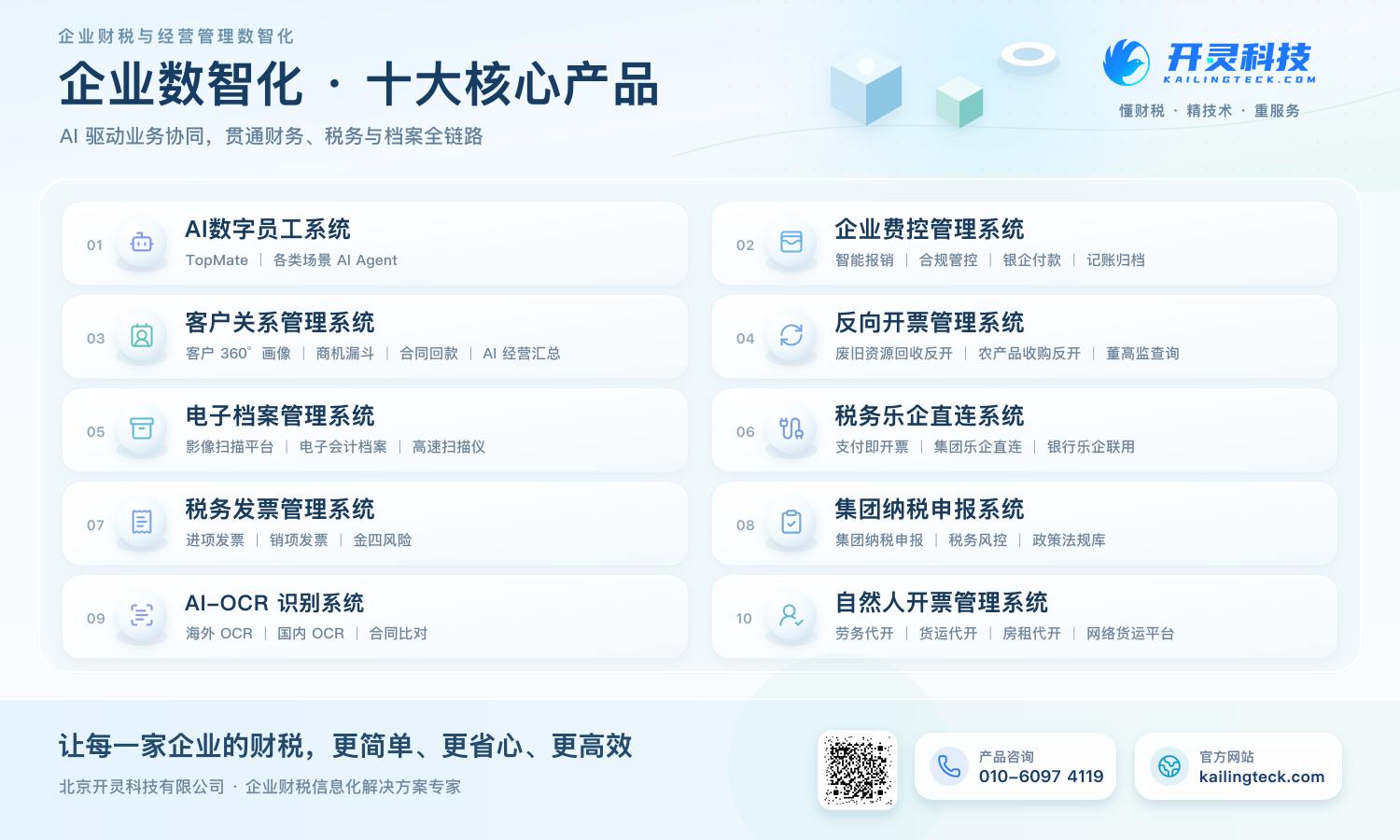
The company has now formed ten core product lines, including: AI digital employee system, enterprise expense control management system, customer relationship management system, reverse invoicing management system, invoice issuance for individuals management system, electronic archives management system, tax fully digitalized e-invoice Leqi system, tax invoice management system, group tax filing system, and AI OCR recognition system. It is committed to connecting enterprise business, finance, tax, funds, and archive data to help customers improve operational efficiency, business-finance-tax compliance capabilities, and digital management levels.
If you have any business-finance-tax digital transformation needs, welcome to contact us. Beijing Kailing Technology will serve you wholeheartedly.
Keywords: Scrap steel recycling, one invoice one file, vehicle weighbridge ticket, Kailing Technology, resource recycling reverse invoicing system
As a comprehensive business-finance-tax digitalization solution service provider, Kailing Technology provides business-finance-tax management digital transformation products and operational services for various government agencies, institutions, and large, medium, and small enterprises. The product line includes: solutions for sales contract management system, procurement contract management system, fully digitalized Leqi interface project, automatic output invoicing system, reverse invoicing system, invoice issuance for individuals system, employee expense control and reimbursement system, input VAT invoice management system, supply chain collaborative reconciliation system, image AI OCR recognition system, automatic financial bookkeeping system, electronic accounting archives system, etc., comprehensively driving the digitalization process across various fields.
Consultation Hotline: 18513895936 / 010-60974119 Location: Beijing