
Is financial review bogged down by massive reimbursement forms? The Kailing Technology enterprise expense control and reimbursement management system uses AI to automatically route compliant and exception documents

After reimbursement volume rises, the review team is most likely to fall into an inefficient cycle: a large number of routine documents with clear rules and complete materials are manually checked item by item, while the exceptions that truly require judgment are queued at the end. The problem is not just insufficient staffing, but that risk density is uneven while the same review method is used, and finance time is evenly allocated to matters with different risks. Around "1. Review backlog stems from all documents going through the same queue," Kailing Technology's enterprise expense control reimbursement management system needs to incorporate related relationships into the same business chain.
Kailing Technology enterprise expense control and reimbursement management system can use digital employees for automatic review, risk reminders, and collaboration with manual approval to divide documents into queues such as automatic approval, supplementary materials, manual review, and return. Here AI undertakes executing confirmed rules, gathering evidence, and routing tasks; it does not replace policy-making, nor does it make unauthorized final judgments on ambiguous business relationships.
▍1. Review backlog comes from all documents going through the same queue
Traditional review often queues by submission time, placing small-amount documents with clear travel standards together with complex documents where the contracting party, invoicing party, and payee are inconsistent. Reviewers must frequently switch their thinking between each document, repeatedly performing format checks while worrying about missing risks in amounts, entities, or attachment relationships, affecting both speed and focus.
A more reasonable queue should be separated by judgability and risk signals. Documents with complete fields, consistent master data, normal voucher verification, and no hit on system exceptions can be automatically advanced or spot-checked according to authorization; those missing evidence should first have documents supplemented; those with amount reconciliation, contract constraints, or counterparty differences enter professional review; those clearly violating hard rules are returned.
- Format and required-field issues are flagged before submission, avoiding consumption of finance review time.
- Explainable risk tags flow with documents; a vague score alone is not acceptable.
- Complex exceptions are assigned by topic to the corresponding roles, allowing reviewers to handle the issues they are best at.
▍II. Kailing Technology enterprise expense control and reimbursement management system: translate policies into machine-judgeable fields and relationships
The original system text often says "attachments complete," "amount reasonable," "subject consistent," but machines need specific objects to check. During implementation, rules must be broken down into fields, relationships, data sources, trigger conditions, and processing actions. For example, whether the payment period is open is a status query, whether an invoice is duplicate is a uniqueness check, and whether cumulative contract payments exceed the agreement requires linking historical documents and contract information.
The nine review dimensions commonly seen in shared service centers—entity, period, expense attribution, customer/supplier, contract, amount, association, attachment, and voucher—can serve as a framework for rule organization, but this does not mean the system implements all enterprises' internal clauses by default. Kailing Technology's enterprise expense control and reimbursement management system supports rule-based review and exception alerts; specific fields and thresholds must be based on the enterprise's own policies and available data.
▍3. The four result types must correspond to four clear actions
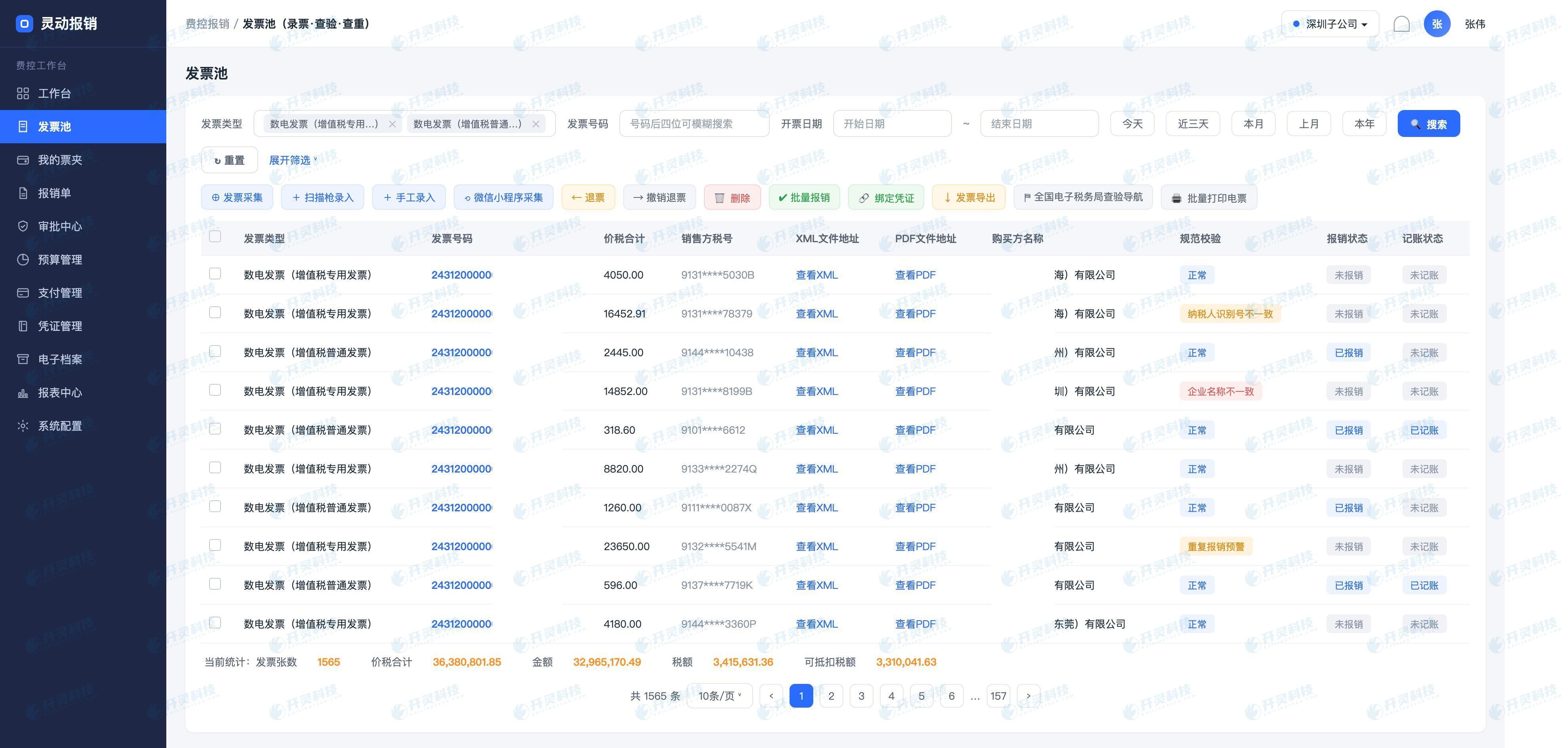
Automatic approval applies to low-risk matters with complete evidence and clear matching conditions, and sampling is retained according to policy. Supplementary materials apply to situations where contracts, statements, or explanations are missing but the business itself cannot yet be judged as wrong; the system should indicate what is missing. Manual review applies to matters that require understanding the business context or authorized exceptions. Return applies to documents that definitely do not meet submission conditions and cannot be corrected at the current node.
Results must be understandable by both the handler and the reviewer. Simply displaying "AI determined anomaly" creates new communication costs; a more useful prompt points out which field is involved, what material it conflicts with, what evidence is suggested to supplement, and who the next handler is. The system's automatic review and mobile approval can jointly undertake these actions, so that machine conclusions do notdeviate from the formal process.

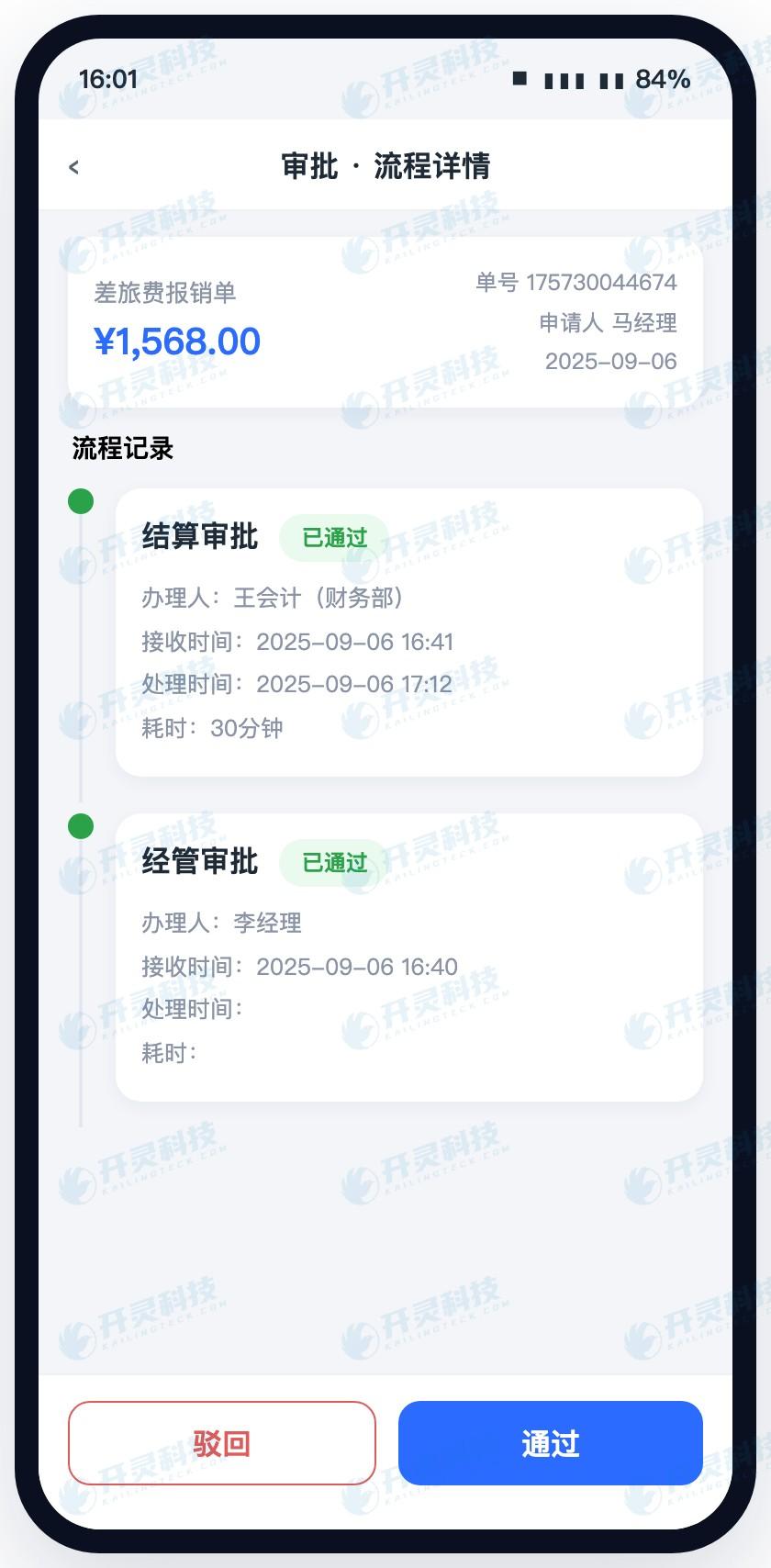
| "The value of AI review is not judging a few more documents, but reserving human judgment for the few matters that rules cannot cover. |
▍IV. Manual spot checks are for calibration, not repeating full review
Documents that pass automatically still need sampling based on risk and rule maturity. When new rules are first launched, the sampling ratio can be increased to observe false positives, omissions, and manual overrides; once stable, reduce routine samples and shift resources to high-risk business. Sampling results must be written back to the rule operations ledger, and cannot simply be privately remembered by reviewers as to which conditions are "not very accurate."
Rule adjustments must also have versions and effective dates. After policy changes, new documents execute according to new conditions, while historical documents can still explain the old rules hit at the time; otherwise, the same expense may show a gap during review where "it does not pass now, but it automatically passed then." For widely impactful modifications, desensitized historical samples should first be replayed before entering production.
- Record the reasons for manual overrides, distinguishing between missing data, ambiguous policies, and rule configuration errors.
- Cluster similar anomalies and prioritize fixing high-frequency issues rather than continuously adding review staff.
- Separate rule maintenance, review processing, and operational review in terms of permissions to avoid a single-person closed loop.
▍V. The operations dashboard should measure risk flow, not just speed
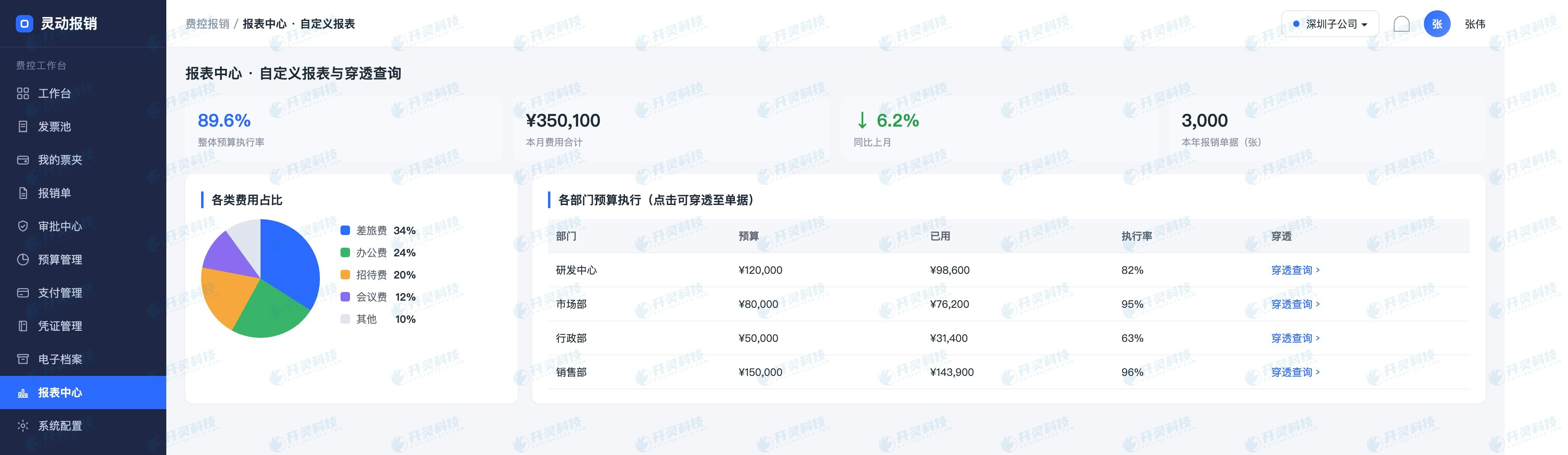
Review duration is of course important, but more noteworthy are the proportion of each queue, number of returns for supplementary materials, reasons for manual overrides, concentration of rule hits, and exception closure cycles. If the automatic pass rate rises but manual overrides also increase simultaneously, the speed improvement is not reliable; if an organization lacks the same type of attachment for a long time, the problem may lie in filing instructions or upstream processes.
Reports should allow drill-down from summaries to desensitized samples and rule versions, helping review supervisors determine whether business risk has increased or data quality has declined. Kailing Technology's enterprise expense control and reimbursement management system supports custom reports and process data analysis. Enterprises can configure observation standards around their own review objectives and should not copy the internal priorities of other organizations.
- At go-live, first select a category of expenses with clear rules and complete data to form a verifiable small closed loop.
- Review machine routing and manual results weekly to confirm whether new rules truly reduce back-and-forth.
- Retain approval evidence for major exceptions, so that automation improves efficiency without sacrificing explainability.
When rule decomposition, queue actions, manual calibration, and operational metrics are connected, financial review will shift from "reviewing every document one by one" to "routine cases proceed automatically, exceptions receive focused review." Employees receive clear feedback, the review team reduces repetitive labor, and managers can also see the whole process of risks being discovered, assigned, and closed.
Deactivation conditions must also be set for the rules. When a data source is interrupted, a policy is being changed, or a certain type of false positive suddenly increases, the system should suspend the relevant automated decisions and switch to manual handling, resuming only after the cause is identified. Reversible automation is safer than continuously outputting unexplainable results, and it also helps teams trust the review mechanism.
Every recovery must go through review.
▍FAQ
Q: Can AI review completely replace finance personnel?
A: Not recommended to understand it this way. It is suitable for executing clear rules, aggregating risks, and routing; matters involving business reasonableness, authorization exceptions, and ambiguous evidence still require human judgment.
Q: Can business rules directly copy another company's review checklist?
A: No. External lists can only provide dimensions for sorting; specific fields, thresholds, and handling actions must be confirmed based on the enterprise's own policies and data conditions.
Q: Do automatically approved documents still need spot checks?
A: Yes. Sampling checks should be set based on risk and rule maturity, and the reasons for manual overrides should be written back to rule operations. A one-time launch cannot replace continuous calibration.
Q: Should missing attachments be returned or transferred to manual handling?
A: It depends on whether the evidence can be supplemented and on policy requirements. For those that can be supplemented, missing items should be clearly indicated; those confirmed not to meet submission conditions should be returned.
Let routine reimbursements proceed automatically and abnormal evidence be concentrated by person. Welcome to visit Kailing Technology: https://www.kailingteck.com/feikong/ .
As a national high-tech enterprise, Kailing Technology focuses on the digital and intelligent transformation of enterprise business-finance-tax and operations management, providing software products, system integration, implementation and delivery, and operational services for various government agencies, institutions, group enterprises, and SMEs.
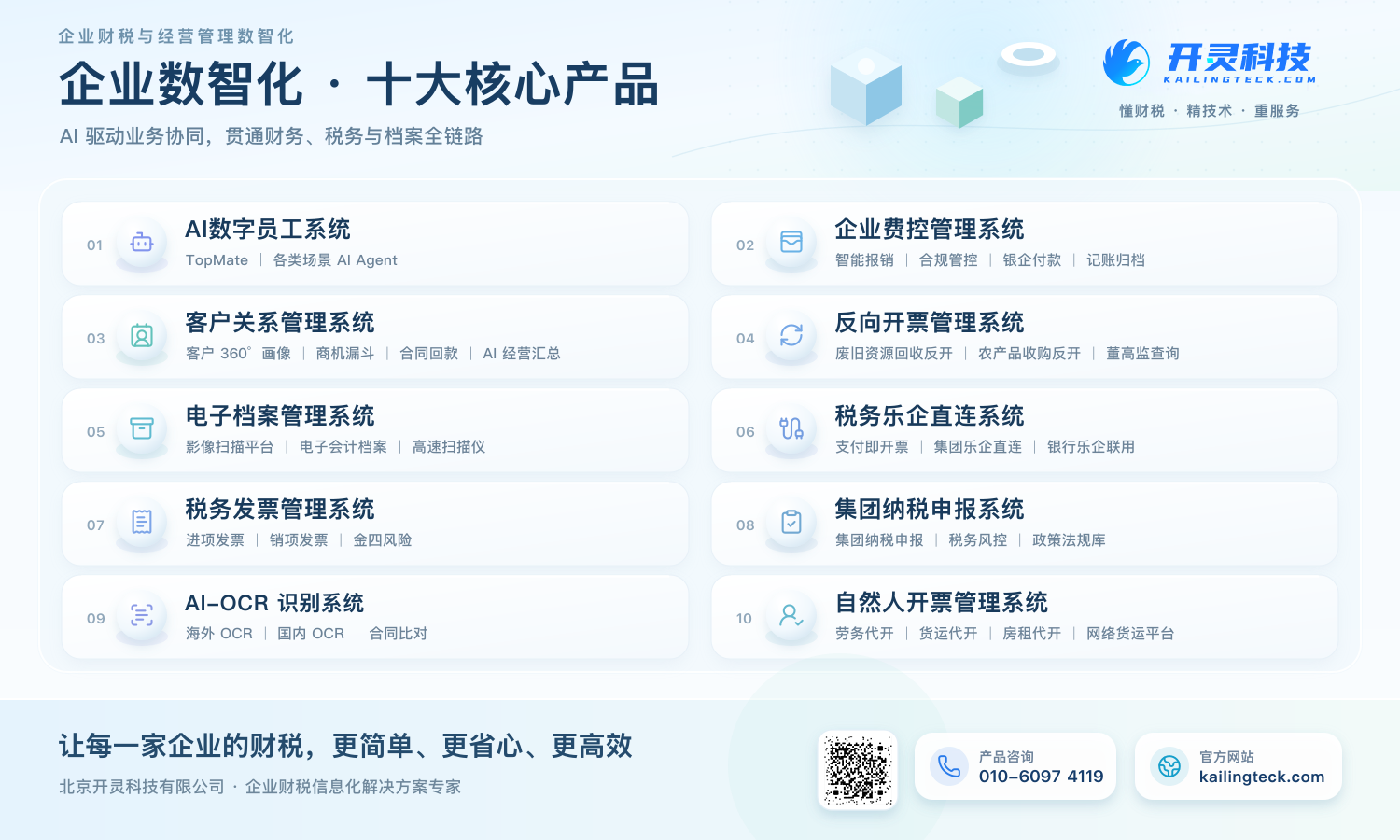
The company has now formed ten core product lines, including: AI digital employee system, enterprise expense control management system, customer relationship management system, reverse invoicing management system, invoice issuance for individuals management system, electronic archives management system, tax fully digitalized e-invoice Leqi system, tax invoice management system, group tax filing system, and AI OCR recognition system. It is committed to connecting enterprise business, finance, tax, funds, and archive data to help customers improve operational efficiency, business-finance-tax compliance capabilities, and digital management levels.
If you have any business-finance-tax digital transformation needs, welcome to contact us. Beijing Kailing Technology will serve you wholeheartedly.
Keywords: AI reimbursement review, abnormal documents, financial shared services, Kailing Technology, enterprise expense control and reimbursement management system
As a comprehensive business-finance-tax digitalization solution service provider, Kailing Technology provides business-finance-tax management digital transformation products and operational services for various government agencies, institutions, and large, medium, and small enterprises. The product line includes: solutions for sales contract management system, procurement contract management system, fully digitalized Leqi interface project, automatic output invoicing system, reverse invoicing system, invoice issuance for individuals system, employee expense control and reimbursement system, input VAT invoice management system, supply chain collaborative reconciliation system, image AI OCR recognition system, automatic financial bookkeeping system, electronic accounting archives system, etc., comprehensively driving the digitalization process across various fields.
Consultation Hotline: 18513895936 / 010-60974119 Location: Beijing