
How to handle borrowing 1000 and reimbursing 1500? Kailing Technology enterprise expense control reimbursement management system automatically connects supplementary payment, offset, and approval

An employee first borrows 1000, and the actual compliant expenditure is 1500. Should the reimbursement be filled in as 1500 or only the difference of 500? If only 500 is filled in, the expense facts and invoice amount are incomplete; if 1500 is paid directly, the original loan is not offset. The numbers in the example are only an abstract calculation case, but they reveal the most common boundary in loan reimbursement: expense recognition, loan reconciliation, and difference payment are three interrelated matters that cannot be conflated. Around "1. First separate the three numbers of expense, loan, and payable," the Kailing Technology enterprise expense control reimbursement management system needs to incorporate the related relationships into the same business chain.
Kailing Technology enterprise expense control and reimbursement management system can associate reimbursement forms with original loans, display the original balance during approval, and let the borrowed portion enter offset while the excess enters supplementary payment. To achieve this result, enterprises need to first define the calculation order of valid reimbursement amount, offsettable balance, and payable difference, avoiding replacing formal relationships with remarks or manual transfers.
▍1. First separate the three numbers: expenses, borrowings, and payables
This expense should be recorded according to the approved business expenditure. The original loan balance reflects funds already advanced to the employee but not yet settled. The payable difference is the result of the expense amount minus the loan amount offsettable this time. The three figures come from different sources: the expense comes from invoices and business facts, the loan comes from the original document status, and the difference comes from rule calculation. Squeezing them into one field makes it difficult to generate correct vouchers later.
In the abstract calculation example, 1500 is the total expense amount pending review, 1000 is the loan that can be referenced by this reimbursement, and only 500 may be the amount that needs to be supplemented after approval. If some invoices are non-compliant or exceed policy limits, the effective expense amount will decrease, and the supplementary payment will change accordingly; therefore, the system cannot settle the loan or determine the final payment at the moment the employee submits.
- Total expenses retain complete business content, facilitating budget, tax, and project analysis.
- The loan balance can only be read from the available original document and cannot be filled in arbitrarily by employees manually.
- The supplementary payment amount is calculated after the review result is determined and remains subject to continued constraints from the payment status.
▍II. Linking documents to the original loan is more reliable than writing "offset" in the remarks
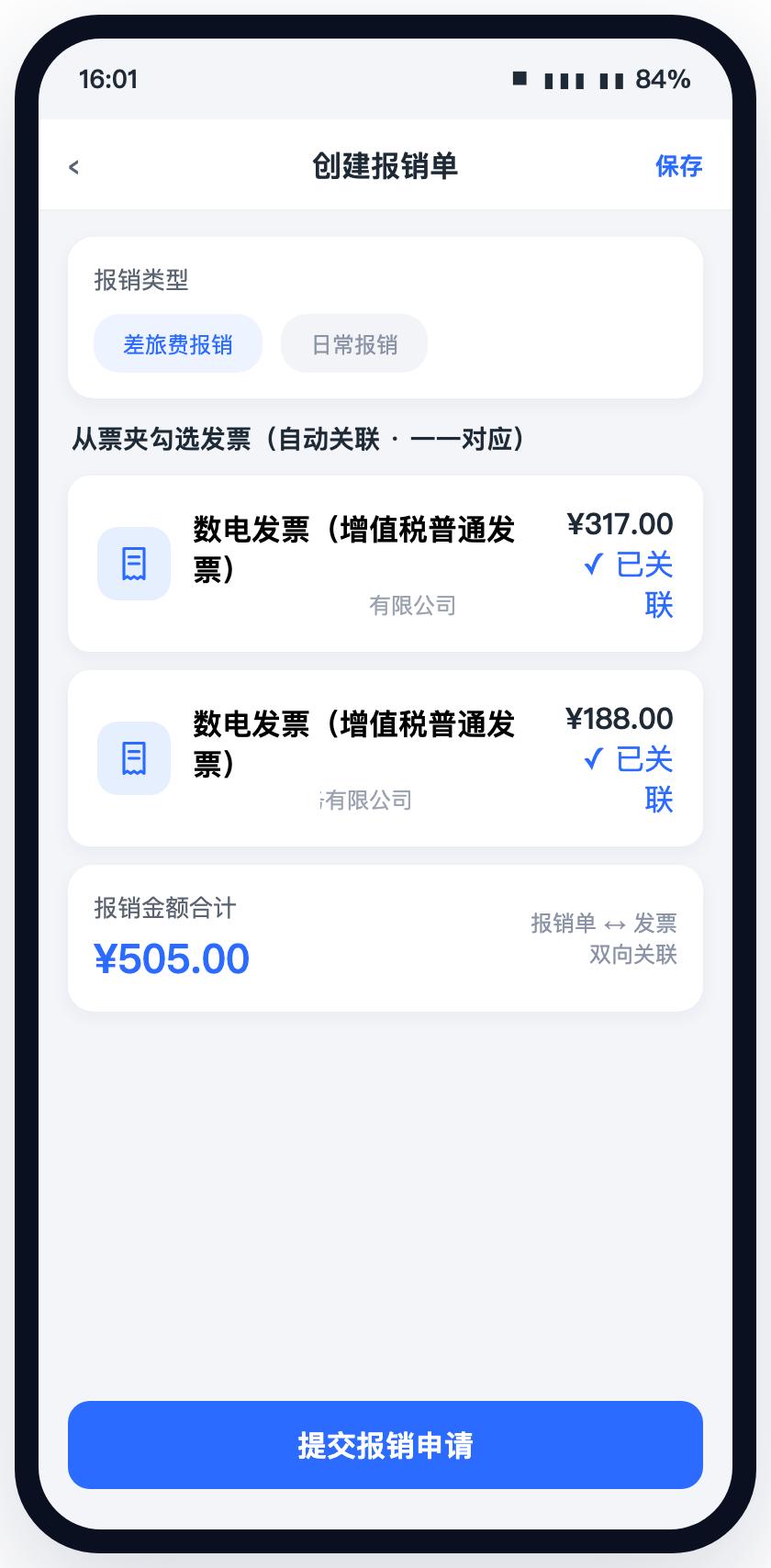
When an employee creates a reimbursement form, they should select the original loan matter, and the system brings out the purpose, date, organization, project, original amount, and current available balance. In this way, approvers can determine whether this expenditure falls within the scope of the original loan, and finance can also see whether other reimbursements are occupying the same balance. Writing only the loan number in the remarks cannot prevent two forms from offsetting the same amount at the same time.
Invoices first enter expense details, and loans then participate in calculation as a settlement source. If an expense includes multiple projects or multiple loans, the enterprise should specify split or allocation methods; if the loan purpose is clearly different from this expenditure, it should be transferred to manual explanation or returned. Once the relationship is clear, withdrawal, rejection, and amount modification have corresponding occupation release actions.
▍III. Kailing Technology enterprise expense control and reimbursement management system lets approvers see the full context
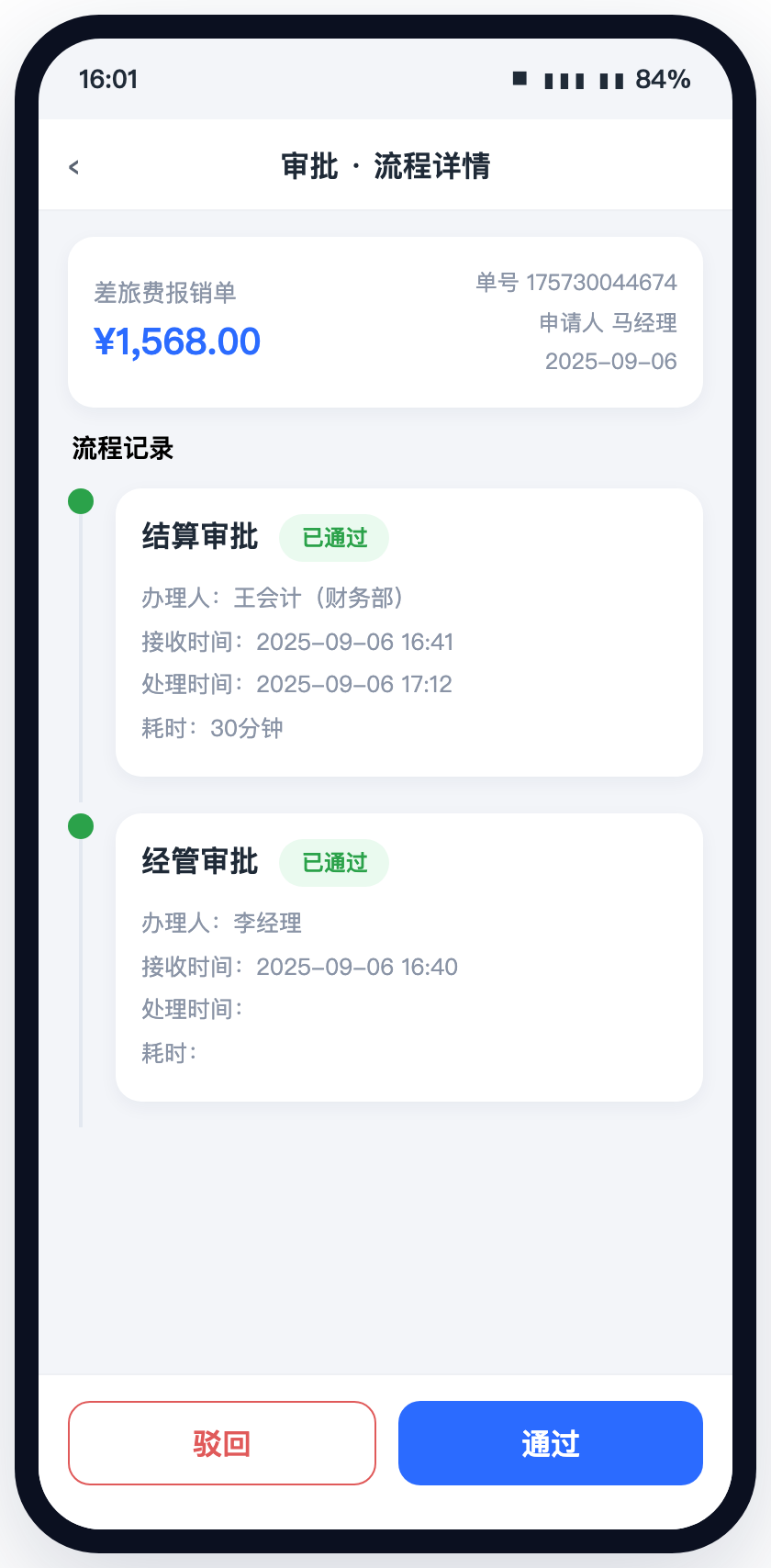
Approval should not only display the single amount line "reimbursement 1,500." For business leaders, they need to see the expense purpose, receipts, budget, and project; for finance, they also need to see the original loan of 1,000, other in-transit occupation, expected offset this time, and expected supplementary payment. Different roles may have different focus points, but all should be based on the same document relationship, avoiding the situation where business approves an expense but finance does not know the funds have already been prepaid.
If the effective amount is adjusted during approval, the difference should be recalculated simultaneously. For example, if an expense is returned for supplementary materials, the system first retains the process status rather than paying in advance; if the entire form is rejected, the loan occupation should be released. Kailing Technology's enterprise expense control and reimbursement management system supports custom approvals and mobile processing, and enterprises can configure situations such as exceeding standards, mismatched purposes, and abnormal balances as manual judgment points.
| "Approval approves the complete expense fact; reversal and supplementary payment are merely two fund-handling outcomes under the same fact. |
▍IV. Payments and vouchers must each handle difference results
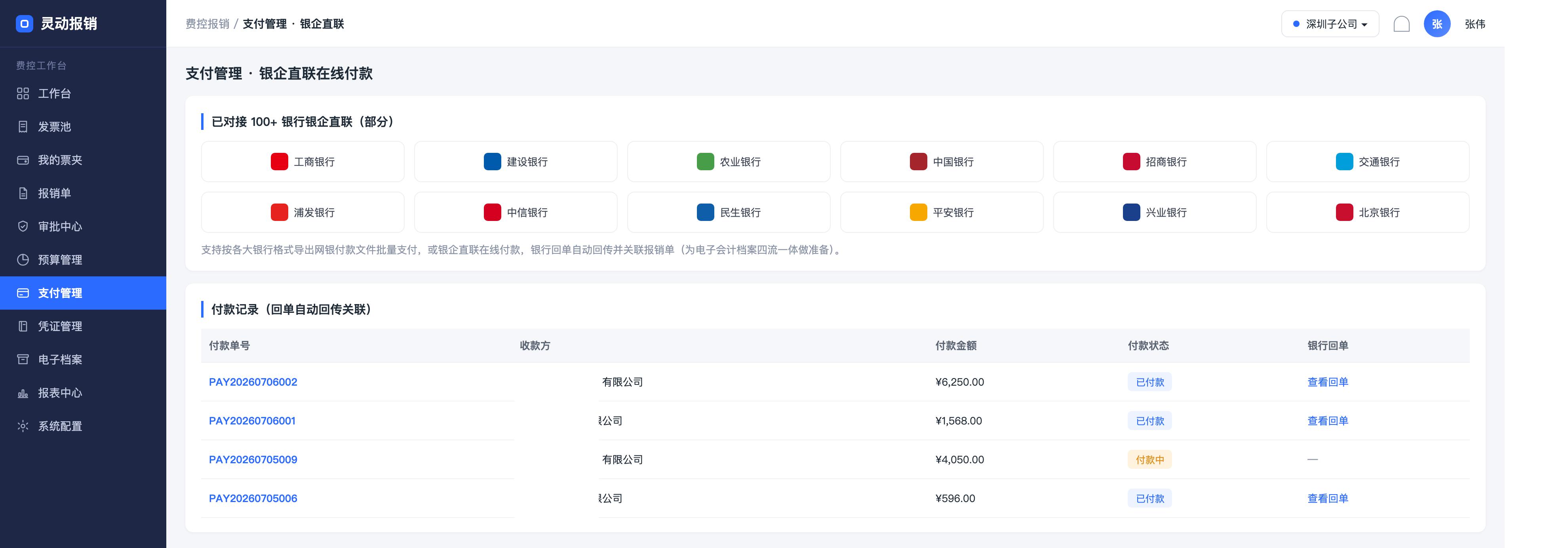
After review takes effect, the borrowed portion is used to offset the employee's loan, and the excess enters payment. Payment tasks should carry back the business document number and payee information, and the bank's success, failure, or return results should be written back to the original reimbursement form. If supplementary payment fails, the entire business cannot be marked as completed just because the loan has been offset; instead, a pending payment exception should be retained.
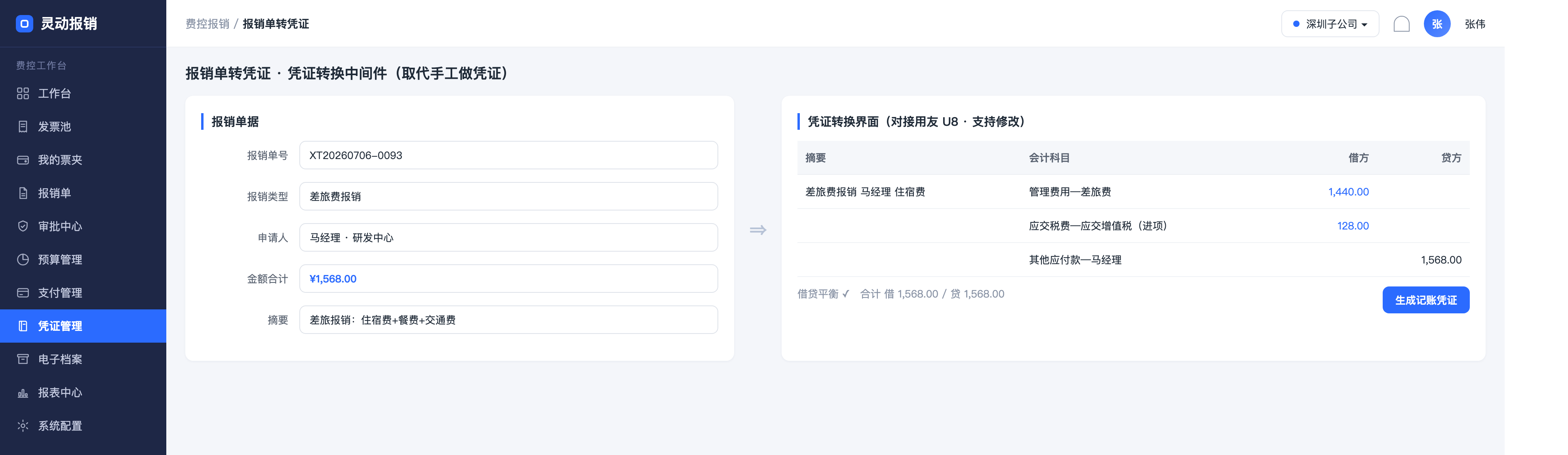
Voucher generation needs to reflect the different relationships of expense recognition, loan offset, and the difference payable or paid. Accounts and accounting dimensions are determined by enterprise rules; the system is responsible for receiving source document fields and generating by mapping, and finance is responsible for reviewing whether the debit-credit direction, amounts, and counterparties balance. Recording only expenses manually while writing off loans off the books will plunge future reconciliation back into patchwork.
- Before payment, verify the payee, organization, and payable difference to prevent carrying over the original loan amount.
- After payment, verify bank status; do not mistake a submitted instruction for funds already received.
- After booking, drill through from vouchers to reimbursement and loans to confirm that the same matter has not been recognized twice.
▍V. Accept with three scenarios: positive variance, zero variance, and negative variance
Launch testing must at least cover three basic scenarios: borrowing less but reporting more, borrowing equal to reimbursement, and borrowing more but reporting less, and add partial expense reduction, document withdrawal, multi-person approval, payment failure, and cross-month processing. Each test should record the balance before submission, the amount occupied during the process, the reversal after review, the actual supplementary payment or amount still owed, and the voucher result; do not look only at a single difference displayed on the front end.
The enterprise's policy on rounding differences and small residual balances must also be determined. The system can execute configurations, but it cannot replace institutional authorization; whether the choice is employee repayment, carrying forward to the next offset, or handling upon approval, the basis and the operator should be recorded. The simpler the arithmetic in the problem statement, the more it must be proven through state testing that it will not be disrupted by reversals, failures, and concurrent operations in real processes.
- Use two reimbursement forms referencing the same loan at the same time to verify whether the system can prevent duplicate occupation.
- Modify and review the valid amount; the confirmed supplementary payment amount and loan write-off amount will be recalculated.
- Simulate bank returns and check whether business status, to-dos and voucher handling remain consistent.
After an enterprise clearly explains the source of numbers, calculation timing, and effective conditions, borrowing less and reporting more is no longer a special problem for expense accountants to split based on experience. Employees only need to fully declare the facts, approvers make judgments based on context, the system separates reversals and supplementary payments according to rules, and finance focuses on a small number of exceptions and final reconciliation.
After running for a period of time, the distribution of supplementary payments, remaining balances, and returns can be observed by loan type. If a certain type of loan almost always shows a relatively large difference, the cause should be checked back at the application amount and purpose standards, rather than leaving all deviations to the reimbursement end. Data is used to improve the starting point of the system, so that the closed loop is not merely automated bookkeeping.
▍FAQ
Q: If 1,000 is borrowed and 1,500 is claimed, should the employee fill in only 500?
A: Not recommended to fill in only the difference. The reimbursement form should fully reflect compliant expenses, and the system then associates the original loan and calculates the portion to be offset and supplemented.
Q: After submitting reimbursement, can the original loan be settled immediately?
A: Usually, in-transit occupation should be recorded first, and write-off should occur after approval and the effective conditions stipulated by the enterprise are met; occupation needs to be released when rejected or withdrawn.
Q: If only 1,200 are ultimately approved, how much should be supplemented?
A: Under the abstract condition that the original loan of 1,000 is fully offsettable and there is no other occupation, the difference is 200; actual handling should still be based on the available balance read by the system and enterprise policy.
Q: How is it handled when the difference supplement payment fails?
A: Retain the payment failure status and enter the exception queue. The entire business item cannot be marked as completed; it should be closed only after correcting the payee information or making a new payment.
Make every loan difference automatically calculated, clearly approved, and clearly accounted for. Welcome to visit Kailing Technology: https://www.kailingteck.com/feikong/ .
As a national high-tech enterprise, Kailing Technology focuses on the digital and intelligent transformation of enterprise business-finance-tax and operations management, providing software products, system integration, implementation and delivery, and operational services for various government agencies, institutions, group enterprises, and SMEs.
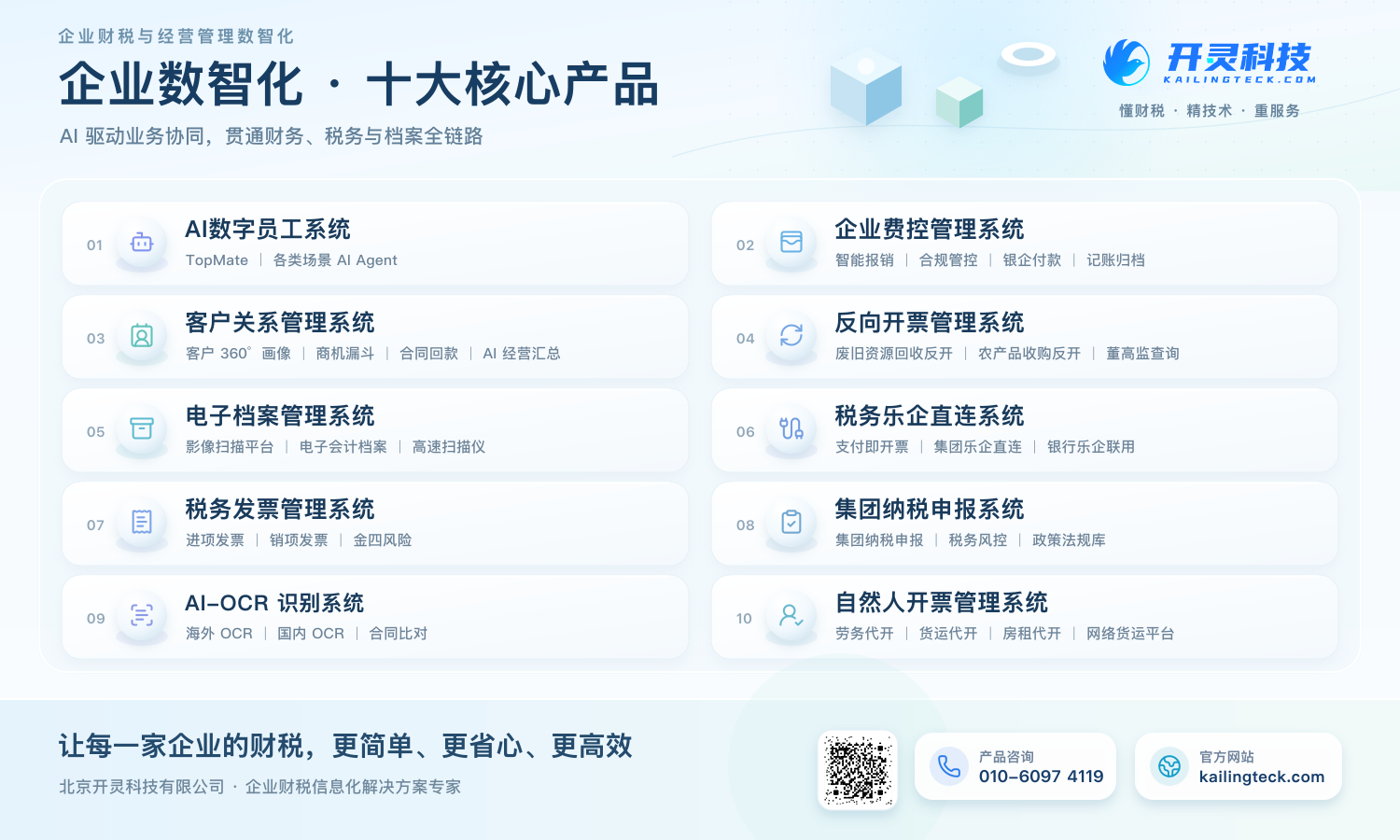
The company has now formed ten core product lines, including: AI digital employee system, enterprise expense control management system, customer relationship management system, reverse invoicing management system, invoice issuance for individuals management system, electronic archives management system, tax fully digitalized e-invoice Leqi system, tax invoice management system, group tax filing system, and AI OCR recognition system. It is committed to connecting enterprise business, finance, tax, funds, and archive data to help customers improve operational efficiency, business-finance-tax compliance capabilities, and digital management levels.
If you have any business-finance-tax digital transformation needs, welcome to contact us. Beijing Kailing Technology will serve you wholeheartedly.
Keywords: Loan reimbursement, difference supplementary payment, loan write-off, Kailing Technology, enterprise expense control and reimbursement management system
As a comprehensive business-finance-tax digitalization solution service provider, Kailing Technology provides business-finance-tax management digital transformation products and operational services for various government agencies, institutions, and large, medium, and small enterprises. The product line includes: solutions for sales contract management system, procurement contract management system, fully digitalized Leqi interface project, automatic output invoicing system, reverse invoicing system, invoice issuance for individuals system, employee expense control and reimbursement system, input VAT invoice management system, supply chain collaborative reconciliation system, image AI OCR recognition system, automatic financial bookkeeping system, electronic accounting archives system, etc., comprehensively driving the digitalization process across various fields.
Consultation Hotline: 18513895936 / 010-60974119 Location: Beijing