
Hospital HIS system integration with Kailing Technology automatic invoicing: How to achieve a full-process closed loop for self-service invoicing after payment
After patients complete payment, the most common experience breakpoint is not that "the hospital cannot issue invoices," but that payment information, settlement status, invoicing orders, electronic documents, and patient entry points are scattered across different systems. Patients cannot find records in the official account, the self-service machine indicates unsettled, and the window needs to re-verify; finance finds the result in the invoicing platform, but the HIS still shows pending. To realize self-service invoicing after payment, the core is not to add a button, but to ensure that a transaction always has a unique number and writable-back status from payment confirmation to delivery and archiving.
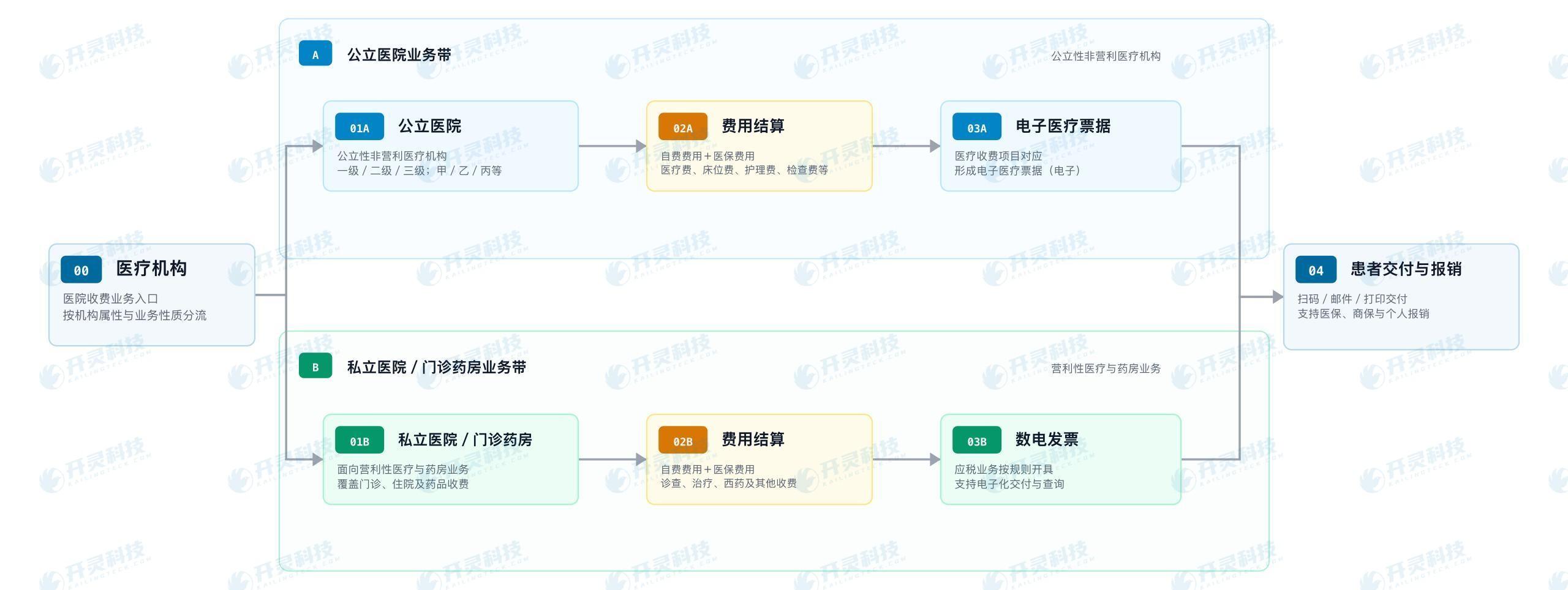
The Kailing Technology automatic invoicing platform can connect to HIS, charging, medical insurance settlement, unified payment, and patient service entrances, undertaking data preprocessing, invoicing orders, review, issuance, result query, callback, red-letter processing, delivery, and record management. Hospitals need to first clarify the invoice type and responsibility boundaries: public medical institutions may involve electronic medical charging invoices, while private institutions and specific businesses may also involve tax invoices. The actual invoice types, fields, issuing entities, and red-letter rules shall be subject to the hospital's nature, business nature, and local finance, tax, and medical insurance regulations.
▍Starting point of the closed loop: HIS issues an invoiceable event only after business conditions are met
Automatic invoicing cannot simply treat "payment successful" as the only condition. Outpatient business needs to confirm charge items, payment channels, medical insurance and self-pay splitting, and refund status; inpatient business usually needs to wait for discharge settlement to be completed and confirm deposits, supplementary payments, medical insurance settlement, and final receivables. Hospitals should keep these business judgments in the HIS or charging system, and the upstream system should generate an invoiceable event containing the business number, payment number, amount, item summary, issuing entity, and necessary patient delivery identifier.
If payment callbacks arrive late, medical insurance settlements are revoked, or the same business is pushed repeatedly, the access layer must handle idempotency by business number and payment number, rather than generating multiple orders. For data with incomplete fields, unbalanced amounts, or conflicting statuses, first enter the pending queue for verification by designated personnel; the system can automatically route, but "issue first, modify later" cannot replace business confirmation.
▍Data relay: translate hospital fields into invoiceable orders
The HIS construction eras and technology stacks of different hospitals vary greatly. The Kailing Technology automatic invoicing platform can select API (JSON/XML), SFTP files, intermediate tables/views, or other controlled methods for access by project. The interface method is not better the more real-time it is; it must simultaneously satisfy network security domains, data minimization, failure compensation, and operational capabilities. Before integration, a field dictionary should be formed, indicating the source system, mandatory status, enumerations, desensitization requirements, and responsible persons.
After entering the platform, data undergoes preprocessing: verifying the invoicing entity, amount, and detail balance, splitting or merging according to rules, mapping goods/charge items, checking duplicate orders, and determining whether to issue automatically or manually review. Complex or high-risk business can stop at the "Order Processing" stage, where personnel preview and confirm before issuing; stable scenarios can then gradually open up automation. This not only improves efficiency for ordinary business but also preserves a manual channel for special invoice titles, historical supplementary issuance, and abnormal settlements.
▍Issuance and return: results must go back to both the patient entry and the hospital ledger
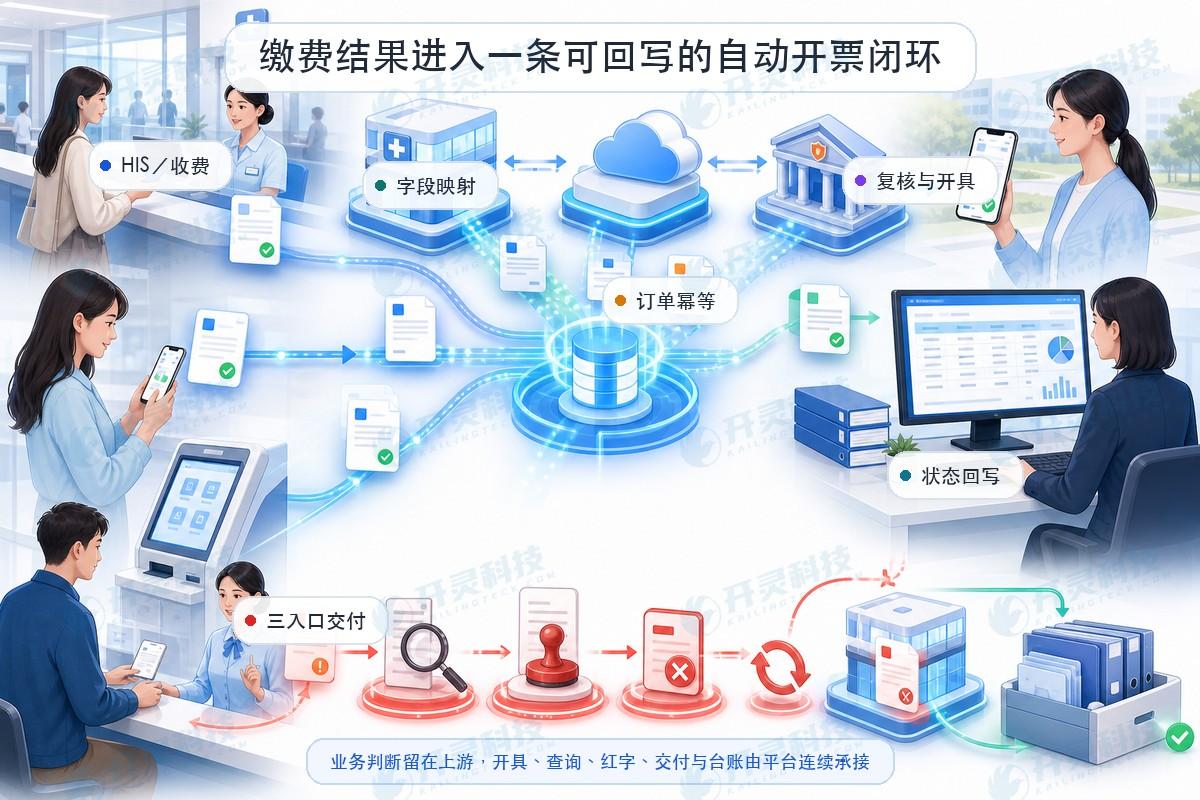
After order verification passes, the platform calls the corresponding fiscal or tax issuance capability according to the actual invoice type, and continuously queries results or receives callbacks. The returned content must at least be able to associate the original business number, invoicing order number, invoice number, issuance status, and electronic file. If the external service is temporarily unavailable, the order should remain in a retryable state to avoid duplicate applications after the front end mistakenly reports failure.
Successful issuance is not the end point. The platform must write the result back to the HIS or patient service platform, so that the official account, self-service kiosks, and counters see the same status; at the same time, a unified invoicing record is formed for financial inquiry, reconciliation, and subsequent red-letter processing. Interface write-back failures require alerts and compensation, and supplementary write operations must retain logs. Only when the upstream, the invoicing platform, and the patient entry point all confirm the same result is the process truly closed-loop.
▍Three types of entry points: shared backend, no duplicate building of invoicing logic
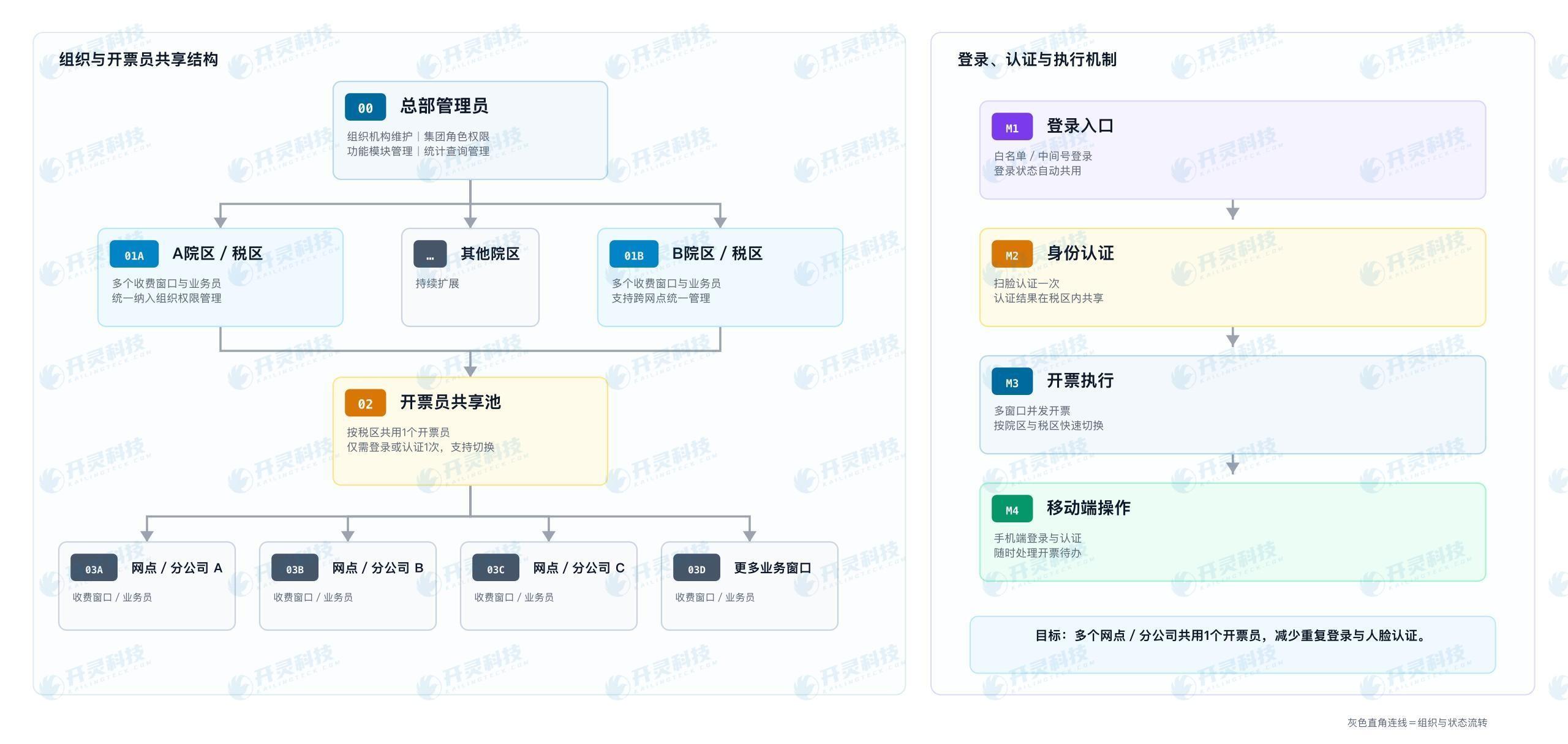
Official accounts or mini-programs are suitable for patients to query and receive after leaving the hospital; self-service terminals are suitable for on-site handling within the hospital; toll windows handle special titles, historical business, data inconsistencies, and people unable to use self-service. None of the three entrances should generate its own set of documents; instead, they should first query the unified invoicing order: if not applied, create once; if processing, display progress; if already issued, deliver directly; if already red-reversed, clearly prompt and guide handling.
Patient identity verification must also match the entry point. The official account can use the already-bound patient relationship, self-service machines can read medical visit cards, ID documents, or settlement vouchers, and windows are verified by staff according to regulations. Regardless of the entry point, the system should only use the minimum fields required for invoicing and delivery, and implement tiered authorization, transmission encryption, access logs, and retention period controls for sensitive information.
▍Refund red-letter reversal: must be driven by the original business status
When a patient refunds, the HIS first confirms the refundable items and amount, then passes the refund event to the invoicing platform. The platform queries the original invoice, verifies the refunded and reversible scope, initiates red-letter or void processing according to the actual invoice type rules, and then writes back the red invoice number, original invoice status, and processing result. When there is a partial refund, a refund across payment methods, or the original invoice is already occupied by another process, it should enter manual review to avoid a successful refund while the invoice still retains the original amount.
Forward invoicing and refund red-letter reversal must share the same business chain: the original charge record, invoicing order, original invoice, red invoice, delivery, and financial ledger are linked to one another. When a patient queries again, they should see the current valid status; during financial reconciliation, it should be possible to trace from the red invoice back to the refund event and the original invoice. The more automated the system, the more it is necessary to retain manual intervention, retries, reversals, and log evidence.
▍FAQ
Q: Must HIS be transformed into a real-time API for integration?
A: Not necessarily. According to the existing architecture, you can choose API, SFTP, intermediate tables/views, etc.; the key is unique numbering, idempotency, failure compensation and security boundaries.
Q: Will the official account, self-service machines, and counters issue duplicate invoices?
A: The three entry points should first query the same order ledger, and use business number and payment number for idempotency control; if already issued, deliver directly without creating a new order.
Q: Can all invoices be issued automatically after successful payment?
A: It should be graded by business stability. Ordinary scenarios with clear rules can be gradually automated, while field conflicts, special headers, historical supplementary issuance, and refunds should retain manual review.
Truly connect payment, invoicing, delivery, and refund status into one line. Kailing Technology accompanies hospitals in steady integration: https://www.kailingteck.com/xiaoxiang/ .
As a national high-tech enterprise, Kailing Technology focuses on the digital and intelligent transformation of enterprise business-finance-tax and operations management, providing software products, system integration, implementation and delivery, and operational services for various government agencies, institutions, group enterprises, and SMEs.
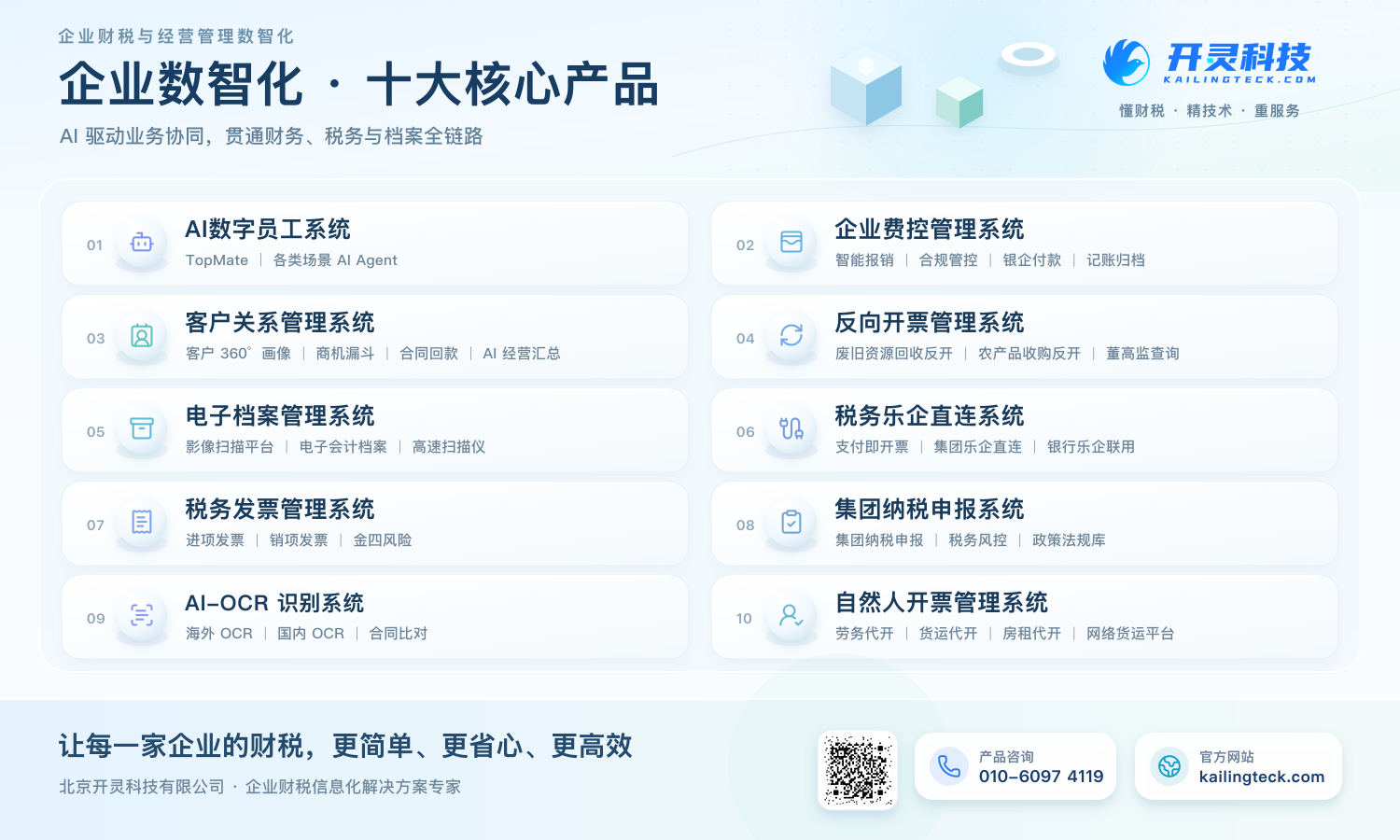
The company has now formed ten core product lines, including: AI digital employee system, enterprise expense control management system, customer relationship management system, reverse invoicing management system, invoice issuance for individuals management system, electronic archives management system, tax fully digitalized e-invoice Leqi system, tax invoice management system, group tax filing system, and AI OCR recognition system. It is committed to connecting enterprise business, finance, tax, funds, and archive data to help customers improve operational efficiency, business-finance-tax compliance capabilities, and digital management levels.
If you have any business-finance-tax digital transformation needs, welcome to contact us. Beijing Kailing Technology will serve you wholeheartedly.
Keywords: Hospital HIS system, automatic invoicing, hospital self-service invoicing, invoicing after payment, medical receipts, Kailing Technology automatic invoicing
As a comprehensive business-finance-tax digitalization solution service provider, Kailing Technology provides business-finance-tax management digital transformation products and operational services for various government agencies, institutions, and large, medium, and small enterprises. The product line includes: solutions for sales contract management system, procurement contract management system, fully digitalized Leqi interface project, automatic output invoicing system, reverse invoicing system, invoice issuance for individuals system, employee expense control and reimbursement system, input VAT invoice management system, supply chain collaborative reconciliation system, image AI OCR recognition system, automatic financial bookkeeping system, electronic accounting archives system, etc., comprehensively driving the digitalization process across various fields.
Consultation Hotline: 18513895936 / 010-60974119 Location: Beijing