
How to choose an output automatic invoicing system? Start with business triggers and the fully digitalized e-invoice closed loop

How to choose an output automatic invoicing system? Start with business triggers and the fully digitalized e-invoice closed loop
Automatic invoicing does not mean skipping review. A workable output VAT system should be triggered by real orders or settlement statements and, under permission and rule controls, complete issuance, delivery, status feedback, red-letter processing, and archiving; when exceptions occur, it should be able to pause, return, and track.
Announcement No. 11 of 2024 by the State Taxation Administration clarifies that from December 1, 2024, fully digitalized e-invoices are officially promoted and applied nationwide. Fully digitalized e-invoices can be automatically delivered through the electronic invoice service platform, and the invoicing party may also deliver them by email, QR code, download and print, etc. The announcement does not require enterprises to purchase any particular type of third-party software; whether to introduce an automatic invoicing system should be decided by business volume, system foundation, internal control and operations capability.
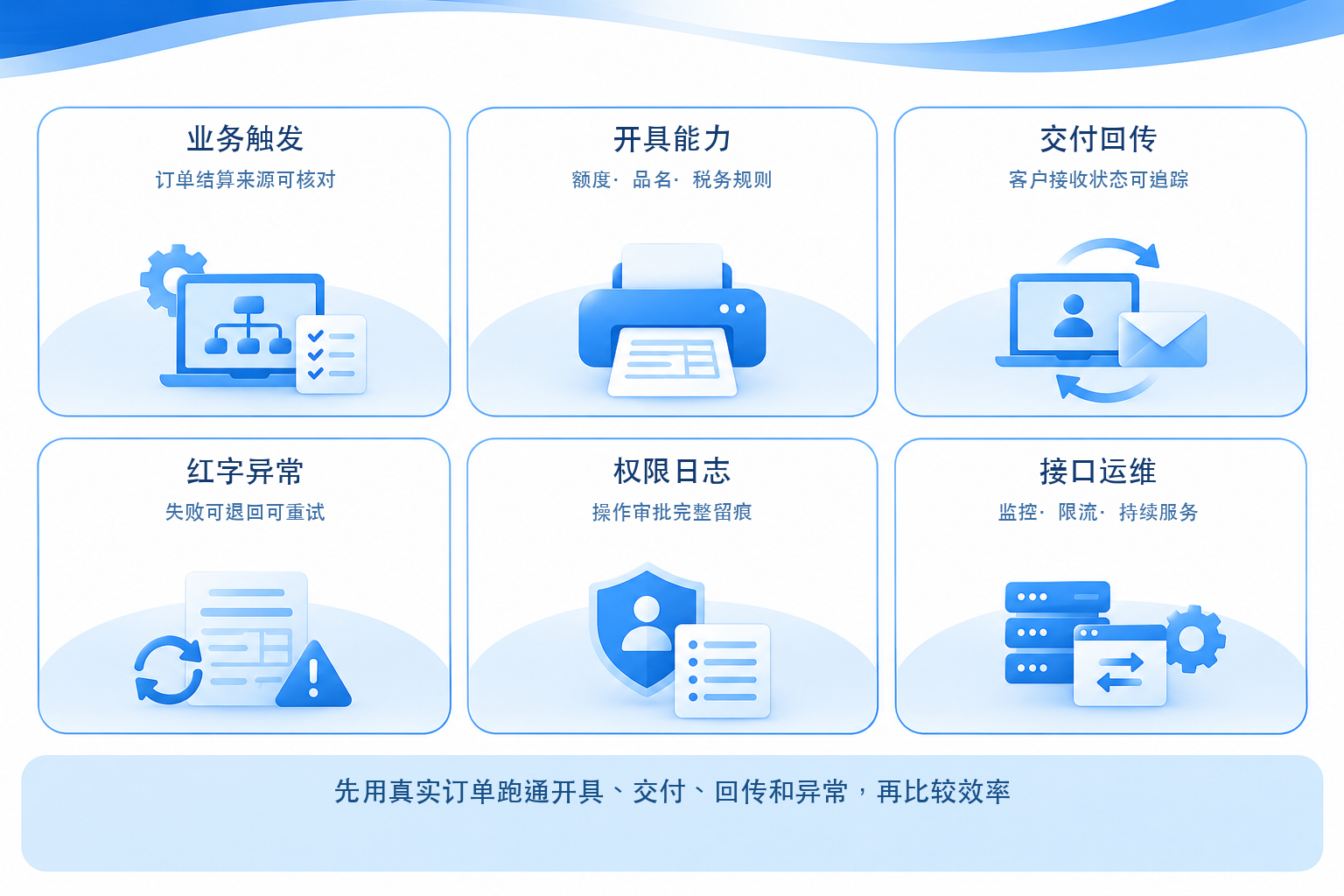
▍1. Business trigger: can the invoicing basis be traced back to orders and settlement
First check where data such as invoice title, goods and services, amount and tax classification comes from, who confirms the business has occurred, and how the invoicing request is linked to orders, contracts, payment collection or settlement records. When source business data is incomplete, the system should enter a pending queue rather than continue automatic issuance.
▍2. Issuance capability: how rules, quotas and manual review work together
The system should support the invoice types, blue and red-letter processes, merging and splitting, and batch scenarios actually required by the enterprise, and validate required fields and enterprise rules before issuance. Invoicing quotas granted by tax authorities, taxpayer status, and platform rules may change; software cannot promise to bypass restrictions or guarantee that any request will succeed.
▍3. Delivery and callback: the customer receives the invoice, and the business system also receives the result
In addition to automatic delivery by the platform, enterprises may also need channels such as email and QR codes. During selection, verify whether issuance success, delivery success, and customer receipt are recorded separately; business systems should obtain invoice status and traceable identifiers to avoid duplicate inquiries by finance and customer service.
▍4. Red-letter exceptions: failure paths are more important than successful demos
Test scenarios such as field errors, insufficient quota, interface timeout, duplicate submission, customer information changes, and red-letter confirmation. The system should clearly define which can be retried and which must be handled manually, and ensure retries do not cause duplicate issuance. Red-letter business should be handled in accordance with invoice management regulations and the fully digitalized e-invoice platform process.
▍5. Permission logs: automation still requires separation of duties
Permissions for business submission, financial review, issuance, red-letter handling, configuration and export should be separable; changes to key rules require approval or review. Request data, issuance results, operator, time and exception handling process should be fully recorded for internal control and audit traceability.
▍6. API operations: is someone continuously responsible after launch
Evaluate API rate limiting, queues, monitoring and alerts, version upgrades, data encryption, and service interruption compensation mechanisms. The Kailing Technology output invoicing solution can connect business systems per project, issue, deliver, and return results for fully digitalized e-invoices, and integrate with modules such as electronic accounting archives; the specific channels, scope of automation, and go-live conditions shall be subject to enterprise authorization, tax platform rules, and project acceptance results.
Keywords: output automatic invoicing, automatic invoicing system, fully digitalized e-invoice, invoice delivery, red-letter invoice, invoicing API, Kailing Technology
As a comprehensive business-finance-tax digitalization solution service provider, Kailing Technology provides business-finance-tax management digital transformation products and operational services for various government agencies, institutions, and large, medium, and small enterprises. The product line includes: solutions for sales contract management system, procurement contract management system, fully digitalized Leqi interface project, automatic output invoicing system, reverse invoicing system, invoice issuance for individuals system, employee expense control and reimbursement system, input VAT invoice management system, supply chain collaborative reconciliation system, image AI OCR recognition system, automatic financial bookkeeping system, electronic accounting archives system, etc., comprehensively driving the digitalization process across various fields.
Consultation Hotline: 18513895936 / 010-60974119 Location: Beijing