
Kailing Technology plain-language interpretation: how is tax calculated for reverse invoicing in resource recycling?
Kailing Technology plain-language interpretation: how is tax calculated for reverse invoicing in resource recycling?
I. First understand: what is reverse invoicing
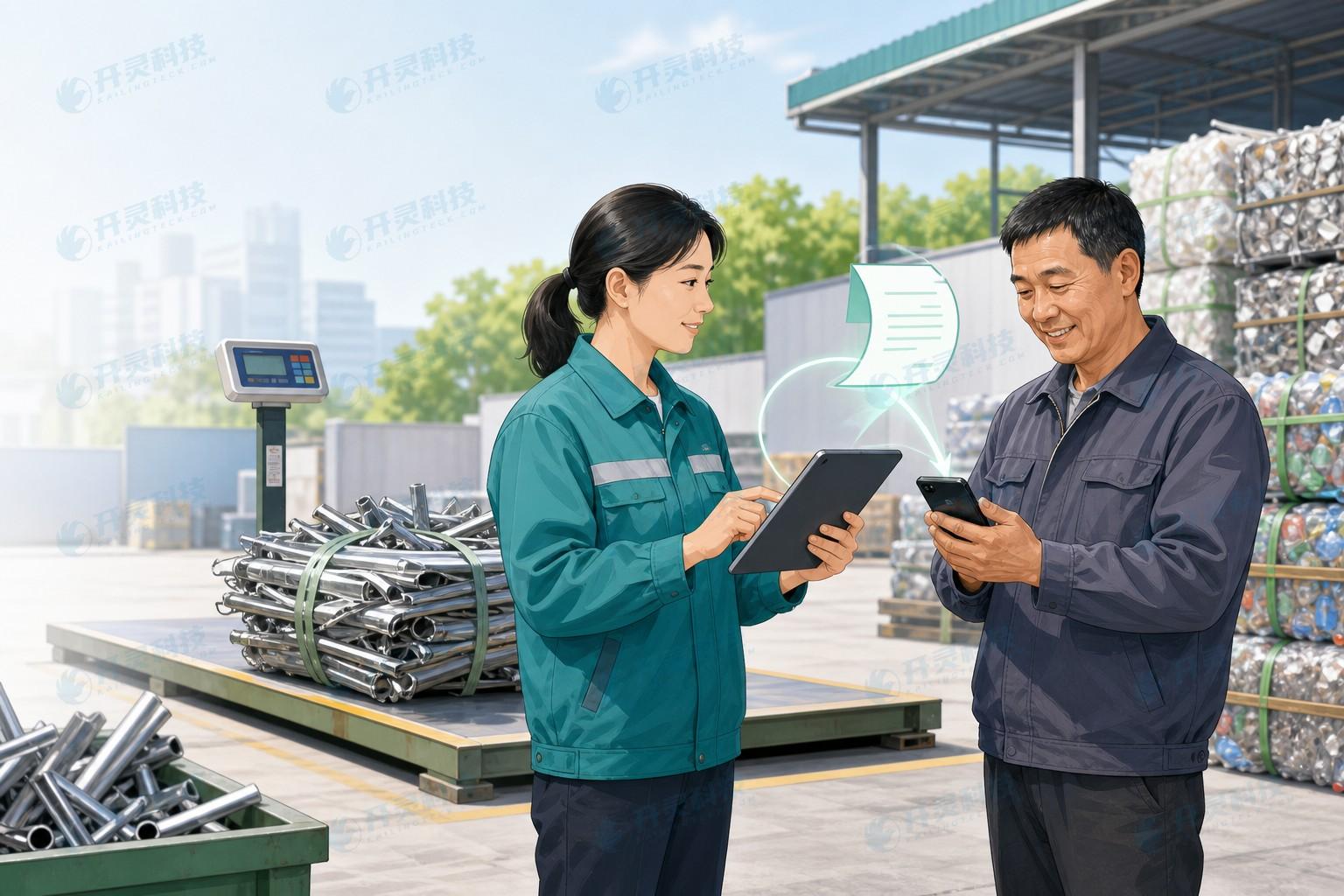
Master Li, who pedals a tricycle to collect scrap copper, sold three hundred kilograms of scrap copper to a recycling company. Master Li cannot issue an invoice—where does the recycling company's cost voucher come from? This was a long-standing challenge in the recycling industry for many years.
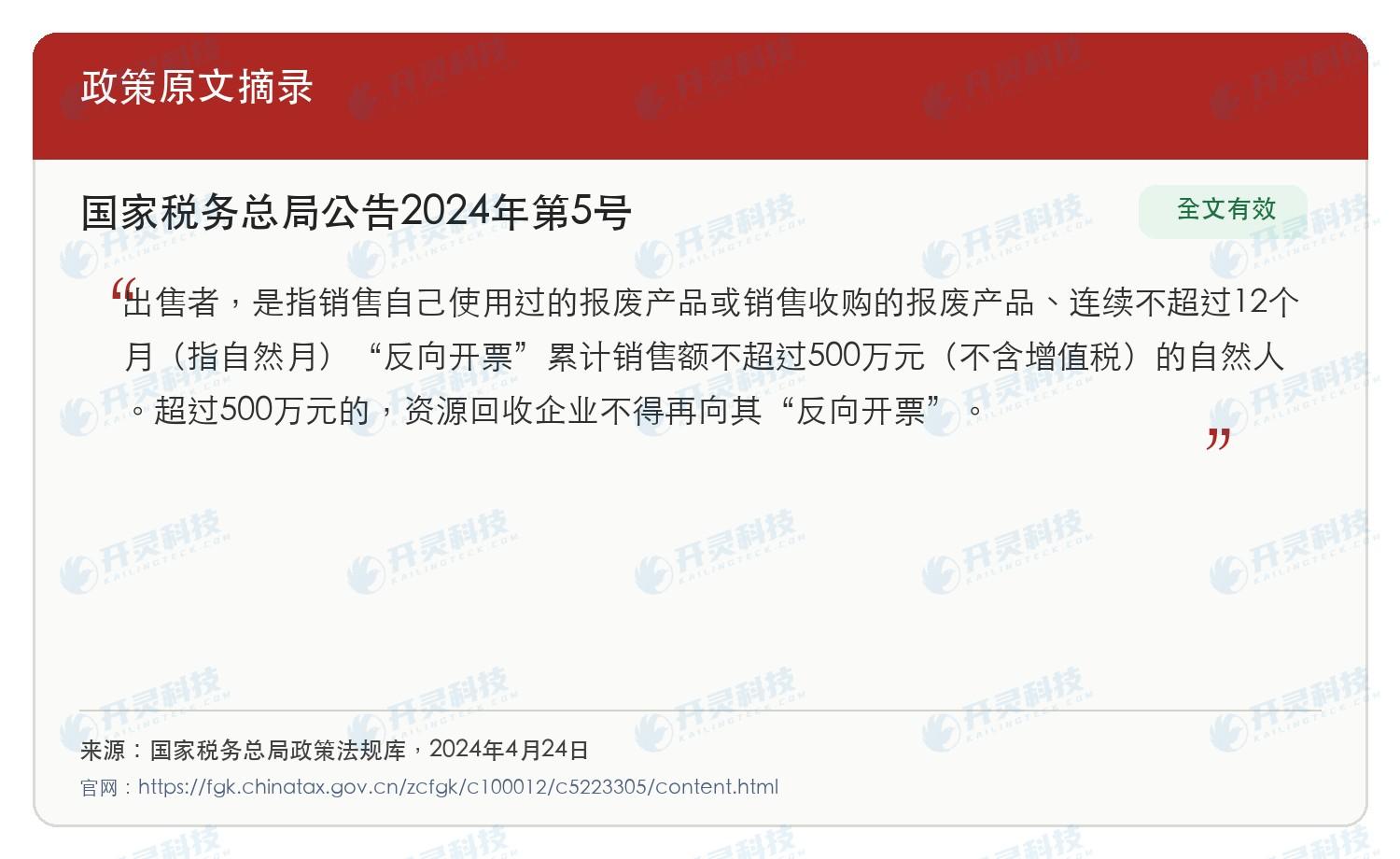
In 2024, the State Taxation Administration issued Announcement No. 5 of 2024, formally providing a channel: qualified resource recycling enterprises may "reverse invoice" to individuals selling scrapped products — normally the seller invoices the buyer, but now the buyer invoices on behalf of the seller, with the notation "scrapped product purchase" on the invoice. The seller here can only be a qualified individual; before invoicing, tax identity and employment information verification must be passed. If there are other disallowed employment identities such as legal representative, director, supervisor, or senior executive, the system will directly block it, and the person cannot serve as the reverse invoicing seller. Master Li does not need to visit the tax bureau, the enterprise obtains compliant vouchers, and the tax bureau can clearly see every transaction.
The tax burden on scrap products should first be assessed by source. When Master Li sells old items he has used himself and that have lost all or part of their use value, VAT may be exempt if conditions are met; if they are scrapped products purchased and then resold, they are judged according to taxable transactions and small-scale taxpayer rules. The two types of business cannot use the same tax calculation basis.
II. VAT: First look at the nature of the old item, then at the monthly threshold of 100,000 yuan
For taxable transactions conducted by individuals through reverse invoicing, the total taxable sales amount of all taxable transactions occurring in the current month shall be aggregated, and the monthly threshold shall apply. If monthly sales are less than 100,000 yuan, exemption may apply according to regulations; once 100,000 yuan is reached (including exactly 100,000 yuan), the tax shall be calculated based on the current month's taxable sales, and the "300,000 yuan per quarter" standard cannot be applied. If eligible for the small-scale taxpayer 1% policy, the tax shall be calculated at a 1% levy rate. (Policy basis: State Taxation Administration Announcement No. 4 of 2026, Ministry of Finance and State Taxation Administration Announcement No. 10 of 2026)
So Master Li's sale of used personal items and resale after purchase must be judged separately; taxable transactions with monthly sales below RMB 100,000 can be exempt from tax, and once the threshold is reached, tax is calculated according to the rules, and tax is not levied only on the portion exceeding RMB 100,000.
III. Individual income tax: classified as "business income", handled by the enterprise
Master Li sells scrapped products through ordinary reverse invoicing and prepays individual income tax on business income at 0.5% of sales. From July 1, 2026, only sales of acquired scrapped products to resource recycling enterprises through "three-flow integrated reverse invoicing," and only the portion of such sales not exceeding 600,000 yuan in the current natural year, will be prepaid at a reduced rate of 0.25%; the portion exceeding 600,000 yuan and other reverse invoicing will still be prepaid at 0.5%. Prepayment is not final tax settlement; sellers must also complete the annual reconciliation of business income before March 31 of the following year. (Policy basis: State Taxation Administration Announcement No. 5 of 2024, No. 12 of 2026)
Monthly filing is mainly handled by recycling enterprises on behalf of individuals, so Master Li usually does not need to visit the tax bureau separately for each transaction; however, the annual business income settlement is still handled by the seller in accordance with the law, and enterprise-handled monthly filing cannot replace an individual's annual settlement.
Hence the classic line at the acquisition site: "Don't deduct this and that from me, I only recognize the take-home price." This is the origin of the "tax bearer": when "borne by the individual" is negotiated, taxes are deducted from the payment; when "borne by the enterprise" is negotiated, Master Li receives the full amount and the tax cost is borne by the enterprise. The two parties can negotiate who bears the cost, but the statutory taxpayer remains the individual seller, and this will not change because of a commercial agreement.
IV. A hard red line: rolling amount not exceeding RMB 5 million within 12 months
Reverse invoicing is a policy channel for qualifying individuals. If a seller's cumulative sales amount through reverse invoicing by multiple resource recycling enterprises over no more than 12 consecutive months does not exceed 5 million yuan in total, the channel can still be used as required; once cumulative sales exceed 5 million yuan, resource recycling enterprises must no longer issue reverse invoices to that seller and should guide them to register as a business entity and issue invoices themselves. The system should monitor the cumulative quota of individuals across enterprises, warn as the upper limit approaches, and directly block once exceeded.
V. Electronic tax bureau "one-stop completion": obtain qualification → issue invoice → filing on behalf
Reverse invoicing in the electronic tax bureau is just three things; finance staff will understand after going through it once.
Step 1: Obtain qualification (one-time)
Path: Log into the New Electronic Tax Bureau → [I Want to Handle Taxes] → [Comprehensive Information Report] → [Qualification Information Report] → [Resource Recycling Enterprise "Reverse Invoicing" Matter Report Application]. Fill in and submit truthfully, and after confirmation by the tax authority, the enterprise obtains the reverse invoicing qualification. Once handled, no further handling is needed for subsequent invoicing.
Another prerequisite: before reverse invoicing a seller for the first time, the other party's consent must be obtained (consent to reverse invoicing + consent to handle taxes on their behalf), and supporting evidence must be retained—this is an explicit requirement of the announcement, and audits will check it.
Step 2: Invoicing (for each transaction)
Path: [I Want to Handle Taxes] → [Invoicing Business] → [Blue Invoice Issuance] → Issue Invoice Now → select [Scrap Product Purchase] under "Specific Business". The seller can only be filled in as the individual seller themselves who has passed validation (name, ID type, ID number), and the detail lines should be filled in truthfully with the scrap product name, quantity, amount, and applicable levy rate. Before invoicing, the system will also validate the individual's identity, employment information, and the cumulative limit of no more than 5 million yuan over 12 consecutive months; those not meeting the conditions will be directly blocked by the system.
Note the invoice type: recycling enterprises subject to simplified taxation can only issue reverse invoicing for ordinary invoices; those subject to general taxation can issue special invoices and ordinary invoices.
Step 3: Filing on behalf (ordinary reverse invoicing is handled during the filing period of the following month)
Under ordinary reverse invoicing, enterprises submit the Tax Payment Agency Report Form and agency details to the electronic tax bureau, and handle VAT and surcharges and business income individual income tax withholding on behalf of the seller according to the seller's actual basis; individual income tax is usually withheld at 0.5%. When using the already-integrated "three-flow integrated reverse invoicing," the system automatically completes tax calculation, withholding and remittance, and pre-filled invoicing at the payment stage. Eligible portions within 600,000 yuan are withheld at 0.25%, and no duplicate agency filing is required the following month.
Emphasize again: this step is not operated in the individual income tax withholding client—that client is for paying wages and labor remuneration. The agency filing for reverse invoicing is handled in the electronic tax bureau.
One red line: if the taxes and fees handled on behalf are not paid on time, the tax authority will suspend the enterprise's reverse invoicing qualification and recover the taxes and late fees in accordance with the law. The qualification is not easy to obtain, so do not slip up at this step during the filing period. (The interfaces and entry names of local electronic tax bureaus differ slightly; the competent tax authority's interpretation shall prevail.)
VI. July 1 New Policy: Three-Flow Integration, Individual Income Tax Halved
On the basis of Announcement No. 5, the State Taxation Administration issued the Announcement on Matters Concerning the Administration of Individual Income Tax (No. 12 of 2026, effective July 1, 2026):
For natural person sellers selling acquired scrapped products to resource recycling enterprises through "three-stream-in-one reverse invoicing", the portion of sales in the current calendar year not exceeding 600,000 yuan is subject to individual income tax on business income at a reduced prepayment rate of 0.25%; the portion exceeding 600,000 yuan is still prepaid at 0.5%. Reverse invoicing through other methods, as well as selling scrapped products one has used, does not automatically qualify for 0.25% merely because of online payment. The 600,000 yuan is calculated on a cumulative basis per natural person across resource recycling enterprises.
What is the "three flows in one"? The official interpretation of the State Taxation Administration is: tax rules are embedded into the online payment platform and directly connected to scrap recycling activity information. When an enterprise initiates payment, the system automatically completes the calculation of the individual's tax payable, withholding and remittance to the treasury, and pre-filled invoicing, achieving the "three flows in one" of payment-invoice flow, person-enterprise flow, and fund flow, and realizing "payment means invoicing, invoicing means tax payment, tax payment means treasury entry." This is not an ordinary online bank transfer, nor is it simply renaming the traditional goods flow, fund flow, and invoice flow.
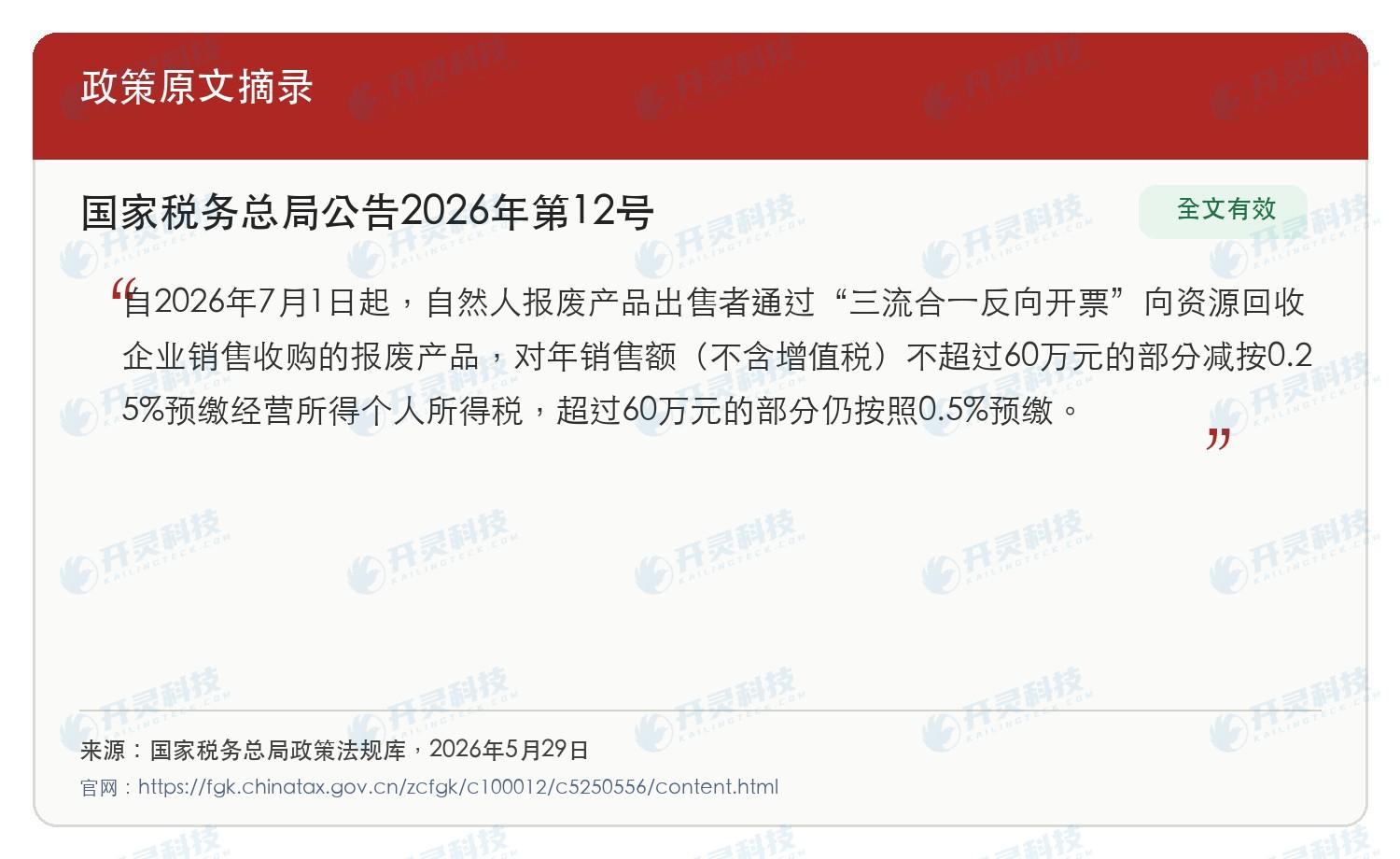
Plain language translation: Only after connecting to a tax-recognized payment platform and having the system complete payment, tax payment, and invoicing linkage according to "three-flow integration reverse invoicing" can you enter the 0.25% preferential channel; ordinary online transfers, cash transactions, or offline invoicing alone cannot be applied on your own.
(Note: 5 million yuan is the rolling 12-month reverse invoicing access threshold, and 600,000 yuan is the tiered threshold for the three-flows-unified individual income tax prepayment preference within a natural year; the two thresholds are calculated independently, do not mix them up.)
VII. Need to connect to the "Leqi Joint Use" interface? This is how tax fields are transmitted
The tax treatment in the message falls on three fields, and the transmission method is completely different from that for agricultural products:
① Reduced taxation type (jazslxDm) → pass according to the actual applicable basis for the seller's current transaction: if the monthly threshold of RMB 100,000 is not reached and exemption conditions are met, pass the exemption option; after reaching the threshold, pass the corresponding option under the current reduced 1% basis. The field enumeration shall be subject to the current interface documentation and joint debugging results.
② Individual income tax item (grsdsxm) → pass "business income". Enterprise filing on behalf and assessed prepayment all fall under this category; passing it wrong makes it wrong from the source.
③ Tax and fee bearer (sfcdf) → for net proceeds pass "enterprise bears", for tax-inclusive price pass "individual bears". The payment interface uses it to decide whether to withhold from the payment.
Two supporting points: real-name registration must upload verification information such as the seller's own ID card and bank card; tax identity and employment reverse lookup is not an optional ordinary risk control for enterprises—only qualifying individuals who pass verification can serve as the seller. If there are disallowed other employment identities such as legal representative, director, supervisor, or senior executive, the system should directly block. Before creating an order, the cumulative limit of RMB 5 million over no more than 12 consecutive months must also be verified, with early warning as it approaches and stoppage once exceeded.
Eight, the lifeline of the recycling industry: consistency of the three flows
The recycling industry has historically been a high-risk area for fraudulent invoicing. For ordinary business, it is still necessary to ensure one-to-one correspondence among purchase orders, weighing and warehousing records, bank payments, and invoices, and to retain transport vouchers and on-site photos when necessary. It is also necessary to distinguish: the "three flows in one" in the 2026 policy specifically refers to the system linkage of the payment-invoice flow, the person-enterprise flow, and the fund flow. It is both a technical condition for the 0.25% prepayment preference and will not turn an untrue transaction into a true transaction.
Final thoughts
What reverse invoicing brings to the recycling industry is the "cost compliance" that has been sought for years without success. The tax rate is already quite favorable; the hard part is getting the entire set of actions right—qualification acquisition, real-name registration, per-transaction invoicing, tax filing on behalf, quota control, and three-flow evidence retention—across dozens or hundreds of orders every day.
Kailing Technology has built these standards into system defaults: sellers scan a code to create a file, taxes and fees are automatically calculated, invoicing occurs upon payment, and the three flows are automatically reconciled. No matter how large the volume, compliance never falters.
Policy basis and official links
[1] State Taxation Administration Announcement No. 5 of 2024: rules on individual sellers, 5 million yuan, reverse invoicing, and tax agency View official website
[2] VAT Law of the People's Republic of China: VAT exemption for individuals selling their own used items View official website
[3] State Taxation Administration Announcement No. 4 of 2026: monthly aggregation of all taxable transactions for reverse invoicing by individuals applies to the threshold View official website
[4] State Taxation Administration Announcement No. 12 of 2026: three-flow integration reverse invoicing 0.25% and 0.5% prepayment rates View official website
[5] Official interpretation of State Taxation Administration Announcement No. 12 of 2026: definition of three-flow integration, cross-enterprise accumulation, annual settlement, and processing procedures View official website
As a national high-tech enterprise, Kailing Technology focuses on the digital and intelligent transformation of enterprise business-finance-tax and operations management, providing software products, system integration, implementation and delivery, and operational services for various government agencies, institutions, group enterprises, and SMEs.
The company has now formed ten core product lines, including: AI digital employee system, enterprise expense control management system, customer relationship management system, reverse invoicing management system, invoice issuance for individuals management system, electronic archives management system, tax fully digitalized e-invoice Leqi system, tax invoice management system, group tax filing system, and AI OCR recognition system. It is committed to connecting enterprise business, finance, tax, funds, and archive data to help customers improve operational efficiency, business-finance-tax compliance capabilities, and digital management levels.
If you have any business-finance-tax digital transformation needs, welcome to contact us. Beijing Kailing Technology will serve you wholeheartedly.
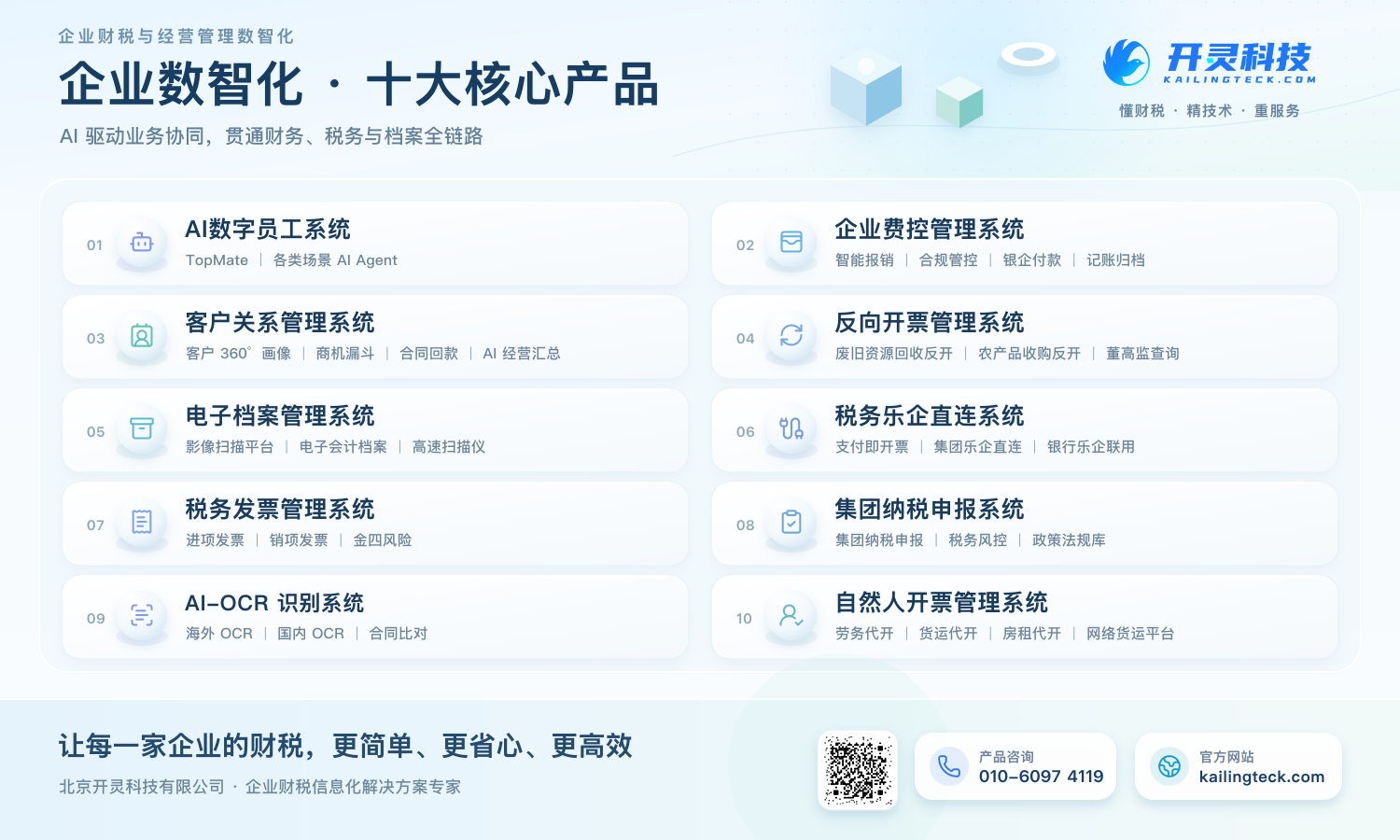
As a comprehensive business-finance-tax digitalization solution service provider, Kailing Technology provides business-finance-tax management digital transformation products and operational services for various government agencies, institutions, and large, medium, and small enterprises. The product line includes: solutions for sales contract management system, procurement contract management system, fully digitalized Leqi interface project, automatic output invoicing system, reverse invoicing system, invoice issuance for individuals system, employee expense control and reimbursement system, input VAT invoice management system, supply chain collaborative reconciliation system, image AI OCR recognition system, automatic financial bookkeeping system, electronic accounting archives system, etc., comprehensively driving the digitalization process across various fields.
Consultation Hotline: 18513895936 / 010-60974119 Location: Beijing