
How is reverse invoicing operated? Full analysis of steps and risks
How is reverse invoicing operated? Complete Guide to Specific Steps and Risk Prevention
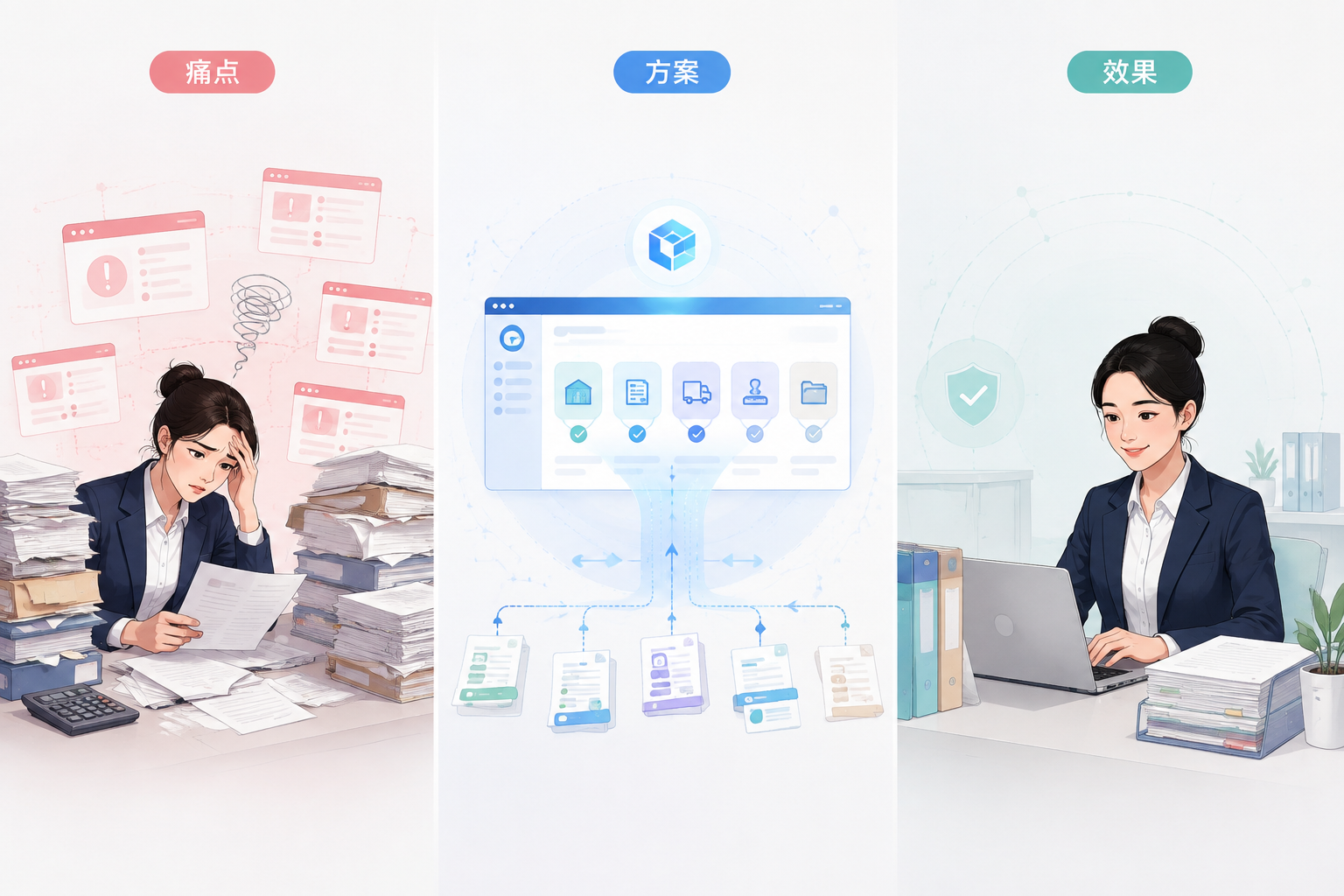
As an agricultural product purchasing or renewable resource recycling enterprise, are you often troubled by the difficulty of issuing invoices for purchases? The sellers are individual farmers who cannot provide invoices, resulting in missing input VAT and a heavy tax burden. Reverse invoicing is precisely the policy tool to solve this pain point, but improper operation can easily trigger tax risks. This article outlines the compliance path from two aspects: operational steps and risk prevention, combined with Kailing Technology's reverse invoicing system.
"Reverse invoicing, compliance first; five-flow integration, risks disappear on their own." |
▍1. Before reverse invoicing, what qualifications and preparations are needed?
Not all enterprises can use reverse invoicing; specific industries and conditions must be met. Under current policy, it is limited to specific businesses such as agricultural product procurement and renewable resource recycling. Enterprises must first confirm whether their business falls within the permitted scope and complete prerequisite procedures such as tax registration and invoice type approval. At the same time, a procurement agreement must be signed with the seller (individual), clarifying that the transaction is genuine and the price is fair. The Kailing Technology reverse invoicing system can assist enterprises with qualification pre-checks to ensure a compliant start.
▍II. What are the specific operating steps for reverse invoicing?
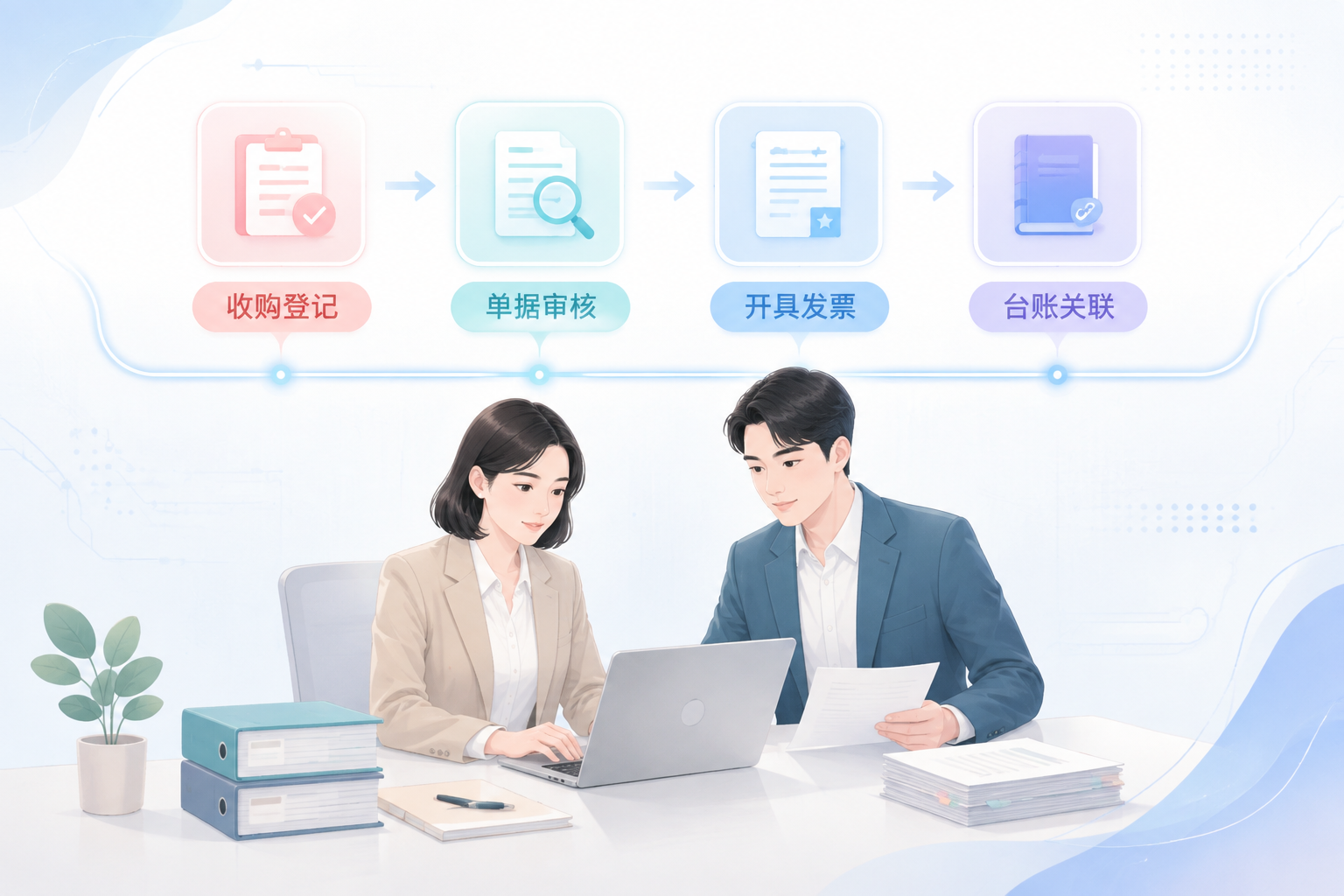
The operation process is roughly as follows: Step one, register the purchase business in the system, entering the seller's identity information, goods name, quantity, amount, etc.; step two, review the purchase documents to ensure consistency of goods, documents, payment, and invoice information; step three, issue a reverse invoice (i.e., purchase invoice) and deliver it to the seller; step four, associate the invoice information with the purchase ledger to form a complete evidence chain. Kailing Technology's reverse invoicing system supports "invoice upon purchase," with weighing data directly generating documents and automatic comparison, greatly reducing manual entry errors.
▍3. What common risks does reverse invoicing have? How to prevent them?
The main risks include: false invoicing risk (no real transaction), false information (identity or amount falsification), deduction violations (failure to calculate input VAT as required), and missing ledgers (inability to respond to inspections). The key to prevention is the "five flows in one"—goods flow, funds flow, invoice flow, contract flow, and information flow must be consistent. The Kailing Technology system uses a five-flows-in-one ledger to automatically compare purchase orders, payment records, and invoice information, providing instant early warnings for anomalies and ensuring every deduction is traceable.
▍IV. How to make reverse invoicing safer and more efficient with digital tools?
Manual operations are not only inefficient but also error-prone. Kailing Technology's reverse invoicing system not only achieves "invoicing upon procurement" but also supports linkage with input VAT invoice management, AI-OCR recognition, electronic accounting archives, and other modules. For example, AI-OCR can automatically recognize procurement documents, posting upon recognition; the electronic accounting archives system archives vouchers upon scanning and compiles them upon association. Full-process digitalization makes compliant traceability simpler and filing deductions more effortless.
Keywords: reverse invoicing, operating steps, risk prevention, agricultural product procurement, renewable resource recycling, five flows in one, Kailing Technology
As a comprehensive business-finance-tax digitalization solution service provider, Kailing Technology provides business-finance-tax management digital transformation products and operational services for various government agencies, institutions, and large, medium, and small enterprises. The product line includes: solutions for sales contract management system, procurement contract management system, fully digitalized Leqi interface project, automatic output invoicing system, reverse invoicing system, invoice issuance for individuals system, employee expense control and reimbursement system, input VAT invoice management system, supply chain collaborative reconciliation system, image AI OCR recognition system, automatic financial bookkeeping system, electronic accounting archives system, etc., comprehensively driving the digitalization process across various fields.
Consultation Hotline: 18513895936 / 010-60974119 Location: Beijing