
How do resource recycling enterprises issue invoices when purchasing scrap copper and scrap aluminum from individuals? Kailing Technology's reverse invoicing system connects the five-flow compliance chain
When a resource recycling enterprise purchases scrap copper and scrap aluminum from individuals and meets the applicable conditions for reverse invoicing, it may, in accordance with the Announcement of the State Taxation Administration on Matters Concerning "Reverse Invoicing" by Resource Recycling Enterprises to Natural Person Sellers of Scrapped Products (State Taxation Administration Announcement No. 5 of 2024), issue invoices to natural person sellers. Before invoicing, the enterprise must first confirm its own qualifications, the identity of the natural person, and that the goods fall within the scope of scrapped products, and then ensure that receiving, grading, settlement, payment, and invoices leave a trail around the same transaction.
Kailing Technology's reverse invoicing system places this information into a queryable business chain. What it solves is not merely "issuing the invoice," but enabling the invoice amount to return to the genuine receiving record, the payment counterparty to return to the genuine seller, and the contract or agreement, self-certification materials, and tax results to corroborate one another.

▍How to issue invoices when purchasing scrap copper and scrap aluminum from individuals
First, the purchaser should be a resource recycling enterprise within the policy scope, and the applicable qualifications should be checked. The enterprise qualification criteria used in the knowledge base are one of three types: hazardous waste operation permit, end-of-life motor vehicle recycling and dismantling qualification, and renewable resource recycling operator filing. The specific requirements should still be confirmed based on the actual business scope and the competent tax authority's requirements.
Second, the seller should be a natural person seller of scrapped products. Legal persons, corporate directors and senior managers, and entities that have already completed relevant individual industrial and commercial registration and do not meet system rules need to be identified and blocked before invoicing. Entity verification only answers "whether this person meets the basic conditions for being a reverse invoicing target," and cannot replace judgment about the source of goods and the genuineness of the transaction.
Finally, issue invoices based on the purchase business. After scrap copper and scrap aluminum enter the site, a goods note is formed recording category, grade, weight, unit price, settlement result, and seller; the system generates pending invoice data accordingly, and the invoicing result is written back to the original goods note. Payment must also return to the same seller and the same business number.
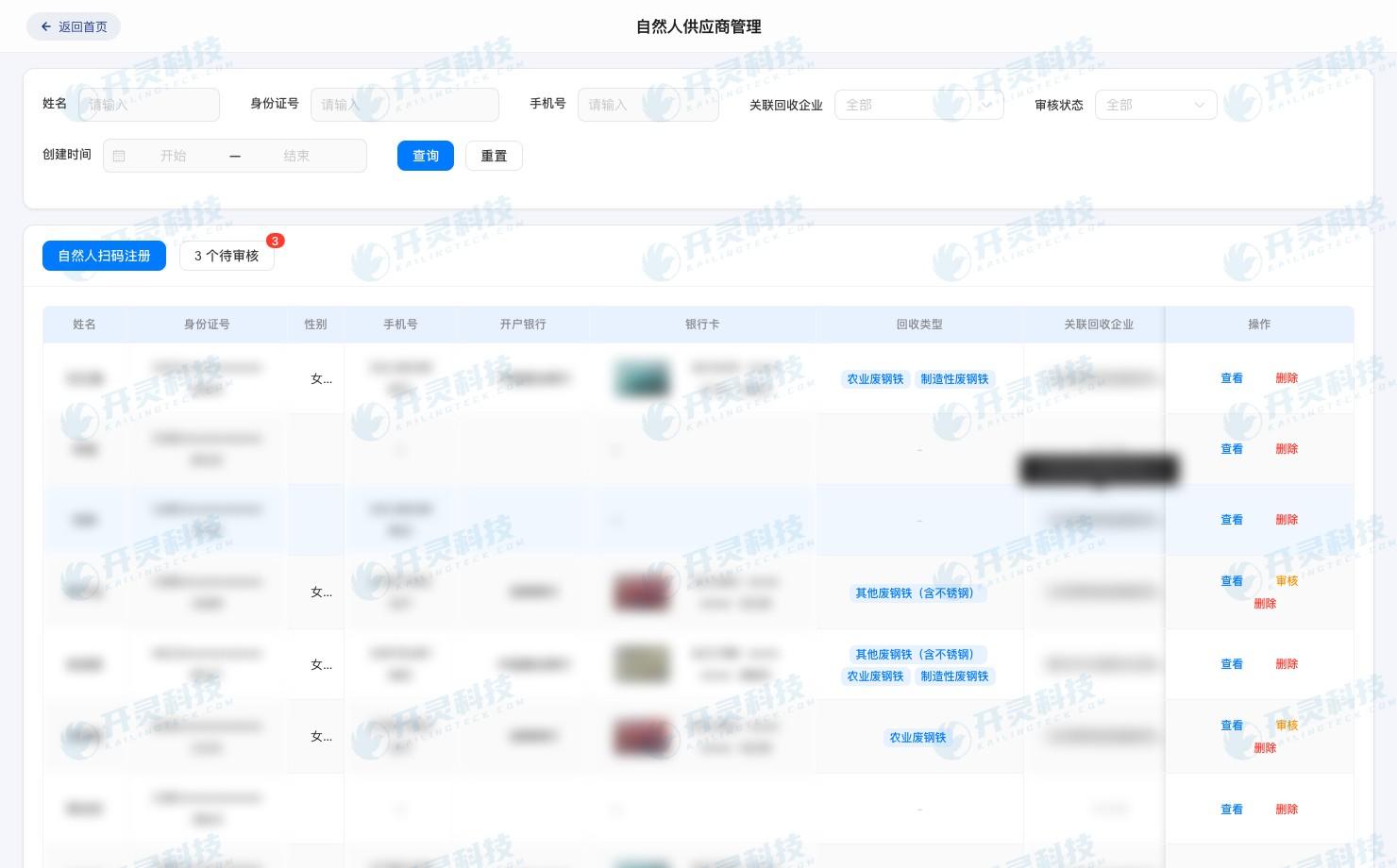
Individual supplier file creation and entity information verification (information desensitized)
▍Before invoicing, first verify the three things clearly: the enterprise, the person and the goods
A common misunderstanding in the scrap metal industry is to proceed directly to invoicing upon seeing "an individual selling scrap." In actual business, the receiving site needs to answer three different questions: whether the purchasing enterprise meets the conditions for handling this business; whether the seller is indeed an applicable natural person; and whether this batch of scrap copper and scrap aluminum comes from a genuine scrapped product transaction. If any one is missing, it is not appropriate to rely on supplementing materials afterward.
Individual archives should retain identity verification results and necessary contact information, but cannot store only an ID card photo. The archive must also establish relationships with each sale transaction. If the same seller delivers multiple times, each receipt should have an independent goods note, while also being viewable in summary under the personal archive, avoiding replacing on-site facts with one large summary note at month-end.
The scope of goods also requires on-site language. Scrap copper may be graded by form, purity, or impurity condition, and scrap aluminum may also be divided into categories such as profiles and alloy materials. System fields should follow the enterprise's actual acceptance criteria and remain consistent with subsequent settlement items. It is not acceptable to write "scrap metal" on the receiving note and then split it into multiple categories from memory at the time of invoicing.
▍How to leave an explainable business record after a truck of copper and aluminum enters the site
After the vehicle arrives, weighing provides the quantity basis, sorting and grading explain price differences, and the acceptance result determines the actual settlement scope. Gross weight, tare weight, net weight, category, grade, and unit price should maintain a calculable relationship; on-site photos, weighbridge tickets, or acceptance records are used to show that the goods actually arrived and why settlement was made according to that standard.
When one truck is mixed-loaded, it is not appropriate to keep only the total weight. Scrap copper and scrap aluminum need separate details, and the relationship from the total weighbridge ticket to the sorting results should be retained. Price adjustments also cannot directly overwrite the original value. Who proposed the adjustment, on what basis, and whether the seller confirmed it should all form version records. In this way, when the invoice amount changes, finance can explain whether the change comes from quantity, grade or unit price.
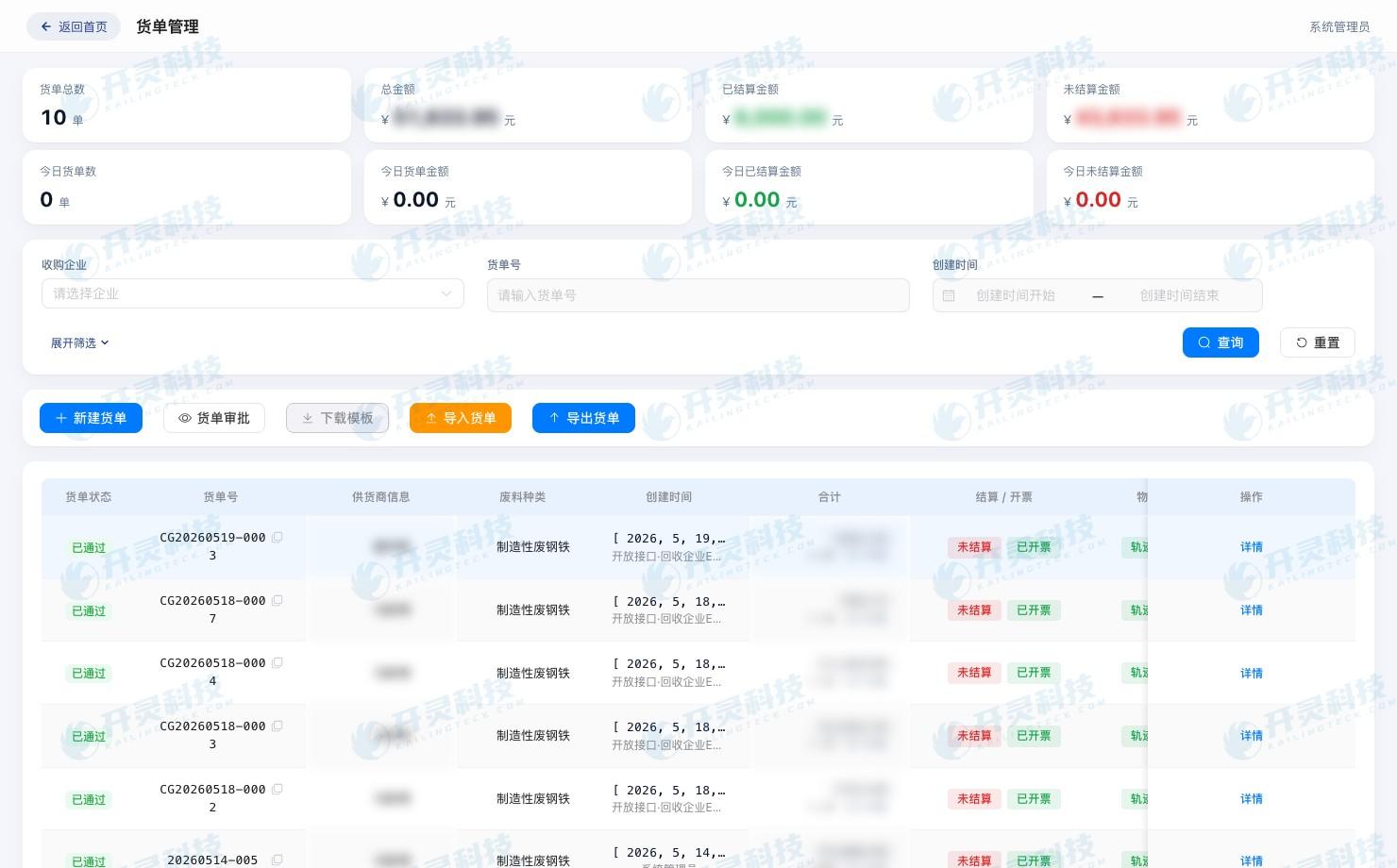
Scrap resource goods notes and receiving status management (information has been desensitized)
▍How five types of materials corroborate each other around the same purchase
Kailing Technology's reverse invoicing system uses the enterprise-internal "five-flow" evidence basis: self-certification flow, contract flow, business flow, tax flow, and fund flow. The five flows are not a new statutory hierarchy, nor can they be described as "higher than the tax three flows." Their role is to help enterprises organize materials held by different positions according to business numbers.
The self-certification flow explains the seller's identity and corresponding declarations; the contract or agreement explains the transaction parties and terms; the business flow preserves goods entry, weighing, grading, and acceptance; the tax flow preserves invoices and red-flush status; the fund flow preserves payment recipient, amount, bank receipt, and failed retry results. Starting from an invoice, finance should be able to find the original goods note and payment; starting from a goods note, on-site staff should also be able to see subsequent invoice and payment status.
The value of evidence does not lie in the number of files. If the contract names Party A but payment is made to another person, no amount of materials can avoid the need for explanation; if the invoice amount equals the settlement statement but the settlement statement cannot return to weight and unit price, there is likewise a break point. System validation can discover inconsistent relationships, but business personnel must still judge the true reasons.
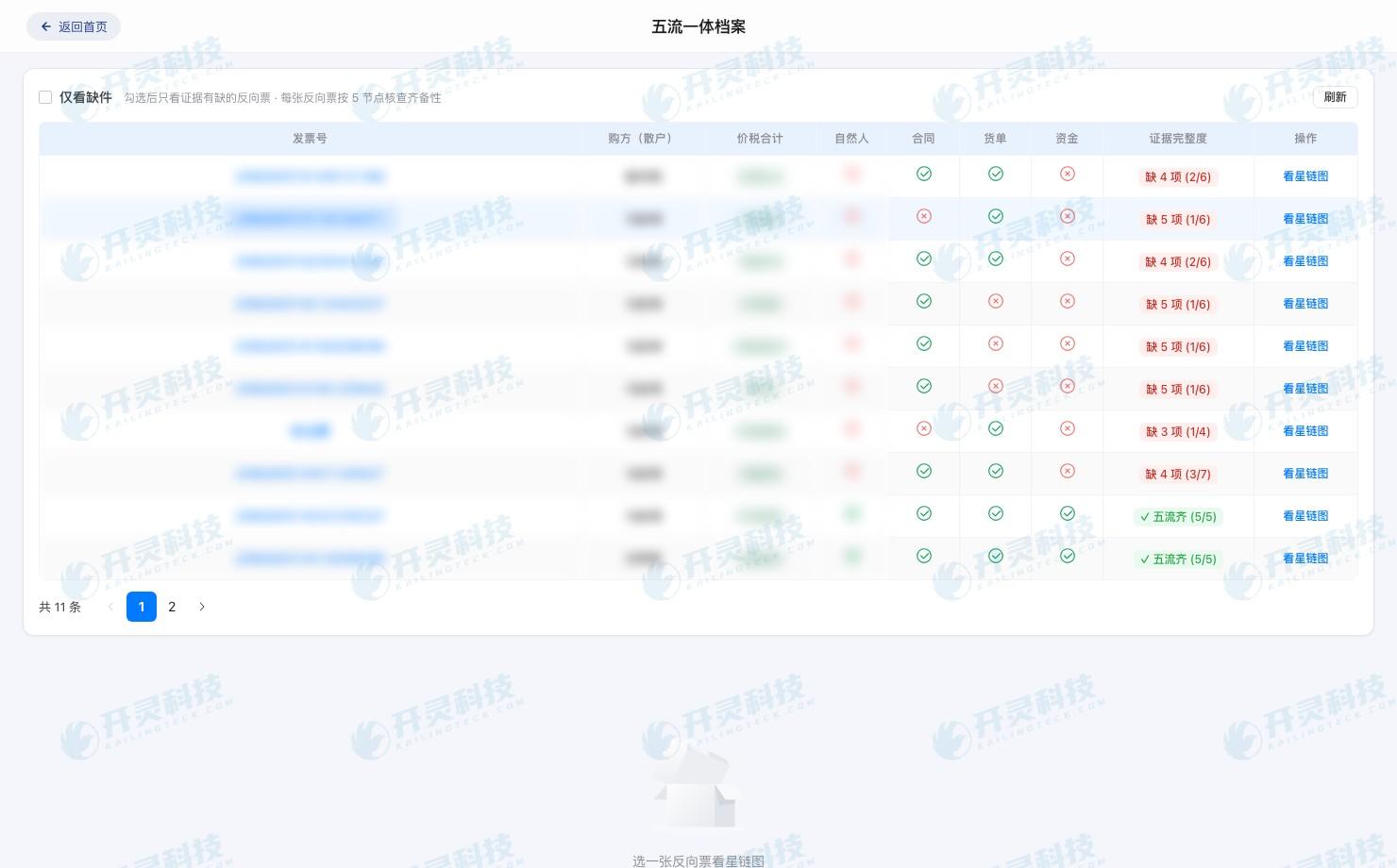
Ledger interface organizing five-flow materials around a single purchase (information has been desensitized)
▍The invoice amount must be jointly explainable by receipt, settlement and payment
Invoicing data should be formed from confirmed receipt and settlement results, avoiding finance staff re-entering category, quantity, and amount. The system can verify the seller's status, business materials, and pending invoice amount before invoicing, and call the corresponding interface to issue the invoice once conditions are met; the results of successful invoicing, failure, or red-flush reversal are written back to the original order.
Payment also cannot become a parallel line. The payee should match the seller or a relationship with sufficient business basis, and the payment amount should be verifiable against settlement and invoicing. When a payment fails, the system retains the failure result and the record of re-payment, and does not directly write "submitted to bank" as "paid".
In this way, enterprises can separately view statuses such as goods received but not settled, settled and awaiting invoicing, invoiced and awaiting payment, payment failed, and business archived. Different statuses correspond to actions by different positions, and month-end reconciliation no longer relies on verbal confirmation.
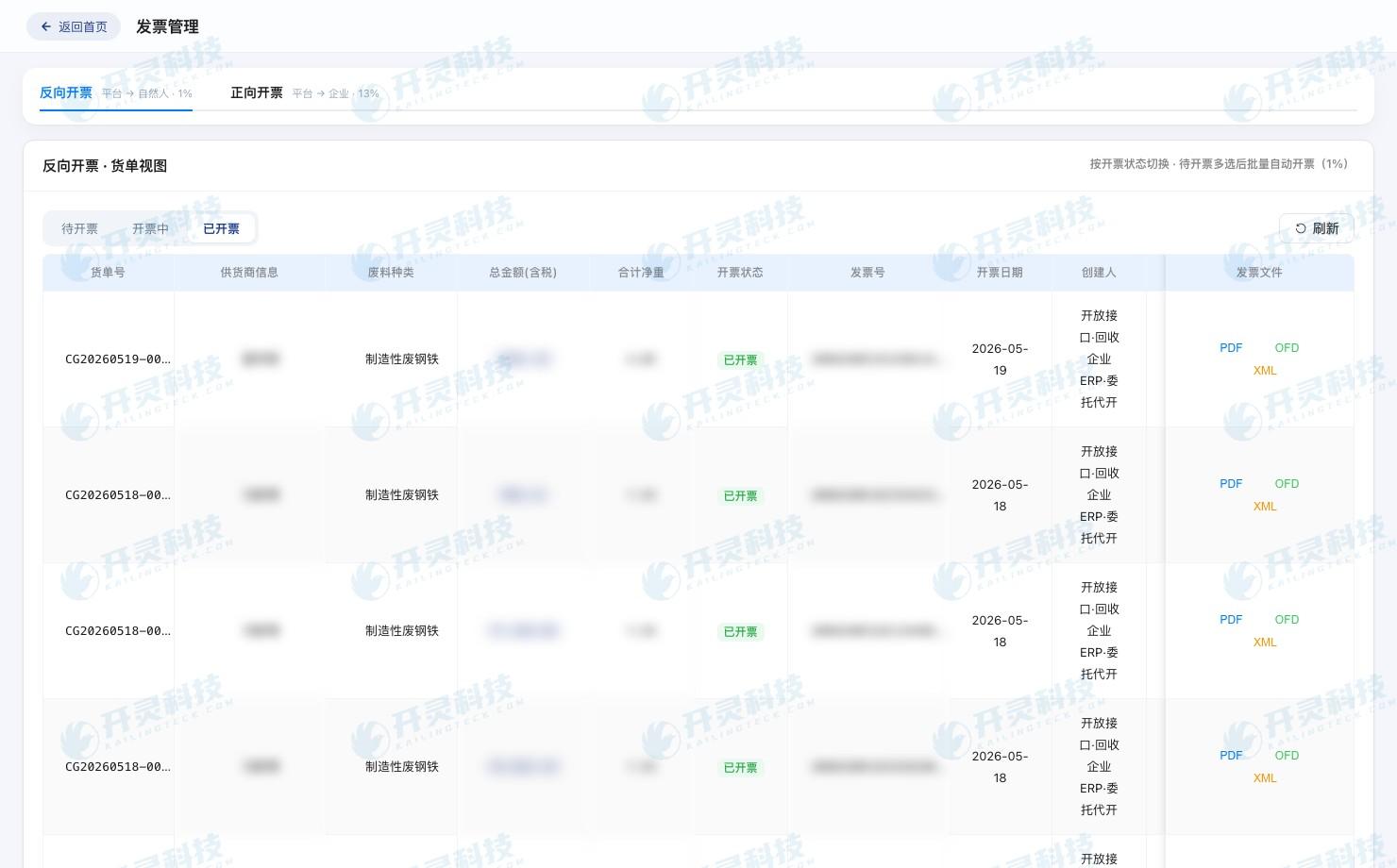
Generate and query reverse invoicing results based on goods notes (information has been desensitized)
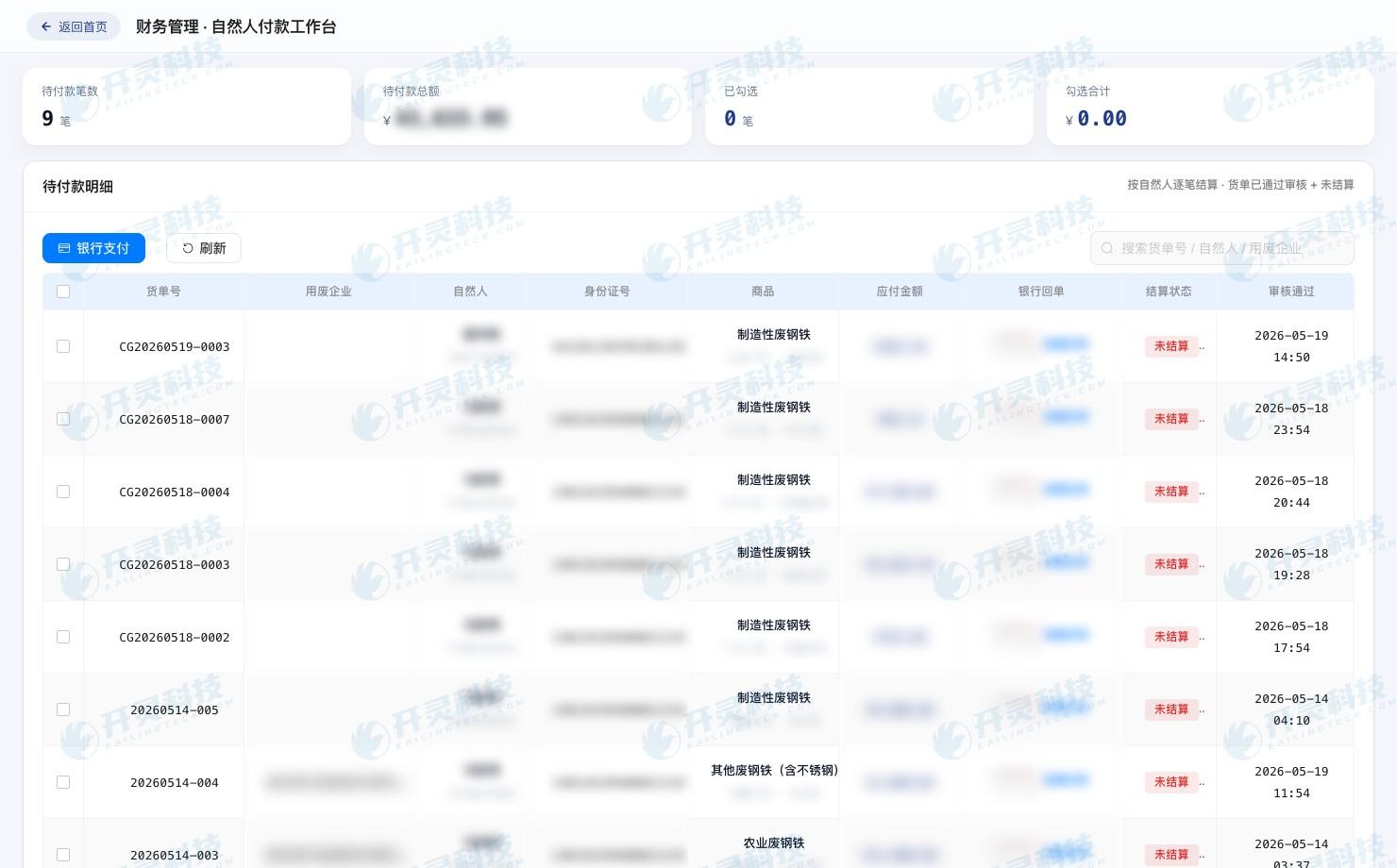
Payment tasks linked to the original purchase business (information has been desensitized)
▍How the five-flow ledger supports daily queries and tax explanations
Kailing Technology's reverse invoicing system places seller, goods note, invoice, payment, and archiving status in the same query relationship. Business personnel can view progress by goods note, finance can trace receiving and payment by invoice, and managers can filter exceptions by natural person, category, time, or status. When materials need to be supplemented, the system indicates which category is missing, rather than making employees search again in shared folders.
Enterprises still need to establish rules based on their own business, such as acceptance fields for different scrap categories, contract templates, payment approvals and red-letter reversal handling. What the system provides are executable records and validation tools; the final compliance judgment still needs to return to the real transaction, applicable policies and the position of the competent tax authority.
▍FAQ
Q: Can enterprises issue reverse invoices for all scrap copper and scrap aluminum sold by individuals?
A: It cannot be generalized. It is necessary to simultaneously verify the conditions of the purchasing enterprise, the identity of the natural person seller, the scope of scrapped products and the authentic purchase materials.
Q: If one truck contains both scrap copper and scrap aluminum, can they be combined into one product name?
A: Details that can explain price and quantity should be retained according to the enterprise's actual acceptance and invoicing rules, and real category differences must not be erased for convenience.
Q: Can payment be made to the seller's family member or an intermediary?
A: Inconsistency between the payee and the seller creates a breakpoint in the fund flow. The real business relationship should first be verified and appropriate evidence obtained; the system cannot automatically presume compliance.
Q: After the invoice is successfully issued, is it still necessary to keep weighbridge tickets and on-site materials?
A: Yes. Invoices prove the result of document processing and cannot replace business authenticity materials such as receipt, grading, settlement and payment.
Enable every reverse invoice to return to real receipt and payment records. Learn about Kailing Technology resource recycling solutions: https://www.kailingteck.com/fxzy/ .
As a national high-tech enterprise, Kailing Technology focuses on the digital and intelligent transformation of enterprise business-finance-tax and operations management, providing software products, system integration, implementation and delivery, and operational services for various government agencies, institutions, group enterprises, and SMEs.
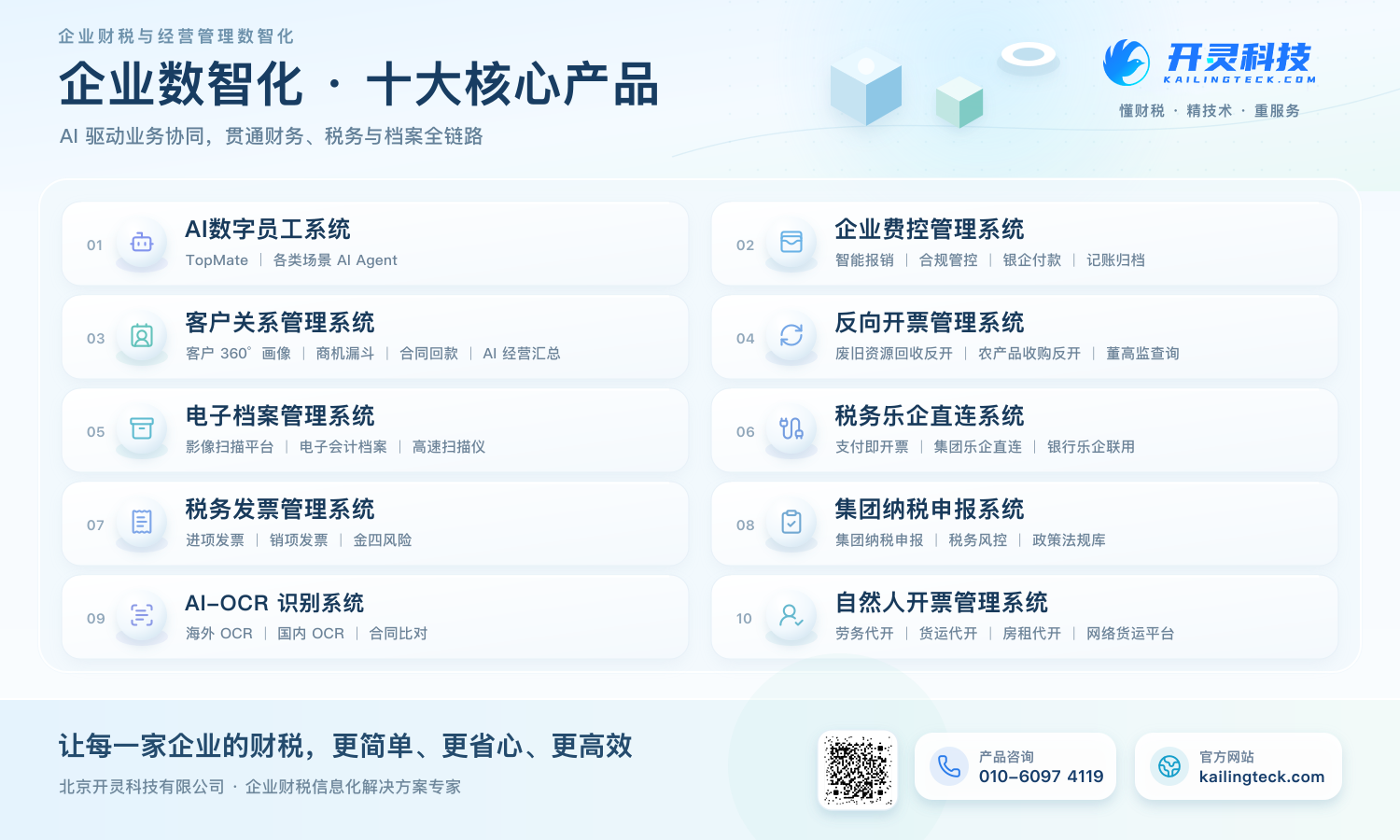
The company has now formed ten core product lines, including: AI digital employee system, enterprise expense control management system, customer relationship management system, reverse invoicing management system, invoice issuance for individuals management system, electronic archives management system, tax fully digitalized e-invoice Leqi system, tax invoice management system, group tax filing system, and AI OCR recognition system. It is committed to connecting enterprise business, finance, tax, funds, and archive data to help customers improve operational efficiency, business-finance-tax compliance capabilities, and digital management levels.
If you have any business-finance-tax digital transformation needs, welcome to contact us. Beijing Kailing Technology will serve you wholeheartedly.
 Keywords: How to issue invoices for scrap copper and scrap aluminum, resource recycling reverse invoicing, natural person sellers, five-flow compliance, scrap metal purchase ledger
As a comprehensive business-finance-tax digitalization solution service provider, Kailing Technology provides business-finance-tax management digital transformation products and operational services for various government agencies, institutions, and large, medium, and small enterprises. The product line includes: solutions for sales contract management system, procurement contract management system, fully digitalized Leqi interface project, automatic output invoicing system, reverse invoicing system, invoice issuance for individuals system, employee expense control and reimbursement system, input VAT invoice management system, supply chain collaborative reconciliation system, image AI OCR recognition system, automatic financial bookkeeping system, electronic accounting archives system, etc., comprehensively driving the digitalization process across various fields.
Consultation Hotline: 18513895936 / 010-60974119 Location: Beijing