
How do enterprises issue invoices when purchasing self-produced agricultural products from farmers? Kailing Technology's agricultural product purchase reverse invoicing system establishes one household, one file.
When an enterprise purchases self-produced agricultural products from agricultural producers, it may issue an agricultural product purchase invoice according to regulations. The operational focus is not merely entering the farmer's name and ID number, but confirming that the counterparty is indeed an agricultural producer, that the goods are indeed their self-produced agricultural products, and that receiving, pricing, payment, and invoices can correspond to one another. When the purchasing enterprise calculates input tax based on the purchase price using compliant agricultural product purchase invoices, it must also meet the requirements for genuine business and document retention.
Kailing Technology's agricultural product purchase reverse invoicing system uses "one household, one file" as the entry point, linking farmer identity, production location, available categories, and self-production materials with subsequent purchase batches. When the farmer supplies again, the already confirmed basic file is reused while the current goods and transaction are re-verified, reducing duplicate registration without treating one review as a long-term pass.
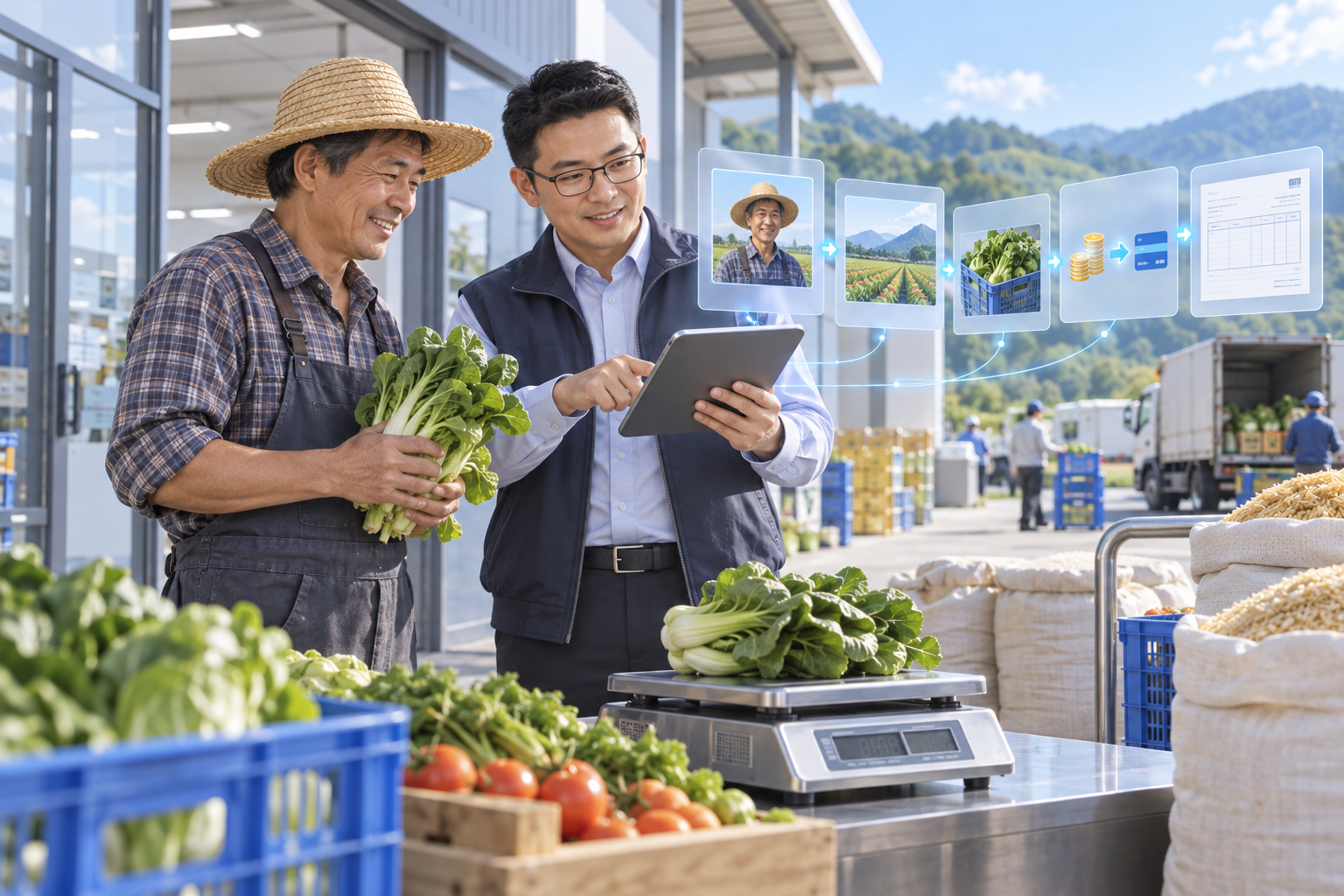
▍Who issues the invoice when purchasing self-produced agricultural products from farmers
Farmers selling self-produced agricultural products are subject to the corresponding VAT exemption policy, and the purchasing enterprise issues agricultural product purchase invoices based on genuine purchase business. The seller information on the invoice comes from the agricultural producer, the purchaser is the actual purchasing enterprise, and the product name, quantity, purchase price, etc. should be consistent with receiving and settlement.
This business and reverse invoicing by resource recycling enterprises to natural person sellers of scrapped products are not the same policy path. Agricultural product articles cannot apply the resource recycling criteria of State Taxation Administration Announcement No. 5 of 2024 or No. 12 of 2026, nor can they apply the rules therein on individual income tax withholding and cumulative sales amount.
Before issuing an invoice, an enterprise should first determine the counterparty. If the goods come from a farmer's self-production, they can be verified as an agricultural product purchase business; if the actual seller is a grain broker, trader, cooperative, or other business entity, then the type of invoice to obtain must be determined based on the genuine contract, supply, and taxpayer status, and one cannot issue a purchase invoice to an individual merely because the goods are agricultural products.
▍Why self-production confirmation is more important than a copy of the ID card
An ID card can only show who the person is, not where this batch of agricultural products came from. Tax treatment focuses on the fact that agricultural producers sell self-produced agricultural products, so enterprises need to verify based on category, production location, planting or breeding conditions, and appropriate self-production proof. The proof materials are determined by local business practices and the competent authority's criteria, and the system should not treat one template as a nationally uniform answer.
Verification must also consider reasonableness. For example, if the production scale recorded in the archive clearly does not match long-term supply quantities, the registered category is completely different from this supply, or the same production site is repeatedly used by many unrelated persons, it should be transferred to manual verification. What the system flags are risk clues, not a direct tax characterization of the farmer or enterprise.
One household, one file stores basic materials and the results of each verification. When materials expire, categories change or production conditions are adjusted, the file should be updated and both the previous and new versions retained. This avoids repeatedly entering ID card, bank card and other information for every truckload of goods, and also explains the state of the materials on which invoicing was based at the time.
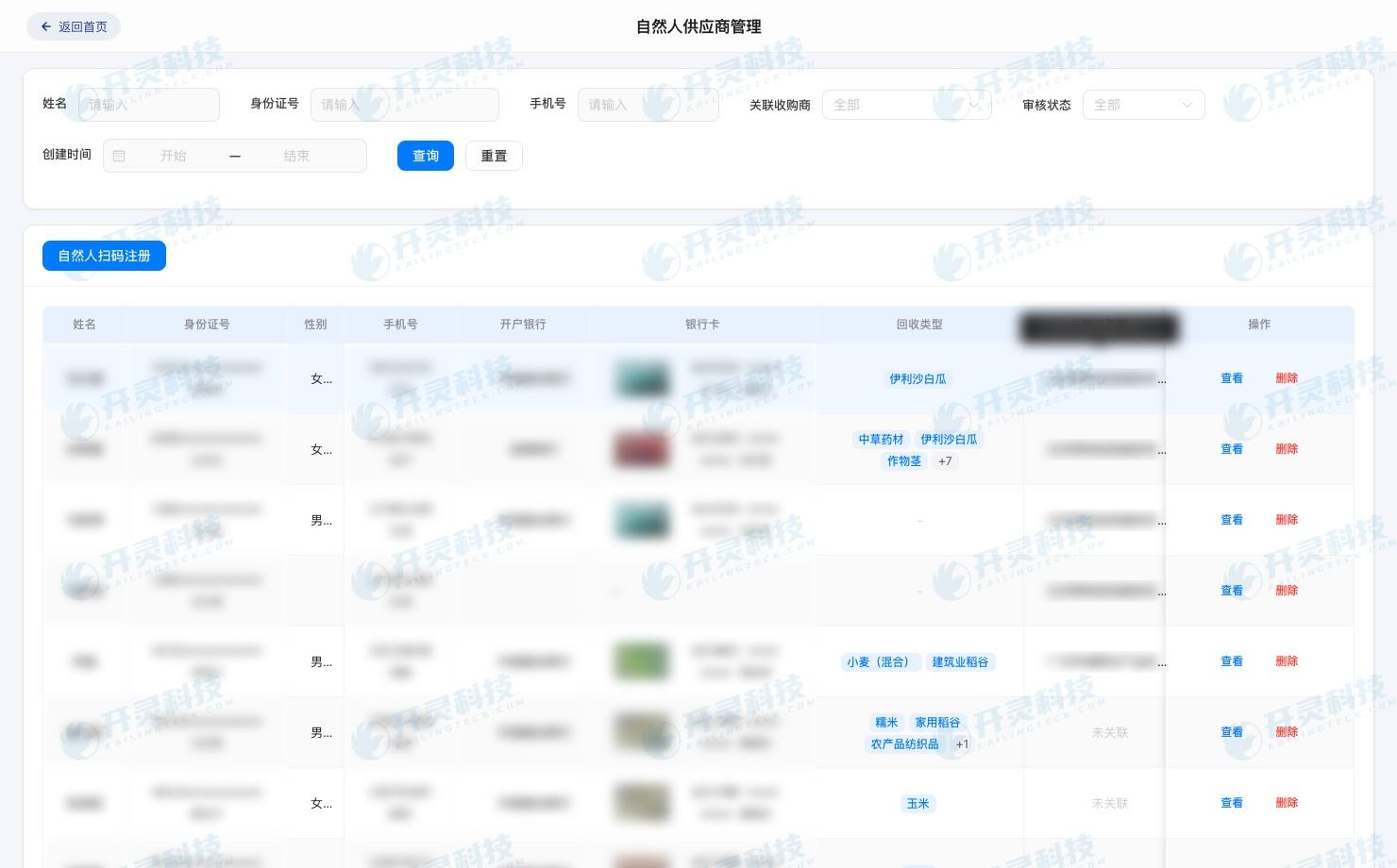
Agricultural producer files and purchasable category management (information has been desensitized)
▍What information should be kept in one household, one file that can be reused by subsequent business
Basic identity includes name, identity verification result, contact information, and relationship to the receiving account; production information includes production location, agricultural product category, necessary self-production materials, and validity period; business relationships include agreements with the purchasing enterprise, historical purchase batches, and exception records. Different materials should have update responsibilities assigned, and cannot remain permanently unchanged after initial file creation.
Archive reuse does not equal copying the previous business transaction. Each purchase must still bring in the current category, weight, grade, unit price, delivery information, and acceptance result. The system can bring out confirmed basic fields from the farmer archive, and then on-site personnel complete this receipt. In this way, the "person's" information can be reused, while the "goods" facts are still regenerated by batch.
If an enterprise adopts the internal five-flow basis, self-production materials can be classified under the self-certification flow, agreements under the contract flow, weighing and acceptance under the business flow, purchase invoices under the tax flow, and bank receipts under the fund flow. The five flows are a method for enterprises to organize evidence, not a statutory term replacing policy conditions.
▍How receipt, weighing, pricing, payment and invoicing correspond to the same transaction
After agricultural products enter the site, the purchase order should record the farmer, category, batch, quantity or weight, grade, unit price, and acceptance result. For grain, livestock, or bulk agricultural products that need weighing, gross weight, tare weight, and net weight can be linked to the weighbridge ticket; for fruits and vegetables priced by piece, basket, or grade, the corresponding acceptance basis should be retained.
The settlement amount is calculated from confirmed receipt details. If impurity deductions, grade adjustments, returns, or price disputes occur on site, the data and confirmation results before and after adjustment should be retained, and the original record cannot be directly overwritten. Invoicing draws data from the final confirmed settlement scope, and payment receipts are then linked back to the corresponding farmer and purchase order.
This relationship means finance does not need to guess from the payment summary table which batches of goods correspond, and it also prevents invoicing clerks from re-entering amounts. An invoicing failure or payment failure only changes the status of the corresponding node and should not mark the entire purchase as "completed."
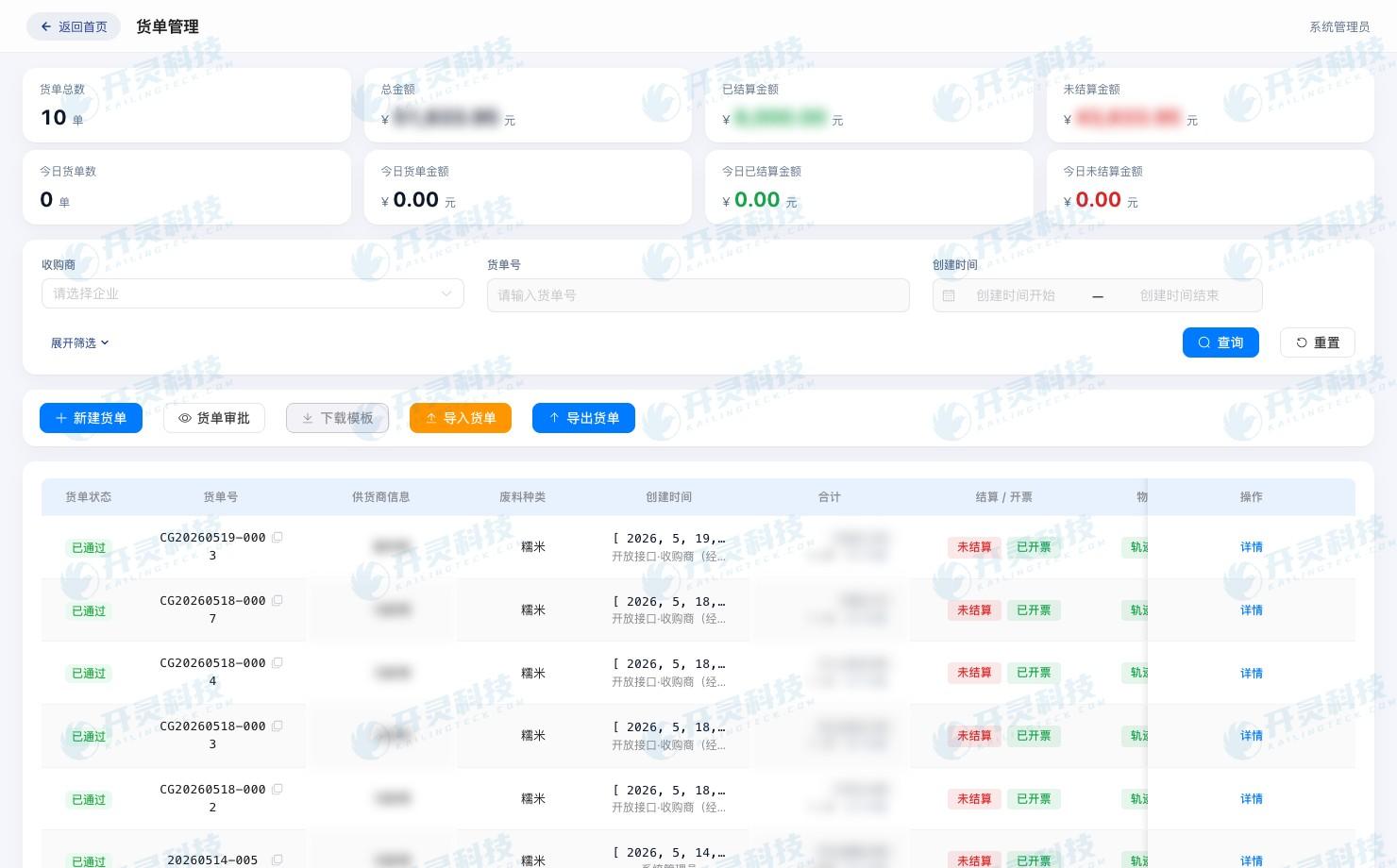
Agricultural product receiving notes and batch information (information has been desensitized)
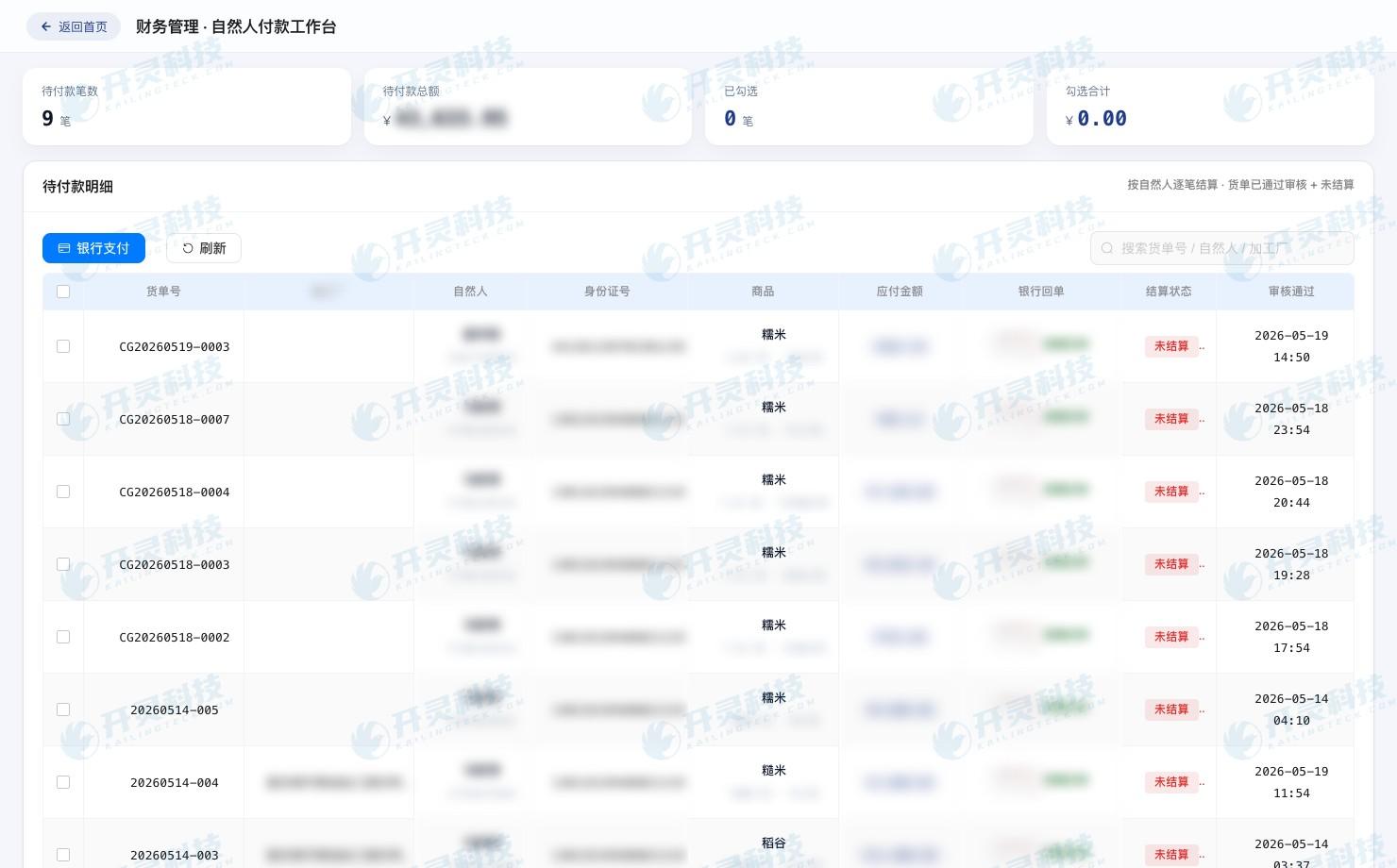
Payment records generated by farmer and purchase business (information desensitized)
▍Basic conditions for agricultural product purchase invoices and input VAT deduction
When a purchasing enterprise buys self-produced agricultural products from agricultural producers and obtains compliant agricultural product purchase invoices, it calculates input tax according to current regulations using the purchase price and a 9% deduction rate. If the purchased agricultural products are used to produce or commission processing of goods subject to a 13% tax rate, qualifying business can, according to regulations, add an additional 1% at the consumption stage; actual treatment must be judged based on use, accounting, and current policy. The 10% cannot be written as a fixed deduction rate for all agricultural product purchases.
The basis for deduction is not only the face of the invoice. Enterprises must also be able to explain who sold, what was sold, whether it was self-produced, whether the goods were actually received, how the amount was formed, and whether payment was made to the corresponding agricultural producer. When inconsistencies arise among invoices, receipt, and funds, they should be verified before filing.
Kailing Technology's agricultural product purchase reverse invoicing system links invoicing results with the original purchase order and retains the actually obtained electronic files such as PDF, OFD, and XML. Enterprises complete certification, deduction, and archiving according to their own financial systems and applicable rules, and the system does not automatically equate "complete materials" with final recognition by tax authorities.
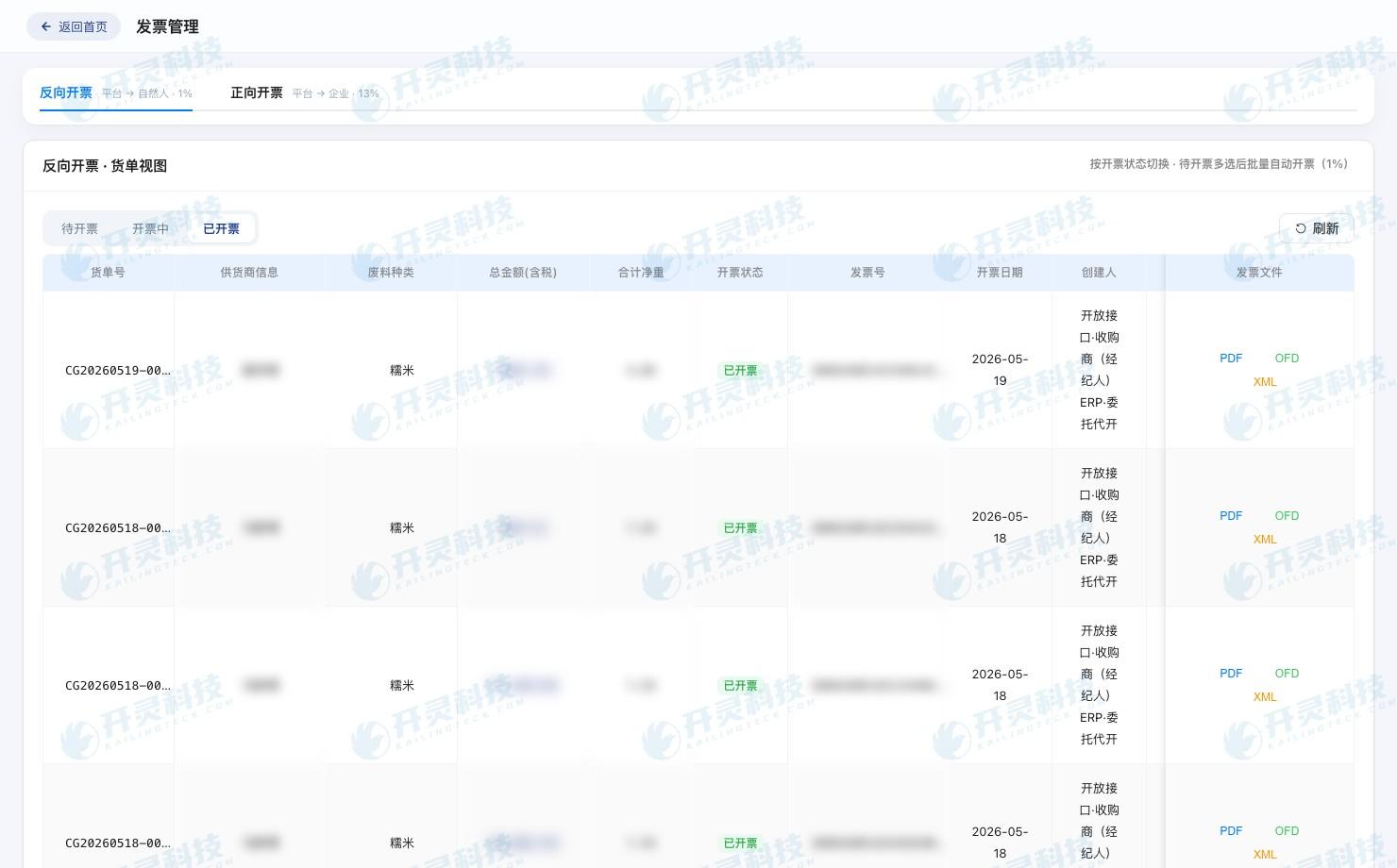
Issuance of agricultural product purchase invoices and format file query (information has been desensitized)
▍How archives reuse reduces registration without lowering verification quality
When purchasing from the same farmer a second time, the system can directly bring out confirmed identity and account information; on-site personnel only need to verify whether it is still valid, then enter this category and receipt result. When contracts or self-production materials have validity periods, the system prompts for review; when adding a new category or changing the receiving account, supplementary review is required.
Managers can trace back from a purchase invoice to the farmer archive, receipt note, settlement, payment, and related materials, and can also view past supplies from the farmer archive. In this way, the Kailing Technology agricultural product purchase reverse invoicing system turns "one household, one archive" into a daily business entry point, rather than a database that no one uses after it is built.
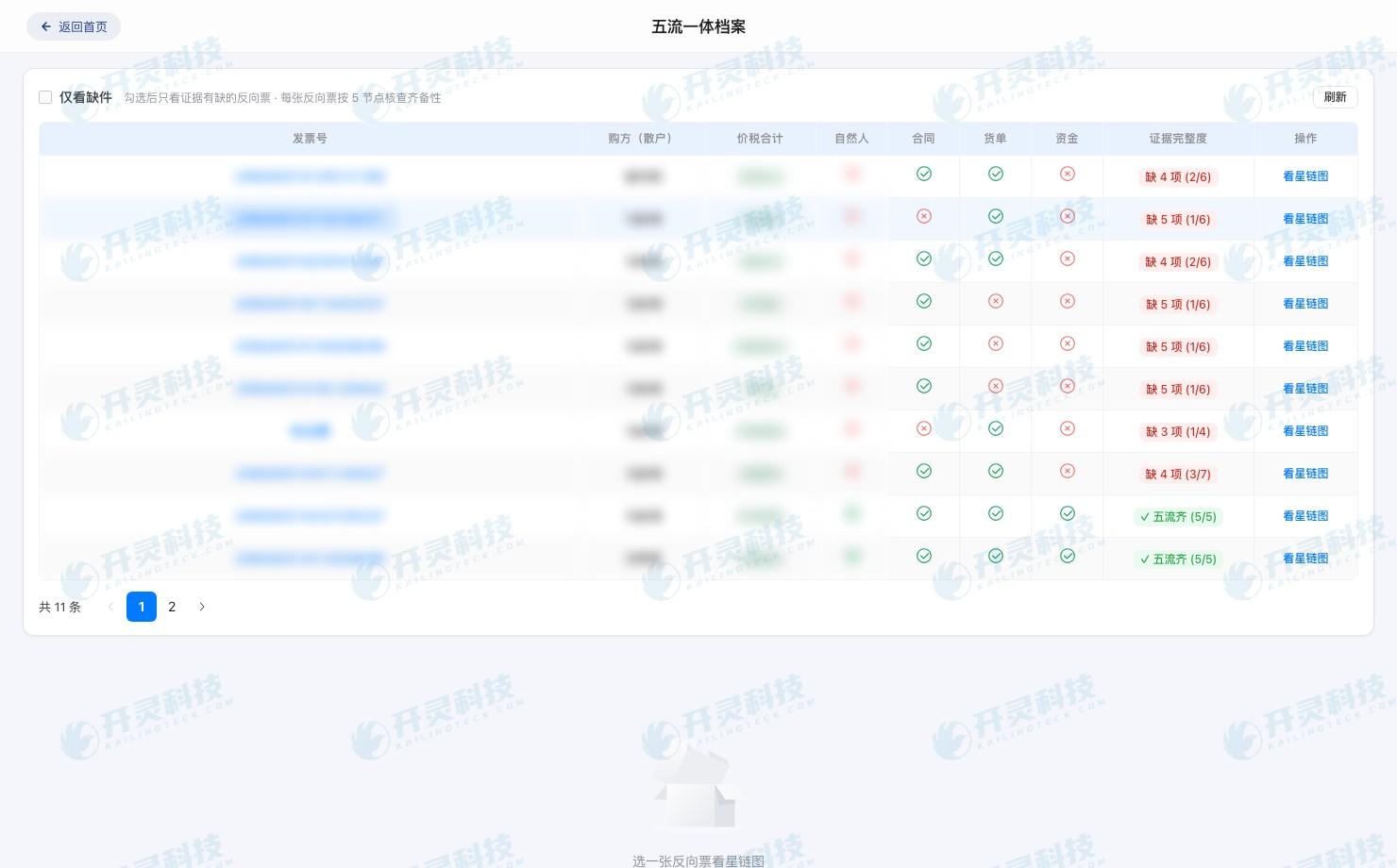
Queryable five-flow archive formed by farmer and individual purchase (information desensitized)
▍FAQ
Q: Can an agricultural product purchase invoice be issued as long as the farmer has an ID card?
A: No. It is also necessary to confirm their status as an agricultural producer, that the goods in this transaction are self-produced agricultural products, and to retain materials that can support the authenticity of the purchase.
Q: When purchasing from cooperatives or traders, is the purchase invoice also issued by the buyer?
A: It should be judged according to the actual sales entity and transaction relationship. When the other party is a business entity, it is usually not possible to apply the treatment for purchases from farmers simply based on the three words "agricultural products".
Q: After one household, one file is established, is review no longer needed each time in the future?
A: Basic materials can be reused, but the validity period, category, production situation, account and the current receipt still need to be verified, and abnormal changes require re-review.
Q: Are all agricultural product purchase invoices deducted at 10%?
A: No. The basic basis is calculated at the purchase price and a 9% deduction rate; when used for producing or entrusting processing of goods with a 13% tax rate and meeting the conditions, the additional deduction is then determined according to the rules.
From one household, one file to single-invoice penetration, linking self-production, receipt, payment and invoicing: https://www.kailingteck.com/fxncp/ .
As a national high-tech enterprise, Kailing Technology focuses on the digital and intelligent transformation of enterprise business-finance-tax and operations management, providing software products, system integration, implementation and delivery, and operational services for various government agencies, institutions, group enterprises, and SMEs.
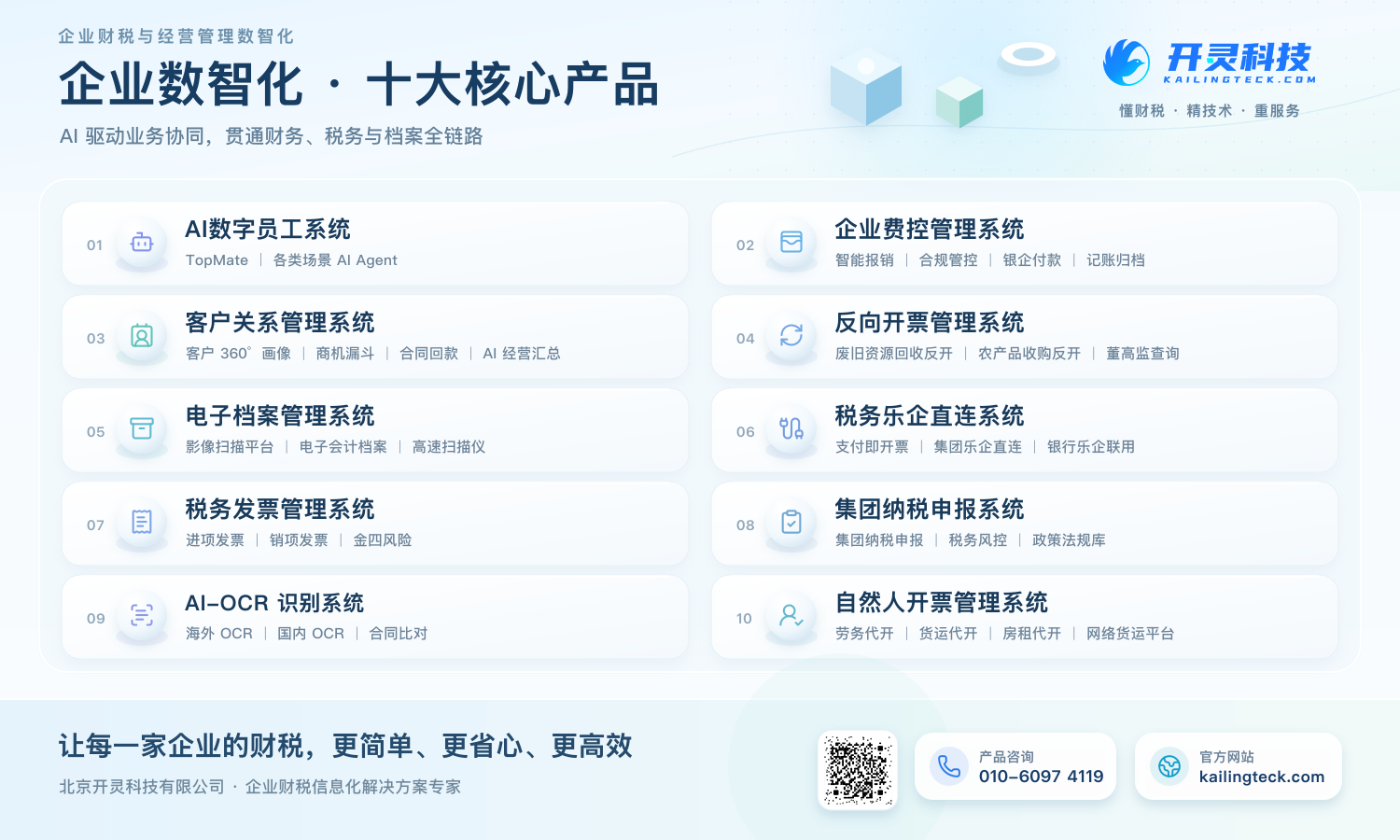
The company has now formed ten core product lines, including: AI digital employee system, enterprise expense control management system, customer relationship management system, reverse invoicing management system, invoice issuance for individuals management system, electronic archives management system, tax fully digitalized e-invoice Leqi system, tax invoice management system, group tax filing system, and AI OCR recognition system. It is committed to connecting enterprise business, finance, tax, funds, and archive data to help customers improve operational efficiency, business-finance-tax compliance capabilities, and digital management levels.
If you have any business-finance-tax digital transformation needs, welcome to contact us. Beijing Kailing Technology will serve you wholeheartedly.
 Keywords: How to issue invoices when purchasing agricultural products from farmers, agricultural product purchase invoices, one household one file, self-produced agricultural products, input tax deduction, agricultural product reverse invoicing system
As a comprehensive business-finance-tax digitalization solution service provider, Kailing Technology provides business-finance-tax management digital transformation products and operational services for various government agencies, institutions, and large, medium, and small enterprises. The product line includes: solutions for sales contract management system, procurement contract management system, fully digitalized Leqi interface project, automatic output invoicing system, reverse invoicing system, invoice issuance for individuals system, employee expense control and reimbursement system, input VAT invoice management system, supply chain collaborative reconciliation system, image AI OCR recognition system, automatic financial bookkeeping system, electronic accounting archives system, etc., comprehensively driving the digitalization process across various fields.
Consultation Hotline: 18513895936 / 010-60974119 Location: Beijing