
What is the electronic accounting archive system used for? Kailing Technology AI electronic accounting archive management system unifies archiving, query, and retrieval

The electronic accounting archive system is used to receive, organize, archive, preserve, and utilize accounting materials, and to organize materials such as invoices, reimbursement forms, contracts, payment receipts, and bookkeeping vouchers by business relationship. It is not a shared folder with larger capacity, nor is it centralized storage after scanning paper into PDF. A truly useful system needs to make material sources traceable, content complete, readable long-term, and permissions controllable, and to quickly return to original documents and related business during audits and daily queries.
Kailing Technology AI Electronic Accounting Archive Management System connects business systems and financial systems, and takes on materials that have already been formed and should be archived. The system organizes materials by category and rules, completes corresponding tests, assigns archive numbers, and retains usage records. Enterprises can thereby reduce repetitive organization, but archive, finance, and business departments still need to jointly confirm the archiving scope, retention period, and permissions.
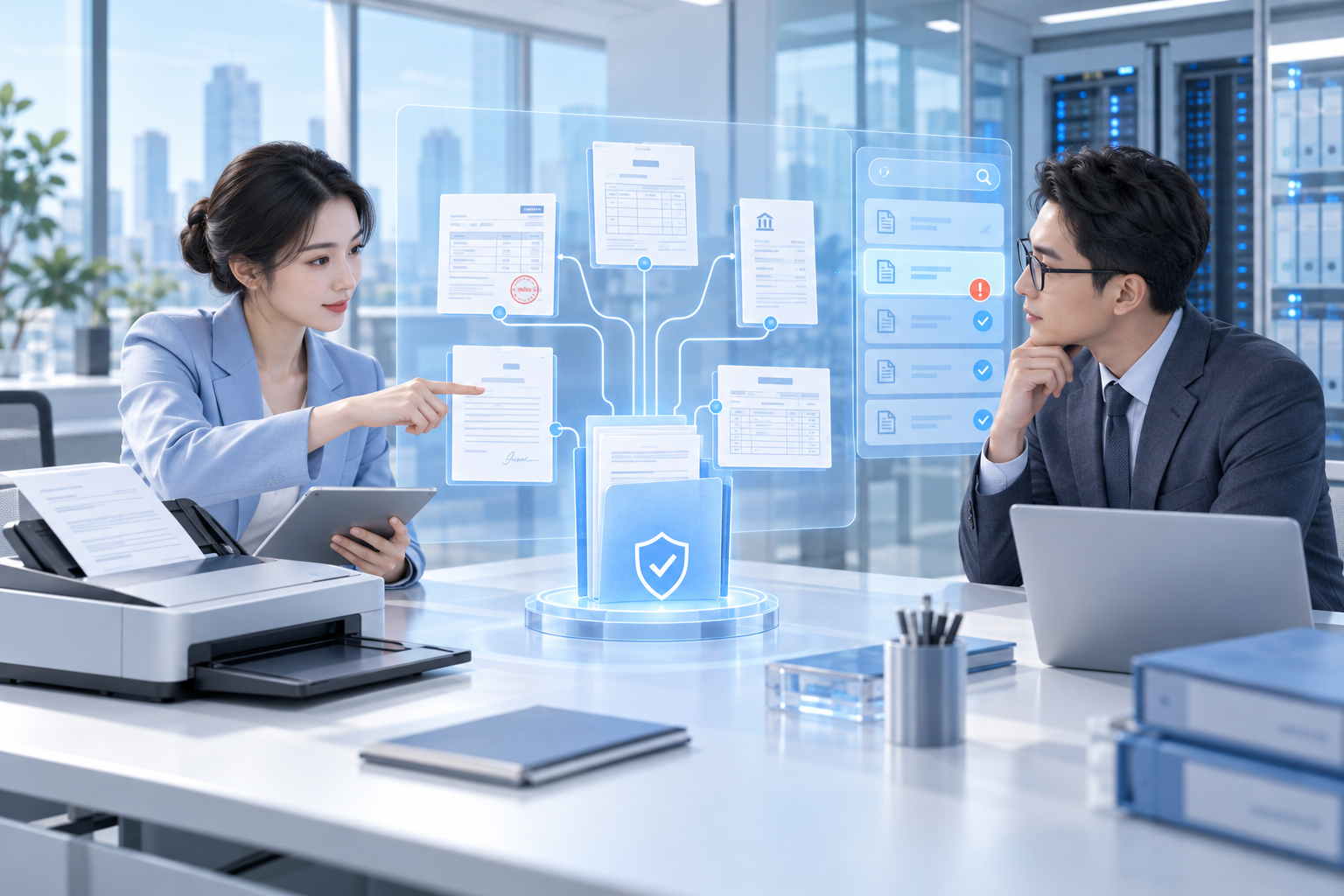
▍What the electronic accounting archives system manages is complete accounting materials
The Measures for the Management of Accounting Archives (Order No. 79 of the Ministry of Finance and the National Archives Administration) set out requirements for the scope, retention, use, appraisal and destruction of accounting archives. The Notice on Standardizing the Reimbursement, Booking and Archiving of Electronic Accounting Vouchers (Cai Kuai [2020] No. 6) further emphasizes that, when conditions are met, archiving may be in electronic form only; if paper printouts of electronic vouchers are used for reimbursement and booking, the corresponding electronic accounting vouchers should also be retained at the same time.
What the system needs to preserve is not isolated files. The relationships between accounting vouchers and attached invoices, contracts, approvals, and receipts can explain how an economic business transaction was formed, reviewed, paid, and recorded. Different archive types have different preservation periods and management rules; all materials cannot be uniformly set to 30 years, nor can only one preview image be stored.
Kailing Technology AI Electronic Accounting Archive Management System organizes functions around material receipt, arrangement, archiving, custody, retrieval, borrowing, appraisal, and disposal. Specific customer versions, interfaces, and test items are subject to the implementation scope, and example data in the system interface cannot be treated as customer operating results.
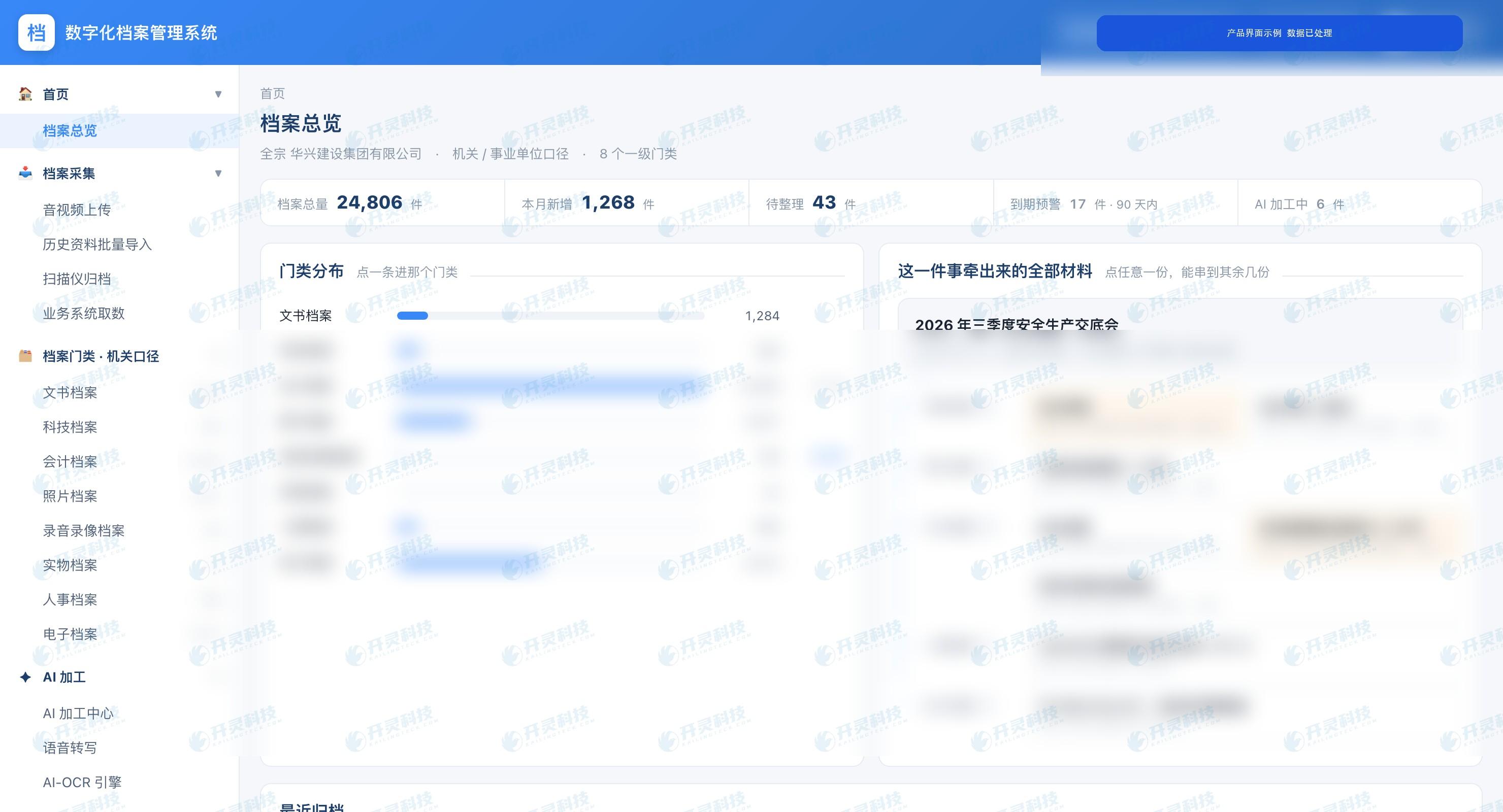
Example product interface for unified management of accounting archives and other materials (example data has been processed)
▍Why attachments in ERP, OA and shared folders are still not archives
ERP is good at recording vouchers and accounting results, OA stores applications and approvals, and shared folders store attachments uploaded by employees. They each solve business processing problems, but they do not necessarily manage materials according to archives categories, archiving scope, retention periods and usage permissions. Being able to open an attachment does not mean archiving has been completed; having the same file name does not mean it can prove it is the same business.
Electronic archive management needs to preserve source files, necessary metadata, business associations, and processing history. For example, for a fully digitalized e-invoice, the enterprise saves the corresponding electronic file according to what it actually obtains and records which reimbursement form, payment, and voucher it is associated with. When files are migrated, format-converted, or re-tested, processing records should also be retained, avoiding having only the final file without its origin.
Shared folders usually rely on manual naming and directory habits, and consistency is easily lost after personnel changes. An archive system, by contrast, organizes materials by archive number, metadata fields, business primary key, and rules, enabling a single business transaction to be found through multiple entry points.
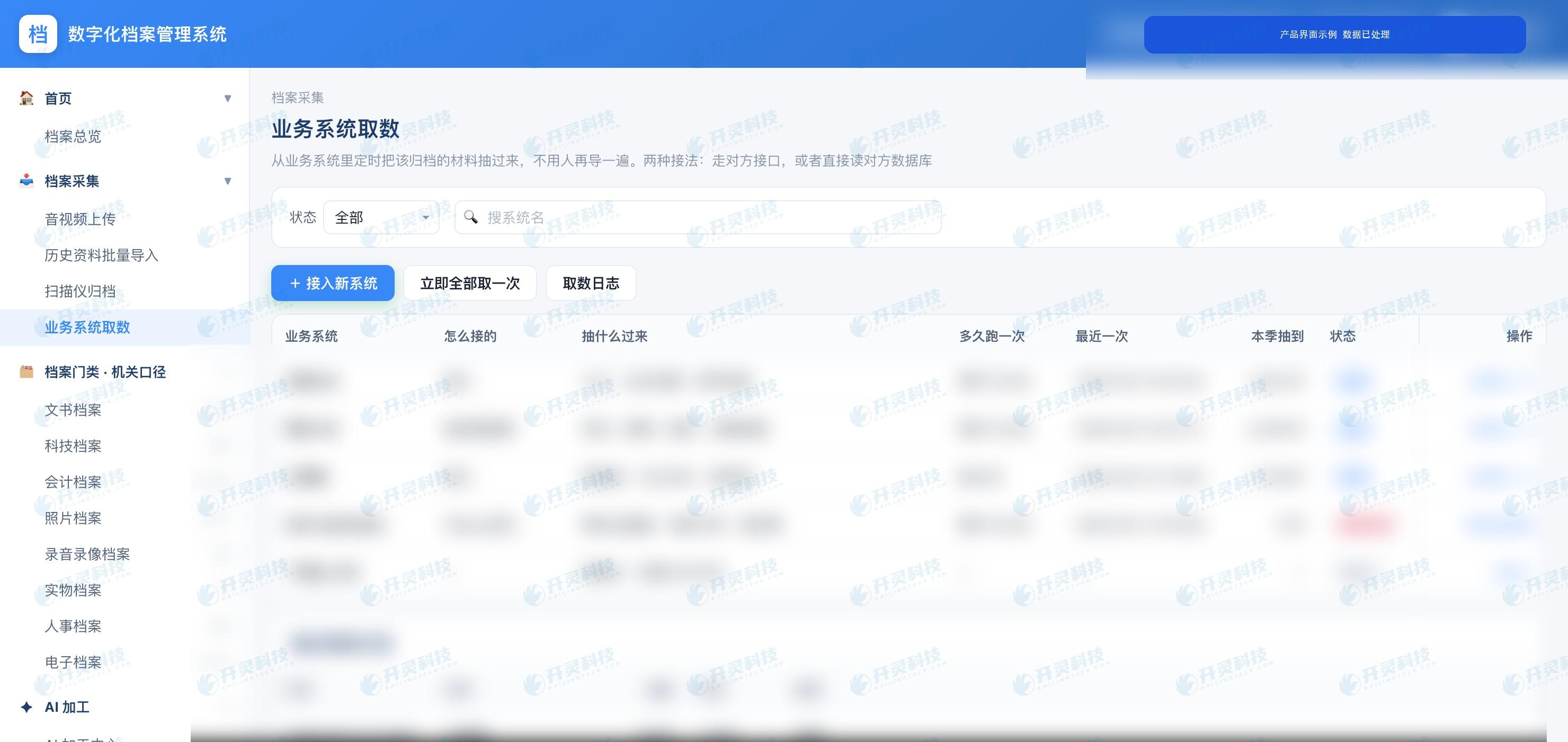
Example of a product interface receiving materials to be archived from business and financial systems (sample data has been processed)
▍How invoices, reimbursement forms, contracts, bank receipts and vouchers automatically establish associations
Associations first come from numbers that already exist in business systems, such as reimbursement form numbers, contract numbers, payment application numbers, bank transaction numbers, and voucher numbers. During system integration, it must be clear which system maintains the master data, which node generates the number, and how status is written back. Relying only on fuzzy matching of file names makes stable traceability difficult to support.
Taking employee reimbursement as an example, after invoices enter the invoice pool they are linked to the reimbursement form, approval completion generates a payment task, the bank receipt returns to the original document, and after the voucher is generated it continues to be attached. The electronic accounting archives system receives these materials and relationships and forms archives according to the rules. When auditors open a voucher, they can continue to view the invoice, approval and bank receipt; searching from the invoice can also return to the booking result.
Interfaces do not automatically fix all historical problems. When upstream lacks business numbers, attachments are duplicated, or field meanings are inconsistent, mapping and supplementary entry rules must first be sorted out. Kailing solutions can use APIs or authorized read-only data retrieval; actual connection frequency and field scope are determined by interface conditions.
▍What problems do the four-property tests before archiving each solve
Authenticity, integrity, usability, and security are important verification dimensions of electronic archive management. Authenticity focuses on whether the source and formation process are traceable; integrity checks whether required files, metadata, and related materials are complete; usability focuses on whether formats can be opened normally and whether conversion is needed; security focuses on permissions, copies, and operation records.
Passing the four-property test does not automatically prove that the economic business is genuine or that tax handling is correct. Hash comparison can support byte-level consistency verification, but cannot by itself prove that a transaction occurred. When a certain material is missing, the system should display the reason and enter a supplementation, repair, or manual verification process, rather than letting operators cover up the problem with a single checkbox.
Detection rules must also match the material type. When audio and video processing is disabled, the absence of a transcript cannot be uniformly judged as unqualified; required attachments also differ by business type. Rule configuration should come from applicable policies and the archiving scope confirmed by the enterprise.
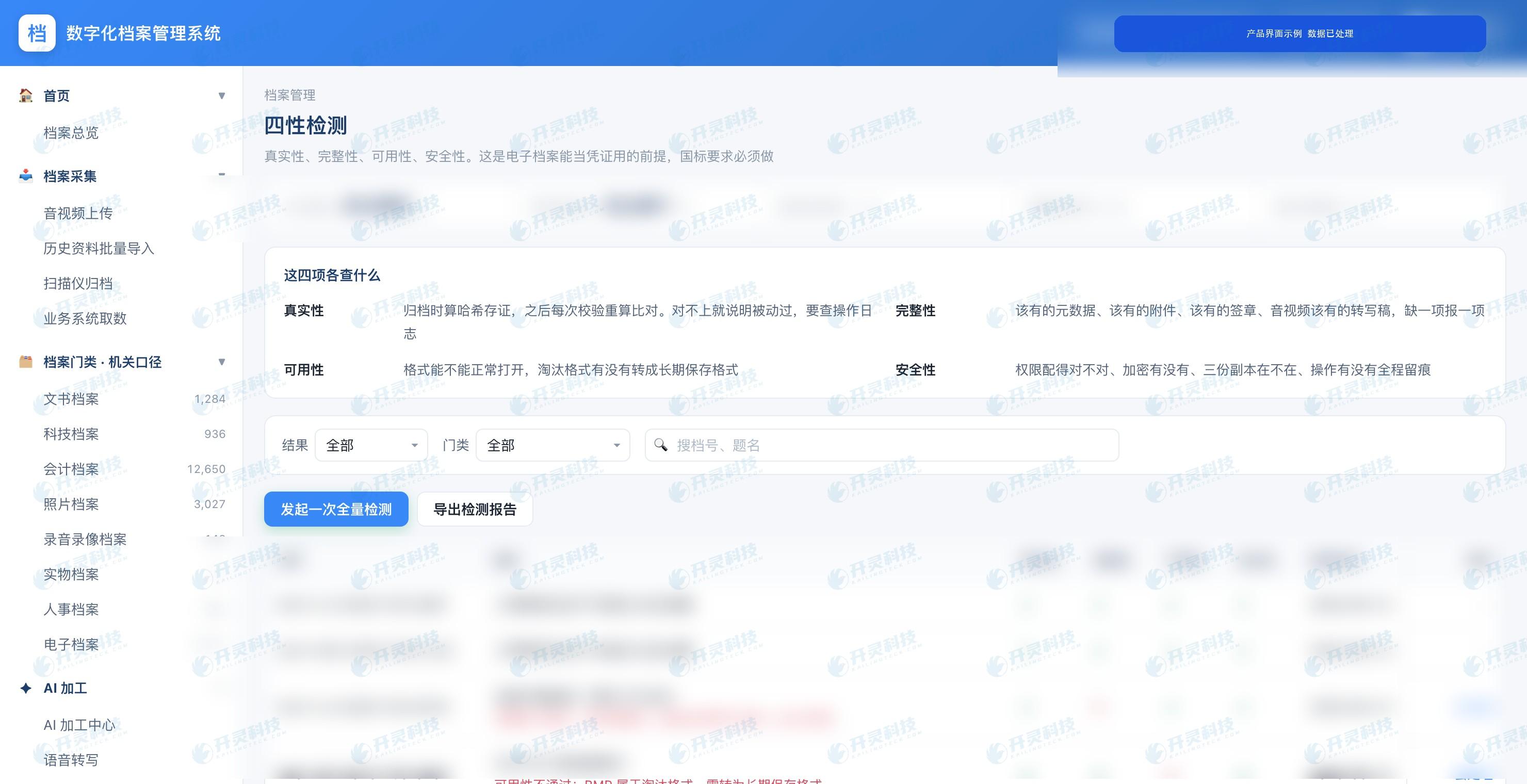
Example interface for authenticity, integrity, usability, and security checks (sample data processed)
▍How querying, audit file retrieval and archives borrowing are completed in one system
Daily finance queries usually start from conditions such as invoice number, voucher number, supplier, date, or amount; audits care more about whether a business package is complete; archive borrowing also requires controlling who can view, for how long, and whether downloading is allowed. A unified system can let these three types of needs use the same archive relationships, but permissions and utilization actions should be configured separately.
Full-text search and metadata field search each have their roles. Structured fields are suitable for precise filtering, while full-text search is suitable for finding clues from the content of documents and attachments. Search results should return to the original file and context, and cannot merely display a piece of recognized text detached from the original.
After borrowing approval is granted, the system can provide controlled online viewing, usage records, and watermarks. Whether downloading original files is allowed depends on permissions and the scope of materials. After the borrowing period expires, platform access permissions can be revoked, but copies already downloaded locally still require supporting policies and technical controls, and cannot automatically disappear just because the system says "expired."

Example product interface for querying archives by description items and content (sample data processed)
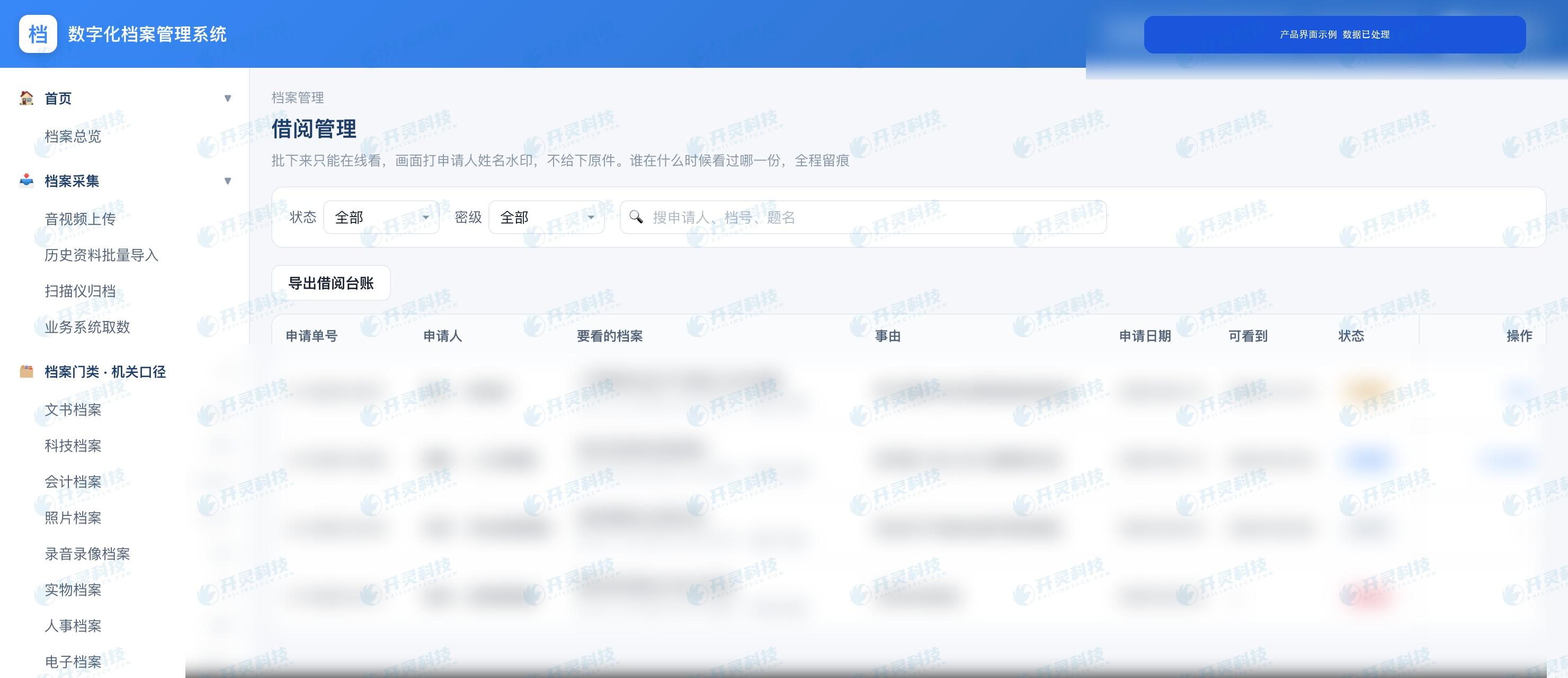
Example interface for archive borrowing approval and utilization records (sample data processed)
▍How Kailing Technology's AI electronic accounting archives management system connects upstream and downstream
The system is positioned to take over materials that should be archived after business handling and financial accounting, rather than replacing ERP, OA, expense control, or banking systems. During implementation, first confirm material sources, business primary keys, archiving nodes, and responsible departments, then design interfaces, detection, filing, permissions, and preservation rules.
New business can first establish a stable electronic archiving chain, then handle historical archives. Before migrating historical materials, a checklist, file correspondence relationships, and failure handling mechanisms are needed; it cannot be advertised as "moving all materials with one click." The Kailing Technology AI electronic accounting archive management system reduces repetitive organization through unified archive relationships and also provides a traceable entry point for subsequent audits and queries.
▍FAQ
Q: What is the difference between an electronic accounting archives system and an online drive?
A: Online drives mainly store files, while an archives system also manages source, metadata, business associations, archive numbers, retention periods, permissions, usage and disposal records.
Q: If voucher attachments already exist in ERP, do they still need to be archived separately?
A: It should be judged according to the enterprise's archiving scope and applicable requirements. ERP attachments do not necessarily include complete source files, metadata, retention rules and archives usage controls.
Q: Does passing the four-property test mean this transaction is fully compliant?
A: No. Testing provides a basis at the archives management and technical levels; the authenticity of the economic business and tax treatment still need to be judged based on the original facts and applicable rules.
Q: Does audit file retrieval have full-database download permission by default?
A: It should not be assumed. Viewing, downloading, printing and transferring should be controlled separately according to the scope of materials, purpose, period and permissions, and usage records should be retained.
Enable accounting materials to be linked, archived, and retrieved from the moment the business is formed. Learn about Kailing Technology's archive solution: https://www.kailingteck.com/eaa/ .
As a national high-tech enterprise, Kailing Technology focuses on the digital and intelligent transformation of enterprise business-finance-tax and operations management, providing software products, system integration, implementation and delivery, and operational services for various government agencies, institutions, group enterprises, and SMEs.
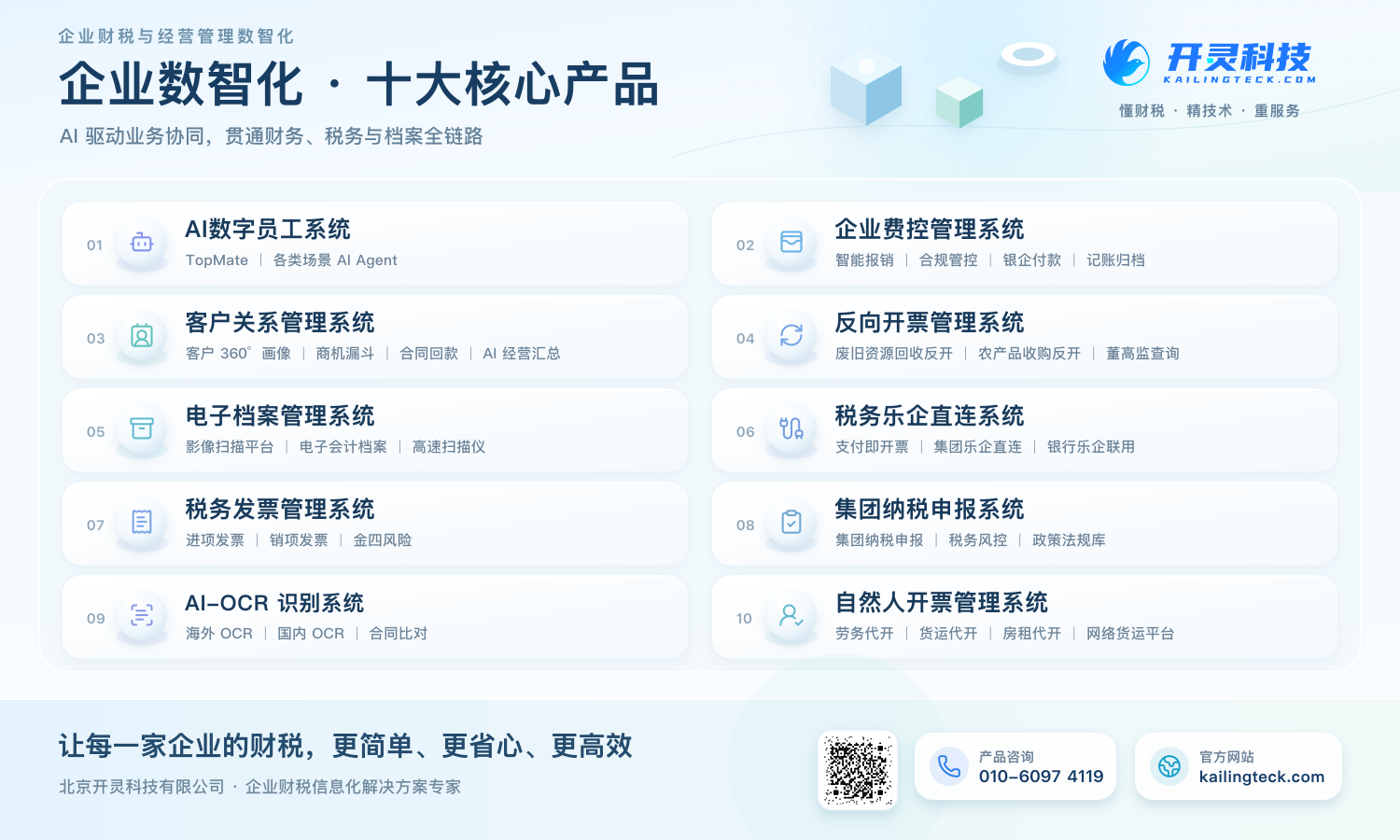
The company has now formed ten core product lines, including: AI digital employee system, enterprise expense control management system, customer relationship management system, reverse invoicing management system, invoice issuance for individuals management system, electronic archives management system, tax fully digitalized e-invoice Leqi system, tax invoice management system, group tax filing system, and AI OCR recognition system. It is committed to connecting enterprise business, finance, tax, funds, and archive data to help customers improve operational efficiency, business-finance-tax compliance capabilities, and digital management levels.
If you have any business-finance-tax digital transformation needs, welcome to contact us. Beijing Kailing Technology will serve you wholeheartedly.
 Keywords: What is the electronic accounting archive system used for, accounting material archiving, four authenticity checks, archive query, audit archive retrieval, electronic archive borrowing
As a comprehensive business-finance-tax digitalization solution service provider, Kailing Technology provides business-finance-tax management digital transformation products and operational services for various government agencies, institutions, and large, medium, and small enterprises. The product line includes: solutions for sales contract management system, procurement contract management system, fully digitalized Leqi interface project, automatic output invoicing system, reverse invoicing system, invoice issuance for individuals system, employee expense control and reimbursement system, input VAT invoice management system, supply chain collaborative reconciliation system, image AI OCR recognition system, automatic financial bookkeeping system, electronic accounting archives system, etc., comprehensively driving the digitalization process across various fields.
Consultation Hotline: 18513895936 / 010-60974119 Location: Beijing