



Regular risk monitoring, operating as a closed loop along one main line
From data collection to risk disposal, four steps are automatically connected and fully traceable, connecting finance and tax data scattered across systems to a unified risk engine
Business-Finance-Tax Data Collection
Aggregate internal enterprise production and operation, invoice, filing, and financial statement data, and connect to authoritative external data such as tax bureaus and customs, with unified standards and drill-down traceability, establishing a calculation foundation for risk control models.
Data Modeling and Governance
Clean, align, and standardize multi-source data, establish a unified business-finance-tax data model and indicator standards, eliminate data fragmentation between entities and systems, and provide a basis for subsequent calculations.
Risk model establishment
Built-in nearly one hundred authoritative financial and tax risk detection indicators and risk control models, covering financial indicators, tax indicators, related-party transactions, and invoice input/output, and supporting custom extensions by group standards.
Risk scanning and handling
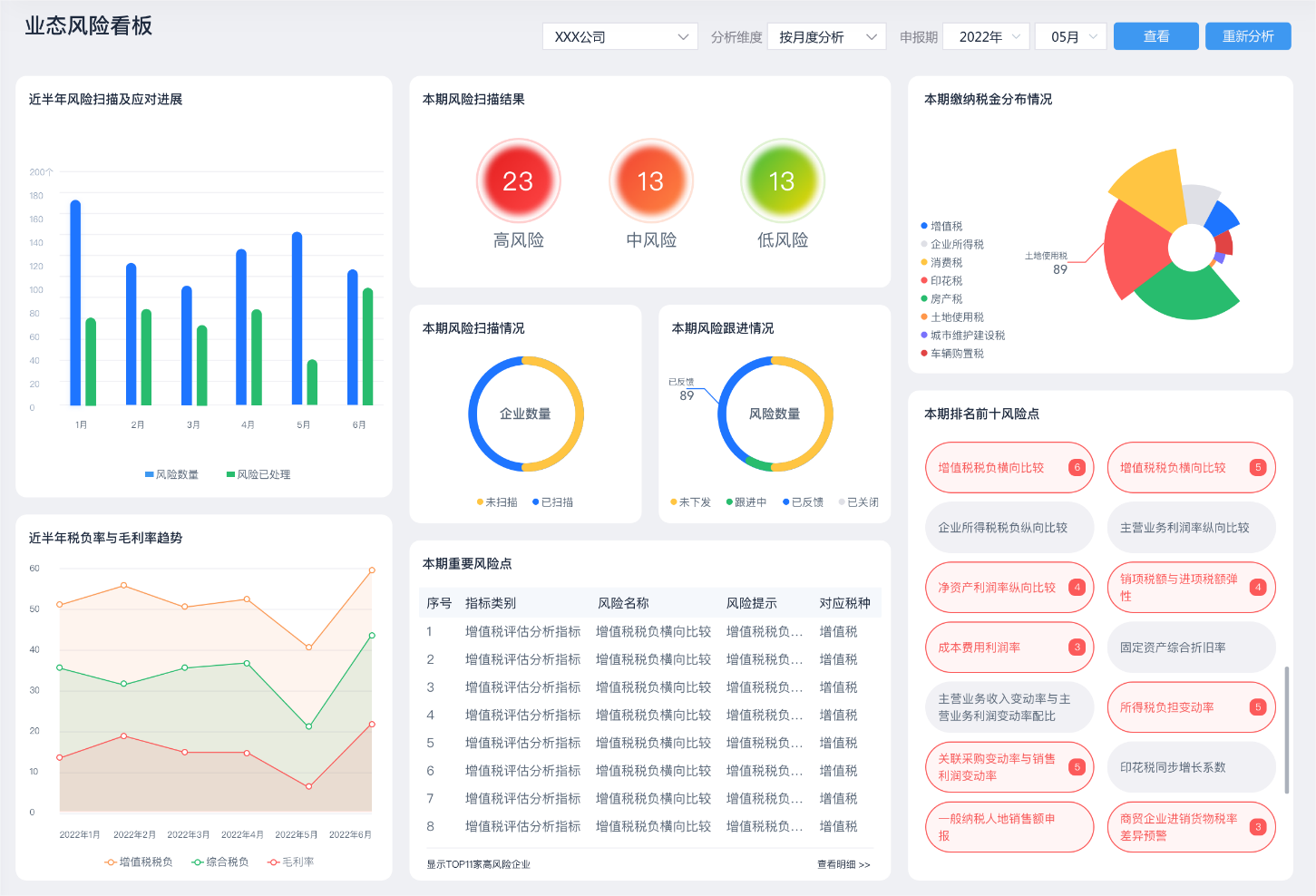
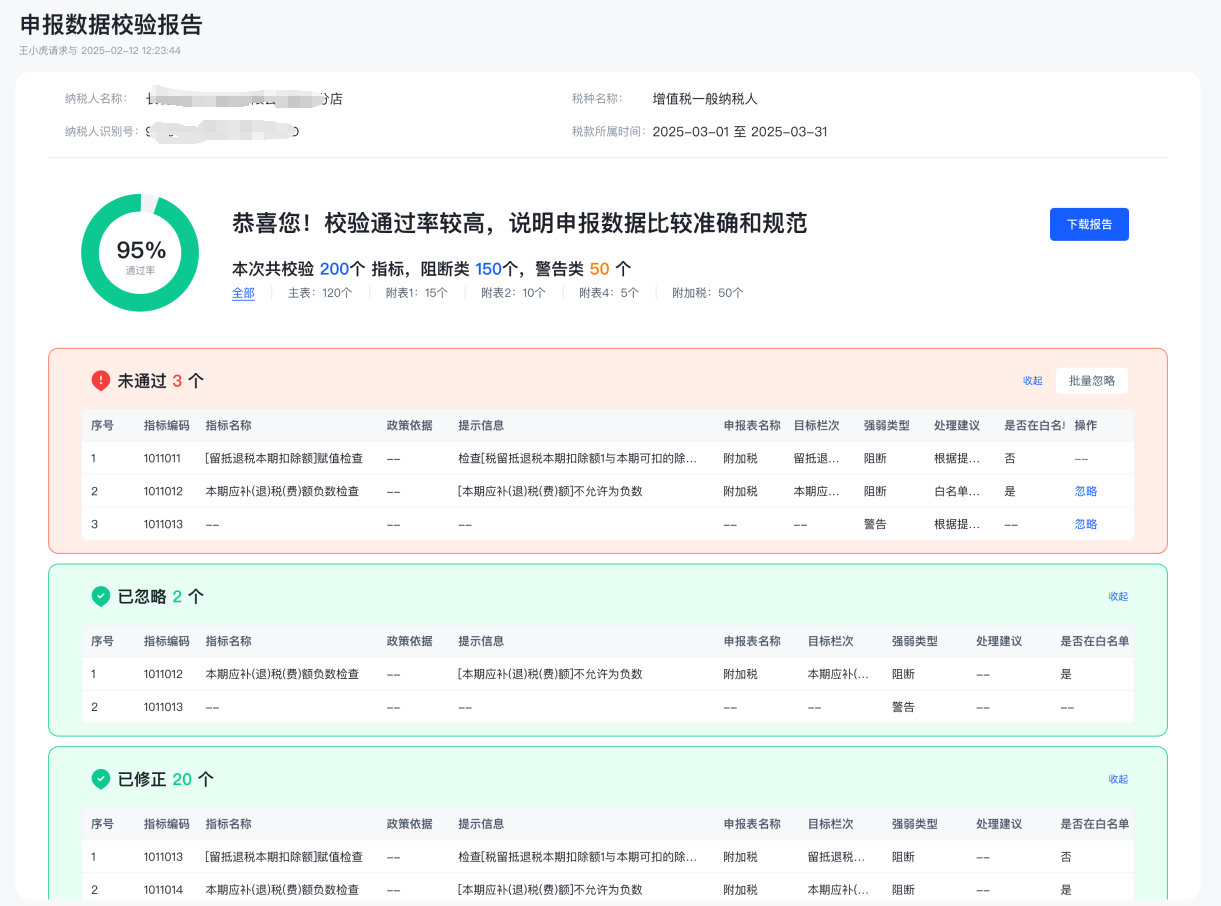
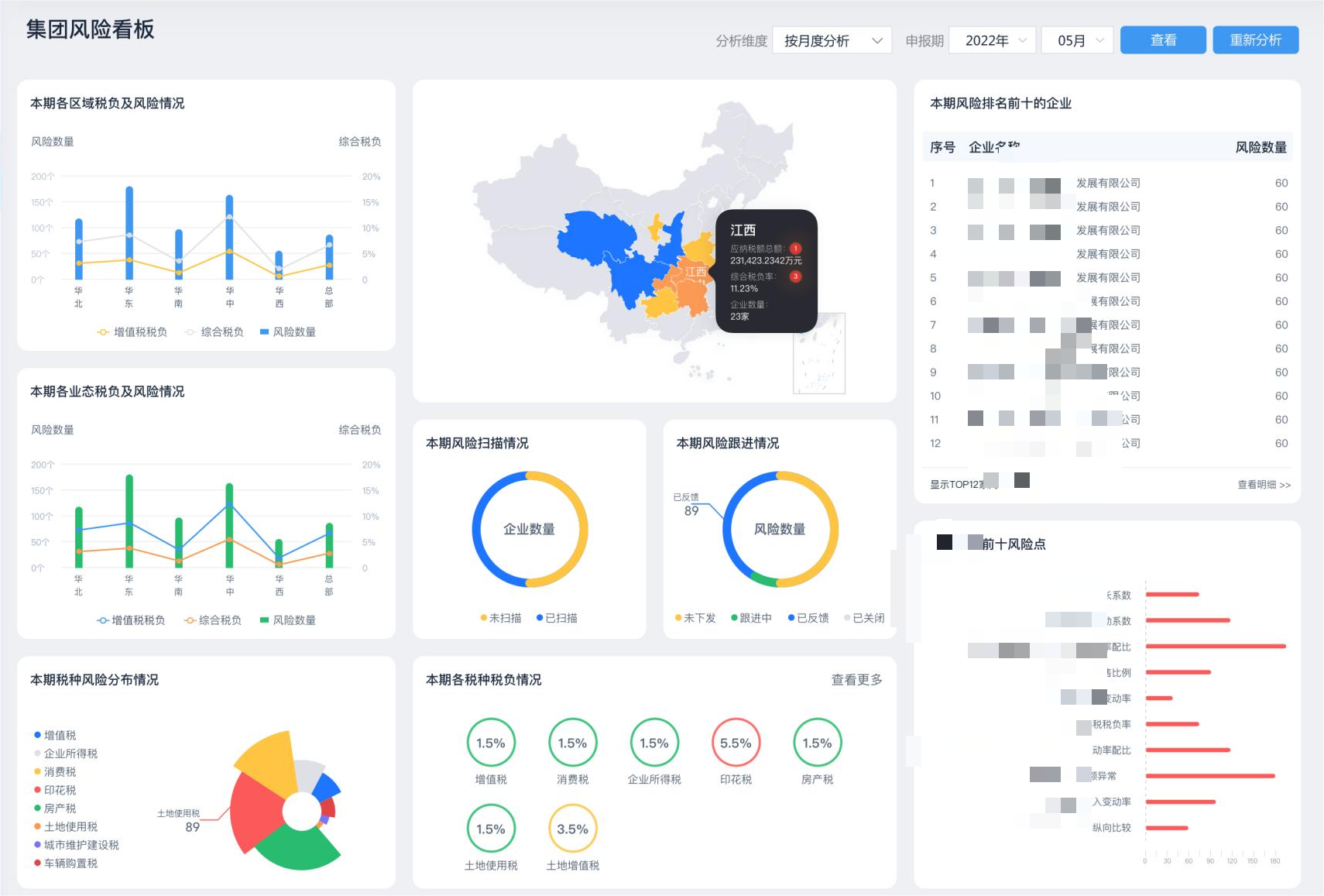
The model automatically scans periodically, with high, medium and low graded risk warnings. Exceptions are automatically issued, followed up, fed back and closed, forming a traceable closed loop for risk handling, and generating tax-related risk assessment reports with one click.
The model automatically scans periodically, and risks are automatically issued, followed up, fed back and closed, forming a traceable closed loop for risk handling.